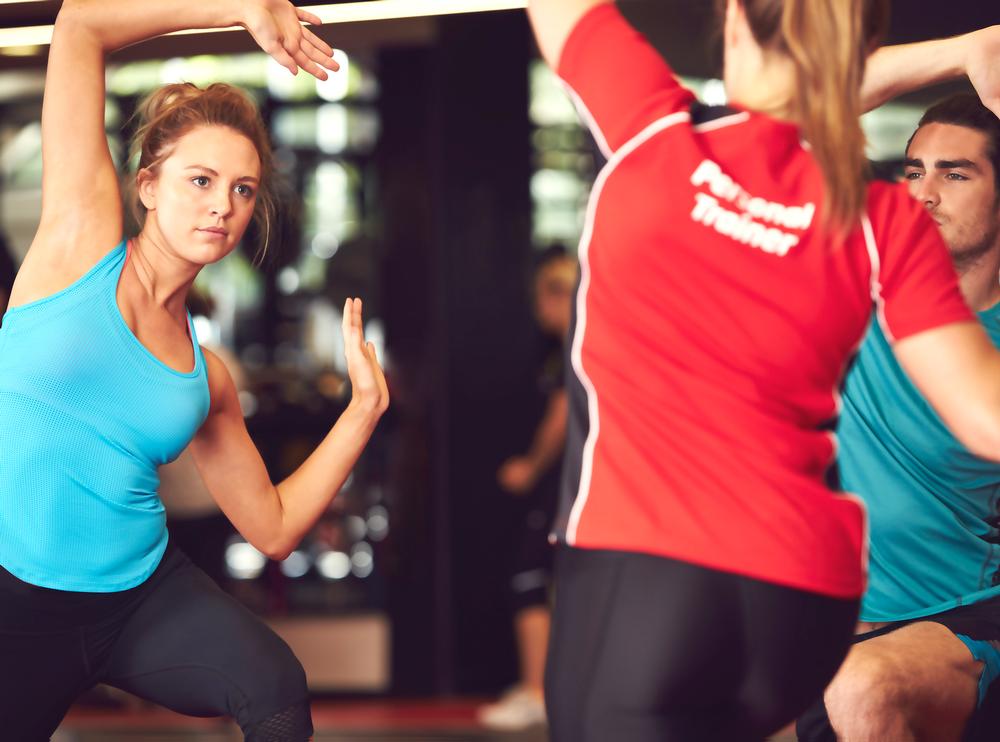
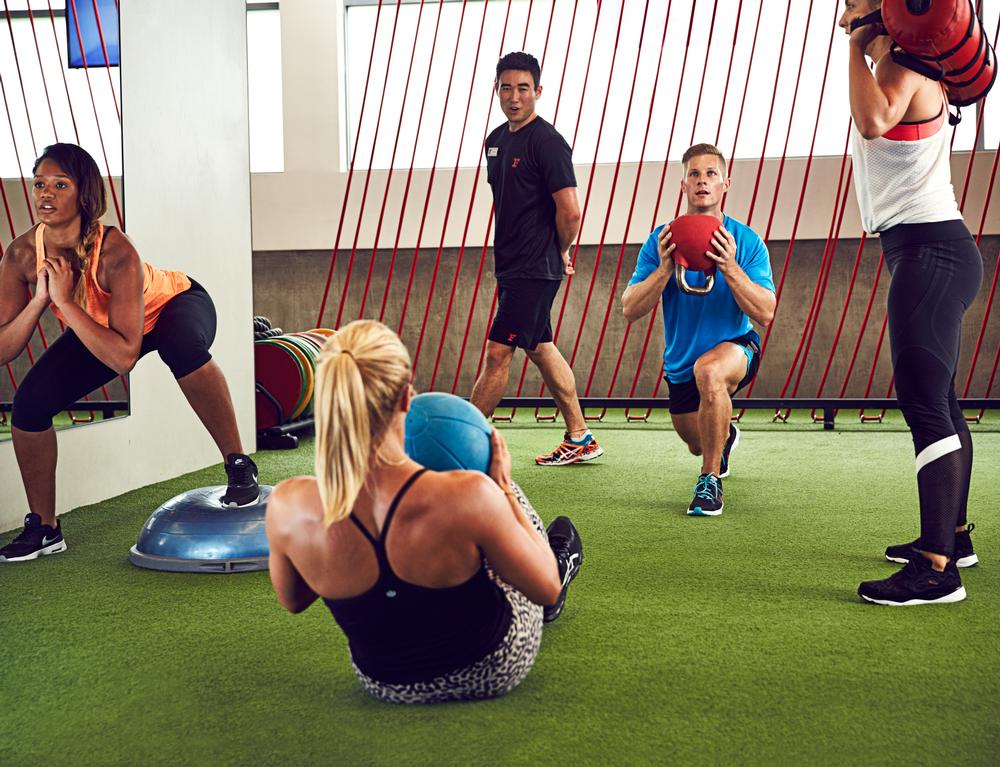
PTs reported having a maximum average availability of 21.4 hours a week during which they could work / PHOTOS: COURTESY OF FITNESS FIRST
The market for personal training is growing fast, but we know very little about its scope and the livelihoods of the people working in the sector, so industry body EuropeActive set out to put that right.
In 2017, the organisation commissioned German research company Edelhelfer to look into the state of the PT market in 15 European countries via an online survey. The report which was produced – Personal Training in Europe – was sponsored by industry supplier MIHA Bodytec and TomTom
Industry professionals were asked about various aspects of personal training, such as pricing, client-types, marketing activity and also threats and opportunities.
A total of 4,370 people took part in the survey; 3,944 were located in the target countries and 2,819 were personal trainers.
Due to the scarcity of information, carefully curated numbers from LinkedIn were also used to get an understanding of individual market sizes across the 15 countries.
Although the figures must be interpreted carefully, they allow for a basic comparison between the different countries and an initial assessment of the size of the PT market in Europe.
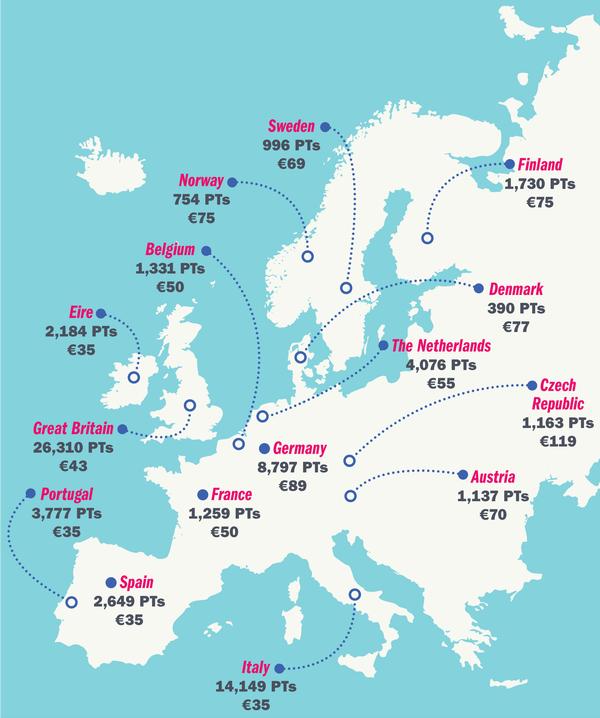
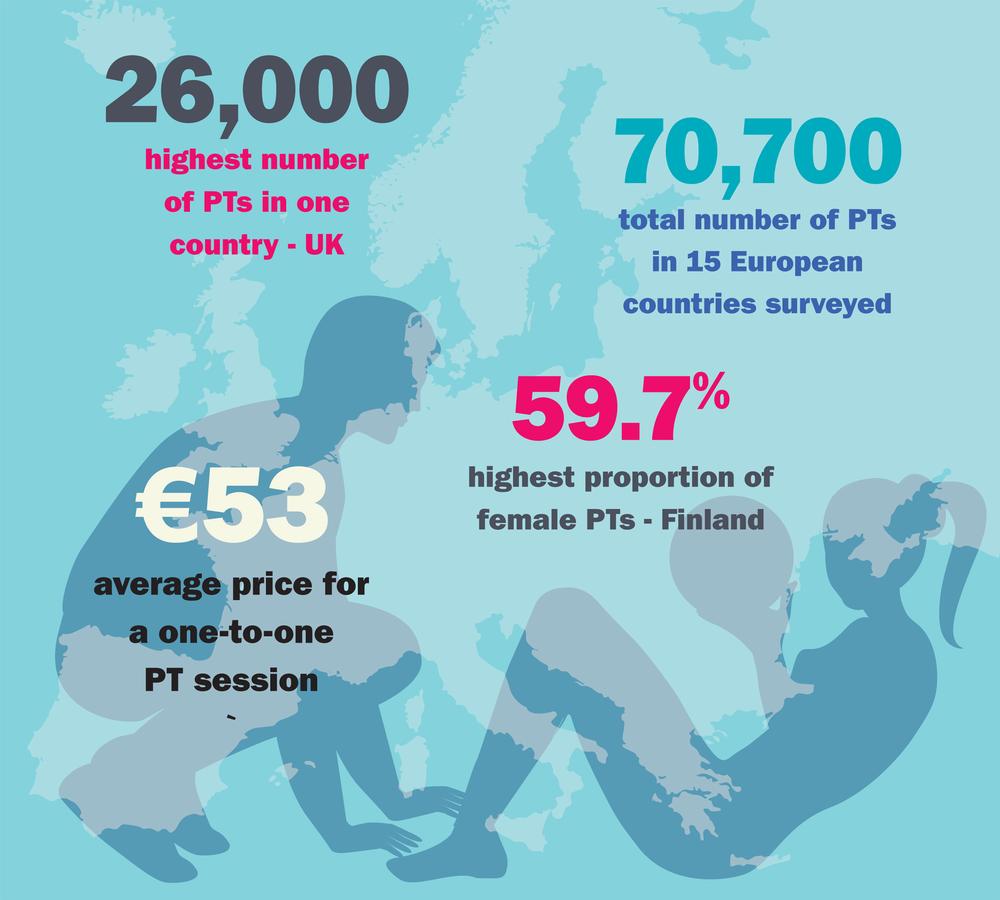
How many PTs are there? Taking these calculations as a basis, the total number of PTs in all 15 countries comes to 70,700. The highest number by far, is seen in the UK, with a total of more than 26,000.
In relation to the overall population, the highest market penetration was identified as being in Ireland and the UK.
In 13 of the 15 analysed countries, there are more male personal trainers than female, with the proportion ranging from almost equal in Austria (47.6 per cent) to less than a fifth in Italy (18.5 per cent). The only exceptions were Finland and Norway with 59.7 per cent and 51.5 per cent female.
Personal trainers are a young group, with an average age of 34. This might be due to capability or to personal training being a new industry that’s still developing, or because the career choice wasn’t available to previous generations. It might also be that active work appeals to younger people.
How much do PTs charge? The average price for a one-to-one personal training session in Europe is €53. The lowest average of €35 is seen in Italy, Spain, Portugal and Ireland. By far the highest average rate for a one-to-one session is seen in Switzerland at €119.
Beyond the description of the actual prices of personal training in the individual markets, the relationship between these prices and specific parameters is worth examining.
It seems that the higher the fitness-related qualification achieved, the higher the price charged by that trainer: while a personal trainer with a basic qualification charges €53.30 an hour, the price increases with higher levels of education.
Do they enjoy the work? Most PTs are generally satisfied with their decision to take this career path, reportedly enjoying their work.
The ‘happiest’ PTs are based in the Netherlands, Germany and Austria and the most important reason for this generally high level of satisfaction is seen as the ‘opportunity to help people’, followed by the fun nature of the work and the potential for personal development.
Full-time and part-time personal trainers are distributed relatively evenly throughout the industry. However, the huge majority work on a self-employed basis. On average, PTs reported having a maximum availability of 21.4 hours during which they could work each week.
The time spent in actual PT sessions – as a proportion of the total overall work of being a trainer – varies from 30 per cent to more than 50 per cent, depending on the country.
Does getting trained make a difference? It’s generally accepted that a good education is an essential prerequisite to becoming a successful personal trainer. An adequate education is also a strong selling proposition and a requirement for good customer retention. Official educational requirements, however, differ greatly from country to country.
While a personal trainer doesn’t need a formal education in some countries, in others there are specific minimum requirements that have to be fulfilled before someone can work as a personal trainer and again, the offerings of the different national training providers vary hugely from country to country, with no real average being identified.
Given this complex international educational system, the majority of personal trainers said they believe international standards would be useful and the European Register of Exercise Professionals (EREPS) is seen as a driving force for the development of these, not only for personal trainers, but also for fitness professionals in general.
NUMBER OF PERSONAL TRAINERS + PRICE FOR A ONE-TO-ONE TRAINING SESSION
Find out more Personal Training in Europe, EuropeActive and Edelhelfer’s study into the personal training market across 15 European countries can be ordered by emailing research company Edelhelfer at contactedelhelfer.eu
EuropeActive and Edelhelfer’s study
The PT market varies hugely across Europe
Most PTs are satisfied with their decision to take this career path. The happiest PTs are in the Netherlands / PHOTO: COURTESY OF FITNESS FIRST
Active Blackpool is deploying Cornerstone Connect, a new digital interface allowing
disparate information from multiple systems to be aggregated into one dataset, to support
its focus on reducing health inequalities and improving healthy life expectancy. [more...]
Panatta brought together four of the most influential figures in bodybuilding history on the
stage of RiminiWellness 2026: Phil Heath, Lee Haney, Ronnie Coleman and Hany Rambod. [more...]
+ More featured suppliers
COMPANY PROFILES
Serco Leisure
Serco Leisure Operating Limited is one of the UK’s leading national operators of leisure centres, de [more...]
PTs reported having a maximum average availability of 21.4 hours a week during which they could work / PHOTOS: COURTESY OF FITNESS FIRST
The market for personal training is growing fast, but we know very little about its scope and the livelihoods of the people working in the sector, so industry body EuropeActive set out to put that right.
In 2017, the organisation commissioned German research company Edelhelfer to look into the state of the PT market in 15 European countries via an online survey. The report which was produced – Personal Training in Europe – was sponsored by industry supplier MIHA Bodytec and TomTom
Industry professionals were asked about various aspects of personal training, such as pricing, client-types, marketing activity and also threats and opportunities.
A total of 4,370 people took part in the survey; 3,944 were located in the target countries and 2,819 were personal trainers.
Due to the scarcity of information, carefully curated numbers from LinkedIn were also used to get an understanding of individual market sizes across the 15 countries.
Although the figures must be interpreted carefully, they allow for a basic comparison between the different countries and an initial assessment of the size of the PT market in Europe.
How many PTs are there? Taking these calculations as a basis, the total number of PTs in all 15 countries comes to 70,700. The highest number by far, is seen in the UK, with a total of more than 26,000.
In relation to the overall population, the highest market penetration was identified as being in Ireland and the UK.
In 13 of the 15 analysed countries, there are more male personal trainers than female, with the proportion ranging from almost equal in Austria (47.6 per cent) to less than a fifth in Italy (18.5 per cent). The only exceptions were Finland and Norway with 59.7 per cent and 51.5 per cent female.
Personal trainers are a young group, with an average age of 34. This might be due to capability or to personal training being a new industry that’s still developing, or because the career choice wasn’t available to previous generations. It might also be that active work appeals to younger people.
How much do PTs charge? The average price for a one-to-one personal training session in Europe is €53. The lowest average of €35 is seen in Italy, Spain, Portugal and Ireland. By far the highest average rate for a one-to-one session is seen in Switzerland at €119.
Beyond the description of the actual prices of personal training in the individual markets, the relationship between these prices and specific parameters is worth examining.
It seems that the higher the fitness-related qualification achieved, the higher the price charged by that trainer: while a personal trainer with a basic qualification charges €53.30 an hour, the price increases with higher levels of education.
Do they enjoy the work? Most PTs are generally satisfied with their decision to take this career path, reportedly enjoying their work.
The ‘happiest’ PTs are based in the Netherlands, Germany and Austria and the most important reason for this generally high level of satisfaction is seen as the ‘opportunity to help people’, followed by the fun nature of the work and the potential for personal development.
Full-time and part-time personal trainers are distributed relatively evenly throughout the industry. However, the huge majority work on a self-employed basis. On average, PTs reported having a maximum availability of 21.4 hours during which they could work each week.
The time spent in actual PT sessions – as a proportion of the total overall work of being a trainer – varies from 30 per cent to more than 50 per cent, depending on the country.
Does getting trained make a difference? It’s generally accepted that a good education is an essential prerequisite to becoming a successful personal trainer. An adequate education is also a strong selling proposition and a requirement for good customer retention. Official educational requirements, however, differ greatly from country to country.
While a personal trainer doesn’t need a formal education in some countries, in others there are specific minimum requirements that have to be fulfilled before someone can work as a personal trainer and again, the offerings of the different national training providers vary hugely from country to country, with no real average being identified.
Given this complex international educational system, the majority of personal trainers said they believe international standards would be useful and the European Register of Exercise Professionals (EREPS) is seen as a driving force for the development of these, not only for personal trainers, but also for fitness professionals in general.
NUMBER OF PERSONAL TRAINERS + PRICE FOR A ONE-TO-ONE TRAINING SESSION
Find out more Personal Training in Europe, EuropeActive and Edelhelfer’s study into the personal training market across 15 European countries can be ordered by emailing research company Edelhelfer at contactedelhelfer.eu
EuropeActive and Edelhelfer’s study
The PT market varies hugely across Europe
Most PTs are satisfied with their decision to take this career path. The happiest PTs are in the Netherlands / PHOTO: COURTESY OF FITNESS FIRST
According to research which tracked more than 147,000 people for 30 years, 90-120 minutes
of strength training a week may deliver some of the biggest long-term health rewards.
The UK's four Chief Medical Officers have published a refreshed edition of Physical activity
guidelines: UK Chief Medical Officers' report, updating the evidence that underpins the nation's
physical activity recommendations and placing greater emphasis on strength, balance, reducing
sedentary behaviour and, for the first time, supporting people taking weight loss medications.
Places Leisure has exchanged contracts to build and operate a flagship £60m water and leisure
destination on behalf of Basingstoke and Deane Borough Council.
The Republic of Ireland will become the latest market in PureGym’s expanding international
portfolio, with the first launch planned for Dublin in 2027.
Anytime Fitness opened more than one club a day in 2025 and is on track to maintain this rate
of growth this year, as parent company Purpose Brands targets further international expansion.
The £33.9 million Leighton Leisure and Community Centre has opened in Leighton Buzzard, UK,
creating a next-generation public leisure, health and wellbeing hub for the local community.
Walnuts Leisure Centre in Orpington, in the London Borough of Bromley, has reopened following
a £17m transformation designed to secure the long-term future of the public leisure asset and
reposition it as a community wellbeing hub.
The Gym Group, has announced that it's sustained positive trading momentum has continued
through the first half of 2026 and the company remains confident about the outlook.
Active Blackpool is deploying Cornerstone Connect, a new digital interface allowing
disparate information from multiple systems to be aggregated into one dataset, to support
its focus on reducing health inequalities and improving healthy life expectancy. [more...]
Panatta brought together four of the most influential figures in bodybuilding history on the
stage of RiminiWellness 2026: Phil Heath, Lee Haney, Ronnie Coleman and Hany Rambod. [more...]
+ More featured suppliers
COMPANY PROFILES
Serco Leisure Serco Leisure Operating Limited is one of the UK’s leading national operators of leisure centres, de [more...]