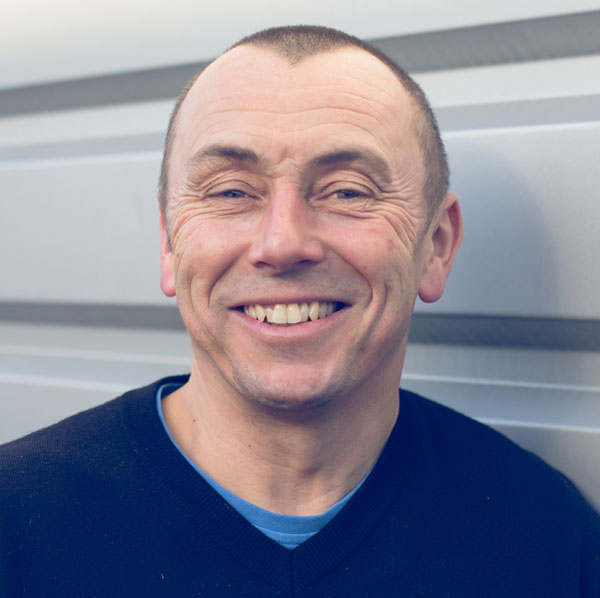
Green says that correct breathing can prevent injury
What does a corrective exercise specialist do? Why is this important? Corrective exercise specialists use current literature and training methodologies to improve how people move and to educate individuals on why functional training is paramount to moving freely and living a life that’s free of pain.
On the whole, we tend to work with clients whose main interests are staying functional as they age, and improving their sporting performance and ability to recover from injury, rather than those with appearance-focused goals.
What are the most common issues you see among clients? The types of people I see most often have either been injured in a gym setting or have chronic injuries. The main issues I come across are poor breathing mechanics and poor movement quality – both of which can greatly affect how people perform daily tasks and can negatively affect how they train in the gym.
Injuries in the gym are very common because most people are unaware of their functional threshold – how hard they can work before they start to notice compensatory body movements that indicate that the exercise has become too much. For example, bicep curls can start off ok, but after a few reps the body starts to swing or the exerciser starts to shrug his or her shoulders. These are signs that it’s no longer just the biceps that are being used to lift the weight – the shoulders and other areas are now getting involved as well. Continually allowing the body to perform in this way ultimately creates issues elsewhere in the body.
Can gyms do more to help clients properly prepare their bodies for exercise? Yes. In my opinion, education is the key. Gym management teams must continuously encourage staff to stay up to date with their training.
Client-centred approaches, as well as making trainers and gym instructors aware of fundamentals of human movement, can help many gym-goers stay injury free. Trainers should really focus on technique during activity and continually correct their clients as needed, to prevent future problems. Doing this will ultimately improve member retention and personal training revenue, as gym members will train more consistently if they’re injury-free.
How much of a difference can effective breathing make to athletic performance? Studies have shown that most of us breathe incorrectly by breathing into our chests and neck region. In reality, we should use our diaphragms fully and pull our breath into our stomachs.
Breathing correctly ensures that more oxygen is released into the muscles and makes the nervous system less sensitive, which, in turn, encourages relaxation throughout the body.
Performance would be improved across the board just by changing to diaphragmatic breathing. By using the diaphragm as a stabilising muscle during exercise, core strength increases, allowing gym-goers to lift heavier, train harder and perform better overall.
Hear more at Elevate
Hannah, Ariana and Stuart will be joining an exciting line-up of speakers at this year’s Elevate conference. Register for free at: www.elevatearena.com
Active Blackpool is deploying Cornerstone Connect, a new digital interface allowing
disparate information from multiple systems to be aggregated into one dataset, to support
its focus on reducing health inequalities and improving healthy life expectancy. [more...]
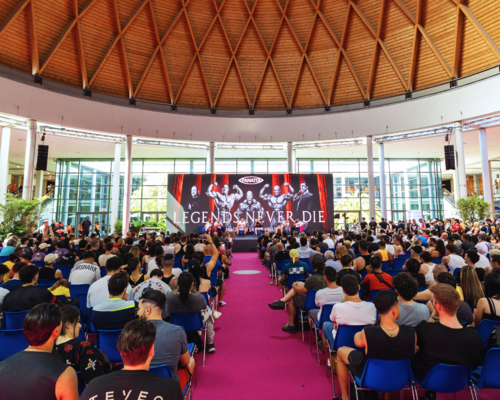
Panatta brought together four of the most influential figures in bodybuilding history on the
stage of RiminiWellness 2026: Phil Heath, Lee Haney, Ronnie Coleman and Hany Rambod. [more...]
+ More featured suppliers
COMPANY PROFILES
Everyone Active
Everyone Active operates leisure centres in partnership with local councils across the UK. Today, Ev [more...]
Safe Space Lockers
We provide a full turn-key solution for clients from design and consultation, through to bespoke man [more...]
Green says that correct breathing can prevent injury
What does a corrective exercise specialist do? Why is this important? Corrective exercise specialists use current literature and training methodologies to improve how people move and to educate individuals on why functional training is paramount to moving freely and living a life that’s free of pain.
On the whole, we tend to work with clients whose main interests are staying functional as they age, and improving their sporting performance and ability to recover from injury, rather than those with appearance-focused goals.
What are the most common issues you see among clients? The types of people I see most often have either been injured in a gym setting or have chronic injuries. The main issues I come across are poor breathing mechanics and poor movement quality – both of which can greatly affect how people perform daily tasks and can negatively affect how they train in the gym.
Injuries in the gym are very common because most people are unaware of their functional threshold – how hard they can work before they start to notice compensatory body movements that indicate that the exercise has become too much. For example, bicep curls can start off ok, but after a few reps the body starts to swing or the exerciser starts to shrug his or her shoulders. These are signs that it’s no longer just the biceps that are being used to lift the weight – the shoulders and other areas are now getting involved as well. Continually allowing the body to perform in this way ultimately creates issues elsewhere in the body.
Can gyms do more to help clients properly prepare their bodies for exercise? Yes. In my opinion, education is the key. Gym management teams must continuously encourage staff to stay up to date with their training.
Client-centred approaches, as well as making trainers and gym instructors aware of fundamentals of human movement, can help many gym-goers stay injury free. Trainers should really focus on technique during activity and continually correct their clients as needed, to prevent future problems. Doing this will ultimately improve member retention and personal training revenue, as gym members will train more consistently if they’re injury-free.
How much of a difference can effective breathing make to athletic performance? Studies have shown that most of us breathe incorrectly by breathing into our chests and neck region. In reality, we should use our diaphragms fully and pull our breath into our stomachs.
Breathing correctly ensures that more oxygen is released into the muscles and makes the nervous system less sensitive, which, in turn, encourages relaxation throughout the body.
Performance would be improved across the board just by changing to diaphragmatic breathing. By using the diaphragm as a stabilising muscle during exercise, core strength increases, allowing gym-goers to lift heavier, train harder and perform better overall.
Hear more at Elevate
Hannah, Ariana and Stuart will be joining an exciting line-up of speakers at this year’s Elevate conference. Register for free at: www.elevatearena.com
According to research which tracked more than 147,000 people for 30 years, 90-120 minutes
of strength training a week may deliver some of the biggest long-term health rewards.
The UK's four Chief Medical Officers have published a refreshed edition of Physical activity
guidelines: UK Chief Medical Officers' report, updating the evidence that underpins the nation's
physical activity recommendations and placing greater emphasis on strength, balance, reducing
sedentary behaviour and, for the first time, supporting people taking weight loss medications.
Places Leisure has exchanged contracts to build and operate a flagship £60m water and leisure
destination on behalf of Basingstoke and Deane Borough Council.
The Republic of Ireland will become the latest market in PureGym’s expanding international
portfolio, with the first launch planned for Dublin in 2027.
Anytime Fitness opened more than one club a day in 2025 and is on track to maintain this rate
of growth this year, as parent company Purpose Brands targets further international expansion.
The £33.9 million Leighton Leisure and Community Centre has opened in Leighton Buzzard, UK,
creating a next-generation public leisure, health and wellbeing hub for the local community.
Walnuts Leisure Centre in Orpington, in the London Borough of Bromley, has reopened following
a £17m transformation designed to secure the long-term future of the public leisure asset and
reposition it as a community wellbeing hub.
The Gym Group, has announced that it's sustained positive trading momentum has continued
through the first half of 2026 and the company remains confident about the outlook.
Active Blackpool is deploying Cornerstone Connect, a new digital interface allowing
disparate information from multiple systems to be aggregated into one dataset, to support
its focus on reducing health inequalities and improving healthy life expectancy. [more...]
Panatta brought together four of the most influential figures in bodybuilding history on the
stage of RiminiWellness 2026: Phil Heath, Lee Haney, Ronnie Coleman and Hany Rambod. [more...]
+ More featured suppliers
COMPANY PROFILES
Everyone Active Everyone Active operates leisure centres in partnership with local councils across the UK. Today, Ev [more...]