Get HCM digital magazine and ezines FREE
Sign up here ▸
Jobs   News   Features   Products   Magazine      Advertise  
NEWS
'Eurocentric' science centres hindering education in STEM for black youths
POSTED 15 Jun 2016 . BY Tom Anstey
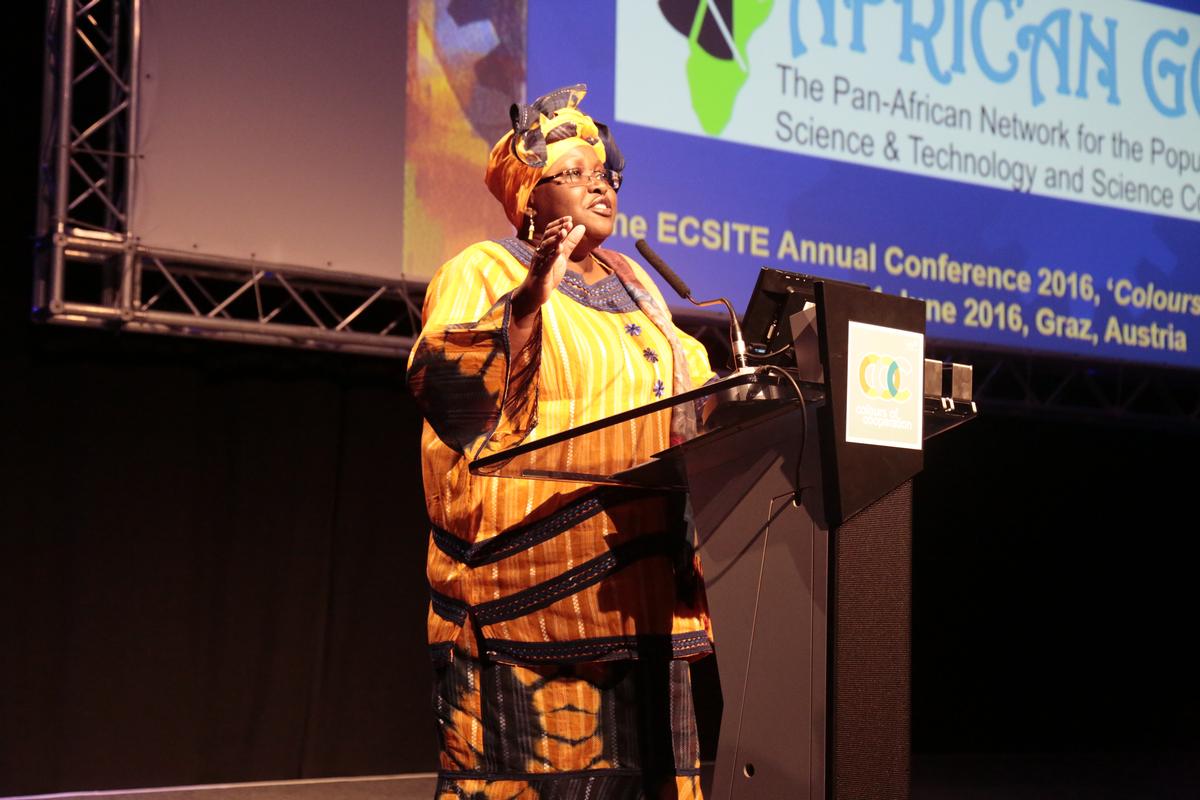
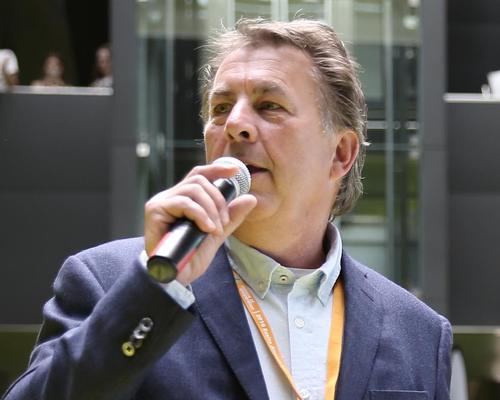
Rasekoala addressed 1,000 Ecsite members at the annual conference taking place this year in Graz, Austria Credit: Ecsite
One of Africa’s leading scientists has called for science centres across the world to address a Eurocentric model excluding many young black people from pursuing interest and potential careers in STEM subjects.

Delivering the keynote address at last week’s Ecsite conference in Graz, Austria, Dr Elizabeth Rasekoala, president of the Pan-African Network for the Popularisation of Science and Technology (Gong), recounted her first Ecsite in 1995 when just a handful of people attended the event.

“We barely filled a room in King’s College in London back then,” she said to the 1,000+ delegates in attendance. “Those were the days full of excitement. I remember that conference and I remember asking myself two questions. First I asked how long will it take before we have more women in the room and it is good to see that that has been question answered well. The second question was how long would it be before I am no longer the only black person in the room? That has still not been answered, that’s on your major to do list.”

Rasekoala went on to share global science centre and science museum visitor statistics, with one in every 1,900 people in Africa visiting such an institution compared to the UK where the figure was significantly lower at one in four. According to Rasekoala, the European education system tells a similar story.

“We see European STEM education welcoming graduates from developing countries, yet they cannot deliver the same progression for local students from those same backgrounds,” she said. “I found myself as a postgraduate African student dealing with a perverse dichotomy of a university department that supported me and my aspirations and yet at a children’s primary school, they are deemed to be underachieving black youths who can only excel in sports and music. You are living with this sort of schizophrenia in society. How do we explain that?”

Rasekoala said that science centres in Europe had failed to deliver a socially-inclusive model, something that was demonstrated by the upcoming UK/EU referendum.

“It’s not surprising that when you look at the UK/EU referendum debate that many ethnic minorities are backing the leave camp because they see the European narrative as toxic and disingenuous and they do not see how it’s going to improve their integration and advancement in the UK, they want out and I find that really sad because I am a great believer in the European project but we must have the courage to take it as far as it can go and not sit in the comfort zone. That’s the globalisation challenge.

“The future wellbeing of science centres and museums will greatly depend on the extent to which today’s institutions are willing to respond to key dynamics which are influencing people’s key decisions, including how and where they learn, whether they wish to learn science and technology or not, and how and when they enjoy their leisure time.”

Rasekoala added that the Eurocentric approach to science has had a trickledown effect in Africa, creating a vicious cycle of inequality that is being replicated worldwide.

“Within the African context we can see the global footprint of these inequalities,” she said. “Somewhat ironically, the contamination of this Eurocentric approach means that in Africa we have African scientists marginalised and so aware of being marginalised that when they go back home they perpetrate the same inequalities. It’s like children who’ve been abused who grow up and become abusers. That’s what we are creating, we are exporting Eurocentrism.

“The STEM and science sectors in Africa are no different. We still have the same inequalities of race, ethnicity, social class and gender, with a huge divide between where Africans are, where the ordinary people are and where the scientists are. This challenge is global and we must work together to address and create a global platform of transformation. This is an equal opportunity failure, we have all failed, period.

“Even in South Africa where we have the most science centres on the continent and where 90 per cent of the population are black Africans, you’ll be shocked to know that less than 5 per cent of visitors to science centres and science museums are black Africans – and that’s in 2016.”

Concluding her keynote, Rasekoala said the Ecsite and the network of global science centres should urgently address the issue, reshaping science to educate with a truly global approach that encourages all to take up science and STEM subjects.

“Science as it is taught, researched, practised and disseminated today is riddled with Eurocentric cultural perspectives and yet it was not always like this. We forget about the roots of science,” she said.

“I want to leave you with my humble recommendation that we move away from projects and look at the Ecsite leadership, the field adopting a transformational and dynamic, diversity, equity and inclusion framework to be endorsed by all science centres and museums as a good practice template for their operations and to be utilised as a practical toolkit for achieving social inclusion. What are the parameters that should be included? It’s up to you to work out but to me these are the key points. This is place where the dead bodies are buried and this is where we’re going to have to dig them up if we want to make change.”
RELATED STORIES
  Ecsite president urges members to fight fear with inclusion


Ecsite president Michiel Buchel has told the science network’s members to take a stand against fear and show all of Europe that inclusion can be far stronger a force than “looking for enemies that are often not really there.”
  Ecsite 2016: Use space to encourage future careers in STEM


Leading Danish scientist Tina Ibsen has called for planetariums and science museums to use a re-emerging popularity in space to draw young people into STEM careers.
  Ecsite 2016: UNESCO backs first world science centre day, coming in November


Ecsite and UNESCO are teaming up to introduce the first ever International Science Centre and Science Museum Day (ISCSMD), coming later this year.
  Austrian President Heinz Fischer opens Ecsite 2016


Austria’s President Heinz Fischer has officially launched this year’s Ecsite conference in Graz, addressing delegates ahead of three days of exploratory talks and session on science centres.
MORE NEWS
PureGym appoints Alex Wood as CEO as Clive Chesser steps down
PureGym Group has announced that group chief financial officer, Alex Wood, is taking over the role of CEO, as Clive Chesser steps down.
Fitness Worx introduces blood testing
Independent operator, Fitness Worx Gyms, is introducing private blood testing as a service to members.
Global industry organisations join forces to call for physical activity to be embedded into GLP-1 care pathways
International industry lobbying associations are calling for physical activity and strength training to be deeply integrated with GLP-1 treatment.
Les Mills calls on the industry to support UNICEF
Global group exercise specialist, Les Mills, is inviting operators to sign up to its Workout for the World event on 20 June, in support of UNICEF.
+ More news   
LATEST JOBS
GP Exercise Referral Instructor
Everyone Active
Salary: £33,000pa + benefits
Job location: Harrow, Middlesex , United Kingdom
Self Employed Personal Trainer
Everyone Active
Salary: Competitive
Job location: Enderby
+ More jobs  

FEATURED SUPPLIERS

Cornerstone Connect helps Active Blackpool tackle health inequalities
Active Blackpool is deploying Cornerstone Connect, a new digital interface allowing disparate information from multiple systems to be aggregated into one dataset, to support its focus on reducing health inequalities and improving healthy life expectancy. [more...]

CoverMe extends matching service to personal training, rewriting how members and personal trainers connect
CoverMe, the global leader in fitness workforce management, today launches CoverMe PT, an on-demand personal training platform that connects the right personal trainer to the right client in under 10 seconds. [more...]
+ More featured suppliers  
COMPANY PROFILES
PSLT Ltd

PSLT Fitness Solutions manufacture, remanufacture and buy back commercial gym equipment. [more...]
IndigoFitness

At IndigoFitness, we create intelligent training spaces that elevate fitness facilities across indus [more...]
+ More profiles  
CATALOGUE GALLERY
 
+ More catalogues  

DIRECTORY
+ More directory  
DIARY


15-18 Jun 2026

HLTH Europe

RAI Convention Centre, Amsterdam, Netherlands
17-18 Jun 2026

Elevate London

Excel London, London, United Kingdom
+ More diary  
 
ABOUT LEISURE MEDIA
LEISURE MEDIA MAGAZINES
LEISURE MEDIA HANDBOOKS
LEISURE MEDIA WEBSITES
LEISURE MEDIA PRODUCT SEARCH
 
HCM
LEISURE OPPORTUNITIES
HEALTH CLUB HANDBOOK
PRINT SUBSCRIPTIONS
FREE DIGITAL SUBSCRIPTIONS
ADVERTISE . CONTACT US

Leisure Media
Tel: +44 (0)1462 431385

©Cybertrek 2026
Get HCM digital magazine and ezines FREE
Sign up here ▸
Jobs    News   Products   Magazine
NEWS
'Eurocentric' science centres hindering education in STEM for black youths
POSTED 15 Jun 2016 . BY Tom Anstey
Rasekoala addressed 1,000 Ecsite members at the annual conference taking place this year in Graz, Austria Credit: Ecsite
One of Africa’s leading scientists has called for science centres across the world to address a Eurocentric model excluding many young black people from pursuing interest and potential careers in STEM subjects.

Delivering the keynote address at last week’s Ecsite conference in Graz, Austria, Dr Elizabeth Rasekoala, president of the Pan-African Network for the Popularisation of Science and Technology (Gong), recounted her first Ecsite in 1995 when just a handful of people attended the event.

“We barely filled a room in King’s College in London back then,” she said to the 1,000+ delegates in attendance. “Those were the days full of excitement. I remember that conference and I remember asking myself two questions. First I asked how long will it take before we have more women in the room and it is good to see that that has been question answered well. The second question was how long would it be before I am no longer the only black person in the room? That has still not been answered, that’s on your major to do list.”

Rasekoala went on to share global science centre and science museum visitor statistics, with one in every 1,900 people in Africa visiting such an institution compared to the UK where the figure was significantly lower at one in four. According to Rasekoala, the European education system tells a similar story.

“We see European STEM education welcoming graduates from developing countries, yet they cannot deliver the same progression for local students from those same backgrounds,” she said. “I found myself as a postgraduate African student dealing with a perverse dichotomy of a university department that supported me and my aspirations and yet at a children’s primary school, they are deemed to be underachieving black youths who can only excel in sports and music. You are living with this sort of schizophrenia in society. How do we explain that?”

Rasekoala said that science centres in Europe had failed to deliver a socially-inclusive model, something that was demonstrated by the upcoming UK/EU referendum.

“It’s not surprising that when you look at the UK/EU referendum debate that many ethnic minorities are backing the leave camp because they see the European narrative as toxic and disingenuous and they do not see how it’s going to improve their integration and advancement in the UK, they want out and I find that really sad because I am a great believer in the European project but we must have the courage to take it as far as it can go and not sit in the comfort zone. That’s the globalisation challenge.

“The future wellbeing of science centres and museums will greatly depend on the extent to which today’s institutions are willing to respond to key dynamics which are influencing people’s key decisions, including how and where they learn, whether they wish to learn science and technology or not, and how and when they enjoy their leisure time.”

Rasekoala added that the Eurocentric approach to science has had a trickledown effect in Africa, creating a vicious cycle of inequality that is being replicated worldwide.

“Within the African context we can see the global footprint of these inequalities,” she said. “Somewhat ironically, the contamination of this Eurocentric approach means that in Africa we have African scientists marginalised and so aware of being marginalised that when they go back home they perpetrate the same inequalities. It’s like children who’ve been abused who grow up and become abusers. That’s what we are creating, we are exporting Eurocentrism.

“The STEM and science sectors in Africa are no different. We still have the same inequalities of race, ethnicity, social class and gender, with a huge divide between where Africans are, where the ordinary people are and where the scientists are. This challenge is global and we must work together to address and create a global platform of transformation. This is an equal opportunity failure, we have all failed, period.

“Even in South Africa where we have the most science centres on the continent and where 90 per cent of the population are black Africans, you’ll be shocked to know that less than 5 per cent of visitors to science centres and science museums are black Africans – and that’s in 2016.”

Concluding her keynote, Rasekoala said the Ecsite and the network of global science centres should urgently address the issue, reshaping science to educate with a truly global approach that encourages all to take up science and STEM subjects.

“Science as it is taught, researched, practised and disseminated today is riddled with Eurocentric cultural perspectives and yet it was not always like this. We forget about the roots of science,” she said.

“I want to leave you with my humble recommendation that we move away from projects and look at the Ecsite leadership, the field adopting a transformational and dynamic, diversity, equity and inclusion framework to be endorsed by all science centres and museums as a good practice template for their operations and to be utilised as a practical toolkit for achieving social inclusion. What are the parameters that should be included? It’s up to you to work out but to me these are the key points. This is place where the dead bodies are buried and this is where we’re going to have to dig them up if we want to make change.”
RELATED STORIES
Ecsite president urges members to fight fear with inclusion


Ecsite president Michiel Buchel has told the science network’s members to take a stand against fear and show all of Europe that inclusion can be far stronger a force than “looking for enemies that are often not really there.”
Ecsite 2016: Use space to encourage future careers in STEM


Leading Danish scientist Tina Ibsen has called for planetariums and science museums to use a re-emerging popularity in space to draw young people into STEM careers.
Ecsite 2016: UNESCO backs first world science centre day, coming in November


Ecsite and UNESCO are teaming up to introduce the first ever International Science Centre and Science Museum Day (ISCSMD), coming later this year.
Austrian President Heinz Fischer opens Ecsite 2016


Austria’s President Heinz Fischer has officially launched this year’s Ecsite conference in Graz, addressing delegates ahead of three days of exploratory talks and session on science centres.
MORE NEWS
PureGym appoints Alex Wood as CEO as Clive Chesser steps down
PureGym Group has announced that group chief financial officer, Alex Wood, is taking over the role of CEO, as Clive Chesser steps down.
Fitness Worx introduces blood testing
Independent operator, Fitness Worx Gyms, is introducing private blood testing as a service to members.
Global industry organisations join forces to call for physical activity to be embedded into GLP-1 care pathways
International industry lobbying associations are calling for physical activity and strength training to be deeply integrated with GLP-1 treatment.
Les Mills calls on the industry to support UNICEF
Global group exercise specialist, Les Mills, is inviting operators to sign up to its Workout for the World event on 20 June, in support of UNICEF.
HUM2N launches longevity clinic at Six Senses London
Global luxury hospitality brand, Six Senses, has partnered with longevity healthcare provider, HUM2N, to launch a clinic at Six Senses London, at The Whiteley.
KX Chelsea invests £15 million to upgrade its wellness offering
Premium London health club, KX Chelsea, will imminently unveil its most significant redevelopment since its launch in 2002 to create an integrated wellness model combining training, recovery and relaxation.
+ More news   
 
FEATURED SUPPLIERS

Cornerstone Connect helps Active Blackpool tackle health inequalities
Active Blackpool is deploying Cornerstone Connect, a new digital interface allowing disparate information from multiple systems to be aggregated into one dataset, to support its focus on reducing health inequalities and improving healthy life expectancy. [more...]

CoverMe extends matching service to personal training, rewriting how members and personal trainers connect
CoverMe, the global leader in fitness workforce management, today launches CoverMe PT, an on-demand personal training platform that connects the right personal trainer to the right client in under 10 seconds. [more...]
+ More featured suppliers  
COMPANY PROFILES
PSLT Ltd

PSLT Fitness Solutions manufacture, remanufacture and buy back commercial gym equipment. [more...]
+ More profiles  
CATALOGUE GALLERY
+ More catalogues  

DIRECTORY
+ More directory  
DIARY


15-18 Jun 2026

HLTH Europe

RAI Convention Centre, Amsterdam, Netherlands
17-18 Jun 2026

Elevate London

Excel London, London, United Kingdom
+ More diary  


ADVERTISE . CONTACT US

Leisure Media
Tel: +44 (0)1462 431385

©Cybertrek 2026

ABOUT LEISURE MEDIA
LEISURE MEDIA MAGAZINES
LEISURE MEDIA HANDBOOKS
LEISURE MEDIA WEBSITES
LEISURE MEDIA PRODUCT SEARCH
PRINT SUBSCRIPTIONS
FREE DIGITAL SUBSCRIPTIONS