A new study by researchers at the British Psychological Society suggests that personality type can impact the effectiveness of a person’s exercise regime as it influences their preferred workout style, frequency and location
Extroverts prefer to exercise with others / photo: shutterstock.com
The fitness industry has long been focused on finding new ways to attract more people to undertake regular exercise. Yet despite the development of new and exciting initiatives, classes and equipment, many operators struggle to retain their gym members.
New research presented last month at the British Psychological Society’s annual conference of the Division of Occupational Psychology in Stratford-upon-Avon now suggests that personality may play a big role in the way people like to exercise – indicating that this may be a reason why some people do not enjoy going to the gym, regardless of the kit or classes on offer.
THE PERSONALITY LINK In the study, 794 individuals completed an online survey designed to investigate the relationship between personality type, exercise frequency and choice of activity.
Personality was defined according to the Myers Briggs Type Indicator (MBTI), which covers four areas of personality: introversion versus extraversion; sensing versus intuition; thinking versus feeling; and judging versus perceiving.
The results showed that two aspects of personality – sensing versus intuition and thinking versus feeling – significantly influenced how frequently a person exercises. Specifically, intuitive personalities were more frequent exercisers than people with sensing personalities, and thinkers exercised more frequently than feelers.
A MATTER OF PREFERENCE Exercise preferences were also found to be in line with the expectations of the researchers, Richard Thompson and John Hackston. For example, the research showed that extroverts displayed a greater preference for exercising at the gym and with other other people, whereas introverts had a greater preference for exercising at home when compared with extroverts.
Hackston said: “The most important piece of advice to come out of this research is that there is not one type of exercise that is suited to everyone.
“There can be pressure to follow the crowd to the gym or sign up to the latest exercise fad, but our research suggests it would be more effective for them to match their personality type to an exercise plan that is more likely to last the test of time.”
Thompson, C and Hackston, J. Personality, exercise, job satisfaction and turnover intention: Are they related. British Psychological Society (BPS), 11 Jan 2018
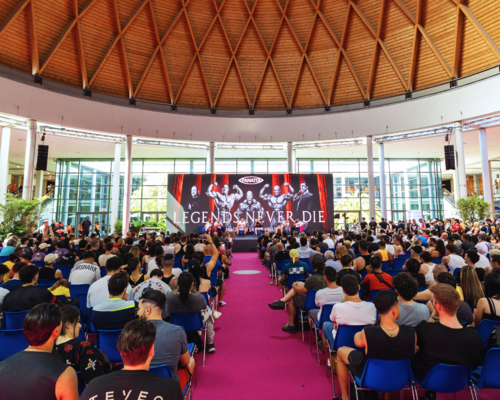
Panatta brought together four of the most influential figures in bodybuilding history on the
stage of RiminiWellness 2026: Phil Heath, Lee Haney, Ronnie Coleman and Hany Rambod. [more...]
Active Blackpool is deploying Cornerstone Connect, a new digital interface allowing
disparate information from multiple systems to be aggregated into one dataset, to support
its focus on reducing health inequalities and improving healthy life expectancy. [more...]
A new study by researchers at the British Psychological Society suggests that personality type can impact the effectiveness of a person’s exercise regime as it influences their preferred workout style, frequency and location
Extroverts prefer to exercise with others / photo: shutterstock.com
The fitness industry has long been focused on finding new ways to attract more people to undertake regular exercise. Yet despite the development of new and exciting initiatives, classes and equipment, many operators struggle to retain their gym members.
New research presented last month at the British Psychological Society’s annual conference of the Division of Occupational Psychology in Stratford-upon-Avon now suggests that personality may play a big role in the way people like to exercise – indicating that this may be a reason why some people do not enjoy going to the gym, regardless of the kit or classes on offer.
THE PERSONALITY LINK In the study, 794 individuals completed an online survey designed to investigate the relationship between personality type, exercise frequency and choice of activity.
Personality was defined according to the Myers Briggs Type Indicator (MBTI), which covers four areas of personality: introversion versus extraversion; sensing versus intuition; thinking versus feeling; and judging versus perceiving.
The results showed that two aspects of personality – sensing versus intuition and thinking versus feeling – significantly influenced how frequently a person exercises. Specifically, intuitive personalities were more frequent exercisers than people with sensing personalities, and thinkers exercised more frequently than feelers.
A MATTER OF PREFERENCE Exercise preferences were also found to be in line with the expectations of the researchers, Richard Thompson and John Hackston. For example, the research showed that extroverts displayed a greater preference for exercising at the gym and with other other people, whereas introverts had a greater preference for exercising at home when compared with extroverts.
Hackston said: “The most important piece of advice to come out of this research is that there is not one type of exercise that is suited to everyone.
“There can be pressure to follow the crowd to the gym or sign up to the latest exercise fad, but our research suggests it would be more effective for them to match their personality type to an exercise plan that is more likely to last the test of time.”
Thompson, C and Hackston, J. Personality, exercise, job satisfaction and turnover intention: Are they related. British Psychological Society (BPS), 11 Jan 2018
According to research which tracked more than 147,000 people for 30 years, 90-120 minutes
of strength training a week may deliver some of the biggest long-term health rewards.
The UK's four Chief Medical Officers have published a refreshed edition of Physical activity
guidelines: UK Chief Medical Officers' report, updating the evidence that underpins the nation's
physical activity recommendations and placing greater emphasis on strength, balance, reducing
sedentary behaviour and, for the first time, supporting people taking weight loss medications.
Places Leisure has exchanged contracts to build and operate a flagship £60m water and leisure
destination on behalf of Basingstoke and Deane Borough Council.
The Republic of Ireland will become the latest market in PureGym’s expanding international
portfolio, with the first launch planned for Dublin in 2027.
Anytime Fitness opened more than one club a day in 2025 and is on track to maintain this rate
of growth this year, as parent company Purpose Brands targets further international expansion.
The £33.9 million Leighton Leisure and Community Centre has opened in Leighton Buzzard, UK,
creating a next-generation public leisure, health and wellbeing hub for the local community.
Walnuts Leisure Centre in Orpington, in the London Borough of Bromley, has reopened following
a £17m transformation designed to secure the long-term future of the public leisure asset and
reposition it as a community wellbeing hub.
The Gym Group, has announced that it's sustained positive trading momentum has continued
through the first half of 2026 and the company remains confident about the outlook.
Panatta brought together four of the most influential figures in bodybuilding history on the
stage of RiminiWellness 2026: Phil Heath, Lee Haney, Ronnie Coleman and Hany Rambod. [more...]
Active Blackpool is deploying Cornerstone Connect, a new digital interface allowing
disparate information from multiple systems to be aggregated into one dataset, to support
its focus on reducing health inequalities and improving healthy life expectancy. [more...]