According to British Swimming, a strength programme is one of the key variables in the performance of elite swimmers. The marginal gains brought about through strength training can convert a strong performance into a world record or podium finish. Kath Hudson looks at the programmes of top swimmers
By Kath Hudson | Published in Sports Management Nov Dec 2017 issue 134
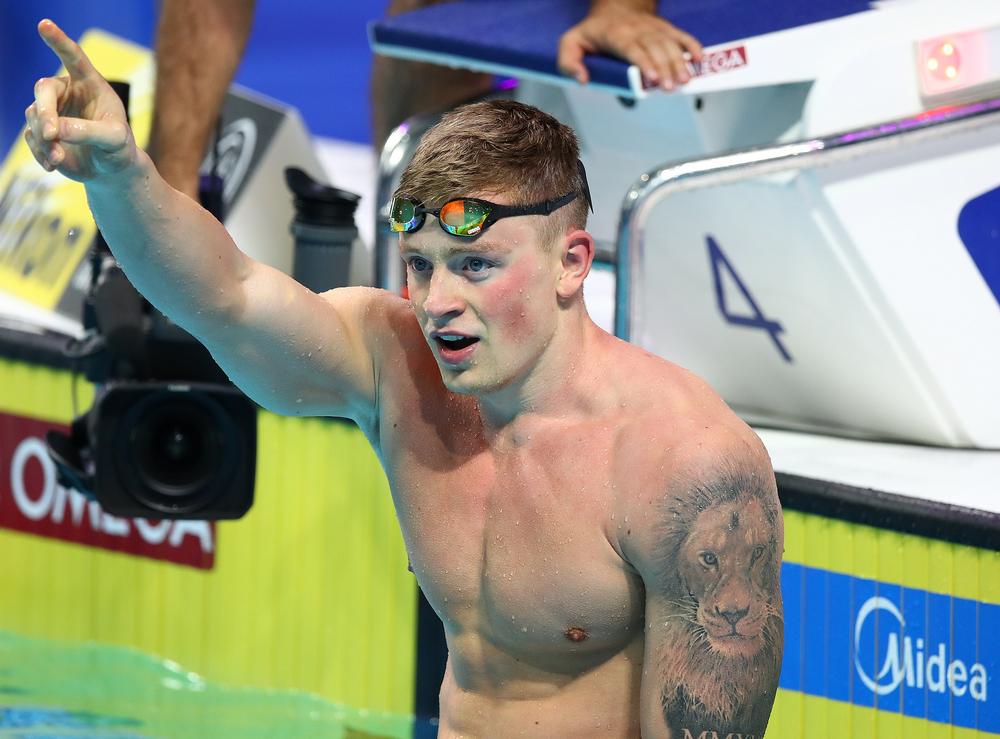
Adam Peaty’s strength programme helped him win gold at Rio 2016
You may be familiar with Adam Peaty’s ‘Don’t try these until you have guns like me’ videos, which show his punishing strength programme, including push ups with a teammate on his back and the #peatypushup, where he propels his whole body into the air and claps. This incredible strength was integral to him breaking world records and winning gold at the Rio Olympics in 2016.
Top coaches agree that strength training is absolutely vital for elite swimmers aiming to be in peak condition, but swimmers at all levels should be doing some form of strength exercise. Strength exercises improve the swimmer’s speed by increasing the propulsive forces and reducing the resistance forces in the water.
Mark Rose, head of coaching and strategic aquatics lead at Manchester City Council’s Swim England Beacon Programme, incorporates an element of strength training into every swim session he does with his elite athletes, as well as two weights sessions a week and a yoga class.
“It became apparent in the 90s that every international athlete was doing all they could to be a fast swimmer and would struggle to spend any more time in the water in order to get faster,” says Rose. “So elite coaches adopted strength training and it became mainstream in the 2000s. You can’t physically develop on the international stage without a strength and conditioning base.”
Rose says there is a finite amount of force that a swimmer can generate through swimming alone, and then they need to do something different to adapt the body physically and build the necessary neurological pathways for improvements. He says that even participation swimmers should spend 10 per cent of their training time doing strength-based training to improve their performance and reduce their injury risk.
Improved performance Many swimmers attribute improvements in their performance to strength training. Cassie Patten, who won a bronze medal in the 10km open water swimming at the 2008 Beijing Olympics, as well as reaching the final in the 800m, says her big gains came when she started putting more emphasis on sport-specific strength and conditioning, targeting the muscles used in swimming: lats, pecs, triceps, biceps and trapezius.
“If you do the same thing all the time you get good at it, but in order to get the marginal gains you have to find different ways to stress the body – you can do this with a strength workout,” says Patten. “Strength training should account for about one-third of the training programme for distance swimmers, like myself, but it can be more for sprinters and middle distance swimmers, who need to focus on building their explosive power.”
Patten says she used to do a two-hour morning swim session, followed by one hour of strength training, as well as lots of prehab strength building, such as Pilates and using resistance bands to do stabilising exercises.
Better balance When elite swimmers are in the water for up to 90km a week, being able to swap out time in the pool for land-based training has many benefits, such as alleviating boredom. And, as Rose points out, it means athletes can work out in a group and feel a sense of camaraderie.
Swimming is a very technical sport and training on land can also help to consolidate this. “We use lots of bodyweight training, and by learning to control the body better a swimmer’s technique will improve,” says Rose.
The core is a key area for swimmers, as it helps them to maintain a streamlined, balanced position in the water, as the base for the arms and legs to work as levers.
“The stronger your core is, the better you can perform,” says Patten. “In other sports, you have some sort of anchor, such as a foot on the ground, but in swimming you don’t have one, so you’re relying on your core as an anchor. If you don’t have a strong core to hold the position and allow the body to rotate, you won’t be able to reach your potential as a swimmer.”
Reducing injury “If the core isn’t strong enough it can lead to lower back issues,” says former international swimmer Josh Walsh, who is now lead strength and conditioning coach at the University of Stirling.
“Swimmers are also prone to repetitive strain injuries, in the shoulder and rotator cuff, so they need to work those areas, as well as the upper back, to prevent injury,” he says.
Walsh says the strength programme can be used to even out imbalances that are caused by the time spent doing the same movements continually. “When you swim a lot you develop movement patterns and can overdevelop one area of the body. We need to offset this on land, to ensure that it doesn’t lead to injuries,” he says.
Rose agrees that strength training seems to significantly reduce the injury risk: “We have a very low injury rate for swimmers who have been in our programme for more than one year. We look for weaknesses in their physiology and strengthen them. For example, if they have instability in their glutes, which is creating pain in their lower back, we give them extra glute exercises.”
Starting young “The younger that people are introduced to strength training the better,” says Walsh.
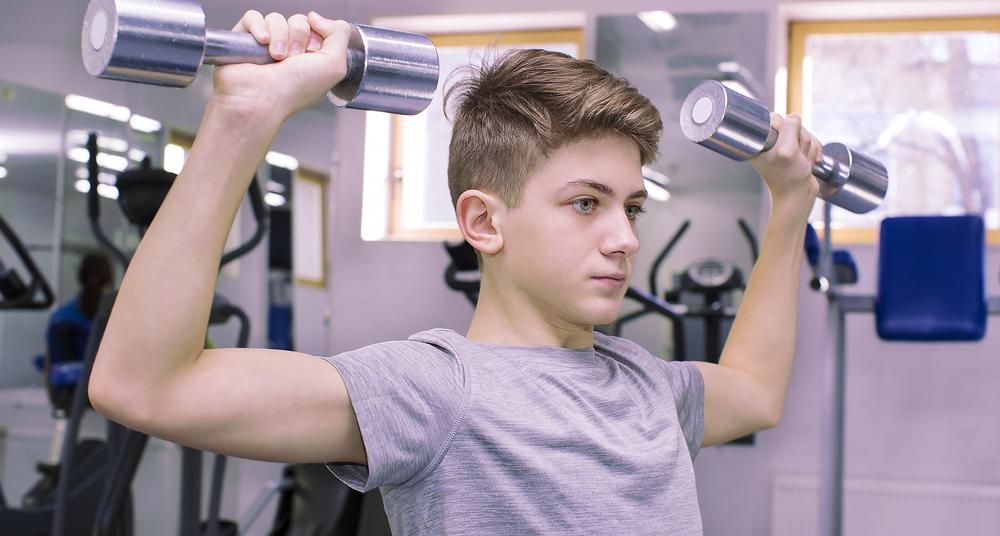
“For early teen swimmers, it’s good to do resistance band work to strengthen the shoulders and rotator cuff and to counteract the hunched position,” he says. “Light weights can be used to drill in movement patterns at an early age.”
It can be difficult to determine how significant a strength training programme is for a swimmer, but Rose claims that it brought the British relay team up to fourth at the London Olympics. “One swimmer dropped two seconds off her 100m time in a year, which is a massive amount at that level. Her improvements alone took the team from being ranked 12th in the world to coming fourth at the Olympics, and the only difference was her strength and conditioning programme.”
Favourite exercises
Mark Rose
MARK ROSE – “My favourite piece of kit is the TRX. We like to use our imagination and adapt exercises that are good for swimming. For example, a sit up with the neck and arms extended into a streamlined position. Everything is checked with a physio first.”
Favourite exercises
Cassie Patten
CASSIE PATTEN – “I used to do lots of exercises with the medicine ball: slam downs and twists. As well as push ups, pull ups, circuits, skipping, body weight exercises, planks and plank twists. I love a Russian twist – working the abs until you feel a bit sick!”
Favourite exercises
Josh Walsh
JOSH WALSH – “You need a lot of upper body strength for swimming, so I rate bodyweight pull ups, as well as barbell lifting and Olympic lifts. Squatting and overhead squatting are great for keeping a neutral upper body in the water.”
Elevate is set to celebrate its 10th anniversary in style this June, with organisers
confirming the event’s largest-ever drinks reception as registrations continue to run more
than 10% ahead of last year. [more...]
Celebrating its milestone 5th anniversary, W3Fit EMEA returns in 2026 with an unmissable
gathering of the Health & Fitness industry’s most influential leaders. [more...]
+ More featured suppliers
COMPANY PROFILES
Alliance Leisure
Alliance Leisure Services was specifically
established to respond to the changing
development need [more...]
According to British Swimming, a strength programme is one of the key variables in the performance of elite swimmers. The marginal gains brought about through strength training can convert a strong performance into a world record or podium finish. Kath Hudson looks at the programmes of top swimmers
By Kath Hudson | Published in Sports Management Nov Dec 2017 issue 134
Adam Peaty’s strength programme helped him win gold at Rio 2016
You may be familiar with Adam Peaty’s ‘Don’t try these until you have guns like me’ videos, which show his punishing strength programme, including push ups with a teammate on his back and the #peatypushup, where he propels his whole body into the air and claps. This incredible strength was integral to him breaking world records and winning gold at the Rio Olympics in 2016.
Top coaches agree that strength training is absolutely vital for elite swimmers aiming to be in peak condition, but swimmers at all levels should be doing some form of strength exercise. Strength exercises improve the swimmer’s speed by increasing the propulsive forces and reducing the resistance forces in the water.
Mark Rose, head of coaching and strategic aquatics lead at Manchester City Council’s Swim England Beacon Programme, incorporates an element of strength training into every swim session he does with his elite athletes, as well as two weights sessions a week and a yoga class.
“It became apparent in the 90s that every international athlete was doing all they could to be a fast swimmer and would struggle to spend any more time in the water in order to get faster,” says Rose. “So elite coaches adopted strength training and it became mainstream in the 2000s. You can’t physically develop on the international stage without a strength and conditioning base.”
Rose says there is a finite amount of force that a swimmer can generate through swimming alone, and then they need to do something different to adapt the body physically and build the necessary neurological pathways for improvements. He says that even participation swimmers should spend 10 per cent of their training time doing strength-based training to improve their performance and reduce their injury risk.
Improved performance Many swimmers attribute improvements in their performance to strength training. Cassie Patten, who won a bronze medal in the 10km open water swimming at the 2008 Beijing Olympics, as well as reaching the final in the 800m, says her big gains came when she started putting more emphasis on sport-specific strength and conditioning, targeting the muscles used in swimming: lats, pecs, triceps, biceps and trapezius.
“If you do the same thing all the time you get good at it, but in order to get the marginal gains you have to find different ways to stress the body – you can do this with a strength workout,” says Patten. “Strength training should account for about one-third of the training programme for distance swimmers, like myself, but it can be more for sprinters and middle distance swimmers, who need to focus on building their explosive power.”
Patten says she used to do a two-hour morning swim session, followed by one hour of strength training, as well as lots of prehab strength building, such as Pilates and using resistance bands to do stabilising exercises.
Better balance When elite swimmers are in the water for up to 90km a week, being able to swap out time in the pool for land-based training has many benefits, such as alleviating boredom. And, as Rose points out, it means athletes can work out in a group and feel a sense of camaraderie.
Swimming is a very technical sport and training on land can also help to consolidate this. “We use lots of bodyweight training, and by learning to control the body better a swimmer’s technique will improve,” says Rose.
The core is a key area for swimmers, as it helps them to maintain a streamlined, balanced position in the water, as the base for the arms and legs to work as levers.
“The stronger your core is, the better you can perform,” says Patten. “In other sports, you have some sort of anchor, such as a foot on the ground, but in swimming you don’t have one, so you’re relying on your core as an anchor. If you don’t have a strong core to hold the position and allow the body to rotate, you won’t be able to reach your potential as a swimmer.”
Reducing injury “If the core isn’t strong enough it can lead to lower back issues,” says former international swimmer Josh Walsh, who is now lead strength and conditioning coach at the University of Stirling.
“Swimmers are also prone to repetitive strain injuries, in the shoulder and rotator cuff, so they need to work those areas, as well as the upper back, to prevent injury,” he says.
Walsh says the strength programme can be used to even out imbalances that are caused by the time spent doing the same movements continually. “When you swim a lot you develop movement patterns and can overdevelop one area of the body. We need to offset this on land, to ensure that it doesn’t lead to injuries,” he says.
Rose agrees that strength training seems to significantly reduce the injury risk: “We have a very low injury rate for swimmers who have been in our programme for more than one year. We look for weaknesses in their physiology and strengthen them. For example, if they have instability in their glutes, which is creating pain in their lower back, we give them extra glute exercises.”
Starting young “The younger that people are introduced to strength training the better,” says Walsh.
“For early teen swimmers, it’s good to do resistance band work to strengthen the shoulders and rotator cuff and to counteract the hunched position,” he says. “Light weights can be used to drill in movement patterns at an early age.”
It can be difficult to determine how significant a strength training programme is for a swimmer, but Rose claims that it brought the British relay team up to fourth at the London Olympics. “One swimmer dropped two seconds off her 100m time in a year, which is a massive amount at that level. Her improvements alone took the team from being ranked 12th in the world to coming fourth at the Olympics, and the only difference was her strength and conditioning programme.”
Favourite exercises
Mark Rose
MARK ROSE – “My favourite piece of kit is the TRX. We like to use our imagination and adapt exercises that are good for swimming. For example, a sit up with the neck and arms extended into a streamlined position. Everything is checked with a physio first.”
Favourite exercises
Cassie Patten
CASSIE PATTEN – “I used to do lots of exercises with the medicine ball: slam downs and twists. As well as push ups, pull ups, circuits, skipping, body weight exercises, planks and plank twists. I love a Russian twist – working the abs until you feel a bit sick!”
Favourite exercises
Josh Walsh
JOSH WALSH – “You need a lot of upper body strength for swimming, so I rate bodyweight pull ups, as well as barbell lifting and Olympic lifts. Squatting and overhead squatting are great for keeping a neutral upper body in the water.”
Global luxury hospitality brand, Six Senses, has partnered with longevity healthcare provider,
HUM2N, to launch a clinic at Six Senses London, at The Whiteley.
Premium London health club, KX Chelsea, will imminently unveil its most significant
redevelopment since its launch in 2002 to create an integrated wellness model combining
training, recovery and relaxation.
Researchers in the US have identified an antibody which could greatly reduce the loss of lean
muscle mass in people who are taking weight-loss medications.
Crunch Fitness has announced the launch of Crunch Reform Pilates – its own reformer concept
designed to bring this fast growing, but rather expensive, modality into the mainstream.
The 20th State of the Industry Report reveals a resilient, expanding and competitive
sector, the
importance of differentiation and the ongoing challenge of tackling inequalities.
Nuffield Health has told HCM that it takes its responsibilities towards its colleagues seriously
and is committed to meeting all legal obligations after news of a tribunal has made national
headlines.
Technogym has announced the launch of the Run X World Treadmill Championship, the first
world championship for running on connected treadmills over five kilometres.
Elevate is set to celebrate its 10th anniversary in style this June, with organisers
confirming the event’s largest-ever drinks reception as registrations continue to run more
than 10% ahead of last year. [more...]
Celebrating its milestone 5th anniversary, W3Fit EMEA returns in 2026 with an unmissable
gathering of the Health & Fitness industry’s most influential leaders. [more...]
+ More featured suppliers
COMPANY PROFILES
Alliance Leisure Alliance Leisure Services was specifically
established to respond to the changing
development need [more...]