A new study has shown that combining yoga with aerobic exercise is twice as effective at reducing heart disease risk factors in patients than either done alone
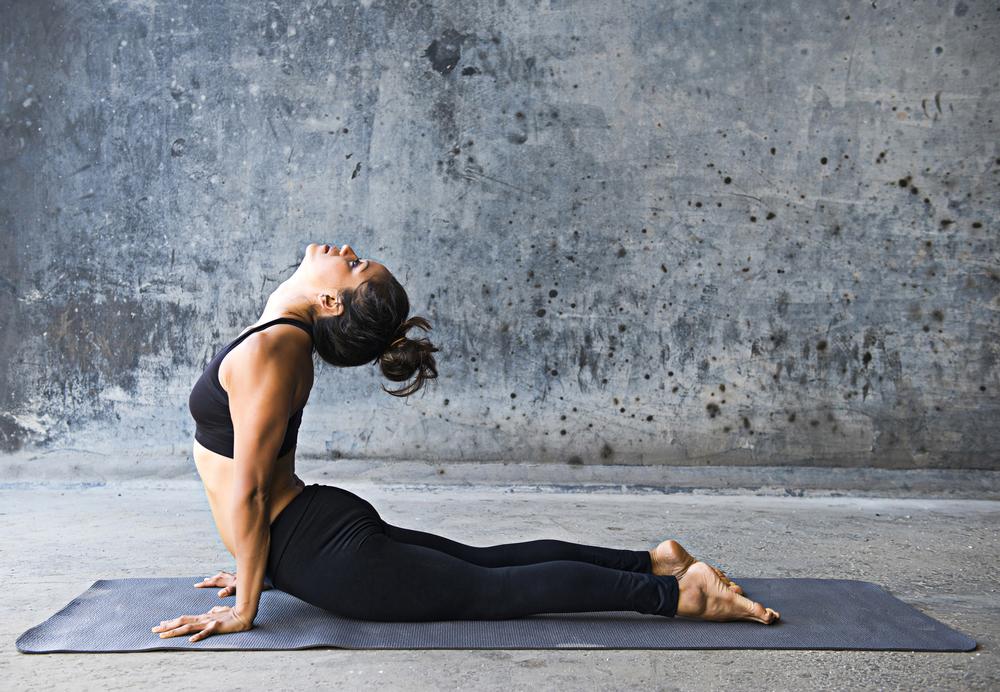
Yoga can be as good for the heart as aerobic exercise / photo: shutterstock.com
Doctors and scientists all agree that regular aerobic exercise is good for the heart as it can improve high blood pressure, obesity, diabetes and other key risk factors for heart disease. And while this form of exercise is often championed as being best for cardiovascular health, an extensive 2014 review of 69 studies has demonstrated that yoga can be just as good for the heart as aerobic exercise – or cardio, as it’s more commonly known.
A COMBINED APPROACH New research presented at the 2017 Emirates Cardiac Society Congress in Dubai – in association with the American College of Cardiology’s Middle East Conference – now suggests that a combined approach may be best. Their study, which has not yet been published, found that heart disease patients who did both yoga – specifically Indian yoga – and aerobic exercise achieved twice as much reduction in body mass index (BMI), blood pressure and cholesterol levels than those who did aerobic exercise or Indian yoga only.
As reported by the authors, Sonal Tanwar and Naresh Sen, both from HG SMS Hospital, located in Jaipur, India, the study involved 750 patients with coronary heart disease.
Of these patients, 240 were assigned to three six-month sessions of Indian yoga only, and 225 patients did aerobic exercise only, over that period of time. A final group of 285 patients did both yoga and aerobic exercise.
IMPROVED RISK FACTORS At the end of the study period, the researchers found that blood pressure, total cholesterol, triglycerides, LDL, weight and waist circumference all fell by similar amounts among the patients who did only yoga or aerobic exercise.
But when the results of the group that did both forms of exercise were assessed, these markers of heart disease were found to have fallen by twice as much as the other groups.
“Heart disease patients could benefit from learning Indian yoga and making it a routine part of daily life,” said study authors Tanwar and Sen.
They added: “Combining Indian yoga and aerobic exercise reduces mental, physical and vascular stress and can lead to decreased cardiovascular mortality and morbidity.”
* Tanwar, S and Sen, N. Yoga and Aerobic Exercise Together May Improve Heart-Disease Risk Factors. Emirates Cardiac Society Congress, 19 Oct 2017
Panatta brought together four of the most influential figures in bodybuilding history on the
stage of RiminiWellness 2026: Phil Heath, Lee Haney, Ronnie Coleman and Hany Rambod. [more...]
Active Blackpool is deploying Cornerstone Connect, a new digital interface allowing
disparate information from multiple systems to be aggregated into one dataset, to support
its focus on reducing health inequalities and improving healthy life expectancy. [more...]
+ More featured suppliers
COMPANY PROFILES
Alliance Leisure
Alliance Leisure Services was specifically
established to respond to the changing
development need [more...]
ukactive
ukactive is the UK’s leading trade body for the physical activity sector, bringing together more tha [more...]
A new study has shown that combining yoga with aerobic exercise is twice as effective at reducing heart disease risk factors in patients than either done alone
Yoga can be as good for the heart as aerobic exercise / photo: shutterstock.com
Doctors and scientists all agree that regular aerobic exercise is good for the heart as it can improve high blood pressure, obesity, diabetes and other key risk factors for heart disease. And while this form of exercise is often championed as being best for cardiovascular health, an extensive 2014 review of 69 studies has demonstrated that yoga can be just as good for the heart as aerobic exercise – or cardio, as it’s more commonly known.
A COMBINED APPROACH New research presented at the 2017 Emirates Cardiac Society Congress in Dubai – in association with the American College of Cardiology’s Middle East Conference – now suggests that a combined approach may be best. Their study, which has not yet been published, found that heart disease patients who did both yoga – specifically Indian yoga – and aerobic exercise achieved twice as much reduction in body mass index (BMI), blood pressure and cholesterol levels than those who did aerobic exercise or Indian yoga only.
As reported by the authors, Sonal Tanwar and Naresh Sen, both from HG SMS Hospital, located in Jaipur, India, the study involved 750 patients with coronary heart disease.
Of these patients, 240 were assigned to three six-month sessions of Indian yoga only, and 225 patients did aerobic exercise only, over that period of time. A final group of 285 patients did both yoga and aerobic exercise.
IMPROVED RISK FACTORS At the end of the study period, the researchers found that blood pressure, total cholesterol, triglycerides, LDL, weight and waist circumference all fell by similar amounts among the patients who did only yoga or aerobic exercise.
But when the results of the group that did both forms of exercise were assessed, these markers of heart disease were found to have fallen by twice as much as the other groups.
“Heart disease patients could benefit from learning Indian yoga and making it a routine part of daily life,” said study authors Tanwar and Sen.
They added: “Combining Indian yoga and aerobic exercise reduces mental, physical and vascular stress and can lead to decreased cardiovascular mortality and morbidity.”
* Tanwar, S and Sen, N. Yoga and Aerobic Exercise Together May Improve Heart-Disease Risk Factors. Emirates Cardiac Society Congress, 19 Oct 2017
According to research which tracked more than 147,000 people for 30 years, 90-120 minutes
of strength training a week may deliver some of the biggest long-term health rewards.
The UK's four Chief Medical Officers have published a refreshed edition of Physical activity
guidelines: UK Chief Medical Officers' report, updating the evidence that underpins the nation's
physical activity recommendations and placing greater emphasis on strength, balance, reducing
sedentary behaviour and, for the first time, supporting people taking weight loss medications.
Places Leisure has exchanged contracts to build and operate a flagship £60m water and leisure
destination on behalf of Basingstoke and Deane Borough Council.
The Republic of Ireland will become the latest market in PureGym’s expanding international
portfolio, with the first launch planned for Dublin in 2027.
Anytime Fitness opened more than one club a day in 2025 and is on track to maintain this rate
of growth this year, as parent company Purpose Brands targets further international expansion.
The £33.9 million Leighton Leisure and Community Centre has opened in Leighton Buzzard, UK,
creating a next-generation public leisure, health and wellbeing hub for the local community.
Walnuts Leisure Centre in Orpington, in the London Borough of Bromley, has reopened following
a £17m transformation designed to secure the long-term future of the public leisure asset and
reposition it as a community wellbeing hub.
The Gym Group, has announced that it's sustained positive trading momentum has continued
through the first half of 2026 and the company remains confident about the outlook.
Panatta brought together four of the most influential figures in bodybuilding history on the
stage of RiminiWellness 2026: Phil Heath, Lee Haney, Ronnie Coleman and Hany Rambod. [more...]
Active Blackpool is deploying Cornerstone Connect, a new digital interface allowing
disparate information from multiple systems to be aggregated into one dataset, to support
its focus on reducing health inequalities and improving healthy life expectancy. [more...]
+ More featured suppliers
COMPANY PROFILES
Alliance Leisure Alliance Leisure Services was specifically
established to respond to the changing
development need [more...]