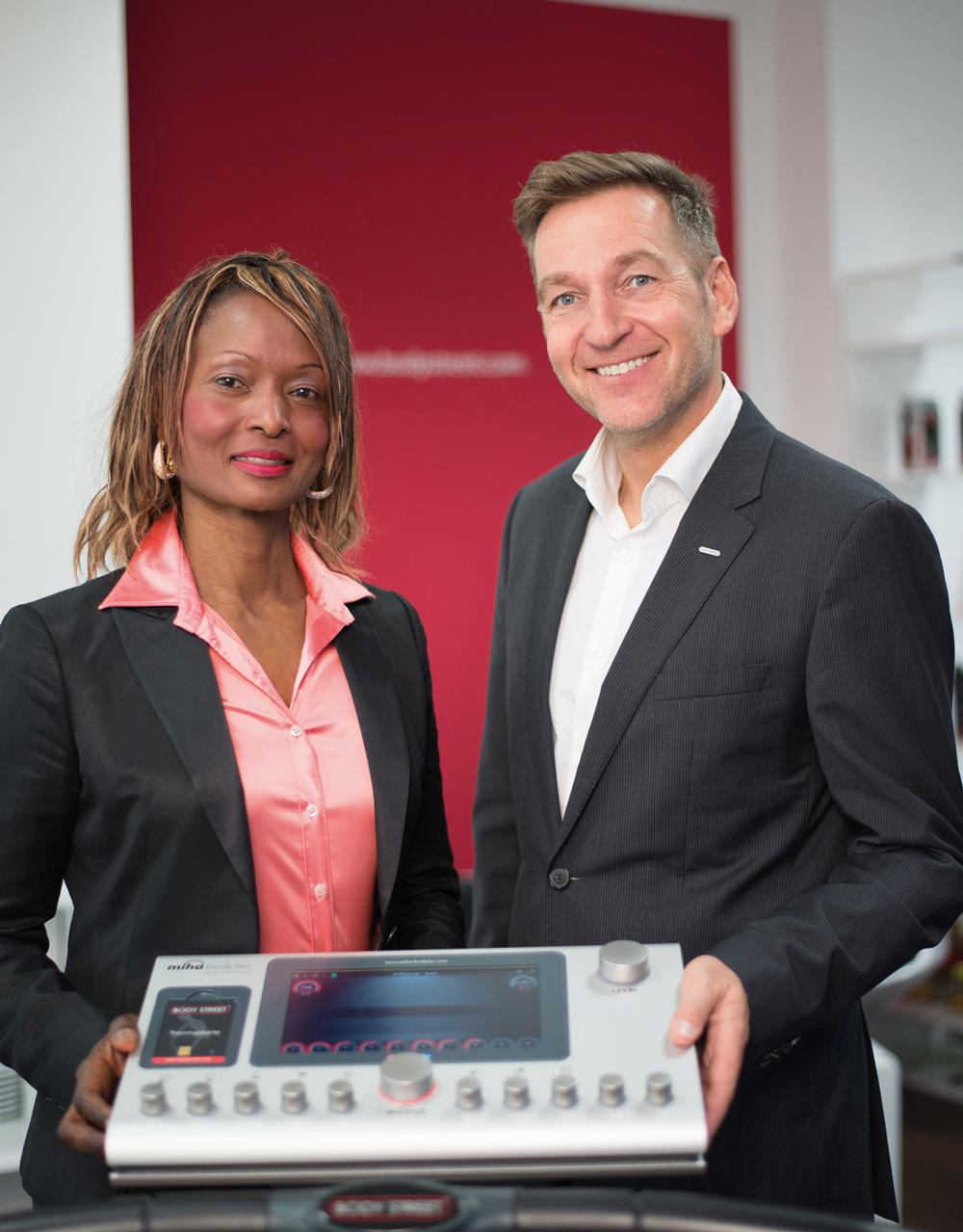
The Lehners saw franchising as the quickest way to grow
How did you come up with the idea for Bodystreet? We started a small gym called Munich Health some years back, which did well and led us to start thinking about how we could use electro muscle stimulation (EMS) technology within the gym. We soon realised this was actually a concept of its own if used in a personal, boutique style fitness centre, and boom, the Bodystreet EMS studio concept was born! We knew we wanted it to grow as a franchise system, and that has worked beyond our initial expectations.
Why franchising? Franchising is an ideal way to build a brand, and to do so quickly. To be the market leader we needed speed, but without sacrificing quality. We’ve set up a great system that helps both the franchisor and franchisee grow.
How has the company grown since your launch in 2007? We first launched Bodystreet in Munich, Germany with three studios, before growing that into the rest of Germany and then into Europe. We now see the whole world as our market. There are currently nearly 260 studios across Germany, Austria and the UK. We’re also excited to say that Italy’s first Bodystreet studio will be opening this month!
How has that journey been? It’s been quite a ride! Through the past 10 years, we’ve had good and bad experiences, but this is a key strength of ours. All of our services contain our past experience and our franchisees also benefit from this. The main lesson we’ve learned along the way is that franchising is a people-centred business. People are really diverse, but a common desire is that we want to belong to a community. This is what we offer to our clients, employees and franchisees.
How does the German fitness industry compare with countries like the UK and US? The UK and German fitness markets are the two strongest fitness markets in Europe in terms of members and turnover. In both markets, the successful players are the budget or premium chains, while independent players often struggle to carve out a good chunk of the market. Bodystreet straddles both the independent and chain sector. We benefit from being a franchise concept that is locally connected through each franchisee, while all the studios are seen by the customer as a larger chain.
What do you think the future holds for EMS? EMS is undeniably still in the growth phase and the German market is the most developed EMS market in Europe. Nonetheless, it still has a lot of potential, and as a market leader, Bodystreet has a key role to play. The EMS method fits perfectly into the modern lifestyle as users can achieve great results within a short amount of time and no longer have to spend hours in a gym to get fit. We believe that this concept will really take over ev lone – it must be used with an EMS-trained PT and training must be done once a week.
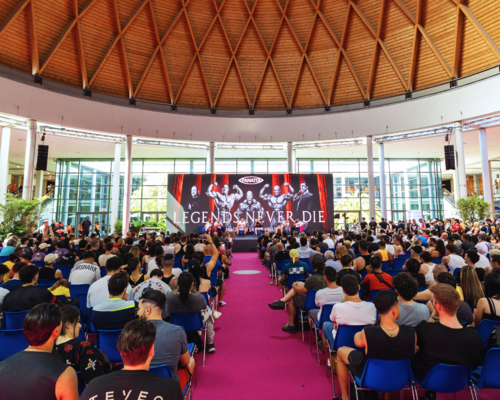
Panatta brought together four of the most influential figures in bodybuilding history on the
stage of RiminiWellness 2026: Phil Heath, Lee Haney, Ronnie Coleman and Hany Rambod. [more...]
Active Blackpool is deploying Cornerstone Connect, a new digital interface allowing
disparate information from multiple systems to be aggregated into one dataset, to support
its focus on reducing health inequalities and improving healthy life expectancy. [more...]
The Lehners saw franchising as the quickest way to grow
How did you come up with the idea for Bodystreet? We started a small gym called Munich Health some years back, which did well and led us to start thinking about how we could use electro muscle stimulation (EMS) technology within the gym. We soon realised this was actually a concept of its own if used in a personal, boutique style fitness centre, and boom, the Bodystreet EMS studio concept was born! We knew we wanted it to grow as a franchise system, and that has worked beyond our initial expectations.
Why franchising? Franchising is an ideal way to build a brand, and to do so quickly. To be the market leader we needed speed, but without sacrificing quality. We’ve set up a great system that helps both the franchisor and franchisee grow.
How has the company grown since your launch in 2007? We first launched Bodystreet in Munich, Germany with three studios, before growing that into the rest of Germany and then into Europe. We now see the whole world as our market. There are currently nearly 260 studios across Germany, Austria and the UK. We’re also excited to say that Italy’s first Bodystreet studio will be opening this month!
How has that journey been? It’s been quite a ride! Through the past 10 years, we’ve had good and bad experiences, but this is a key strength of ours. All of our services contain our past experience and our franchisees also benefit from this. The main lesson we’ve learned along the way is that franchising is a people-centred business. People are really diverse, but a common desire is that we want to belong to a community. This is what we offer to our clients, employees and franchisees.
How does the German fitness industry compare with countries like the UK and US? The UK and German fitness markets are the two strongest fitness markets in Europe in terms of members and turnover. In both markets, the successful players are the budget or premium chains, while independent players often struggle to carve out a good chunk of the market. Bodystreet straddles both the independent and chain sector. We benefit from being a franchise concept that is locally connected through each franchisee, while all the studios are seen by the customer as a larger chain.
What do you think the future holds for EMS? EMS is undeniably still in the growth phase and the German market is the most developed EMS market in Europe. Nonetheless, it still has a lot of potential, and as a market leader, Bodystreet has a key role to play. The EMS method fits perfectly into the modern lifestyle as users can achieve great results within a short amount of time and no longer have to spend hours in a gym to get fit. We believe that this concept will really take over ev lone – it must be used with an EMS-trained PT and training must be done once a week.
According to research which tracked more than 147,000 people for 30 years, 90-120 minutes
of strength training a week may deliver some of the biggest long-term health rewards.
The UK's four Chief Medical Officers have published a refreshed edition of Physical activity
guidelines: UK Chief Medical Officers' report, updating the evidence that underpins the nation's
physical activity recommendations and placing greater emphasis on strength, balance, reducing
sedentary behaviour and, for the first time, supporting people taking weight loss medications.
Places Leisure has exchanged contracts to build and operate a flagship £60m water and leisure
destination on behalf of Basingstoke and Deane Borough Council.
The Republic of Ireland will become the latest market in PureGym’s expanding international
portfolio, with the first launch planned for Dublin in 2027.
Anytime Fitness opened more than one club a day in 2025 and is on track to maintain this rate
of growth this year, as parent company Purpose Brands targets further international expansion.
The £33.9 million Leighton Leisure and Community Centre has opened in Leighton Buzzard, UK,
creating a next-generation public leisure, health and wellbeing hub for the local community.
Walnuts Leisure Centre in Orpington, in the London Borough of Bromley, has reopened following
a £17m transformation designed to secure the long-term future of the public leisure asset and
reposition it as a community wellbeing hub.
The Gym Group, has announced that it's sustained positive trading momentum has continued
through the first half of 2026 and the company remains confident about the outlook.
Panatta brought together four of the most influential figures in bodybuilding history on the
stage of RiminiWellness 2026: Phil Heath, Lee Haney, Ronnie Coleman and Hany Rambod. [more...]
Active Blackpool is deploying Cornerstone Connect, a new digital interface allowing
disparate information from multiple systems to be aggregated into one dataset, to support
its focus on reducing health inequalities and improving healthy life expectancy. [more...]