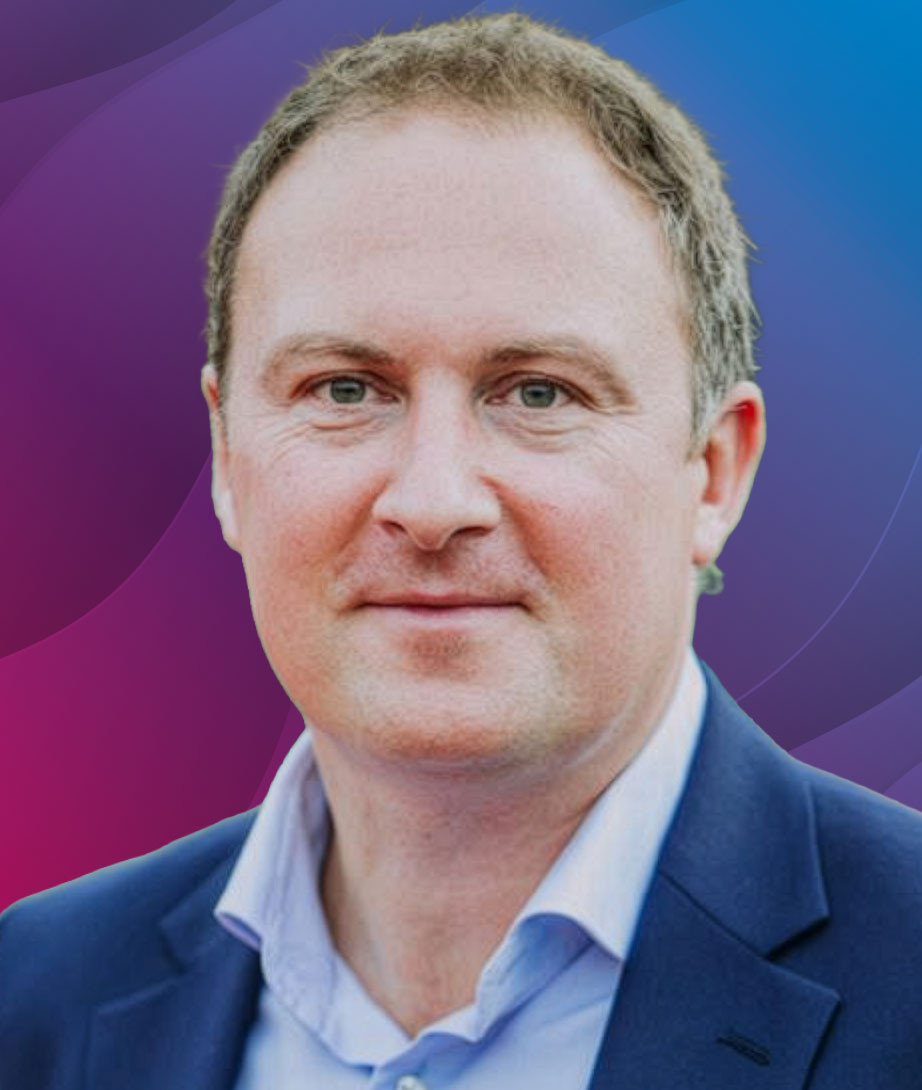
Quirk develops techniques to help people live an active life
What does an exercise psychologist do? As a researcher in exercise psychology, I use psychological principles to help understand how to promote and maintain physical activity and exercise participation in people across the population. I’m interested in what people think about physical activity and exercise, their experience of taking part and developing evidence-based techniques to help people initiate and maintain an active lifestyle.
My current research projects involve developing ways to promote physical activity among patients with type I diabetes, exploring the ways that physical activity is experienced by people living with a serious mental illness, and helping to bring the benefits of Parkrun to more people with long-term health conditions.
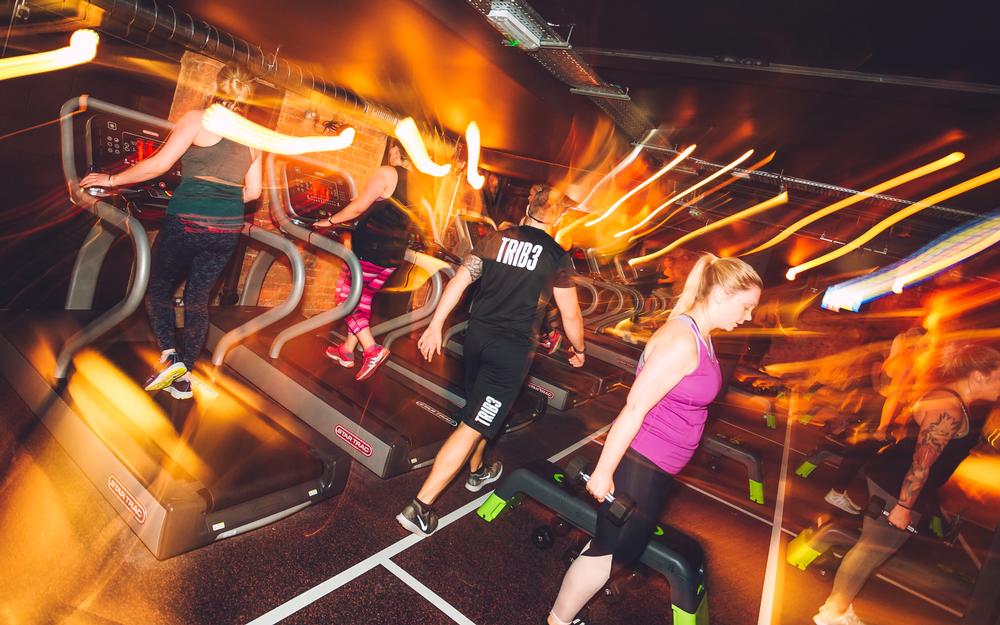
You played an advisory role with fitness studio TRIB3. Tell us more about that When the boutique HIIT concept TRIB3 first opened its doors in Sheffield and boasted to be the ‘hardest workout in the north’, there was little doubt I wanted in on the action. This was a fitness studio that had paid attention to every detail of its members’ journey. Although I wasn’t directly involved in the design of the TRIB3 studio, I initially spoke with the CEO, Kevin Yates, about his creation and the psychological principles underlying TRIB3’s concept development. I’ve since helped reinforce why the TRIB3 member journey works, hosted a psychology evening for members and have written psychology blogs for the company’s website.
As TRIB3 continues to expand, keeping in mind the fundamental needs of its members will ensure the essence of its flagship Sheffield studio is replicated for the rest of the world to enjoy.
How can clubs benefit from using psychological principles during the design process? Getting inside the mind of members should be the driving force behind the design of fitness clubs. A club can have everything on paper to make it the best in the business but its longevity depends on how well it understands the basic psychological needs of its members. Who is your target audience, what are their fundamental needs and how can you satisfy them?
At a basic level, people have three psychological needs; the need to feel competent, the need to feel autonomous and the need to feel connected. Fitness clubs that carefully consider these needs in every aspect of the member journey will offer clients a unique and enjoyable experience that differs from competitors.
Building design, furnishing, décor, sounds, smells and staff all contribute to this experience. It means creating an environment in which members enter feeling optimistic, excited, motivated, enthusiastic, connected with others and that they belong. If they’re enjoying the journey, they’re more likely to keep coming back.
Fitness club designs fail when members enter the facility feeling demotivated, intimidated, disconnected from others, uncomfortable and insecure.
How else can gym operators use psychology to help their health and fitness businesses? Looking at group dynamics in order to understand behaviour is beneficial, as feeling like we belong to a group satisfies our psychological need for connectedness. Gym operators should consider their club’s community and focus on creating a culture in which new members feel a sense of belonging to that group.
Clubs with a strong culture notice that whilst members may not know each other, as a group they have a shared purpose and are in pursuit of a common goal. Members with a strong connection to the group will then want to be branded with the group name.
Another way to strengthen community spirit is to encourage a lively online community too. A research study assessing the impact of promotional messages and motivational videos on exercise participation, compared to anonymous online peer group support found that the promotional messages had almost no long-term effect on exercise participation. The peer group was more effective at motivating people to exercise and the effect became stronger over time. These findings suggest that more time should be invested into social groups than mass promotional materials and campaigns.
What are your thoughts on using psychology to get more people moving? As kids, our default behaviour was to play. We would run, skip, jump, throw and lift without even thinking about it and without a single care about what we looked like! We did it simply because it was fun.
As adults, we have a very different relationship with these behaviours. Exercise often becomes something we feel we ‘should’ do more of. Somewhere along the line from childhood to adulthood, physical activity loses its enjoyment. Psychologists can help address this problem by helping people to understand themselves.
A great place to start is with ‘why’– why do you exercise? Once we know this, we can begin to understand our motivations, what’s driving us, and how this is helping or hindering our exercise goals. If exercise is something we think we should do, we can’t expect to sustain it for a long time. But if it’s something we want to do, then this is more likely to lead to long-term behaviour change.
Maybe the answer to getting people moving more is to go back to basics – do what you enjoy, enjoy what you do!
TRIB3 has applied psychological principles to its fitness concept
Active Blackpool is deploying Cornerstone Connect, a new digital interface allowing
disparate information from multiple systems to be aggregated into one dataset, to support
its focus on reducing health inequalities and improving healthy life expectancy. [more...]
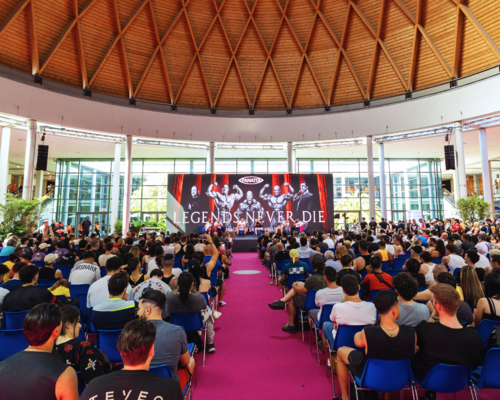
Panatta brought together four of the most influential figures in bodybuilding history on the
stage of RiminiWellness 2026: Phil Heath, Lee Haney, Ronnie Coleman and Hany Rambod. [more...]
+ More featured suppliers
COMPANY PROFILES
Everyone Active
Everyone Active operates leisure centres in partnership with local councils across the UK. Today, Ev [more...]
ukactive
ukactive is the UK’s leading trade body for the physical activity sector, bringing together more tha [more...]
Quirk develops techniques to help people live an active life
What does an exercise psychologist do? As a researcher in exercise psychology, I use psychological principles to help understand how to promote and maintain physical activity and exercise participation in people across the population. I’m interested in what people think about physical activity and exercise, their experience of taking part and developing evidence-based techniques to help people initiate and maintain an active lifestyle.
My current research projects involve developing ways to promote physical activity among patients with type I diabetes, exploring the ways that physical activity is experienced by people living with a serious mental illness, and helping to bring the benefits of Parkrun to more people with long-term health conditions.
You played an advisory role with fitness studio TRIB3. Tell us more about that When the boutique HIIT concept TRIB3 first opened its doors in Sheffield and boasted to be the ‘hardest workout in the north’, there was little doubt I wanted in on the action. This was a fitness studio that had paid attention to every detail of its members’ journey. Although I wasn’t directly involved in the design of the TRIB3 studio, I initially spoke with the CEO, Kevin Yates, about his creation and the psychological principles underlying TRIB3’s concept development. I’ve since helped reinforce why the TRIB3 member journey works, hosted a psychology evening for members and have written psychology blogs for the company’s website.
As TRIB3 continues to expand, keeping in mind the fundamental needs of its members will ensure the essence of its flagship Sheffield studio is replicated for the rest of the world to enjoy.
How can clubs benefit from using psychological principles during the design process? Getting inside the mind of members should be the driving force behind the design of fitness clubs. A club can have everything on paper to make it the best in the business but its longevity depends on how well it understands the basic psychological needs of its members. Who is your target audience, what are their fundamental needs and how can you satisfy them?
At a basic level, people have three psychological needs; the need to feel competent, the need to feel autonomous and the need to feel connected. Fitness clubs that carefully consider these needs in every aspect of the member journey will offer clients a unique and enjoyable experience that differs from competitors.
Building design, furnishing, décor, sounds, smells and staff all contribute to this experience. It means creating an environment in which members enter feeling optimistic, excited, motivated, enthusiastic, connected with others and that they belong. If they’re enjoying the journey, they’re more likely to keep coming back.
Fitness club designs fail when members enter the facility feeling demotivated, intimidated, disconnected from others, uncomfortable and insecure.
How else can gym operators use psychology to help their health and fitness businesses? Looking at group dynamics in order to understand behaviour is beneficial, as feeling like we belong to a group satisfies our psychological need for connectedness. Gym operators should consider their club’s community and focus on creating a culture in which new members feel a sense of belonging to that group.
Clubs with a strong culture notice that whilst members may not know each other, as a group they have a shared purpose and are in pursuit of a common goal. Members with a strong connection to the group will then want to be branded with the group name.
Another way to strengthen community spirit is to encourage a lively online community too. A research study assessing the impact of promotional messages and motivational videos on exercise participation, compared to anonymous online peer group support found that the promotional messages had almost no long-term effect on exercise participation. The peer group was more effective at motivating people to exercise and the effect became stronger over time. These findings suggest that more time should be invested into social groups than mass promotional materials and campaigns.
What are your thoughts on using psychology to get more people moving? As kids, our default behaviour was to play. We would run, skip, jump, throw and lift without even thinking about it and without a single care about what we looked like! We did it simply because it was fun.
As adults, we have a very different relationship with these behaviours. Exercise often becomes something we feel we ‘should’ do more of. Somewhere along the line from childhood to adulthood, physical activity loses its enjoyment. Psychologists can help address this problem by helping people to understand themselves.
A great place to start is with ‘why’– why do you exercise? Once we know this, we can begin to understand our motivations, what’s driving us, and how this is helping or hindering our exercise goals. If exercise is something we think we should do, we can’t expect to sustain it for a long time. But if it’s something we want to do, then this is more likely to lead to long-term behaviour change.
Maybe the answer to getting people moving more is to go back to basics – do what you enjoy, enjoy what you do!
TRIB3 has applied psychological principles to its fitness concept
According to research which tracked more than 147,000 people for 30 years, 90-120 minutes
of strength training a week may deliver some of the biggest long-term health rewards.
The UK's four Chief Medical Officers have published a refreshed edition of Physical activity
guidelines: UK Chief Medical Officers' report, updating the evidence that underpins the nation's
physical activity recommendations and placing greater emphasis on strength, balance, reducing
sedentary behaviour and, for the first time, supporting people taking weight loss medications.
Places Leisure has exchanged contracts to build and operate a flagship £60m water and leisure
destination on behalf of Basingstoke and Deane Borough Council.
The Republic of Ireland will become the latest market in PureGym’s expanding international
portfolio, with the first launch planned for Dublin in 2027.
Anytime Fitness opened more than one club a day in 2025 and is on track to maintain this rate
of growth this year, as parent company Purpose Brands targets further international expansion.
The £33.9 million Leighton Leisure and Community Centre has opened in Leighton Buzzard, UK,
creating a next-generation public leisure, health and wellbeing hub for the local community.
Walnuts Leisure Centre in Orpington, in the London Borough of Bromley, has reopened following
a £17m transformation designed to secure the long-term future of the public leisure asset and
reposition it as a community wellbeing hub.
The Gym Group, has announced that it's sustained positive trading momentum has continued
through the first half of 2026 and the company remains confident about the outlook.
Active Blackpool is deploying Cornerstone Connect, a new digital interface allowing
disparate information from multiple systems to be aggregated into one dataset, to support
its focus on reducing health inequalities and improving healthy life expectancy. [more...]
Panatta brought together four of the most influential figures in bodybuilding history on the
stage of RiminiWellness 2026: Phil Heath, Lee Haney, Ronnie Coleman and Hany Rambod. [more...]
+ More featured suppliers
COMPANY PROFILES
Everyone Active Everyone Active operates leisure centres in partnership with local councils across the UK. Today, Ev [more...]