Marc Cohen, who leads the Wellness Discipline, School of Health and Biomedical Sciences, at RMIT University in Melbourne, Australia, outlines his predictions for the future of wellness – and the implications for spas
By Professor Marc Cohen | Published in Spa Business Handbook 2017 issue 1
It is always treacherous to make predictions and, in a world where change is occurring at such a rapid pace, the only certainties are that the future will be radically different and that any current forecasts are likely to flawed.
Dramatic shifts in human demographics, climate and computer intelligence, together with new technological innovations, renewable energy systems and unprecedented human connectivity, will combine to create a future that’s far beyond the realms of our current thinking.
However, though predictions are difficult to make, the following list is based on current trends that are likely to continue into the near future and impact the spa and wellness industry by presenting opportunities and challenges that spa owners and operators may benefit from considering.
1. AI CONSULTANTS & VIRTUAL WELLNESS Artificial intelligence will evolve to create personal AI wellness consultants that design programmes informed by vast data sources, including genetic, microbiome, biosensor, psychometric, geographical exposure and social-connection data. Virtual reality will also move into the wellness world with virtual experiences and getaways to exotic locations, both real and imaginary. Together, virtual reality and AI will power immersive games using real-time biometrics that take us places we have not yet imagined.
This will provide spas with the opportunity to create unique experiences and treatments based on guests’ personalised data. It will challenge spas to adapt their wellness offerings to VR environments and it will also challenge spas to provide exhilarating and nurturing real-world experiences that can compete with VR experiences available elsewhere.
2. THE POCKET LAB The power of smartphones will be leveraged to revolutionise personal medical testing. Sophisticated technologies – currently only available in specialised labs with multi-million-dollar equipment – will become available to everyone, at minimal cost. Expect to see new low-cost nano-biosensors and devices that collect and analyse our blood, urine, sweat and tears, and measure the quality of our food, water, environment and overall health.
This will provide the opportunity for spas to compete with conventional medical services and offer evidence-based services that positively impact guests’ health metrics. Personal wellness metrics will also challenge spas to monitor their guests’ wellbeing and response to treatments, as well as to interface with existing and future medical data and record-keeping systems.
3. DEEP NATURE The healing power of nature cannot be overestimated, but nature will become an increasingly valuable resource. As much of the planet is now a tourist destination and true wilderness no longer really exists, people will seek out immersion in ‘deep nature’ that is far away from technological and industrial influences. People will become more attuned to the variability, beauty and fragility of local flora and fauna and the changes humans are imposing on these environments.
This will put pressure on natural environments, and on the operators who struggle to preserve nature in its pristine state while coping with the impact of more and more people. Designers and architects will be challenged to create and reproduce seemingly natural experiences in urban environments in order to satisfy our inherent biophilia.
shutterstock_By EpicStock
The appeal of ‘deep nature’ – far away from everyday influences – is increasing
4. MAKING PEACE WITH THE NATURE WITHIN The war on microbes that has been raged with antibiotics, chlorine, pesticides, disinfectants and preservatives is coming to an end. We now recognise that 99 per cent of the genetic material in our bodies belongs to the bacteria in our gut – and is vital for health. Expect to see greater emphasis on microbial ecosystems and the benefits of pre- and probiotics, fermented foods, vaginal births, contact with healthy soils, and the use of stool transplants for a range of medical conditions. This increased understanding will provide opportunities to create microbial-based products. A growing understanding of the ‘bathing biome’ will lead to microbial-based water treatments and spas will need to provide hygienic environments while minimising the use of disinfectants.
5. THE SOUND OF WELLNESS Sound is all around us and inside us, yet the dominant ambient sound in most urban environments is the hum of industrial noise. Expect to see a greater emphasis on natural soundscapes, with music replacing televised news in waiting rooms and wellness offerings that include true silence. Also expect a greater use of music as medicine, sound therapy devices and an emphasis on the personal benefits of singing, playing music and the sounds of nature. There will be opportunities for musicians to create healing music that engages us in new ways. It will also challenge architects to minimise or counteract ambient noise in the urban environment and (re)produce true silence, which can be used as a blank canvas for conscious soundscapes.
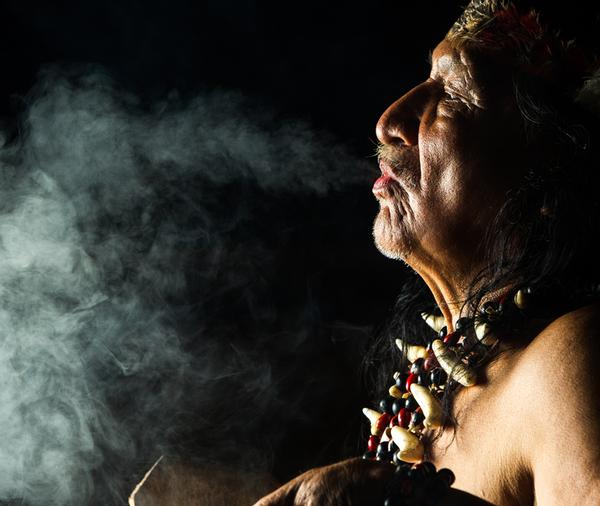
6. DANCE, CHANT & GET HIGH As people move into a virtual, technology-driven world, they will increasingly seek down-to-earth experiences inspired by indigenous wisdom and cultures. Expect to see a rise in shamanic practices that use traditional foods and plant-based medicines, such as medicinal marijuana and ayahuasca (an Amazonian ceremony brew used as a traditional spiritual medicine), along with a resurgence of ancient rituals such as sweat lodges, chanting, drumming and ecstatic dance.
The inclusion of such practices presents an opportunity for spas to create safe spaces for guests to experience extreme emotional catharsis and deep personal transformation. Spas will have to provide therapists who are skilled in dealing with intense situations and coping with potential adverse reactions. Challenges around legal and licensing issues, and issues of cultural appropriation and authenticity, could also arise.
Shamanic-style practices could become popular
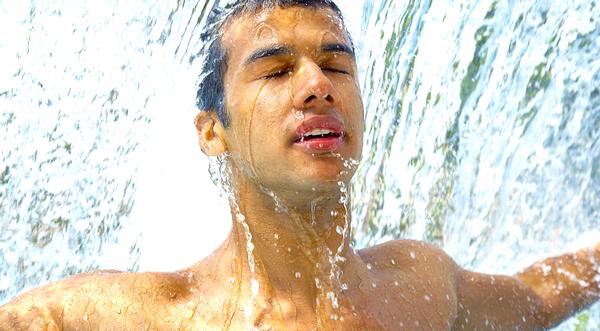
7. HOW WET IS YOUR WATER? The value of pure flowing water will increase and become recognised as a wellness resource. People are now realising their drinking water is often contaminated with heavy metals, pesticides, pharmaceutical drugs and other industrial contaminants. Expect to see smartphone compatible water-test kits; new water harvesting, filtering and purification technologies; and more attention to water quality in food outlets, bathing facilities and wellness locations.
An emphasis on water as a wellness resource provides opportunities for spas to promote the unique qualities of their water and deliver on the promise of ‘health through water’. It also challenges spas to seize a leadership position in regard to water quality and reduce the use of pollutants by measuring, monitoring and managing the quality of the water used in their facilities and communities.
Spas should take the lead
on water quality
8. UP IN THE AIR Air quality is becoming an increasingly important issue, both locally and globally. Air quality is vital for optimal health and brain function and – as more people realise that traffic pollution kills more people than traffic accidents – we’ll see more people vacating cities to escape the toxic air. Also expect to see new air-filter technologies, indoor air quality meters and metrics, and fitness centres and other wellness locations that highlight air quality in their offerings.
Awareness of air quality provides an opportunity for remote locations that offer fresh air to capitalise on this precious resource, and will challenge urban spas to provide fresh air havens using the latest air-purification technologies. It will also prompt spas to consider going beyond aromas and signature smells, and move to design treatments around specific air-quality measures.
9. WELLNESS POLITICS Wellness will become increasingly political, with governments taking up the challenge to effectively measure and administer wellbeing and align policies with human health, rather than economic health. This is likely to play out in levies on sugar, alcohol, tobacco and fast foods, and policies around health and wellness insurance, workplace wellness incentives, vaccines, food labelling and environmental pollutants.
The politics of wellness provides an opportunity for spa services to become incorporated into workplace wellness programmes, government health insurance schemes and community-based health programmes. Spas can also try to enhance the quality of political decisions by championing the inclusion of wellness activities and experiences in the political process – and engaging politicians in nurturing their own wellbeing.
shutterstock_By Antonio Guillem
Government involvement in wellness will increase, with levies on sugar, alcohol and fast food likely, along with policies on food labelling
10. THE CROWD IN THE CLOUD Wellness is about ‘we’ not ‘I’. With most people owning a connected mobile device, we can expect to see a surge in social media use and peer-to-peer initiatives that harness geographical information systems, sensor technologies and cloud-computing platforms. This leads to crowd-sourced and crowd-funded wellness maps that transcend political boundaries, highlight resource gradients and hold corporations and governments to account.
A greater reliance on crowd-based information will extend platforms like TripAdvisor and create opportunities for spas to expand their client base and engage in more meaningful dialogues through crowd-sourced treatments and viral wellness campaigns. This will challenge spas to interface between communities, corporations and governments, and promote trends that foster a global wellness culture.
About the author:
Professor Marc Cohen
Professor Marc Cohen leads the Wellness Discipline in the School of Health and Biomedical Sciences at RMIT University in Australia. He has recently completed research on the effects of acupuncture on acute pain (see SB17/3), as well as an extensive survey on the effects of thermal bathing (see SB17/2). He is currently conducting global surveys on sauna use and the Wim Hof Method. He also heads up the Global Wellness Institute’s Global Retreat Study and will focus his research next year on the physical and mental effects of destination spa retreats.
Panatta brought together four of the most influential figures in bodybuilding history on the
stage of RiminiWellness 2026: Phil Heath, Lee Haney, Ronnie Coleman and Hany Rambod. [more...]
+ More featured suppliers
COMPANY PROFILES
Everyone Active
Everyone Active operates leisure centres in partnership with local councils across the UK. Today, Ev [more...]
Alliance Leisure
Alliance Leisure Services was specifically
established to respond to the changing
development need [more...]
Marc Cohen, who leads the Wellness Discipline, School of Health and Biomedical Sciences, at RMIT University in Melbourne, Australia, outlines his predictions for the future of wellness – and the implications for spas
By Professor Marc Cohen | Published in Spa Business Handbook 2017 issue 1
It is always treacherous to make predictions and, in a world where change is occurring at such a rapid pace, the only certainties are that the future will be radically different and that any current forecasts are likely to flawed.
Dramatic shifts in human demographics, climate and computer intelligence, together with new technological innovations, renewable energy systems and unprecedented human connectivity, will combine to create a future that’s far beyond the realms of our current thinking.
However, though predictions are difficult to make, the following list is based on current trends that are likely to continue into the near future and impact the spa and wellness industry by presenting opportunities and challenges that spa owners and operators may benefit from considering.
1. AI CONSULTANTS & VIRTUAL WELLNESS Artificial intelligence will evolve to create personal AI wellness consultants that design programmes informed by vast data sources, including genetic, microbiome, biosensor, psychometric, geographical exposure and social-connection data. Virtual reality will also move into the wellness world with virtual experiences and getaways to exotic locations, both real and imaginary. Together, virtual reality and AI will power immersive games using real-time biometrics that take us places we have not yet imagined.
This will provide spas with the opportunity to create unique experiences and treatments based on guests’ personalised data. It will challenge spas to adapt their wellness offerings to VR environments and it will also challenge spas to provide exhilarating and nurturing real-world experiences that can compete with VR experiences available elsewhere.
2. THE POCKET LAB The power of smartphones will be leveraged to revolutionise personal medical testing. Sophisticated technologies – currently only available in specialised labs with multi-million-dollar equipment – will become available to everyone, at minimal cost. Expect to see new low-cost nano-biosensors and devices that collect and analyse our blood, urine, sweat and tears, and measure the quality of our food, water, environment and overall health.
This will provide the opportunity for spas to compete with conventional medical services and offer evidence-based services that positively impact guests’ health metrics. Personal wellness metrics will also challenge spas to monitor their guests’ wellbeing and response to treatments, as well as to interface with existing and future medical data and record-keeping systems.
3. DEEP NATURE The healing power of nature cannot be overestimated, but nature will become an increasingly valuable resource. As much of the planet is now a tourist destination and true wilderness no longer really exists, people will seek out immersion in ‘deep nature’ that is far away from technological and industrial influences. People will become more attuned to the variability, beauty and fragility of local flora and fauna and the changes humans are imposing on these environments.
This will put pressure on natural environments, and on the operators who struggle to preserve nature in its pristine state while coping with the impact of more and more people. Designers and architects will be challenged to create and reproduce seemingly natural experiences in urban environments in order to satisfy our inherent biophilia.
shutterstock_By EpicStock
The appeal of ‘deep nature’ – far away from everyday influences – is increasing
4. MAKING PEACE WITH THE NATURE WITHIN The war on microbes that has been raged with antibiotics, chlorine, pesticides, disinfectants and preservatives is coming to an end. We now recognise that 99 per cent of the genetic material in our bodies belongs to the bacteria in our gut – and is vital for health. Expect to see greater emphasis on microbial ecosystems and the benefits of pre- and probiotics, fermented foods, vaginal births, contact with healthy soils, and the use of stool transplants for a range of medical conditions. This increased understanding will provide opportunities to create microbial-based products. A growing understanding of the ‘bathing biome’ will lead to microbial-based water treatments and spas will need to provide hygienic environments while minimising the use of disinfectants.
5. THE SOUND OF WELLNESS Sound is all around us and inside us, yet the dominant ambient sound in most urban environments is the hum of industrial noise. Expect to see a greater emphasis on natural soundscapes, with music replacing televised news in waiting rooms and wellness offerings that include true silence. Also expect a greater use of music as medicine, sound therapy devices and an emphasis on the personal benefits of singing, playing music and the sounds of nature. There will be opportunities for musicians to create healing music that engages us in new ways. It will also challenge architects to minimise or counteract ambient noise in the urban environment and (re)produce true silence, which can be used as a blank canvas for conscious soundscapes.
6. DANCE, CHANT & GET HIGH As people move into a virtual, technology-driven world, they will increasingly seek down-to-earth experiences inspired by indigenous wisdom and cultures. Expect to see a rise in shamanic practices that use traditional foods and plant-based medicines, such as medicinal marijuana and ayahuasca (an Amazonian ceremony brew used as a traditional spiritual medicine), along with a resurgence of ancient rituals such as sweat lodges, chanting, drumming and ecstatic dance.
The inclusion of such practices presents an opportunity for spas to create safe spaces for guests to experience extreme emotional catharsis and deep personal transformation. Spas will have to provide therapists who are skilled in dealing with intense situations and coping with potential adverse reactions. Challenges around legal and licensing issues, and issues of cultural appropriation and authenticity, could also arise.
Shamanic-style practices could become popular
7. HOW WET IS YOUR WATER? The value of pure flowing water will increase and become recognised as a wellness resource. People are now realising their drinking water is often contaminated with heavy metals, pesticides, pharmaceutical drugs and other industrial contaminants. Expect to see smartphone compatible water-test kits; new water harvesting, filtering and purification technologies; and more attention to water quality in food outlets, bathing facilities and wellness locations.
An emphasis on water as a wellness resource provides opportunities for spas to promote the unique qualities of their water and deliver on the promise of ‘health through water’. It also challenges spas to seize a leadership position in regard to water quality and reduce the use of pollutants by measuring, monitoring and managing the quality of the water used in their facilities and communities.
Spas should take the lead
on water quality
8. UP IN THE AIR Air quality is becoming an increasingly important issue, both locally and globally. Air quality is vital for optimal health and brain function and – as more people realise that traffic pollution kills more people than traffic accidents – we’ll see more people vacating cities to escape the toxic air. Also expect to see new air-filter technologies, indoor air quality meters and metrics, and fitness centres and other wellness locations that highlight air quality in their offerings.
Awareness of air quality provides an opportunity for remote locations that offer fresh air to capitalise on this precious resource, and will challenge urban spas to provide fresh air havens using the latest air-purification technologies. It will also prompt spas to consider going beyond aromas and signature smells, and move to design treatments around specific air-quality measures.
9. WELLNESS POLITICS Wellness will become increasingly political, with governments taking up the challenge to effectively measure and administer wellbeing and align policies with human health, rather than economic health. This is likely to play out in levies on sugar, alcohol, tobacco and fast foods, and policies around health and wellness insurance, workplace wellness incentives, vaccines, food labelling and environmental pollutants.
The politics of wellness provides an opportunity for spa services to become incorporated into workplace wellness programmes, government health insurance schemes and community-based health programmes. Spas can also try to enhance the quality of political decisions by championing the inclusion of wellness activities and experiences in the political process – and engaging politicians in nurturing their own wellbeing.
shutterstock_By Antonio Guillem
Government involvement in wellness will increase, with levies on sugar, alcohol and fast food likely, along with policies on food labelling
10. THE CROWD IN THE CLOUD Wellness is about ‘we’ not ‘I’. With most people owning a connected mobile device, we can expect to see a surge in social media use and peer-to-peer initiatives that harness geographical information systems, sensor technologies and cloud-computing platforms. This leads to crowd-sourced and crowd-funded wellness maps that transcend political boundaries, highlight resource gradients and hold corporations and governments to account.
A greater reliance on crowd-based information will extend platforms like TripAdvisor and create opportunities for spas to expand their client base and engage in more meaningful dialogues through crowd-sourced treatments and viral wellness campaigns. This will challenge spas to interface between communities, corporations and governments, and promote trends that foster a global wellness culture.
About the author:
Professor Marc Cohen
Professor Marc Cohen leads the Wellness Discipline in the School of Health and Biomedical Sciences at RMIT University in Australia. He has recently completed research on the effects of acupuncture on acute pain (see SB17/3), as well as an extensive survey on the effects of thermal bathing (see SB17/2). He is currently conducting global surveys on sauna use and the Wim Hof Method. He also heads up the Global Wellness Institute’s Global Retreat Study and will focus his research next year on the physical and mental effects of destination spa retreats.
In response to customer demand, Gymnation has unveiled a muscle thobe and ghutra range
for Saudi men that celebrates Saudi culture as well as the region’s growing interest in fitness.
Italian Exhibition Group – the organiser behind industry events Dubai Active and Dubai Muscle
Show – has been appointed to deliver the Health and Wellness Expo and Fire and Safety Expo at
the 16th World Firefighters Games.
It’s been five years since the fitness industry reopened after the last lockdown – long enough
to look back on the impact the pandemic had on the sector and what might come next.
Wattbike has announced a new integration with EGYM, which enables the bikes to contribute to
the Cardio BioAge score of individuals via a VO2 max result.
Les Mills has launched a reformer Pilates workout. The 45-minute workout blends traditional
reformer movements and more contemporary exercises, choreographed to music.
According to research which tracked more than 147,000 people for 30 years, 90-120 minutes
of strength training a week may deliver some of the biggest long-term health rewards.
The UK's four Chief Medical Officers have published a refreshed edition of Physical activity
guidelines: UK Chief Medical Officers' report, updating the evidence that underpins the nation's
physical activity recommendations and placing greater emphasis on strength, balance, reducing
sedentary behaviour and, for the first time, supporting people taking weight loss medications.
Places Leisure has exchanged contracts to build and operate a flagship £60m water and leisure
destination on behalf of Basingstoke and Deane Borough Council.
Panatta brought together four of the most influential figures in bodybuilding history on the
stage of RiminiWellness 2026: Phil Heath, Lee Haney, Ronnie Coleman and Hany Rambod. [more...]
+ More featured suppliers
COMPANY PROFILES
Everyone Active Everyone Active operates leisure centres in partnership with local councils across the UK. Today, Ev [more...]