Rowing puts a heavy load on the body, making conditioning programmes for rowers extremely important. Steph Eaves looks at the methods used by top rowing clubs worldwide
By Steph Eaves | Published in Sports Management Sep Oct 2017 issue 133
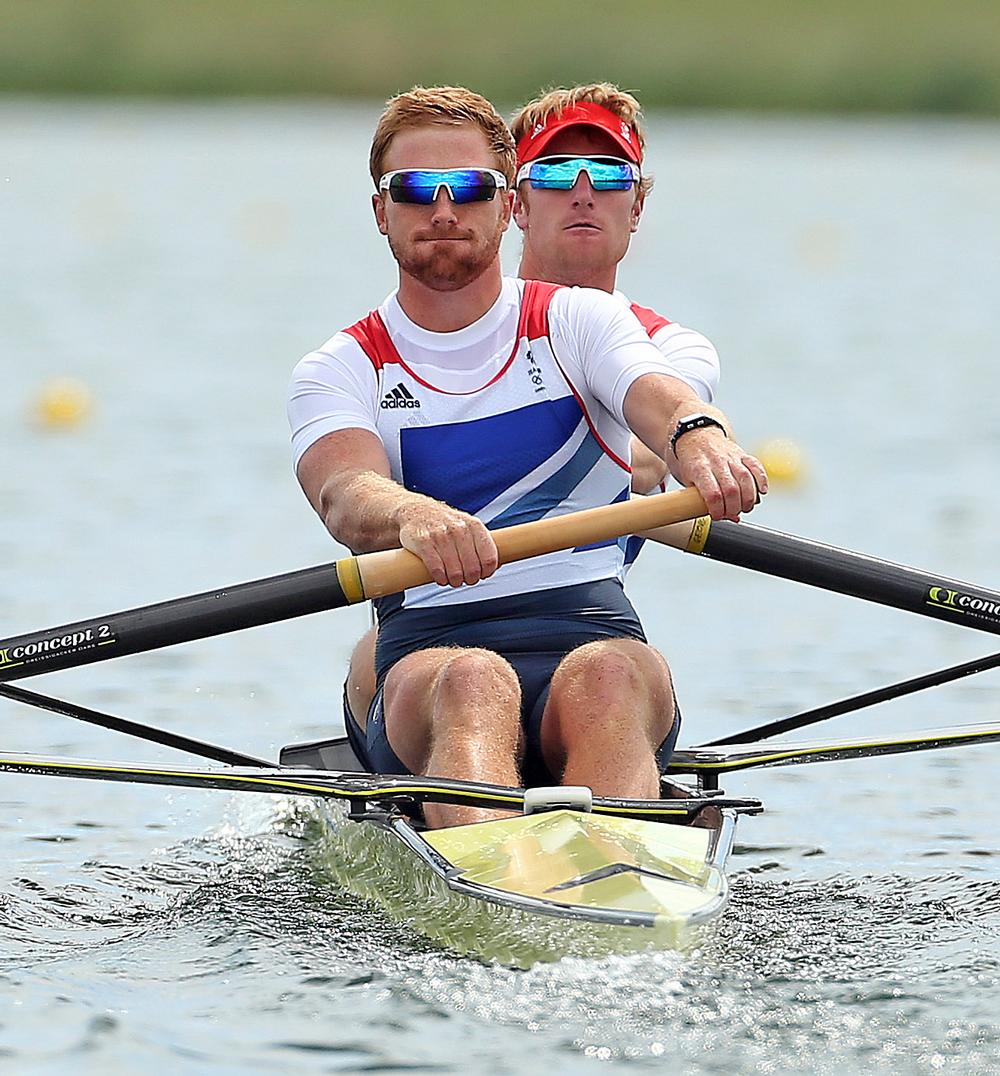
GB rowers Will Satch and George Nash put their training to use in London 2012 / PA Images
Rowers are some of the strongest, fittest athletes in the world, thanks to training for a sport that works every muscle in the body and requires extreme stamina. However, they are also prone to their fair share of injuries, due to intense loading on the lower back during each stroke, and the requirement to twist repeatedly to one side.
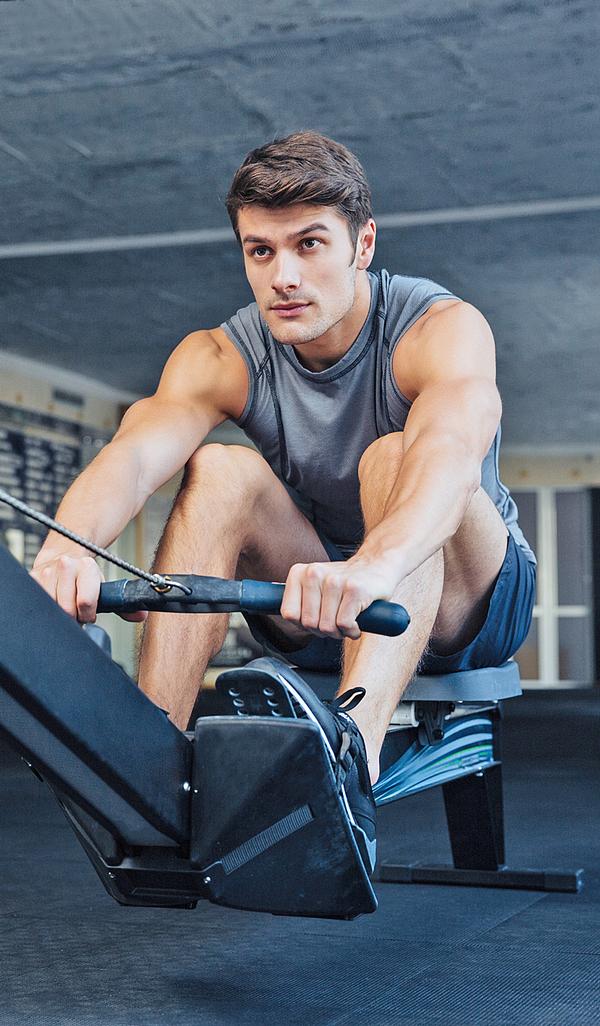
Strength and conditioning training is an important part of keeping these athletes in top condition, helping them to win and minimising the risk of injury. At the centre of this training is the rowing machine, or ‘erg’.
“The rowing machine is the cornerstone for fitness conditioning in the British Rowing team,” says GB rower and Olympic Gold Medallist Will Satch. “Whether it’s a long, steady row for 90 minutes plus, or a short higher-intensity piece, the rowing machine can’t be beaten.”
Because the sport takes place on the water, there are many variables, such as currents and wind, that can affect the speed of the boat. By using the erg, athletes and coaches can reliably measure and compare times, allowing progress to be tracked.
“The rowing ergometer is a key testing and training tool, as it controls for many confounding variables, allowing a more refined and objective approach,” says a spokesperson from Loughborough University’s coaching team.
At Melbourne University Boat Club (MUBC) in Australia, a training ground for Olympians, the rowing machine is used for training sessions at least three times a week in order to build athletes’ endurance and strength.
“We do a lot of steady-state, low intensity but high volume training on the erg, as well as some sprint work,” says Franz Imfeld, MUBC’s high performance manager.
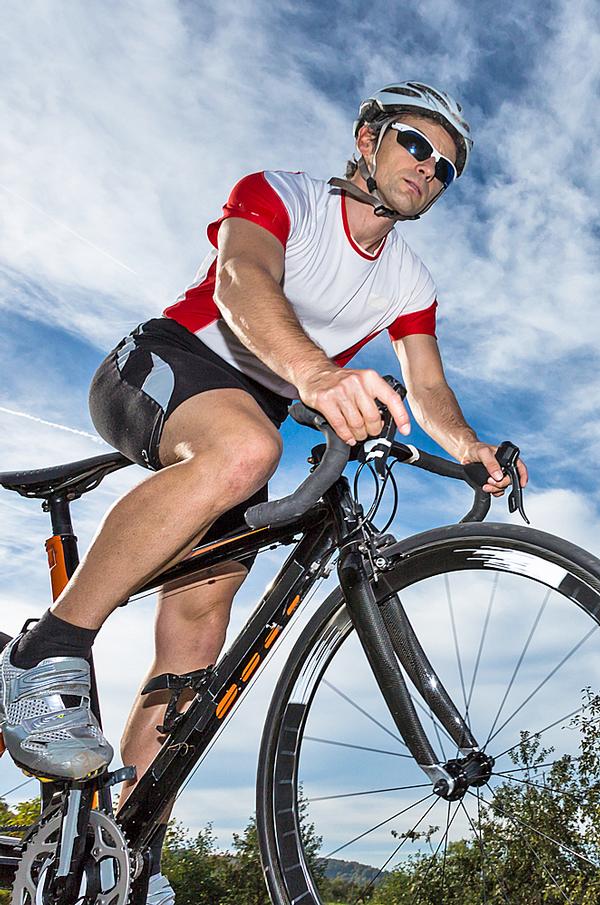
Cross training While rowing on the water and indoors is a huge part of the training programme for elite rowers, coaches stress the importance of adding some cross training to the mix. One of the most popular methods of cross training is cycling – either indoor or outdoor.
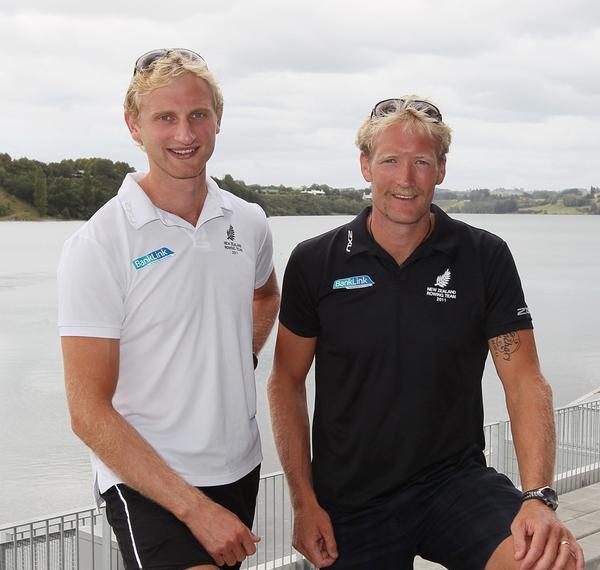
Double gold medallist New Zealand rower Eric Murray credits the Wattbike with helping him and his teammates achieve success in the boat.
“There are four main training components in rowing,” he explains. “On-water rowing, the rowing machine, the gym and the bike. The bike has been an integral part of my training and that of the wider NZ rowing team. The Wattbike specifically lets you easily monitor your output.”
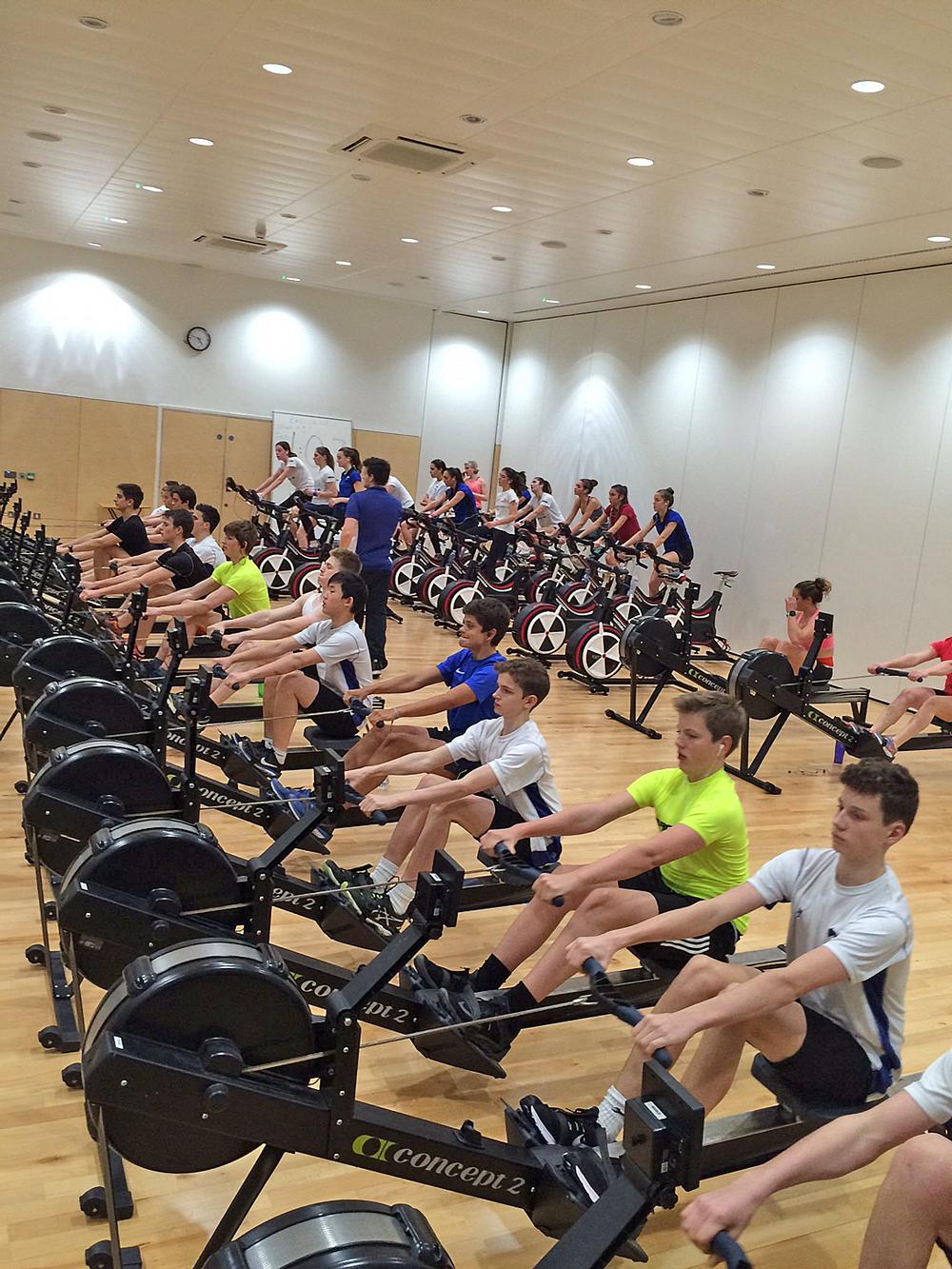
Cycling and rowing often go hand in hand, as they both require explosive leg power. By using both the rowing machine and indoor bike, coaches can ensure that rowers stay mentally fresh, as Tom Cannon, assistant head of boats at Latymer Upper School in London explains: “The indoor bike enables us to vary training in order to keep the athletes stimulated throughout the season. Often we use it in longer, steady state sessions to maintain endurance or shorter, higher intensity pieces to work on power.
“Indoor cycling gives the athletes a mental break from the erg and water sessions, and helps them feel mentally refreshed while keeping the training going.”
As well as providing variety, Cannon says the Wattbike has also proved to be great tool for measuring performance over time.
“After attending a workshop by [sports scientist] Eddie Fletcher, we’ve used it to monitor some athletes’ development, rather than the traditional erg or weights,” he says. “Those who can’t row due to injury often use it keep their training constant and keep up their endurance whilst they are on their way back to full fitness.”
Strength In addition to cardio-based training, a huge emphasis is placed on strength work, which helps the athletes to get the most out of each stroke they take in the boat.
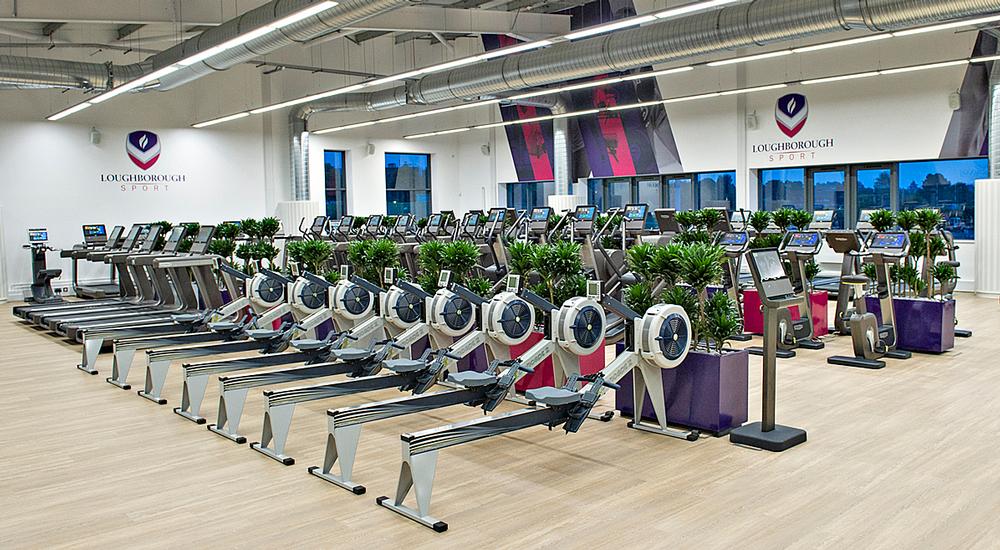
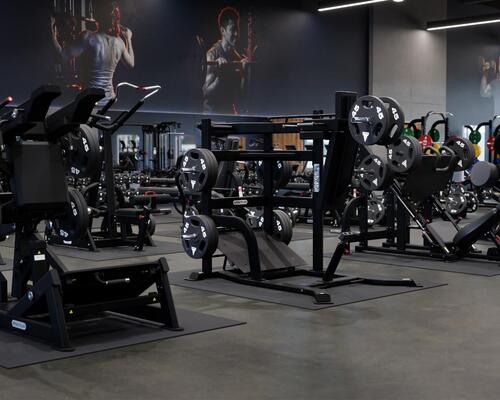
Loughborough University rowers, training in their Powerbase gym, which was designed in collaboration with Technogym, focus on traditional weight-based exercises.
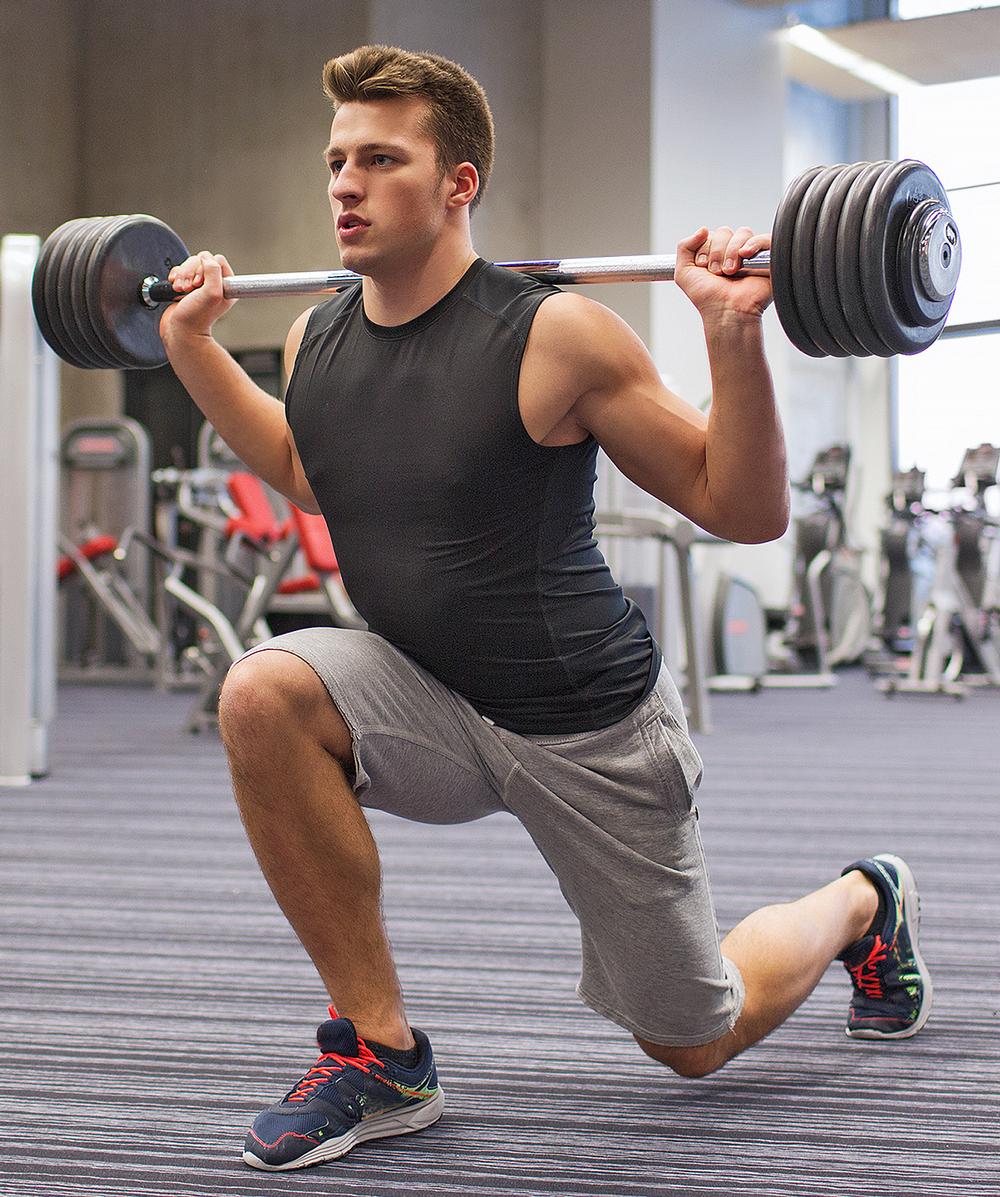
“Foundational movements, such as squats and deadlifts, bolstered by the more dynamic Olympic lifts – snatch and clean and jerk – and variants such as high pull are ideal as they use the coordinated whole-body motion necessary for rowing,” says the Loughborough University spokesperson.
A similar programme is followed by MUBC, with additional exercises to ensure the athletes’ musculature supports the mechanics of the rowing movement.
“Strength training is a vital part of the rowing training programme,” confirms MUBC’s Imfeld. “Rowing is a high-loading power and endurance-based sport, and if rowers don’t have the conditioning and support that enable them to take the load, injuries become rife.
“What makes rowing an unusual sport is that it’s asymmetric loading: unlike on a erg, in the boat rowers sweep off to their left or right, meaning they’re taking full load while they’re fully rotated in the upper body and completely compressed in the lower body.”
He continues: “To make sure we account for this, we have a rigorous three- to four-time weekly lifting routine, which consists of sport specific major lifts, but is then supplemented by a lot of isolation work – single arm and single leg work – to ensure support is built across the body.”
At Latymer Upper School rowing club, the focus is less on lifting heavy weights, and more on developing the young rowers’ bodies with functional exercises, explains Cannon.
“Functional movement exercises have allowed the athletes to understand their bodies and to develop correct posture. The knock-on effect is that athletes become more coachable on the water as they understand how they move.”
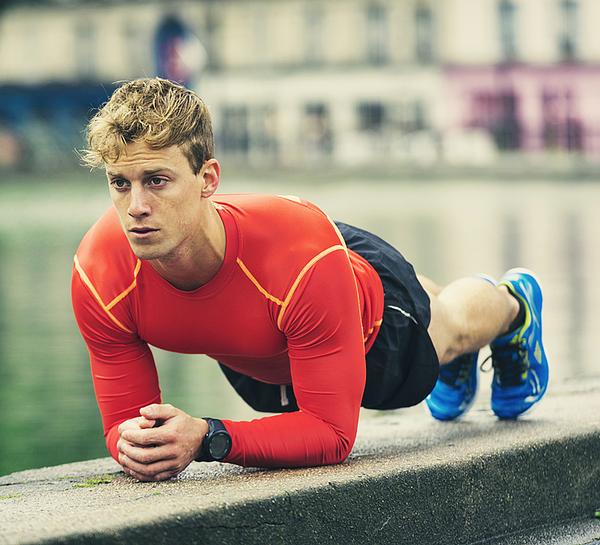
Core stability Strength is important, but when asked what aspect of training makes the biggest difference to performance, MUBC’s Imfeld is clear. “Core stability,” he says. “Being able to hold yourself still and repeatedly absorb the loading, stroke after stroke, only comes from being able to activate your core. The injury prevention and improved performance that comes from this on and off the water is key.”
MUBC rowers, he says, do core exercises as part of every weights session, with weekly sessions dedicated to core strength.
Recovery Part of any good conditioning programme is an effective recovery strategy, something Latymer Upper School is well aware of. “Rest and recovery is so important to keep them injury-free and mentally fresh,” says Cannon.
The university clubs employ a variety of recovery methods to help athletes stay in prime condition. Massage, stretching and foam rolling are used through the season, and cold therapy during times of competition.
While there are plenty of new technologies, theories and research, Imfeld says the key to success is to avoid over-complicating the training process.
“Keep it simple. There are a lot of fads out there when it comes to training, but ultimately we want to row fast. To row fast, you need to have good technique. To have good technique, you need to be able to hold yourself still and strong. To be able to hold yourself still and strong, you need good core and endurance – it’s all linked together. If you have the above, you won’t get injured and you’ll go fast. Simple!”
Panatta brought together four of the most influential figures in bodybuilding history on the
stage of RiminiWellness 2026: Phil Heath, Lee Haney, Ronnie Coleman and Hany Rambod. [more...]
Rowing puts a heavy load on the body, making conditioning programmes for rowers extremely important. Steph Eaves looks at the methods used by top rowing clubs worldwide
By Steph Eaves | Published in Sports Management Sep Oct 2017 issue 133
GB rowers Will Satch and George Nash put their training to use in London 2012 / PA Images
Rowers are some of the strongest, fittest athletes in the world, thanks to training for a sport that works every muscle in the body and requires extreme stamina. However, they are also prone to their fair share of injuries, due to intense loading on the lower back during each stroke, and the requirement to twist repeatedly to one side.
Strength and conditioning training is an important part of keeping these athletes in top condition, helping them to win and minimising the risk of injury. At the centre of this training is the rowing machine, or ‘erg’.
“The rowing machine is the cornerstone for fitness conditioning in the British Rowing team,” says GB rower and Olympic Gold Medallist Will Satch. “Whether it’s a long, steady row for 90 minutes plus, or a short higher-intensity piece, the rowing machine can’t be beaten.”
Because the sport takes place on the water, there are many variables, such as currents and wind, that can affect the speed of the boat. By using the erg, athletes and coaches can reliably measure and compare times, allowing progress to be tracked.
“The rowing ergometer is a key testing and training tool, as it controls for many confounding variables, allowing a more refined and objective approach,” says a spokesperson from Loughborough University’s coaching team.
At Melbourne University Boat Club (MUBC) in Australia, a training ground for Olympians, the rowing machine is used for training sessions at least three times a week in order to build athletes’ endurance and strength.
“We do a lot of steady-state, low intensity but high volume training on the erg, as well as some sprint work,” says Franz Imfeld, MUBC’s high performance manager.
Cross training While rowing on the water and indoors is a huge part of the training programme for elite rowers, coaches stress the importance of adding some cross training to the mix. One of the most popular methods of cross training is cycling – either indoor or outdoor.
Double gold medallist New Zealand rower Eric Murray credits the Wattbike with helping him and his teammates achieve success in the boat.
“There are four main training components in rowing,” he explains. “On-water rowing, the rowing machine, the gym and the bike. The bike has been an integral part of my training and that of the wider NZ rowing team. The Wattbike specifically lets you easily monitor your output.”
Cycling and rowing often go hand in hand, as they both require explosive leg power. By using both the rowing machine and indoor bike, coaches can ensure that rowers stay mentally fresh, as Tom Cannon, assistant head of boats at Latymer Upper School in London explains: “The indoor bike enables us to vary training in order to keep the athletes stimulated throughout the season. Often we use it in longer, steady state sessions to maintain endurance or shorter, higher intensity pieces to work on power.
“Indoor cycling gives the athletes a mental break from the erg and water sessions, and helps them feel mentally refreshed while keeping the training going.”
As well as providing variety, Cannon says the Wattbike has also proved to be great tool for measuring performance over time.
“After attending a workshop by [sports scientist] Eddie Fletcher, we’ve used it to monitor some athletes’ development, rather than the traditional erg or weights,” he says. “Those who can’t row due to injury often use it keep their training constant and keep up their endurance whilst they are on their way back to full fitness.”
Strength In addition to cardio-based training, a huge emphasis is placed on strength work, which helps the athletes to get the most out of each stroke they take in the boat.
Loughborough University rowers, training in their Powerbase gym, which was designed in collaboration with Technogym, focus on traditional weight-based exercises.
“Foundational movements, such as squats and deadlifts, bolstered by the more dynamic Olympic lifts – snatch and clean and jerk – and variants such as high pull are ideal as they use the coordinated whole-body motion necessary for rowing,” says the Loughborough University spokesperson.
A similar programme is followed by MUBC, with additional exercises to ensure the athletes’ musculature supports the mechanics of the rowing movement.
“Strength training is a vital part of the rowing training programme,” confirms MUBC’s Imfeld. “Rowing is a high-loading power and endurance-based sport, and if rowers don’t have the conditioning and support that enable them to take the load, injuries become rife.
“What makes rowing an unusual sport is that it’s asymmetric loading: unlike on a erg, in the boat rowers sweep off to their left or right, meaning they’re taking full load while they’re fully rotated in the upper body and completely compressed in the lower body.”
He continues: “To make sure we account for this, we have a rigorous three- to four-time weekly lifting routine, which consists of sport specific major lifts, but is then supplemented by a lot of isolation work – single arm and single leg work – to ensure support is built across the body.”
At Latymer Upper School rowing club, the focus is less on lifting heavy weights, and more on developing the young rowers’ bodies with functional exercises, explains Cannon.
“Functional movement exercises have allowed the athletes to understand their bodies and to develop correct posture. The knock-on effect is that athletes become more coachable on the water as they understand how they move.”
Core stability Strength is important, but when asked what aspect of training makes the biggest difference to performance, MUBC’s Imfeld is clear. “Core stability,” he says. “Being able to hold yourself still and repeatedly absorb the loading, stroke after stroke, only comes from being able to activate your core. The injury prevention and improved performance that comes from this on and off the water is key.”
MUBC rowers, he says, do core exercises as part of every weights session, with weekly sessions dedicated to core strength.
Recovery Part of any good conditioning programme is an effective recovery strategy, something Latymer Upper School is well aware of. “Rest and recovery is so important to keep them injury-free and mentally fresh,” says Cannon.
The university clubs employ a variety of recovery methods to help athletes stay in prime condition. Massage, stretching and foam rolling are used through the season, and cold therapy during times of competition.
While there are plenty of new technologies, theories and research, Imfeld says the key to success is to avoid over-complicating the training process.
“Keep it simple. There are a lot of fads out there when it comes to training, but ultimately we want to row fast. To row fast, you need to have good technique. To have good technique, you need to be able to hold yourself still and strong. To be able to hold yourself still and strong, you need good core and endurance – it’s all linked together. If you have the above, you won’t get injured and you’ll go fast. Simple!”
In response to customer demand, Gymnation has unveiled a muscle thobe and ghutra range
for Saudi men that celebrates Saudi culture as well as the region’s growing interest in fitness.
Italian Exhibition Group – the organiser behind industry events Dubai Active and Dubai Muscle
Show – has been appointed to deliver the Health and Wellness Expo and Fire and Safety Expo at
the 16th World Firefighters Games.
It’s been five years since the fitness industry reopened after the last lockdown – long enough
to look back on the impact the pandemic had on the sector and what might come next.
Wattbike has announced a new integration with EGYM, which enables the bikes to contribute to
the Cardio BioAge score of individuals via a VO2 max result.
Les Mills has launched a reformer Pilates workout. The 45-minute workout blends traditional
reformer movements and more contemporary exercises, choreographed to music.
According to research which tracked more than 147,000 people for 30 years, 90-120 minutes
of strength training a week may deliver some of the biggest long-term health rewards.
The UK's four Chief Medical Officers have published a refreshed edition of Physical activity
guidelines: UK Chief Medical Officers' report, updating the evidence that underpins the nation's
physical activity recommendations and placing greater emphasis on strength, balance, reducing
sedentary behaviour and, for the first time, supporting people taking weight loss medications.
Places Leisure has exchanged contracts to build and operate a flagship £60m water and leisure
destination on behalf of Basingstoke and Deane Borough Council.
Panatta brought together four of the most influential figures in bodybuilding history on the
stage of RiminiWellness 2026: Phil Heath, Lee Haney, Ronnie Coleman and Hany Rambod. [more...]