Maintaining physical activity levels on the road can be challenging, but it’s a challenge the fitness industry is now addressing. Laura Swain, assistant editor of hospitality at innovation research and advisory company Stylus, investigates the growing in-transit fitness trend
Consumers have long accepted that getting on a plane or travelling for work inevitably involves a lot of sitting down and less-than-healthy meals. But according to the Global Business Travel Association (GBTA) 2017 Business Traveler Sentiment Index Global Report, 22 per cent of UK business travellers say that poorer on-the-road eating habits make them want to exercise while travelling.
Indeed, from business travellers and tourists to hardcore athletes, consumers are yearning for convenient services and on-the-go fitness support to help them make the best use of their time in transit. In fact, the GBTA reports that 41 per cent of millennials say they would be more likely to continue their workout schedules on the road if they felt they had access to the equipment required to do so.
In response to this growing appetite, airports and airlines are increasingly developing strategic facilities and services that allow passengers to use their travel time to exercise and improve their overall health. It’s a move that’s led to some extremely innovative ideas in this space and something that the health and fitness industry is now capitalising on.
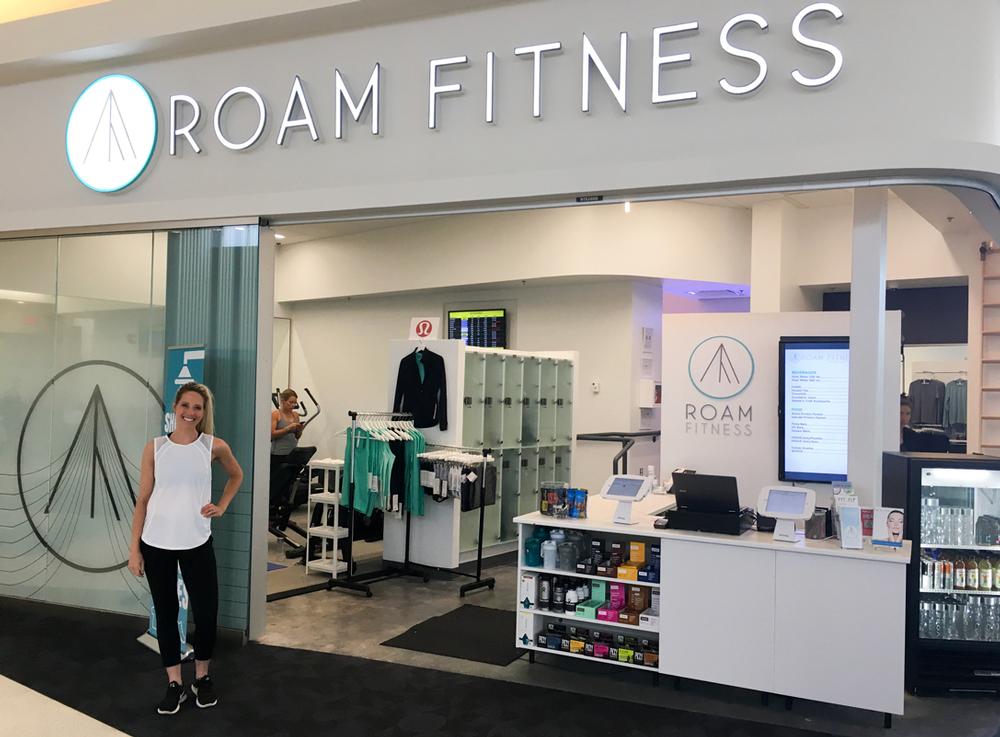
In-airport facilities In the US, start-up Roam Fitness opened what it claims to be the first public-facing post-security airport fitness centre in early 2017. The gym, which includes shower facilities, is based at Baltimore-Washington International Airport and is available to members on a daily, monthly or yearly basis. The fully serviced gym facility includes fitness kit and equipment hire from Canadian athletic clothing brand LuluLemon and Brooks Running Shoes. Alternatively, customers can vacuum-seal their own kit post-workout to avoid emitting odours within their luggage. Most importantly, the gym features departure screens and alerts to ensure flights are not missed.
Closer to home, London’s Heathrow Airport has announced plans to launch FlyFit – a gym and wellness studio located in the airport’s Terminal 2 (see HCM August, p14). Offering indoor cycling, yoga and meditation classes, it will also provide rental workout kits, showers and healthy food options for travellers looking to maximise their health while waiting for connecting flights.
Airlines are also getting involved, with UAE’s national airline Etihad offering its first-class or premium-grade passengers departing from Abu Dhabi a luxury gym experience in its new First Class Lounge, complete with showers and towel hire.
In-flight offerings Taking in-transit fitness one step further, some companies have moved beyond the airport and are focused on in-flight fitness options.
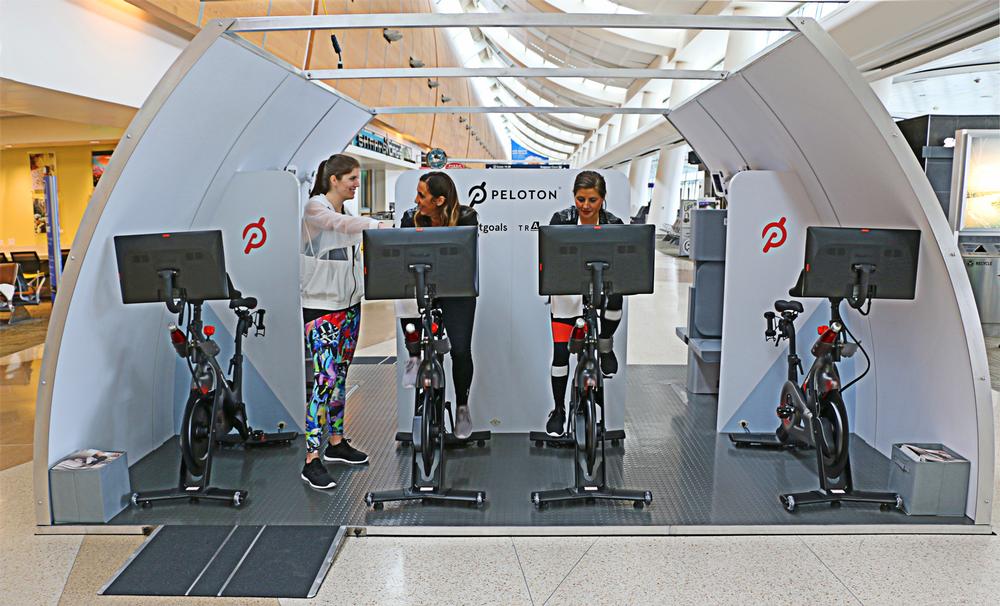
For example, US-based global aeroplane manufacturer Airbus has teamed up with sportswear brand Reebok and interactive indoor cycling company Peloton to develop fitness pods for its new A3 Transpose modular plane concept. The pods will contain Peloton fitness bikes and gym equipment, allowing passengers to fit in a workout during their flight. Airbus is also currently developing ways to add Imax projectors to the module walls to create the effect of cycling outdoors.
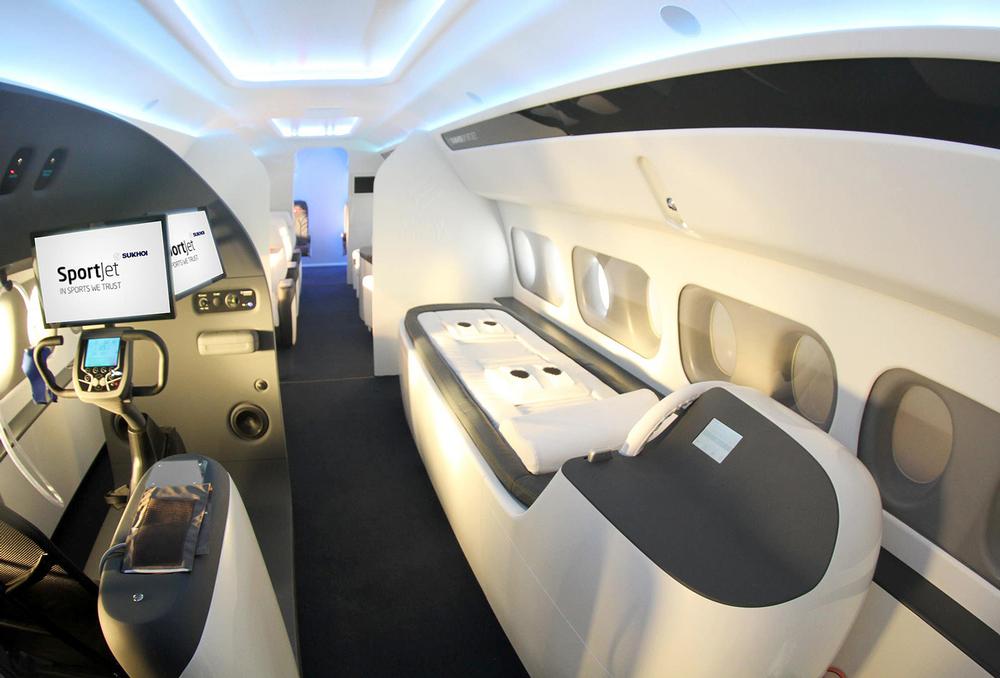
Meanwhile, Russian aviation company Sukhoi Civil Aircraft has developed an aircraft catering specifically for athletes. Launching at the end of 2017, the 100-seat SportJet will be split into zones that include fitness equipment, massage chairs for sports injuries, chairs with in-built sensors that monitor heart rate and oxygen levels, and a toilet containing in-built hydration sensors.
There are simpler approaches. Developed in collaboration with players from German football team Bayern Munich, Lufthansa has created a series of short clips entitled Flyrobic to demonstrate how passengers can exercise while in their seats to promote blood flow.
Enabling individuals to maintain their wellbeing regimes in transit doesn’t just extend to fitness. A number of travel operators – especially airports – are enhancing modern travel with practical and calming initiatives for leveraging sedentary wait times and reducing unwanted noise.
Airline Cathay Pacific’s lounge at Taiwan Taoyuan International Airport has installed Shiraz Solo Chairs, which feature partitions for privacy and soft-lit reading lamps. The use of warm, natural materials such as wood and stone soften acoustics, while the lamps mimic the experience of sitting in a living room.
In the future, ambient décor and material and colour choice will play an even greater role when it comes to providing ease and rejuvenation in transit. US aircraft manufacturer Boeing’s plane of the future includes calming and soporific lighting projections such as starry skies on the walls and bulkheads to help promote better-quality sleep.
Hotel room fitness The latest on-the-go fitness solutions are not limited to airports and planes. Hotel room workouts are also rising in popularity. According to a 2017 study by Cornell University Center for Hospitality Research, 46 per cent of US hotel guests travel with the intention of working out, however only 22 per cent of travellers use hotel gyms. There’s a huge opportunity here for health clubs to collaborate with hoteliers to provide guests with in-room solutions – like workout equipment and videos – that offer flexible, private and convenient ways to exercise.
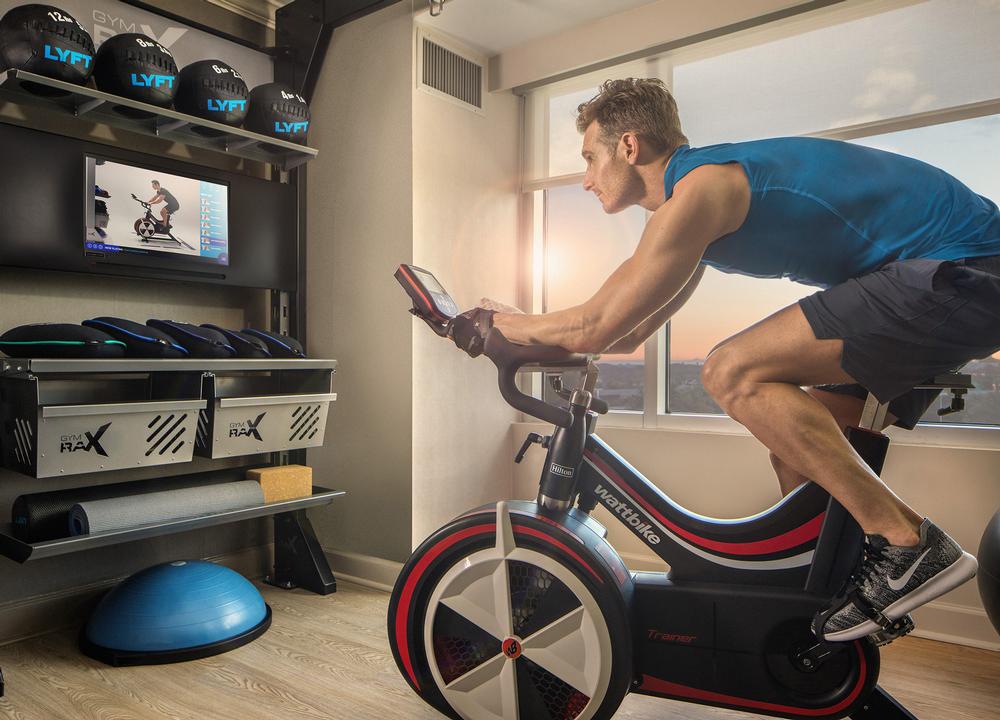
Several hotels are starting to explore this concept by offering flexible in-room exercise classes, streamed live or on-demand from local gyms and fitness specialists. In June this year, global hotel chain Hilton Hotels and Resorts unveiled its Five Feet to Fitness concept (see HCM July, p50). This collection of rooms includes premium in-room gym equipment, such as indoor cycling bikes from British company Wattbike and functional training stations with weights, suspension ropes and pull-up bars.
The road ahead In-transit and in-room exercise concepts represent a commercial goldmine as modern travellers require flexible products and experiences to accommodate a myriad of needs. Airlines are taking this on board with agile cabin designs that satisfy work and leisure requirements, while also recognising that good quality sleep is a vital part of the in-flight experience.
As consumers become increasingly eager to maintain their wellbeing and fitness regimes in transit, the need for on-the-go active solutions will grow. For health and fitness businesses, it’s about identifying how you can extend your services beyond the static gym and, increasingly, looking at collaboration opportunities within the travel industry – whether that’s in the air or in-room.
Some of the most exciting new concepts are born when different industries come together. The Reebok, Peloton and Airbus collaboration is a key example of this in practice. As consumers live more blended lifestyles, this exploration will become even more important.
ABOUT THE AUTHOR
Laura Swain
Laura Swain is the assistant editor of food, beverage and hospitality at Stylus. In this role, she tracks everything from global health food trends to new hotel and hospitality innovations. Before joining Stylus, Laura oversaw PR projects for brands, including Mondelez and Unilever.
Roam Fitness includes clothing hire
Aeroplane manufacturer Airbus plans to develop onboard fitness pods
Exercise bikes and massage chairs will be located on Sukhoi’s SportJet
Hilton’s Five Feet to Fitness rooms feature indoor bikes and weights
Active Blackpool is deploying Cornerstone Connect, a new digital interface allowing
disparate information from multiple systems to be aggregated into one dataset, to support
its focus on reducing health inequalities and improving healthy life expectancy. [more...]
Panatta brought together four of the most influential figures in bodybuilding history on the
stage of RiminiWellness 2026: Phil Heath, Lee Haney, Ronnie Coleman and Hany Rambod. [more...]
+ More featured suppliers
COMPANY PROFILES
PSLT Ltd
PSLT Fitness Solutions manufacture, remanufacture and buy back commercial gym equipment. [more...]
Maintaining physical activity levels on the road can be challenging, but it’s a challenge the fitness industry is now addressing. Laura Swain, assistant editor of hospitality at innovation research and advisory company Stylus, investigates the growing in-transit fitness trend
Consumers have long accepted that getting on a plane or travelling for work inevitably involves a lot of sitting down and less-than-healthy meals. But according to the Global Business Travel Association (GBTA) 2017 Business Traveler Sentiment Index Global Report, 22 per cent of UK business travellers say that poorer on-the-road eating habits make them want to exercise while travelling.
Indeed, from business travellers and tourists to hardcore athletes, consumers are yearning for convenient services and on-the-go fitness support to help them make the best use of their time in transit. In fact, the GBTA reports that 41 per cent of millennials say they would be more likely to continue their workout schedules on the road if they felt they had access to the equipment required to do so.
In response to this growing appetite, airports and airlines are increasingly developing strategic facilities and services that allow passengers to use their travel time to exercise and improve their overall health. It’s a move that’s led to some extremely innovative ideas in this space and something that the health and fitness industry is now capitalising on.
In-airport facilities In the US, start-up Roam Fitness opened what it claims to be the first public-facing post-security airport fitness centre in early 2017. The gym, which includes shower facilities, is based at Baltimore-Washington International Airport and is available to members on a daily, monthly or yearly basis. The fully serviced gym facility includes fitness kit and equipment hire from Canadian athletic clothing brand LuluLemon and Brooks Running Shoes. Alternatively, customers can vacuum-seal their own kit post-workout to avoid emitting odours within their luggage. Most importantly, the gym features departure screens and alerts to ensure flights are not missed.
Closer to home, London’s Heathrow Airport has announced plans to launch FlyFit – a gym and wellness studio located in the airport’s Terminal 2 (see HCM August, p14). Offering indoor cycling, yoga and meditation classes, it will also provide rental workout kits, showers and healthy food options for travellers looking to maximise their health while waiting for connecting flights.
Airlines are also getting involved, with UAE’s national airline Etihad offering its first-class or premium-grade passengers departing from Abu Dhabi a luxury gym experience in its new First Class Lounge, complete with showers and towel hire.
In-flight offerings Taking in-transit fitness one step further, some companies have moved beyond the airport and are focused on in-flight fitness options.
For example, US-based global aeroplane manufacturer Airbus has teamed up with sportswear brand Reebok and interactive indoor cycling company Peloton to develop fitness pods for its new A3 Transpose modular plane concept. The pods will contain Peloton fitness bikes and gym equipment, allowing passengers to fit in a workout during their flight. Airbus is also currently developing ways to add Imax projectors to the module walls to create the effect of cycling outdoors.
Meanwhile, Russian aviation company Sukhoi Civil Aircraft has developed an aircraft catering specifically for athletes. Launching at the end of 2017, the 100-seat SportJet will be split into zones that include fitness equipment, massage chairs for sports injuries, chairs with in-built sensors that monitor heart rate and oxygen levels, and a toilet containing in-built hydration sensors.
There are simpler approaches. Developed in collaboration with players from German football team Bayern Munich, Lufthansa has created a series of short clips entitled Flyrobic to demonstrate how passengers can exercise while in their seats to promote blood flow.
Enabling individuals to maintain their wellbeing regimes in transit doesn’t just extend to fitness. A number of travel operators – especially airports – are enhancing modern travel with practical and calming initiatives for leveraging sedentary wait times and reducing unwanted noise.
Airline Cathay Pacific’s lounge at Taiwan Taoyuan International Airport has installed Shiraz Solo Chairs, which feature partitions for privacy and soft-lit reading lamps. The use of warm, natural materials such as wood and stone soften acoustics, while the lamps mimic the experience of sitting in a living room.
In the future, ambient décor and material and colour choice will play an even greater role when it comes to providing ease and rejuvenation in transit. US aircraft manufacturer Boeing’s plane of the future includes calming and soporific lighting projections such as starry skies on the walls and bulkheads to help promote better-quality sleep.
Hotel room fitness The latest on-the-go fitness solutions are not limited to airports and planes. Hotel room workouts are also rising in popularity. According to a 2017 study by Cornell University Center for Hospitality Research, 46 per cent of US hotel guests travel with the intention of working out, however only 22 per cent of travellers use hotel gyms. There’s a huge opportunity here for health clubs to collaborate with hoteliers to provide guests with in-room solutions – like workout equipment and videos – that offer flexible, private and convenient ways to exercise.
Several hotels are starting to explore this concept by offering flexible in-room exercise classes, streamed live or on-demand from local gyms and fitness specialists. In June this year, global hotel chain Hilton Hotels and Resorts unveiled its Five Feet to Fitness concept (see HCM July, p50). This collection of rooms includes premium in-room gym equipment, such as indoor cycling bikes from British company Wattbike and functional training stations with weights, suspension ropes and pull-up bars.
The road ahead In-transit and in-room exercise concepts represent a commercial goldmine as modern travellers require flexible products and experiences to accommodate a myriad of needs. Airlines are taking this on board with agile cabin designs that satisfy work and leisure requirements, while also recognising that good quality sleep is a vital part of the in-flight experience.
As consumers become increasingly eager to maintain their wellbeing and fitness regimes in transit, the need for on-the-go active solutions will grow. For health and fitness businesses, it’s about identifying how you can extend your services beyond the static gym and, increasingly, looking at collaboration opportunities within the travel industry – whether that’s in the air or in-room.
Some of the most exciting new concepts are born when different industries come together. The Reebok, Peloton and Airbus collaboration is a key example of this in practice. As consumers live more blended lifestyles, this exploration will become even more important.
ABOUT THE AUTHOR
Laura Swain
Laura Swain is the assistant editor of food, beverage and hospitality at Stylus. In this role, she tracks everything from global health food trends to new hotel and hospitality innovations. Before joining Stylus, Laura oversaw PR projects for brands, including Mondelez and Unilever.
Roam Fitness includes clothing hire
Aeroplane manufacturer Airbus plans to develop onboard fitness pods
Exercise bikes and massage chairs will be located on Sukhoi’s SportJet
Hilton’s Five Feet to Fitness rooms feature indoor bikes and weights
According to research which tracked more than 147,000 people for 30 years, 90-120 minutes
of strength training a week may deliver some of the biggest long-term health rewards.
The UK's four Chief Medical Officers have published a refreshed edition of Physical activity
guidelines: UK Chief Medical Officers' report, updating the evidence that underpins the nation's
physical activity recommendations and placing greater emphasis on strength, balance, reducing
sedentary behaviour and, for the first time, supporting people taking weight loss medications.
Places Leisure has exchanged contracts to build and operate a flagship £60m water and leisure
destination on behalf of Basingstoke and Deane Borough Council.
The Republic of Ireland will become the latest market in PureGym’s expanding international
portfolio, with the first launch planned for Dublin in 2027.
Anytime Fitness opened more than one club a day in 2025 and is on track to maintain this rate
of growth this year, as parent company Purpose Brands targets further international expansion.
The £33.9 million Leighton Leisure and Community Centre has opened in Leighton Buzzard, UK,
creating a next-generation public leisure, health and wellbeing hub for the local community.
Walnuts Leisure Centre in Orpington, in the London Borough of Bromley, has reopened following
a £17m transformation designed to secure the long-term future of the public leisure asset and
reposition it as a community wellbeing hub.
The Gym Group, has announced that it's sustained positive trading momentum has continued
through the first half of 2026 and the company remains confident about the outlook.
Active Blackpool is deploying Cornerstone Connect, a new digital interface allowing
disparate information from multiple systems to be aggregated into one dataset, to support
its focus on reducing health inequalities and improving healthy life expectancy. [more...]
Panatta brought together four of the most influential figures in bodybuilding history on the
stage of RiminiWellness 2026: Phil Heath, Lee Haney, Ronnie Coleman and Hany Rambod. [more...]
+ More featured suppliers
COMPANY PROFILES
PSLT Ltd PSLT Fitness Solutions manufacture, remanufacture and buy back commercial gym equipment. [more...]