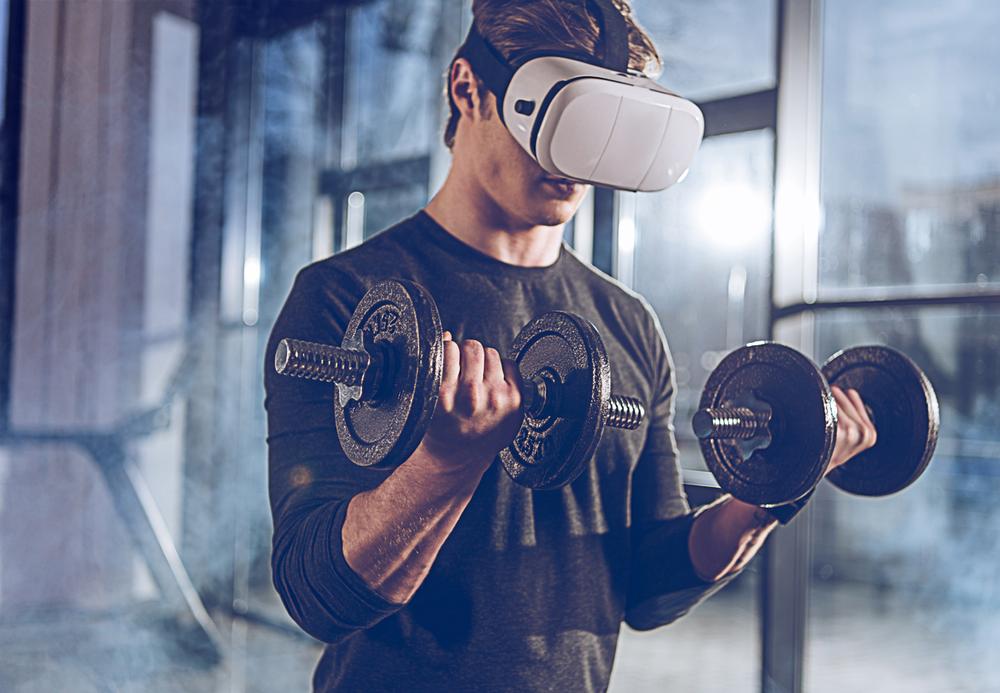
Immersive’ is the buzzword in fitness at the moment, as gyms and suppliers strive to find new ways to make people forget they’re exercising. Now, healthtech entrepreneur Dr Isabel Van De Keere is applying the same principle to the area of rehabilitation.
Last year the former medical technology consultant founded Immersive Rehab – a startup that creates virtual reality (VR) games designed to increase the effectiveness of physical rehabilitation after injury.
“Traditional physiotherapy is quite boring for the patient,” says Dr Van De Keere. “People get demotivated and frustrated.”
On the gym floor This is particularly true for injured gym-goers. Many are non-compliant with the physiotherapist-prescribed exercises they need to do to get back into action – further delaying their recovery. But Dr Van De Keere believes that the introduction of VR machines in gyms could change this.
“When physios give patients an exercise to do at home, most people don’t do it. But if there was a physio clinic in the gym, with VR equipment, people might be more motivated to do their prescribed exercises there. That way they can still go to the gym, so they don’t lose their routine. They won’t be doing their normal programme, but they’ll be getting rehabilitated in a fun and engaging way.”
Dr Van De Keere explains that with virtual reality games, patients become motivated to challenge themselves further than they would in a normal physio session.
“You can really mix up the way exercises are delivered,” she says. “And because patients are inside the virtual environment, they feel empowered. It takes them out of the white-walled, clinical environment and puts them somewhere new and interesting. It also gives them a sense of control over their surroundings.”
VR in the future While Dr Van De Keere’s software is currently aimed at helping patients who have suffered from neurological trauma, such as stroke, traumatic brain injury and spinal cord injury, she has also worked with athletes including Paralympic rower David Smith, and says the potential for treating sports and exercise injuries is high.
“For athletes who are injured and can’t be out there playing their sport, it can be depressing. In VR they can be on a virtual football pitch, for example, doing their rehab exercises with a virtual ball. It strengthens their mental state and is more motivating than doing those exercises within the four white walls of a physio clinic.”
Unsurprisingly, Dr Van De Keere is also a big believer in VR as a tool to get people more active.
“The headsets will become more comfortable and will be more like normal glasses at some point. It will take some time but it’ll happen,” she says.
“Then we’ll be able to have people on the exercise bike or the treadmill who are immersed in an environment, like the mountains. Looking at a TV screen that’s showing a forest won’t make you feel like you’re there. But VR can.”
VR can transport patients from the white walls of the clinic to somewhere more interesting
As healthcare continues to shift towards prevention, there’s a growing focus on helping
people stay active, independent and feeling good for longer. [more...]
CoverMe, the global leader in fitness workforce management, today launches CoverMe PT, an
on-demand personal training platform that connects the right personal trainer to the right
client in under 10 seconds. [more...]
Immersive’ is the buzzword in fitness at the moment, as gyms and suppliers strive to find new ways to make people forget they’re exercising. Now, healthtech entrepreneur Dr Isabel Van De Keere is applying the same principle to the area of rehabilitation.
Last year the former medical technology consultant founded Immersive Rehab – a startup that creates virtual reality (VR) games designed to increase the effectiveness of physical rehabilitation after injury.
“Traditional physiotherapy is quite boring for the patient,” says Dr Van De Keere. “People get demotivated and frustrated.”
On the gym floor This is particularly true for injured gym-goers. Many are non-compliant with the physiotherapist-prescribed exercises they need to do to get back into action – further delaying their recovery. But Dr Van De Keere believes that the introduction of VR machines in gyms could change this.
“When physios give patients an exercise to do at home, most people don’t do it. But if there was a physio clinic in the gym, with VR equipment, people might be more motivated to do their prescribed exercises there. That way they can still go to the gym, so they don’t lose their routine. They won’t be doing their normal programme, but they’ll be getting rehabilitated in a fun and engaging way.”
Dr Van De Keere explains that with virtual reality games, patients become motivated to challenge themselves further than they would in a normal physio session.
“You can really mix up the way exercises are delivered,” she says. “And because patients are inside the virtual environment, they feel empowered. It takes them out of the white-walled, clinical environment and puts them somewhere new and interesting. It also gives them a sense of control over their surroundings.”
VR in the future While Dr Van De Keere’s software is currently aimed at helping patients who have suffered from neurological trauma, such as stroke, traumatic brain injury and spinal cord injury, she has also worked with athletes including Paralympic rower David Smith, and says the potential for treating sports and exercise injuries is high.
“For athletes who are injured and can’t be out there playing their sport, it can be depressing. In VR they can be on a virtual football pitch, for example, doing their rehab exercises with a virtual ball. It strengthens their mental state and is more motivating than doing those exercises within the four white walls of a physio clinic.”
Unsurprisingly, Dr Van De Keere is also a big believer in VR as a tool to get people more active.
“The headsets will become more comfortable and will be more like normal glasses at some point. It will take some time but it’ll happen,” she says.
“Then we’ll be able to have people on the exercise bike or the treadmill who are immersed in an environment, like the mountains. Looking at a TV screen that’s showing a forest won’t make you feel like you’re there. But VR can.”
VR can transport patients from the white walls of the clinic to somewhere more interesting
Global luxury hospitality brand, Six Senses, has partnered with longevity healthcare provider,
HUM2N, to launch a clinic at Six Senses London, at The Whiteley.
Premium London health club, KX Chelsea, will imminently unveil its most significant
redevelopment since its launch in 2002 to create an integrated wellness model combining
training, recovery and relaxation.
Researchers in the US have identified an antibody which could greatly reduce the loss of lean
muscle mass in people who are taking weight-loss medications.
Crunch Fitness has announced the launch of Crunch Reform Pilates – its own reformer concept
designed to bring this fast growing, but rather expensive, modality into the mainstream.
The 20th State of the Industry Report reveals a resilient, expanding and competitive
sector, the
importance of differentiation and the ongoing challenge of tackling inequalities.
Nuffield Health has told HCM that it takes its responsibilities towards its colleagues seriously
and is committed to meeting all legal obligations after news of a tribunal has made national
headlines.
As healthcare continues to shift towards prevention, there’s a growing focus on helping
people stay active, independent and feeling good for longer. [more...]
CoverMe, the global leader in fitness workforce management, today launches CoverMe PT, an
on-demand personal training platform that connects the right personal trainer to the right
client in under 10 seconds. [more...]