Get HCM digital magazine and ezines FREE
Sign up here ▸
Jobs   News   Features   Products   Magazine      Advertise  
NEWS
The Living Wage: How will the fitness industry cope?
POSTED 07 Jan 2016 . BY Jak Phillips
With wage bills set to soar regardless of which rate they pay, operators face tough decisions to ensure they can balance the books Credit: www.shutterstock.com/Aleksandr Markin
The fast-approaching National Living Wage is either a great opportunity for the fitness industry to up-skill or a massive threat to the quality of staff, depending on who you talk to. One thing’s for sure though, it will come into effect this April and the sector will need to find ways to deal with it.

Chancellor George Osborne’s initiative will see the starting hourly rate for over-25s jump to £7.20 (up from the current minimum wage of £6.50), gradually rising to £9 an hour by 2020. It means a pay rise for many of the 6 million (or 23 per cent) of UK workers currently earning below a living wage and forms a central pillar of Osborne’s efforts to reduce Britain’s welfare bill by cutting tax credits.

The impact on the health and fitness industry is expected to be significant, given that a large number of workers enter – and often stay – at the lower end of the pay scale. One school of thought suggests that investing in staff wages will pay significantly higher dividends in the longer term.

According to Emma Kosmin, programme manager for the Living Wage Foundation – which advocates pay rates of £9.40 an hour in London and a rate of £8.25 elsewhere – the benefits for a business to become a Living Wage Employer are “immense”.

She said: “Absenteeism can drop by 25 per cent as staff become less stressed; staff retention also improves, so companies spend less on recruitment and new training.”

But with wage bills set to soar regardless of which rate they pay, operators face tough decisions to ensure they can balance the books? Will membership fees have to rise, or will this simply chase away customers who were hard to win in the first place? Will the fact that many workers are in line for a pay rise mean they’ll be willing to spend more on leisure? This month’s Health Club Management asked a panel of experts for their views on what the National Living Wage means for fitness.

For Tim Baker, chair of leisure consultancy Touchstone Partners, there are a number of ways the operators can offset the cost. Some, he says, may scale back on staff using a model similar to budget gyms, while others may raise prices and urge staff to offer a more personalised service in order to justify the hike.

Baker notes that gyms have an advantage over other sectors likely to be hit by the Living Wage – such as retail and hospitality – as the industry can position itself as a ‘force for good’ by facilitating healthy living. He suggests leveraging this position to create new revenue streams through tie-ups with schools/colleges, care homes and other service providers.

Meanwhile, Tara Dillon, CEO of CIMSPA, believes another of Osborne’s initiatives – the Apprenticeship Levy – could help offset the costs of the National Living Wage. By embracing apprenticeships and the funding available from the Levy to train them, Dillon says operators can improve the quality of their workforce and generate returns.

“Some forward-thinking operators are already reviewing their staff structures, working with CIMSPA to better qualify their workforces to prepare for the introduction of the National Living Wage and apprenticeship levy,” said Dillon. “I would strongly urge other operators to do the same.”

But while the National Living Wage may make hiring young people a more attractive prospect, some feel the move leaves those aged over-25 – often with valuable life experience – less employable. There are also concerns that centres will find staff less willing to work flexible shifts.

Martin Guyton, CEO of leisure trust tmactive believes the wage hike will tempt permanent employees to move to the more flexible hourly wage, making it difficult to staff centres during unsociable times, namely evenings and weekends.

He also echoes the fears privately expressed by several industry observers that operators will simply adopt unofficial ‘hire under-25s’ policies to circumvent the wage hike.

“Sadly, I do think the new wage will mean that older people in our sector will find themselves less employable, simply because it will be cheaper to employ under-25s,” he said.

“While that’s not something we at tmactive will be doing, I can’t speak for others in the sector.”

For Health Club Management editor Kate Cracknell, the inevitably of the National Living Wage means operators have to start looking for the positives of the situation, of which she feels there are many.

“Let’s use the Living Wage to our advantage, asking not if we embrace it, but rather how it can best work for us,” wrote Cracknell in her editor’s letter.

“Yes it’s disruptive, but it presents a perfect moment to up-skill the workforce and improve the sector’s credibility.”

To read the full debate on what the Living Wage means for the fitness industry – from the January 2016 edition of Health Club Management – click here.

RELATED STORIES
  The Living Wage: What does it mean for leisure?


Chancellor George Osborne has today (8 July) unveiled plans for a new compulsory living wage in the first Conservative government Budget for almost 20 years.
  Aquaterra first London leisure trust to gain London Living Wage accreditation


Aquaterra is proud to announce that casual staff in Islington including Islington lifeguards, instructors, receptionists and membership advisors received an upgrade to the £8.55 per hour London Living Wage payment this July, positively impacting on up to 200 Aquaterra staff.
MORE NEWS
Fitness First UK unveils makeover of Highbury club with new recovery and Pilates offerings
Fitness First UK has raised the bar with its latest refurbishment, in Highbury, London, as it continues to premiumise its estate.
Total Fitness research charts the fitness industry’s post-pandemic transformation
It’s been five years since the fitness industry reopened after the last lockdown – long enough to look back on the impact the pandemic had on the sector and what might come next. 
Wattbike and EGYM integration allows addition of VO2 max tests
Wattbike has announced a new integration with EGYM, which enables the bikes to contribute to the Cardio BioAge score of individuals via a VO2 max result.
Les Mills launches reformer Pilates workout
Les Mills has launched a reformer Pilates workout. The 45-minute workout blends traditional reformer movements and more contemporary exercises, choreographed to music. 
+ More news   
LATEST JOBS
Fitness Motivator and Personal Trainer
Everyone Active
Salary:
Job location: Fleet
Fitness Motivator and Personal Trainer
Everyone Active
Salary: £Excellent salary + benefits
Job location: Easton, Bristol , United Kingdom
Fitness Motivator and Personal Trainer
Everyone Active
Salary:
Job location: Aldershot
GP Exercise Referral Instructor
Everyone Active
Salary: £33,000pa + benefits
Job location: Harrow, Middlesex , United Kingdom
+ More jobs  

FEATURED SUPPLIERS

Introducing a new era of Nautilus Leverage
Strength training has never been more important for member retention, facility differentiation and long-term commercial success. [more...]

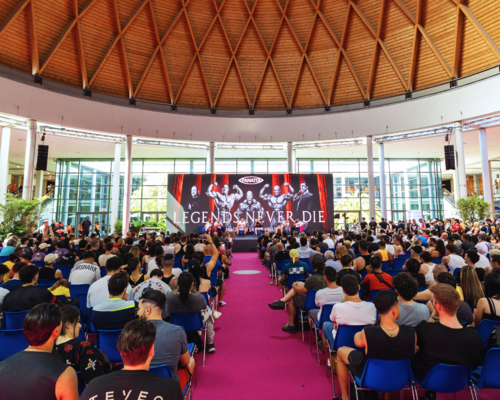
Legends never die: four legends, four philosophies of life
Panatta brought together four of the most influential figures in bodybuilding history on the stage of RiminiWellness 2026: Phil Heath, Lee Haney, Ronnie Coleman and Hany Rambod. [more...]
+ More featured suppliers  
COMPANY PROFILES
Everyone Active

Everyone Active operates leisure centres in partnership with local councils across the UK. Today, Ev [more...]
ukactive

ukactive is the UK’s leading trade body for the physical activity sector, bringing together more tha [more...]
+ More profiles  
CATALOGUE GALLERY
 
+ More catalogues  

DIRECTORY
+ More directory  
DIARY


23-26 Aug 2026

Elevate Spa Riviera Maya Edition

The Riviera Maya Edition Kanai, Playa del Carmen, Mexico
31 Aug - 02 Sep 2026

SpaTec North America

Pier Sixty Six, Fort Lauderdale, United States
+ More diary  
 
ABOUT LEISURE MEDIA
LEISURE MEDIA MAGAZINES
LEISURE MEDIA HANDBOOKS
LEISURE MEDIA WEBSITES
LEISURE MEDIA PRODUCT SEARCH
 
HCM
LEISURE OPPORTUNITIES
HEALTH CLUB HANDBOOK
PRINT SUBSCRIPTIONS
FREE DIGITAL SUBSCRIPTIONS
ADVERTISE . CONTACT US

Leisure Media
Tel: +44 (0)1462 431385

©Cybertrek 2026
Get HCM digital magazine and ezines FREE
Sign up here ▸
Jobs    News   Products   Magazine
NEWS
The Living Wage: How will the fitness industry cope?
POSTED 07 Jan 2016 . BY Jak Phillips
With wage bills set to soar regardless of which rate they pay, operators face tough decisions to ensure they can balance the books Credit: www.shutterstock.com/Aleksandr Markin
The fast-approaching National Living Wage is either a great opportunity for the fitness industry to up-skill or a massive threat to the quality of staff, depending on who you talk to. One thing’s for sure though, it will come into effect this April and the sector will need to find ways to deal with it.

Chancellor George Osborne’s initiative will see the starting hourly rate for over-25s jump to £7.20 (up from the current minimum wage of £6.50), gradually rising to £9 an hour by 2020. It means a pay rise for many of the 6 million (or 23 per cent) of UK workers currently earning below a living wage and forms a central pillar of Osborne’s efforts to reduce Britain’s welfare bill by cutting tax credits.

The impact on the health and fitness industry is expected to be significant, given that a large number of workers enter – and often stay – at the lower end of the pay scale. One school of thought suggests that investing in staff wages will pay significantly higher dividends in the longer term.

According to Emma Kosmin, programme manager for the Living Wage Foundation – which advocates pay rates of £9.40 an hour in London and a rate of £8.25 elsewhere – the benefits for a business to become a Living Wage Employer are “immense”.

She said: “Absenteeism can drop by 25 per cent as staff become less stressed; staff retention also improves, so companies spend less on recruitment and new training.”

But with wage bills set to soar regardless of which rate they pay, operators face tough decisions to ensure they can balance the books? Will membership fees have to rise, or will this simply chase away customers who were hard to win in the first place? Will the fact that many workers are in line for a pay rise mean they’ll be willing to spend more on leisure? This month’s Health Club Management asked a panel of experts for their views on what the National Living Wage means for fitness.

For Tim Baker, chair of leisure consultancy Touchstone Partners, there are a number of ways the operators can offset the cost. Some, he says, may scale back on staff using a model similar to budget gyms, while others may raise prices and urge staff to offer a more personalised service in order to justify the hike.

Baker notes that gyms have an advantage over other sectors likely to be hit by the Living Wage – such as retail and hospitality – as the industry can position itself as a ‘force for good’ by facilitating healthy living. He suggests leveraging this position to create new revenue streams through tie-ups with schools/colleges, care homes and other service providers.

Meanwhile, Tara Dillon, CEO of CIMSPA, believes another of Osborne’s initiatives – the Apprenticeship Levy – could help offset the costs of the National Living Wage. By embracing apprenticeships and the funding available from the Levy to train them, Dillon says operators can improve the quality of their workforce and generate returns.

“Some forward-thinking operators are already reviewing their staff structures, working with CIMSPA to better qualify their workforces to prepare for the introduction of the National Living Wage and apprenticeship levy,” said Dillon. “I would strongly urge other operators to do the same.”

But while the National Living Wage may make hiring young people a more attractive prospect, some feel the move leaves those aged over-25 – often with valuable life experience – less employable. There are also concerns that centres will find staff less willing to work flexible shifts.

Martin Guyton, CEO of leisure trust tmactive believes the wage hike will tempt permanent employees to move to the more flexible hourly wage, making it difficult to staff centres during unsociable times, namely evenings and weekends.

He also echoes the fears privately expressed by several industry observers that operators will simply adopt unofficial ‘hire under-25s’ policies to circumvent the wage hike.

“Sadly, I do think the new wage will mean that older people in our sector will find themselves less employable, simply because it will be cheaper to employ under-25s,” he said.

“While that’s not something we at tmactive will be doing, I can’t speak for others in the sector.”

For Health Club Management editor Kate Cracknell, the inevitably of the National Living Wage means operators have to start looking for the positives of the situation, of which she feels there are many.

“Let’s use the Living Wage to our advantage, asking not if we embrace it, but rather how it can best work for us,” wrote Cracknell in her editor’s letter.

“Yes it’s disruptive, but it presents a perfect moment to up-skill the workforce and improve the sector’s credibility.”

To read the full debate on what the Living Wage means for the fitness industry – from the January 2016 edition of Health Club Management – click here.
RELATED STORIES
The Living Wage: What does it mean for leisure?


Chancellor George Osborne has today (8 July) unveiled plans for a new compulsory living wage in the first Conservative government Budget for almost 20 years.
Aquaterra first London leisure trust to gain London Living Wage accreditation


Aquaterra is proud to announce that casual staff in Islington including Islington lifeguards, instructors, receptionists and membership advisors received an upgrade to the £8.55 per hour London Living Wage payment this July, positively impacting on up to 200 Aquaterra staff.
MORE NEWS
Fitness First UK unveils makeover of Highbury club with new recovery and Pilates offerings
Fitness First UK has raised the bar with its latest refurbishment, in Highbury, London, as it continues to premiumise its estate.
Total Fitness research charts the fitness industry’s post-pandemic transformation
It’s been five years since the fitness industry reopened after the last lockdown – long enough to look back on the impact the pandemic had on the sector and what might come next. 
Wattbike and EGYM integration allows addition of VO2 max tests
Wattbike has announced a new integration with EGYM, which enables the bikes to contribute to the Cardio BioAge score of individuals via a VO2 max result.
Les Mills launches reformer Pilates workout
Les Mills has launched a reformer Pilates workout. The 45-minute workout blends traditional reformer movements and more contemporary exercises, choreographed to music. 
HCM Invest opens applications for pitching slots
The inaugural HCM Invest event has opened applications for pitching slots ahead of its launch in London on 21 October 2026.
Researchers find that 90-120 minutes of strength training a week has longevity benefits
According to research which tracked more than 147,000 people for 30 years, 90-120 minutes of strength training a week may deliver some of the biggest long-term health rewards.
+ More news   
 
FEATURED SUPPLIERS

Introducing a new era of Nautilus Leverage
Strength training has never been more important for member retention, facility differentiation and long-term commercial success. [more...]

Legends never die: four legends, four philosophies of life
Panatta brought together four of the most influential figures in bodybuilding history on the stage of RiminiWellness 2026: Phil Heath, Lee Haney, Ronnie Coleman and Hany Rambod. [more...]
+ More featured suppliers  
COMPANY PROFILES
Everyone Active

Everyone Active operates leisure centres in partnership with local councils across the UK. Today, Ev [more...]
+ More profiles  
CATALOGUE GALLERY
+ More catalogues  

DIRECTORY
+ More directory  
DIARY


23-26 Aug 2026

Elevate Spa Riviera Maya Edition

The Riviera Maya Edition Kanai, Playa del Carmen, Mexico
31 Aug - 02 Sep 2026

SpaTec North America

Pier Sixty Six, Fort Lauderdale, United States
+ More diary  


ADVERTISE . CONTACT US

Leisure Media
Tel: +44 (0)1462 431385

©Cybertrek 2026

ABOUT LEISURE MEDIA
LEISURE MEDIA MAGAZINES
LEISURE MEDIA HANDBOOKS
LEISURE MEDIA WEBSITES
LEISURE MEDIA PRODUCT SEARCH
PRINT SUBSCRIPTIONS
FREE DIGITAL SUBSCRIPTIONS