As large consumers of power, how can sport and leisure operators buy wisely, manage their
consumption and even generate their own energy on-site? Phil Bryant of British Gas explains
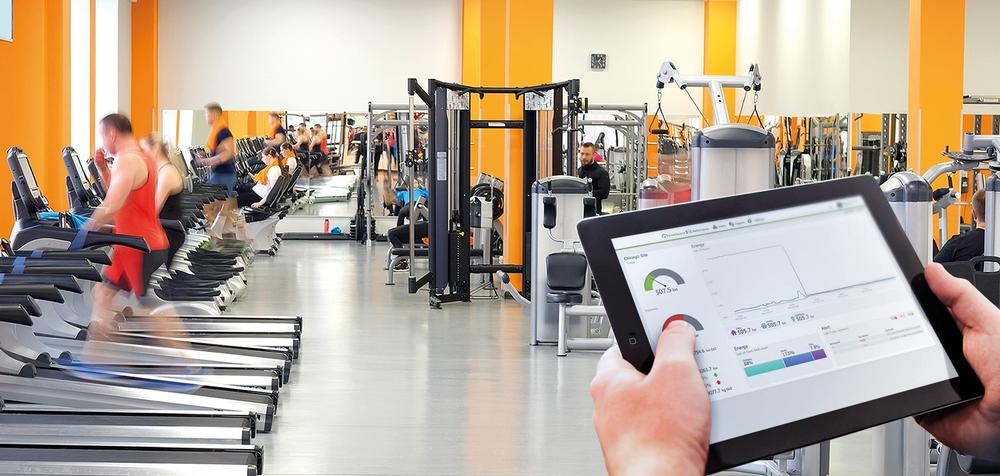
Cloud-based analytics and wireless sensor technology
can help operators identify inefficient energy appliances
What are the key factors that energy procurement managers should be considering today, and how can British Gas help? At British Gas Business we encourage businesses to consider ‘three pillars’ when it comes to their energy supply. The first step is to help them review what supply product they are on and to buy more wisely.
Some of our customers like to see how the market changes, and buy when it’s favourable. Others like the security of budgeting for a fixed price for the longer term. Fortunately, at British Gas Business, our range of tariffs suits both strategies. Fixed price contracts for up to five years help businesses budget, while flexible contracts give them more control over their energy spend. Some prefer a hybrid model with our blended contracts.
Secondly, operators need the right tools to help them use energy more wisely. Access to reliable consumption and invoicing data is incredibly important when making decisions about their estate. All our business supply contracts offer the option for automatic meter reading and an online energy management portal.
Using insights gained from intelligent data monitoring, we use live demand profiles to identify consumption trends and recommend areas where savings can be made.
Thirdly, we can help identify what options and assets are available for on-site generation, helping businesses avoid costs at peak periods and even generate income.
What does British Gas Business see as the main energy challenges for leisure operators? Operators should ensure their energy strategy allows them options on how to purchase their energy and monitor usage.
Non-commodity costs currently make up around half of a business’s energy bill, and industry forecasts suggest this could increase to nearly 60 per cent. With a large proportion of energy expenses being incurred between 4-7pm, the way to avoid these costs is to not use energy from the grid.
Clearly these are peak times for leisure operators so shutting down is not an option, but by utilising technology from a Distributed Energy (DE) solution, the costs can be avoided.
This is through solutions such as combined heat and power (CHP), allowing electricity and heat to be generated on site with the use of a gas intake boiler. Electricity can also be produced at different times, charged to an on-site battery, and then discharged during peak hours.
Can you explain more about the Distributed Energy concept and why it’s important for businesses? Distributed Energy represents a shift away from the traditional model of large power stations feeding electricity into the National Grid and on to local distribution networks. It’s a world where smaller generation sites join forces with battery storage, energy efficiency and smart building management systems, all managed from a single energy control centre.
The concept can apply to both multi-site businesses and single site operators within the corporate energy sector, so it’s extremely relevant for the leisure and health club sectors.
Our aim is to help businesses and other large energy users take control of their energy by giving them the power to operate, monitor, and optimise their energy assets.
Centrica recently acquired Panoramic Power. What does this bring to the portfolio? Panoramic Power was acquired by Centrica to complement our DE strategy. Combined with cloud-based analytics, the wireless sensor technology allows customers to obtain valuable insight into their energy usage – beyond the meter consumption and down to appliance level.
It’s managed online or through mobile apps, and provides real-time energy usage data on circuits or elements of buildings e.g. certain floors or rooms.
It will enable operators to identify inefficient equipment and potentially predict breakdowns before they happen; therefore mitigating potential downtime or valuable space being used for temporary generators.
What part does a company’s energy policy play in managing their brand reputation? As natural energy sources deplete and we become more reliable on new, greener technologies, organisations can use energy to boost their CSR credentials and therefore their brand reputation. By embracing the future world now, exploring the wider energy strategy around DE and adopting some of the technologies, they will be able to state their CSR credentials in this space and their support for the UK energy infrastructure long term.
Active Blackpool is deploying Cornerstone Connect, a new digital interface allowing
disparate information from multiple systems to be aggregated into one dataset, to support
its focus on reducing health inequalities and improving healthy life expectancy. [more...]
Panatta brought together four of the most influential figures in bodybuilding history on the
stage of RiminiWellness 2026: Phil Heath, Lee Haney, Ronnie Coleman and Hany Rambod. [more...]
+ More featured suppliers
COMPANY PROFILES
PSLT Ltd
PSLT Fitness Solutions manufacture, remanufacture and buy back commercial gym equipment. [more...]
Safe Space Lockers
We provide a full turn-key solution for clients from design and consultation, through to bespoke man [more...]
As large consumers of power, how can sport and leisure operators buy wisely, manage their
consumption and even generate their own energy on-site? Phil Bryant of British Gas explains
Cloud-based analytics and wireless sensor technology
can help operators identify inefficient energy appliances
What are the key factors that energy procurement managers should be considering today, and how can British Gas help? At British Gas Business we encourage businesses to consider ‘three pillars’ when it comes to their energy supply. The first step is to help them review what supply product they are on and to buy more wisely.
Some of our customers like to see how the market changes, and buy when it’s favourable. Others like the security of budgeting for a fixed price for the longer term. Fortunately, at British Gas Business, our range of tariffs suits both strategies. Fixed price contracts for up to five years help businesses budget, while flexible contracts give them more control over their energy spend. Some prefer a hybrid model with our blended contracts.
Secondly, operators need the right tools to help them use energy more wisely. Access to reliable consumption and invoicing data is incredibly important when making decisions about their estate. All our business supply contracts offer the option for automatic meter reading and an online energy management portal.
Using insights gained from intelligent data monitoring, we use live demand profiles to identify consumption trends and recommend areas where savings can be made.
Thirdly, we can help identify what options and assets are available for on-site generation, helping businesses avoid costs at peak periods and even generate income.
What does British Gas Business see as the main energy challenges for leisure operators? Operators should ensure their energy strategy allows them options on how to purchase their energy and monitor usage.
Non-commodity costs currently make up around half of a business’s energy bill, and industry forecasts suggest this could increase to nearly 60 per cent. With a large proportion of energy expenses being incurred between 4-7pm, the way to avoid these costs is to not use energy from the grid.
Clearly these are peak times for leisure operators so shutting down is not an option, but by utilising technology from a Distributed Energy (DE) solution, the costs can be avoided.
This is through solutions such as combined heat and power (CHP), allowing electricity and heat to be generated on site with the use of a gas intake boiler. Electricity can also be produced at different times, charged to an on-site battery, and then discharged during peak hours.
Can you explain more about the Distributed Energy concept and why it’s important for businesses? Distributed Energy represents a shift away from the traditional model of large power stations feeding electricity into the National Grid and on to local distribution networks. It’s a world where smaller generation sites join forces with battery storage, energy efficiency and smart building management systems, all managed from a single energy control centre.
The concept can apply to both multi-site businesses and single site operators within the corporate energy sector, so it’s extremely relevant for the leisure and health club sectors.
Our aim is to help businesses and other large energy users take control of their energy by giving them the power to operate, monitor, and optimise their energy assets.
Centrica recently acquired Panoramic Power. What does this bring to the portfolio? Panoramic Power was acquired by Centrica to complement our DE strategy. Combined with cloud-based analytics, the wireless sensor technology allows customers to obtain valuable insight into their energy usage – beyond the meter consumption and down to appliance level.
It’s managed online or through mobile apps, and provides real-time energy usage data on circuits or elements of buildings e.g. certain floors or rooms.
It will enable operators to identify inefficient equipment and potentially predict breakdowns before they happen; therefore mitigating potential downtime or valuable space being used for temporary generators.
What part does a company’s energy policy play in managing their brand reputation? As natural energy sources deplete and we become more reliable on new, greener technologies, organisations can use energy to boost their CSR credentials and therefore their brand reputation. By embracing the future world now, exploring the wider energy strategy around DE and adopting some of the technologies, they will be able to state their CSR credentials in this space and their support for the UK energy infrastructure long term.
According to research which tracked more than 147,000 people for 30 years, 90-120 minutes
of strength training a week may deliver some of the biggest long-term health rewards.
The UK's four Chief Medical Officers have published a refreshed edition of Physical activity
guidelines: UK Chief Medical Officers' report, updating the evidence that underpins the nation's
physical activity recommendations and placing greater emphasis on strength, balance, reducing
sedentary behaviour and, for the first time, supporting people taking weight loss medications.
Places Leisure has exchanged contracts to build and operate a flagship £60m water and leisure
destination on behalf of Basingstoke and Deane Borough Council.
The Republic of Ireland will become the latest market in PureGym’s expanding international
portfolio, with the first launch planned for Dublin in 2027.
Anytime Fitness opened more than one club a day in 2025 and is on track to maintain this rate
of growth this year, as parent company Purpose Brands targets further international expansion.
The £33.9 million Leighton Leisure and Community Centre has opened in Leighton Buzzard, UK,
creating a next-generation public leisure, health and wellbeing hub for the local community.
Walnuts Leisure Centre in Orpington, in the London Borough of Bromley, has reopened following
a £17m transformation designed to secure the long-term future of the public leisure asset and
reposition it as a community wellbeing hub.
The Gym Group, has announced that it's sustained positive trading momentum has continued
through the first half of 2026 and the company remains confident about the outlook.
Active Blackpool is deploying Cornerstone Connect, a new digital interface allowing
disparate information from multiple systems to be aggregated into one dataset, to support
its focus on reducing health inequalities and improving healthy life expectancy. [more...]
Panatta brought together four of the most influential figures in bodybuilding history on the
stage of RiminiWellness 2026: Phil Heath, Lee Haney, Ronnie Coleman and Hany Rambod. [more...]
+ More featured suppliers
COMPANY PROFILES
PSLT Ltd PSLT Fitness Solutions manufacture, remanufacture and buy back commercial gym equipment. [more...]