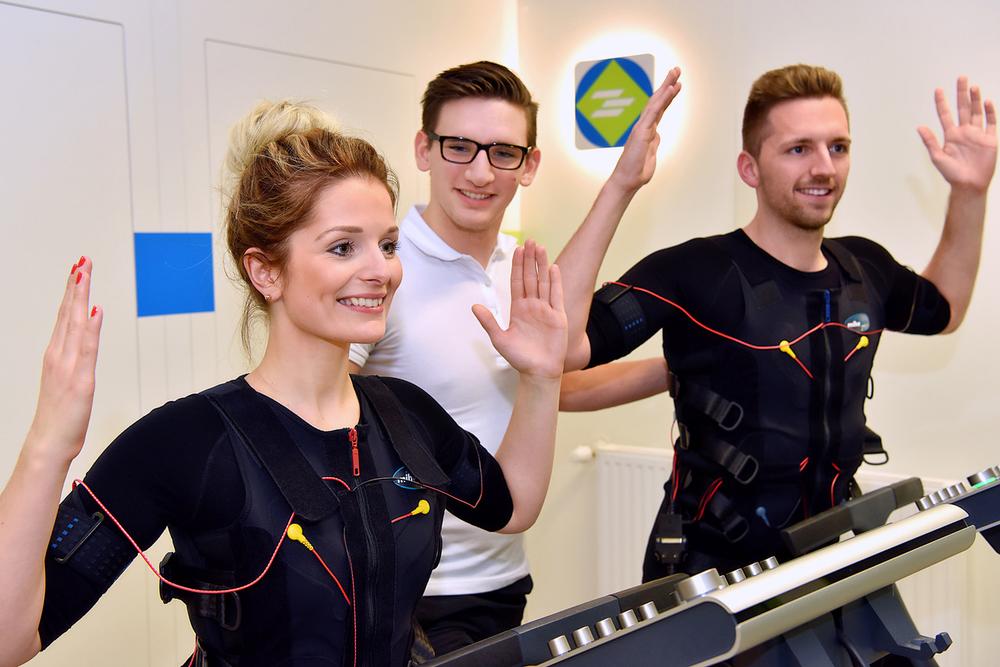
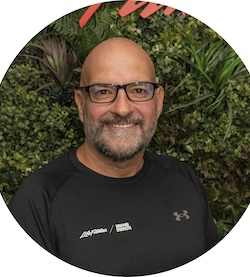
A 'shop-in-shop' EMS model offers affordable start-up costs and huge potential to improve your health club profits, says EMS operator Thomas Kammerling
You do not need many EMS customers to create high profit
he fitness industry has changed fundamentally in recent years. Above all this is due to an oversupply and price decline of the ‘fitness’ offer by discount giants. If, as a health club operator, you do not refine and enhance your brand, you'll probably not be able to survive the next few years.
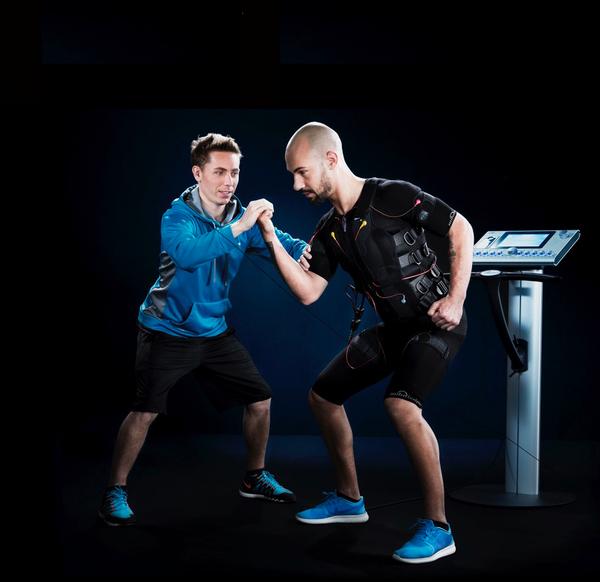
For many clubs, the concept of EMS personal training could provide an important lifeline with potential for huge market growth and a chance for service and price differentiation targeted at specific customer segments.
The EMS concept has been proven to deliver quality and time-efficient personal training, making it accessible to a broader customer demographic. In Germany, EMS continues its positive development and increasingly skims a significant part of the classic fitness market. Here we discuss the specific advantages of integrating EMS into your existing facilities as a 'shop-in-shop' system.
Is it enough to let the EMS personal training take place in the training area? The answer to this is ‘no’, as the experience of numerous club operators as well as the world market leader for EMS training – miha bodytec clearly shows. You should avoid mixing EMS personal training with conventional PT as this may deter the prospect and blur the line between two very different service categories.
The experience regarding the drop-out and fluctuation rate of EMS clients shows that the member attrition rate of the shop-in-shop system is far lower than conventional models, usually with a fluctuation rate of less than 10%.
Can I use my course training room for EMS? At first, this may appear to be a viable solution, but it's not advisable if you want to have lasting economic success with EMS training. If you want to create the added value and high esteem that is typically expected by EMS customers, you need to build it up by separating it spatially and giving it a high-quality look and feel.
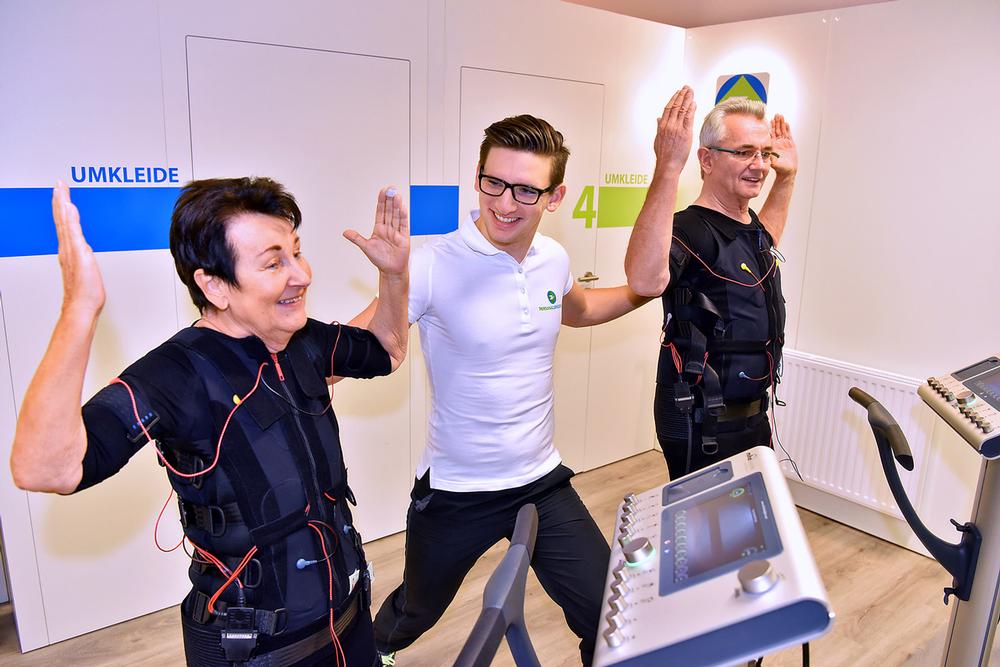
In comparison to typical health club fees, EMS customers are willing to pay more than twice as much for a weekly 20-minute EMS session in a 1:2 personal training scenario. So these clients deserves a luxury training space. Compare it to a hotel room: the luxury suite costs twice as much per night, and as a guest you should be able to feel that difference!
This is why the 'shop-in-shop' system works so well. It's even advisable to give your EMS personal training its own brand name. The key point is that you increase the exclusivity of this service and clearly separate and elevate it from the rest of the company.
Do I cannibalise my existing health club members by adding an EMS shop-in-shop system? Experience shows otherwise. Your EMS personal training should focus on attracting people who have not yet found their way into your club, or who are former members who'd quit their classic fitness training due to lack of time or motivation, or because they did not achieve their goals. Imagine if you could reach out to previous customers and re-enrol them into your new EMS training club by overcoming the typical cancellation arguments of ‘too little time’?
What are the advantages and synergies offered by the integration of the shop-in-shop system? You''ll see the great benefit of this system by being able to reach the EMS target group because of the clear separation from the rest of your club – while still fully exploiting the great synergies that enable you to integrate the EMS concept into your existing business.
These synergies begin, for example, with the enormous cost advantages compared to a ‘stand-alone’ boutique-studio with regard to rent, personnel procurement as well as sales opportunities.
However, the most interesting benefits come in the form of additional sales potentials for your existing health and fitness club. Through EMS personal training you now appeal to a whole new target group and, of course, gain a lot more interest in your club.
All your new EMS personal training clients also have family, friends and acquaintances, who represent potential EMS customers or fitness club customers. Added to this are revenues from the supplementary sale of nutritional concepts, supplements and similar benefits.
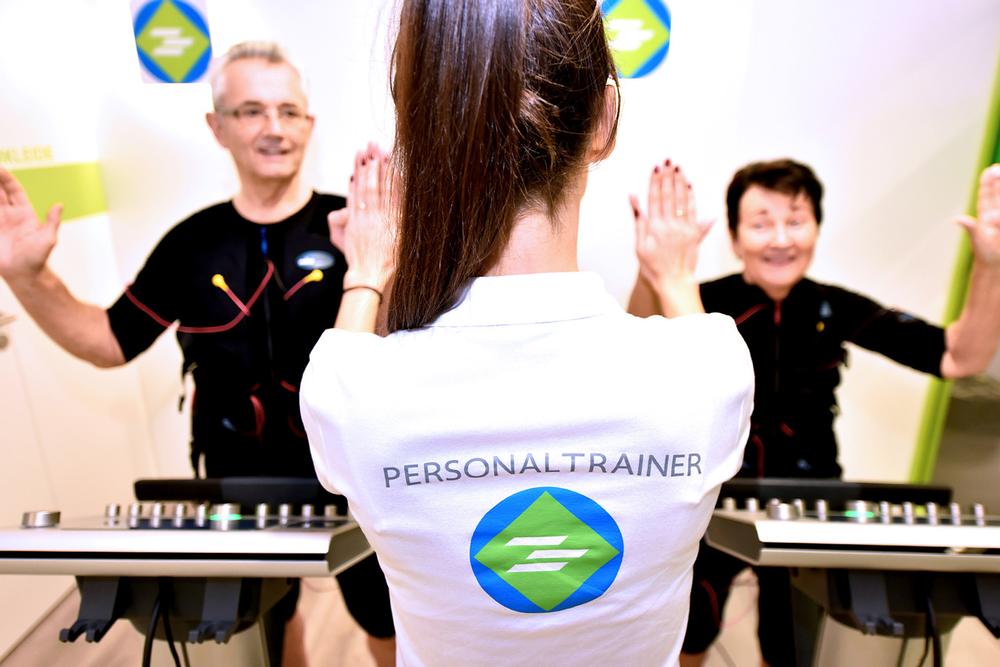
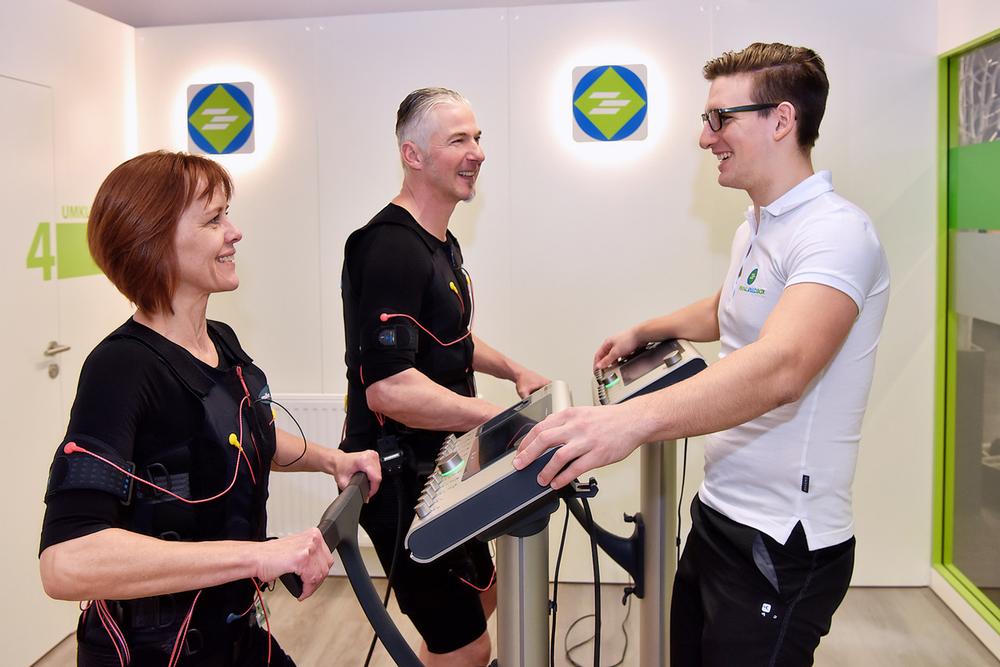
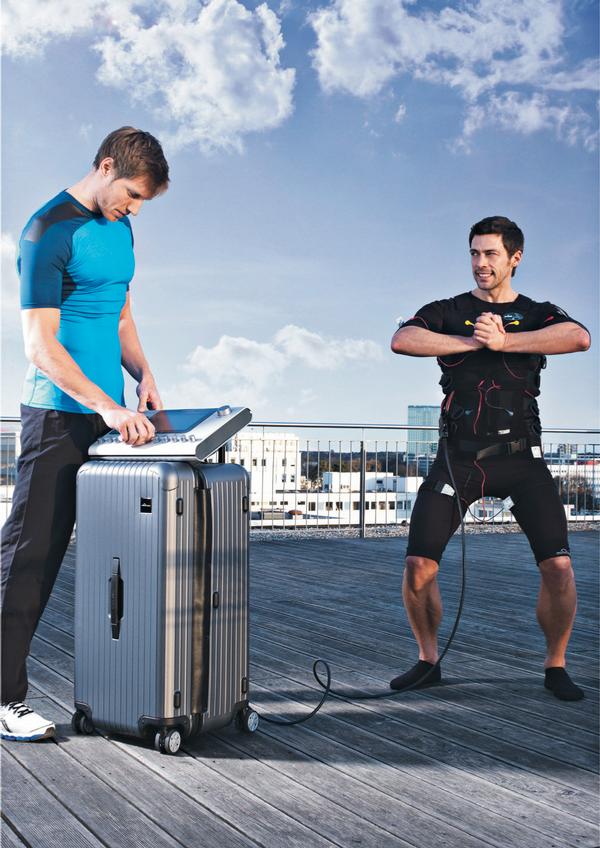
What do I need for a functioning shop? You need the basics, which is two EMS devices, a room design of around 40 sqm as well as trained employees. The acquisition costs are manageable and far more favourable than any electronic circuit concept in the industry. However, the low acquisition costs do not mean that EMS personal training will become a big seller in your area by itself. For that, you need working structures and procedures for your employees in order to win EMS customers, be successful and achieve maximum profitability.
Active Blackpool is deploying Cornerstone Connect, a new digital interface allowing
disparate information from multiple systems to be aggregated into one dataset, to support
its focus on reducing health inequalities and improving healthy life expectancy. [more...]
Panatta brought together four of the most influential figures in bodybuilding history on the
stage of RiminiWellness 2026: Phil Heath, Lee Haney, Ronnie Coleman and Hany Rambod. [more...]
A 'shop-in-shop' EMS model offers affordable start-up costs and huge potential to improve your health club profits, says EMS operator Thomas Kammerling
You do not need many EMS customers to create high profit
he fitness industry has changed fundamentally in recent years. Above all this is due to an oversupply and price decline of the ‘fitness’ offer by discount giants. If, as a health club operator, you do not refine and enhance your brand, you'll probably not be able to survive the next few years.
For many clubs, the concept of EMS personal training could provide an important lifeline with potential for huge market growth and a chance for service and price differentiation targeted at specific customer segments.
The EMS concept has been proven to deliver quality and time-efficient personal training, making it accessible to a broader customer demographic. In Germany, EMS continues its positive development and increasingly skims a significant part of the classic fitness market. Here we discuss the specific advantages of integrating EMS into your existing facilities as a 'shop-in-shop' system.
Is it enough to let the EMS personal training take place in the training area? The answer to this is ‘no’, as the experience of numerous club operators as well as the world market leader for EMS training – miha bodytec clearly shows. You should avoid mixing EMS personal training with conventional PT as this may deter the prospect and blur the line between two very different service categories.
The experience regarding the drop-out and fluctuation rate of EMS clients shows that the member attrition rate of the shop-in-shop system is far lower than conventional models, usually with a fluctuation rate of less than 10%.
Can I use my course training room for EMS? At first, this may appear to be a viable solution, but it's not advisable if you want to have lasting economic success with EMS training. If you want to create the added value and high esteem that is typically expected by EMS customers, you need to build it up by separating it spatially and giving it a high-quality look and feel.
In comparison to typical health club fees, EMS customers are willing to pay more than twice as much for a weekly 20-minute EMS session in a 1:2 personal training scenario. So these clients deserves a luxury training space. Compare it to a hotel room: the luxury suite costs twice as much per night, and as a guest you should be able to feel that difference!
This is why the 'shop-in-shop' system works so well. It's even advisable to give your EMS personal training its own brand name. The key point is that you increase the exclusivity of this service and clearly separate and elevate it from the rest of the company.
Do I cannibalise my existing health club members by adding an EMS shop-in-shop system? Experience shows otherwise. Your EMS personal training should focus on attracting people who have not yet found their way into your club, or who are former members who'd quit their classic fitness training due to lack of time or motivation, or because they did not achieve their goals. Imagine if you could reach out to previous customers and re-enrol them into your new EMS training club by overcoming the typical cancellation arguments of ‘too little time’?
What are the advantages and synergies offered by the integration of the shop-in-shop system? You''ll see the great benefit of this system by being able to reach the EMS target group because of the clear separation from the rest of your club – while still fully exploiting the great synergies that enable you to integrate the EMS concept into your existing business.
These synergies begin, for example, with the enormous cost advantages compared to a ‘stand-alone’ boutique-studio with regard to rent, personnel procurement as well as sales opportunities.
However, the most interesting benefits come in the form of additional sales potentials for your existing health and fitness club. Through EMS personal training you now appeal to a whole new target group and, of course, gain a lot more interest in your club.
All your new EMS personal training clients also have family, friends and acquaintances, who represent potential EMS customers or fitness club customers. Added to this are revenues from the supplementary sale of nutritional concepts, supplements and similar benefits.
What do I need for a functioning shop? You need the basics, which is two EMS devices, a room design of around 40 sqm as well as trained employees. The acquisition costs are manageable and far more favourable than any electronic circuit concept in the industry. However, the low acquisition costs do not mean that EMS personal training will become a big seller in your area by itself. For that, you need working structures and procedures for your employees in order to win EMS customers, be successful and achieve maximum profitability.
According to research which tracked more than 147,000 people for 30 years, 90-120 minutes
of strength training a week may deliver some of the biggest long-term health rewards.
The UK's four Chief Medical Officers have published a refreshed edition of Physical activity
guidelines: UK Chief Medical Officers' report, updating the evidence that underpins the nation's
physical activity recommendations and placing greater emphasis on strength, balance, reducing
sedentary behaviour and, for the first time, supporting people taking weight loss medications.
Places Leisure has exchanged contracts to build and operate a flagship £60m water and leisure
destination on behalf of Basingstoke and Deane Borough Council.
The Republic of Ireland will become the latest market in PureGym’s expanding international
portfolio, with the first launch planned for Dublin in 2027.
Anytime Fitness opened more than one club a day in 2025 and is on track to maintain this rate
of growth this year, as parent company Purpose Brands targets further international expansion.
The £33.9 million Leighton Leisure and Community Centre has opened in Leighton Buzzard, UK,
creating a next-generation public leisure, health and wellbeing hub for the local community.
Walnuts Leisure Centre in Orpington, in the London Borough of Bromley, has reopened following
a £17m transformation designed to secure the long-term future of the public leisure asset and
reposition it as a community wellbeing hub.
The Gym Group, has announced that it's sustained positive trading momentum has continued
through the first half of 2026 and the company remains confident about the outlook.
Active Blackpool is deploying Cornerstone Connect, a new digital interface allowing
disparate information from multiple systems to be aggregated into one dataset, to support
its focus on reducing health inequalities and improving healthy life expectancy. [more...]
Panatta brought together four of the most influential figures in bodybuilding history on the
stage of RiminiWellness 2026: Phil Heath, Lee Haney, Ronnie Coleman and Hany Rambod. [more...]