While some people above 70 are active on a daily basis, others struggle to walk unaided. With such a wide range of abilities among this age group, Kath Hudson asks the industry’s experts: how should clubs engage with older adults?
By Kath Hudson | Published in Health Club Management 2017 issue 8
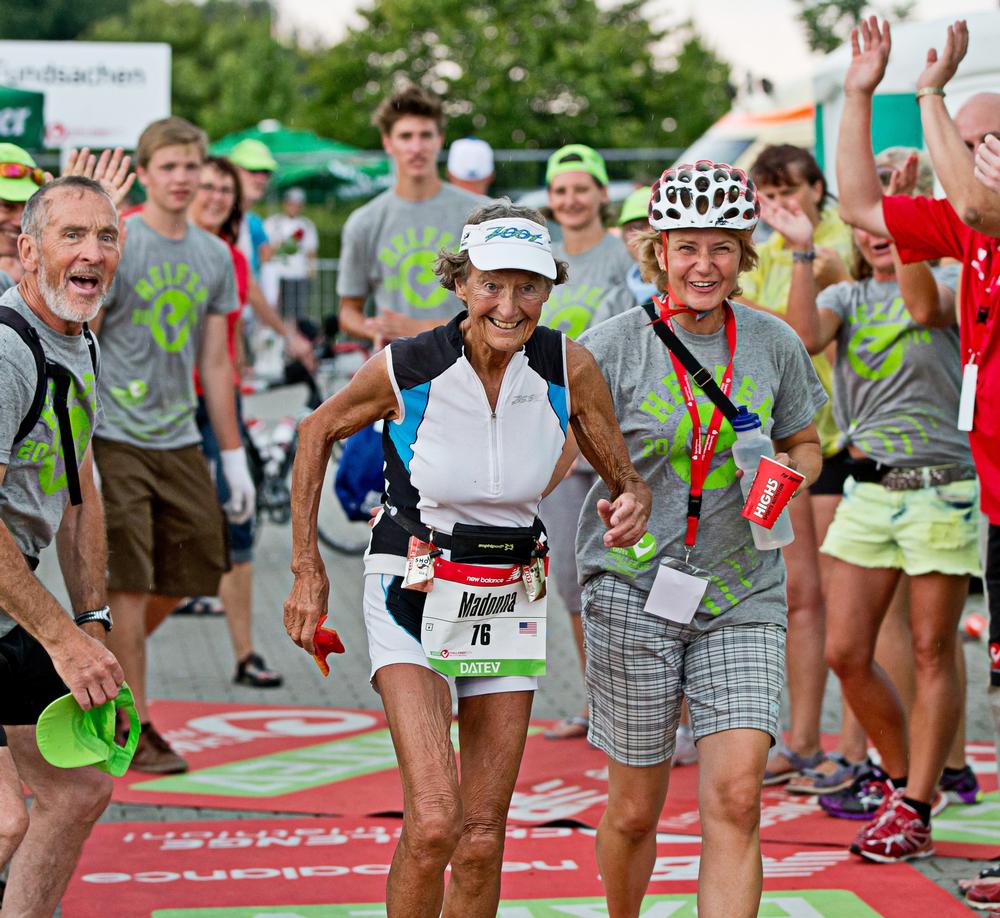
87 year old 'Iron Nun', Madonna Buder, started competing in Ironman events at the age of 55 / DANIEL KARMANN/dpa_PRESS ASSOCIATION
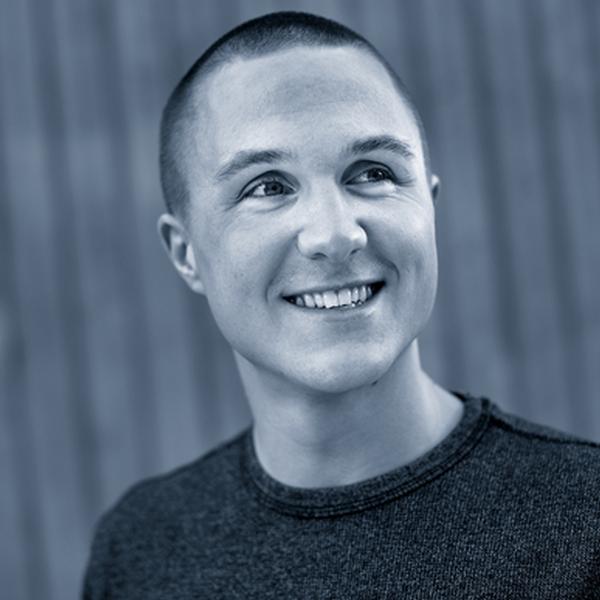
Dr Stephan BandelowSenior lecturer in psychologyLoughborough University
Dr Stephan Bandelow
There is good evidence to prove that regular physical activity can help ward off a number of old age conditions, including dementia, diabetes and cardiovascular disease, as well as giving the direct benefits of making people more strong and physically able.
Although the data shows that everyone can benefit from exercise, even if they don’t pick it up until later in life, evidence also suggests that the later they leave it the less likely people are to change their habits.
A recently announced change in advice from the World Health Organization, is that in addition to the 150 minutes of moderate exercise each week, it is now recommended that older people complete two strength training sessions each week. Also, some of those 150 minutes should be at a vigorous intensity.
Any health conditions should be taken into consideration when working with this demographic and it must be remembered that older people have slower recovery times and are prone to inflammation. However, they do not need to be treated with kid gloves: many 80-year-olds run marathons.
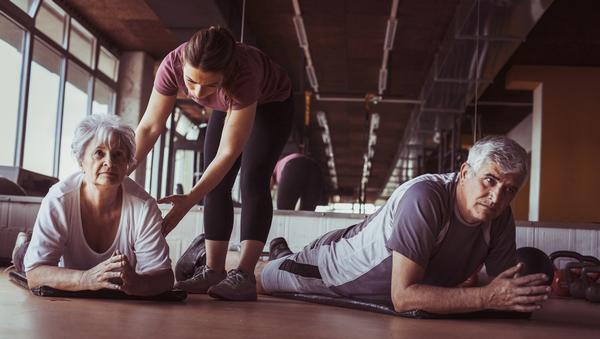
For those who don’t exercise, the main challenge will be getting them into your club in the first place. Anything gyms can do to lower the starting point and initial barriers would be helpful, such as holding taster sessions.
"For those who don’t exercise, the challenge will be getting them into your club in the first place. Anything gyms can do to lower the initial barriers would be helpful"
shutterstock
Taster sessions can be useful in attracting older members
Kristoffer SjobergDevelopment ManagerActivage
Kristoffer Sjoberg
To engage with this demographic, you need to ensure the barriers to entry are low. As we're specifically targeting older people, we designed our club with this in mind and you enter into a lounge area. This immediately makes people feel comfortable and changes their perceptions about what a health club is like.
If people are new to exercise, you need to start very lightly. For anyone who has been inactive for more than a couple of months, it will take a while for their joints and ligaments to adjust. The longer they've been inactive the slower you need to take it. Initially, with our new members, we focus less on the work and more on creating a positive feeling and experience, while they are trying to form the habit.
Research shows that the older you get, the heavier you have to lift, so we do pretty hard strength training with older adults. You need to be aware of injuries and To engage with this demographic, you need to ensure the barriers to entry are low. As we're specifically targeting older people, we designed our club with this in mind and you enter into a lounge area. This immediately makes people feel comfortable and changes their perceptions about what a health club is like.
If people are new to exercise, you need to start very lightly. For anyone who has been inactive for more than a couple of months, it will take a while for their joints and ligaments to adjust. The longer they've been inactive the slower you need to take it. Initially, with our new members, we focus less on the work and more on creating a positive feeling and experience, while they are trying to form the habit.
Research shows that the older you get, the heavier you have to lift, so we do pretty hard strength training with older adults. You need to be aware of injuries and illnesses and supervise them carefully to know how hard to push them.
Balance training is another area of focus. Many clients come to us with canes and walkers, but within a few months they don’t need them anymore. We make them stand unaided during the exercises, but ensure they have something to grab if they lose their balance.
Finally, to successfully work with older people, you have to be genuinely interested in them and really good at taking the time to explain the exercises.
"Research shows that the older you get, the heavier you have to lift, so we do pretty hard strength training with older adults"
Harkirat MahalFounderMotivate PT
Harkirat Mahal
We're seeing an upsurge in interest from elderly people for our PT services. Sometimes it’s because their health-conscious, 40-something children have got in touch asking us to work with their parent(s). Sometimes it’s because as individuals realise they're getting to the end of their life, they start to value their health more and want to improve it.
Working with this demographic is incredibly rewarding, but has its own challenges, as not all older clients enjoy changing their habits. Sometimes older clients suffer from depression, loneliness and lack the confidence to leave their homes. I’ve arrived at people’s houses and they’ve been in their pyjamas, so I’ve had to coax them to get dressed and engage in the session. You cannot take this personally. Being a senior fitness PT requires persistence, patience and maturity.
GOOD RAPPORT We usually find that once people have gotten through the first eight weeks, they're enjoying it and have built a rapport with their trainer. This trust is all important – they don’t like change, and will generally miss a session if their PT is on holiday, rather than work with another one.
Exercise programmes need to be incredibly tailored, because age means nothing. I have some 70-year-olds who can train like they’re 50 and others who struggle to get out of a chair. However, this is not a “give me 10 more” type of client, and you have to be mindful about not pushing beyond comfort levels.
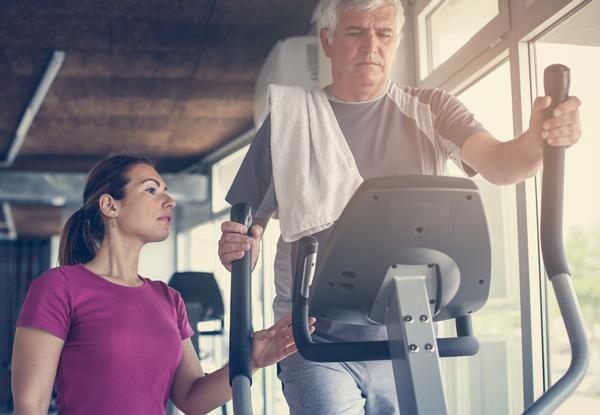
When taking on a new client, it’s very important to do a thorough consultation and all the common sense checks, like blood pressure. If you're unsure about something, such as a recent operation, or if they're being vague, don’t be embarrassed to ask for a doctor’s note before they get started.
With older people, sometimes the mental deterioration can be faster than the physical, so they won’t always remember the last session, or the exercises. Research has shown that working on coordination can improve memory, as can incorporating light weights.
GREAT OUTDOORS I bring an element of repetition into sessions to see if they can remember what to do themselves. Be prepared to write down their homework, to help them recall the exercises. It’s also good to design exercises which can be incorporated into their everyday lives, such as practising squatting as they get in and out of chairs.
Getting them outside is great too: some of them don’t go out much and a walk provides the chance to have a friendly chat.
"This trust is all important – they don’t like change, and will generally miss a session if their PT is on holiday, rather than work with another one"
shutterstock
Seniors may need medical clearance before starting a an exercise programme
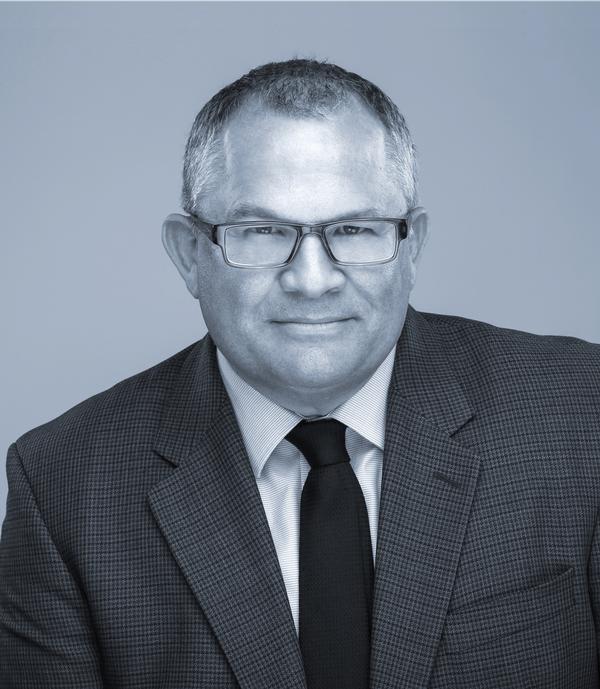
Colin MilnerCEOInternational Council on Active Ageing
Colin Milner
Responding to this demographic is tough and requires a strategy: it’s about inclusion in terms of the facility, service and programming. Each individual over 65 will be different, so every programme has to be tailored. The key point is to base the programme on where they are now, making it fun and enjoyable, with challenges based on their capabilities.
For someone who has been sedentary for a long time, getting them to the recommended 150 minutes a week might be intimidating, so you need to help them build up to – and ideally get beyond – that. Work on power and balance is important, as power means they can move faster, which means less risk of falls. Also, the use of HIIT for training older adults is fast becoming popular.
It's important not to put people in a box. There isn’t a particular type of exercise which appeals to this demographic, so when an older member comes in, the instructor needs to find out what they aspire to and then design a programme which will help them to achieve that.
PUSHING HARDER The biggest misconception about this demographic is that they can’t work hard. Like anyone else, when you push them hard, they don’t die, they get stronger, fitter and more independent. Some might need to spend part of the session in a chair, but the aim needs to be to get them to stand up for increasing amounts of time. Like anyone else, they need programmes to improve their stamina, strength, power and flexibility and they need progression.
Going forward, personal training will become precision training, with technology allowing trainers to give precise advice, while wearables will start to give people more real time feedback.
"Work on power and balance is important, as power means they can move faster, which means less risk of falls"
shutterstock
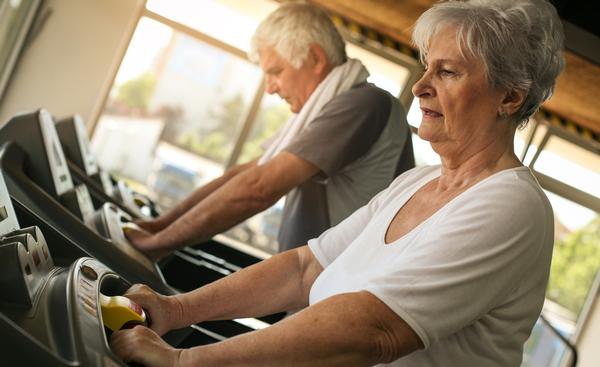
For seniors, 150 minutes of moderate-intensity activity per week is recommended
WHO physical activity guidelines for older adults • Older adults should do at least 150 minutes of moderate-intensity or 75 minutes of vigorous-intensity aerobic physical activity throughout the week
• Aerobic activity should be done in bouts of at least 10 minutes
• For additional health benefits, older adults should increase their moderate-intensity aerobic physical activity to 300 minutes per week, or engage in 150 minutes of vigorous-intensity aerobic physical activity per week
• Older adults with poor mobility should perform physical activity to enhance balance and prevent falls on three or more days per week
• Muscle-strengthening activities, involving major muscle groups, should be done on two or more days a week
• When older adults cannot do the recommended amounts of physical activity due to health conditions, they should be as physically active as their abilities and conditions allow
Active Blackpool is deploying Cornerstone Connect, a new digital interface allowing
disparate information from multiple systems to be aggregated into one dataset, to support
its focus on reducing health inequalities and improving healthy life expectancy. [more...]
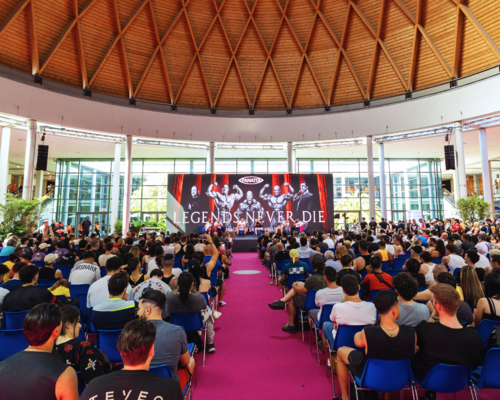
Panatta brought together four of the most influential figures in bodybuilding history on the
stage of RiminiWellness 2026: Phil Heath, Lee Haney, Ronnie Coleman and Hany Rambod. [more...]
+ More featured suppliers
COMPANY PROFILES
Safe Space Lockers
We provide a full turn-key solution for clients from design and consultation, through to bespoke man [more...]
Precor
Precor promises precision-quality products with steadfast reliability that are inspired by exerciser [more...]
While some people above 70 are active on a daily basis, others struggle to walk unaided. With such a wide range of abilities among this age group, Kath Hudson asks the industry’s experts: how should clubs engage with older adults?
By Kath Hudson | Published in Health Club Management 2017 issue 8
87 year old 'Iron Nun', Madonna Buder, started competing in Ironman events at the age of 55 / DANIEL KARMANN/dpa_PRESS ASSOCIATION
Dr Stephan BandelowSenior lecturer in psychologyLoughborough University
Dr Stephan Bandelow
There is good evidence to prove that regular physical activity can help ward off a number of old age conditions, including dementia, diabetes and cardiovascular disease, as well as giving the direct benefits of making people more strong and physically able.
Although the data shows that everyone can benefit from exercise, even if they don’t pick it up until later in life, evidence also suggests that the later they leave it the less likely people are to change their habits.
A recently announced change in advice from the World Health Organization, is that in addition to the 150 minutes of moderate exercise each week, it is now recommended that older people complete two strength training sessions each week. Also, some of those 150 minutes should be at a vigorous intensity.
Any health conditions should be taken into consideration when working with this demographic and it must be remembered that older people have slower recovery times and are prone to inflammation. However, they do not need to be treated with kid gloves: many 80-year-olds run marathons.
For those who don’t exercise, the main challenge will be getting them into your club in the first place. Anything gyms can do to lower the starting point and initial barriers would be helpful, such as holding taster sessions.
"For those who don’t exercise, the challenge will be getting them into your club in the first place. Anything gyms can do to lower the initial barriers would be helpful"
shutterstock
Taster sessions can be useful in attracting older members
Kristoffer SjobergDevelopment ManagerActivage
Kristoffer Sjoberg
To engage with this demographic, you need to ensure the barriers to entry are low. As we're specifically targeting older people, we designed our club with this in mind and you enter into a lounge area. This immediately makes people feel comfortable and changes their perceptions about what a health club is like.
If people are new to exercise, you need to start very lightly. For anyone who has been inactive for more than a couple of months, it will take a while for their joints and ligaments to adjust. The longer they've been inactive the slower you need to take it. Initially, with our new members, we focus less on the work and more on creating a positive feeling and experience, while they are trying to form the habit.
Research shows that the older you get, the heavier you have to lift, so we do pretty hard strength training with older adults. You need to be aware of injuries and To engage with this demographic, you need to ensure the barriers to entry are low. As we're specifically targeting older people, we designed our club with this in mind and you enter into a lounge area. This immediately makes people feel comfortable and changes their perceptions about what a health club is like.
If people are new to exercise, you need to start very lightly. For anyone who has been inactive for more than a couple of months, it will take a while for their joints and ligaments to adjust. The longer they've been inactive the slower you need to take it. Initially, with our new members, we focus less on the work and more on creating a positive feeling and experience, while they are trying to form the habit.
Research shows that the older you get, the heavier you have to lift, so we do pretty hard strength training with older adults. You need to be aware of injuries and illnesses and supervise them carefully to know how hard to push them.
Balance training is another area of focus. Many clients come to us with canes and walkers, but within a few months they don’t need them anymore. We make them stand unaided during the exercises, but ensure they have something to grab if they lose their balance.
Finally, to successfully work with older people, you have to be genuinely interested in them and really good at taking the time to explain the exercises.
"Research shows that the older you get, the heavier you have to lift, so we do pretty hard strength training with older adults"
Harkirat MahalFounderMotivate PT
Harkirat Mahal
We're seeing an upsurge in interest from elderly people for our PT services. Sometimes it’s because their health-conscious, 40-something children have got in touch asking us to work with their parent(s). Sometimes it’s because as individuals realise they're getting to the end of their life, they start to value their health more and want to improve it.
Working with this demographic is incredibly rewarding, but has its own challenges, as not all older clients enjoy changing their habits. Sometimes older clients suffer from depression, loneliness and lack the confidence to leave their homes. I’ve arrived at people’s houses and they’ve been in their pyjamas, so I’ve had to coax them to get dressed and engage in the session. You cannot take this personally. Being a senior fitness PT requires persistence, patience and maturity.
GOOD RAPPORT We usually find that once people have gotten through the first eight weeks, they're enjoying it and have built a rapport with their trainer. This trust is all important – they don’t like change, and will generally miss a session if their PT is on holiday, rather than work with another one.
Exercise programmes need to be incredibly tailored, because age means nothing. I have some 70-year-olds who can train like they’re 50 and others who struggle to get out of a chair. However, this is not a “give me 10 more” type of client, and you have to be mindful about not pushing beyond comfort levels.
When taking on a new client, it’s very important to do a thorough consultation and all the common sense checks, like blood pressure. If you're unsure about something, such as a recent operation, or if they're being vague, don’t be embarrassed to ask for a doctor’s note before they get started.
With older people, sometimes the mental deterioration can be faster than the physical, so they won’t always remember the last session, or the exercises. Research has shown that working on coordination can improve memory, as can incorporating light weights.
GREAT OUTDOORS I bring an element of repetition into sessions to see if they can remember what to do themselves. Be prepared to write down their homework, to help them recall the exercises. It’s also good to design exercises which can be incorporated into their everyday lives, such as practising squatting as they get in and out of chairs.
Getting them outside is great too: some of them don’t go out much and a walk provides the chance to have a friendly chat.
"This trust is all important – they don’t like change, and will generally miss a session if their PT is on holiday, rather than work with another one"
shutterstock
Seniors may need medical clearance before starting a an exercise programme
Colin MilnerCEOInternational Council on Active Ageing
Colin Milner
Responding to this demographic is tough and requires a strategy: it’s about inclusion in terms of the facility, service and programming. Each individual over 65 will be different, so every programme has to be tailored. The key point is to base the programme on where they are now, making it fun and enjoyable, with challenges based on their capabilities.
For someone who has been sedentary for a long time, getting them to the recommended 150 minutes a week might be intimidating, so you need to help them build up to – and ideally get beyond – that. Work on power and balance is important, as power means they can move faster, which means less risk of falls. Also, the use of HIIT for training older adults is fast becoming popular.
It's important not to put people in a box. There isn’t a particular type of exercise which appeals to this demographic, so when an older member comes in, the instructor needs to find out what they aspire to and then design a programme which will help them to achieve that.
PUSHING HARDER The biggest misconception about this demographic is that they can’t work hard. Like anyone else, when you push them hard, they don’t die, they get stronger, fitter and more independent. Some might need to spend part of the session in a chair, but the aim needs to be to get them to stand up for increasing amounts of time. Like anyone else, they need programmes to improve their stamina, strength, power and flexibility and they need progression.
Going forward, personal training will become precision training, with technology allowing trainers to give precise advice, while wearables will start to give people more real time feedback.
"Work on power and balance is important, as power means they can move faster, which means less risk of falls"
shutterstock
For seniors, 150 minutes of moderate-intensity activity per week is recommended
WHO physical activity guidelines for older adults • Older adults should do at least 150 minutes of moderate-intensity or 75 minutes of vigorous-intensity aerobic physical activity throughout the week
• Aerobic activity should be done in bouts of at least 10 minutes
• For additional health benefits, older adults should increase their moderate-intensity aerobic physical activity to 300 minutes per week, or engage in 150 minutes of vigorous-intensity aerobic physical activity per week
• Older adults with poor mobility should perform physical activity to enhance balance and prevent falls on three or more days per week
• Muscle-strengthening activities, involving major muscle groups, should be done on two or more days a week
• When older adults cannot do the recommended amounts of physical activity due to health conditions, they should be as physically active as their abilities and conditions allow
According to research which tracked more than 147,000 people for 30 years, 90-120 minutes
of strength training a week may deliver some of the biggest long-term health rewards.
The UK's four Chief Medical Officers have published a refreshed edition of Physical activity
guidelines: UK Chief Medical Officers' report, updating the evidence that underpins the nation's
physical activity recommendations and placing greater emphasis on strength, balance, reducing
sedentary behaviour and, for the first time, supporting people taking weight loss medications.
Places Leisure has exchanged contracts to build and operate a flagship £60m water and leisure
destination on behalf of Basingstoke and Deane Borough Council.
The Republic of Ireland will become the latest market in PureGym’s expanding international
portfolio, with the first launch planned for Dublin in 2027.
Anytime Fitness opened more than one club a day in 2025 and is on track to maintain this rate
of growth this year, as parent company Purpose Brands targets further international expansion.
The £33.9 million Leighton Leisure and Community Centre has opened in Leighton Buzzard, UK,
creating a next-generation public leisure, health and wellbeing hub for the local community.
Walnuts Leisure Centre in Orpington, in the London Borough of Bromley, has reopened following
a £17m transformation designed to secure the long-term future of the public leisure asset and
reposition it as a community wellbeing hub.
The Gym Group, has announced that it's sustained positive trading momentum has continued
through the first half of 2026 and the company remains confident about the outlook.
Active Blackpool is deploying Cornerstone Connect, a new digital interface allowing
disparate information from multiple systems to be aggregated into one dataset, to support
its focus on reducing health inequalities and improving healthy life expectancy. [more...]
Panatta brought together four of the most influential figures in bodybuilding history on the
stage of RiminiWellness 2026: Phil Heath, Lee Haney, Ronnie Coleman and Hany Rambod. [more...]
+ More featured suppliers
COMPANY PROFILES
Safe Space Lockers We provide a full turn-key solution for clients from design and consultation, through to bespoke man [more...]