With online streaming bringing high quality fitness classes into the home, Kath Hudson explores if the health and fitness industry is at risk of losing ground to the home gym
By Kath Hudson | Published in Health Club Management 2017 issue 8
As digital technology grows increasingly sophisticated, high-quality fitness equipment and expertise are no longer limited to the gym. Instead, functional kit, live class streaming, training apps, downloadable programmes and even virtuaI PTs are now widely available to all, and often at an affordable price. In the face of such offerings, gyms need to make sure their point of differentiation is strong enough to stop people staying at home to workout, rather than visiting the gym.
What can gyms do to make sure they’re offering something that makes them worth the time, effort and cost for the majority of people? Does the answer lie with the expertise available, the personal attention, the social aspect or something else?
We ask five industry experts what gym operators need to do to effectively ward off the threat of the home gym.
Dave LongCEOOrangetheory Fitness
Dave Long
People are starting to consume fitness differently. They’re no longer just going to go to a big-box gym, but are instead looking at getting different services from different places.
When we initially opened, we didn’t position ourselves as the only thing people were going to do, we wanted them to come twice a week to get the best results, but also expected them to do other things, whether that be a home workout, a yoga class or running.
Home equipment is getting better, but we don’t believe you can replicate the out-of-home experience at home, because there is the community factor and social factor of clubs. Even if home gym usage goes up, we don’t think it’s a big threat. It’s just part of the fitness puzzle people are putting together and any opportunity to get them exercising is good news.
Historically, usage at home has been low, so even with better equipment, it will be a challenge to stay on task.
At Orangetheory Fitness, we’re supporting customers to exercise outside of our studios by rebuilding our technology platform to be more supportive of out-of-club activity and improving connectivity in relation to getting hold of their data.
Even if home gym usage goes up, we don’t think it’s a big threat. It’s just part of the fitness puzzle people are putting together and any opportunity to get them exercising is good news – Dave Long
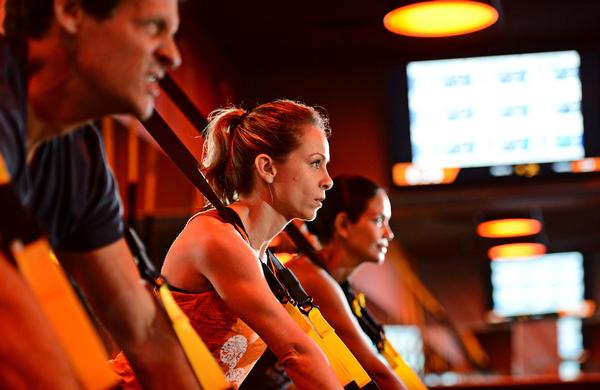
Orangetheory’s technology assists members with home exercise
Michelle DandGroup Health and Fitness ManagerDavid Lloyd Leisure
Michelle Dand
Clubs need to know what they are representing and ensure they make this clear to their audience. At David Lloyd Leisure (DLL), we have positioned ourselves as a type of lifestyle. Members can spend all day at our clubs, playing tennis and hanging out as a family, in comfortable and welcoming surroundings.
Home exercising has been around for years, but more people are members of gyms than ever before because they want the experience they can’t get at home in front of the TV. I’ve got a Wattbike at home, with a specific training programme, which I do because I need to, but I still go to a group class for the social experience.
Millennials want experience even more so, and are less tied to their homes than previous generations. People want a social experience and like group workouts and camaraderie. The trend at the moment is for group activities, like Spartan and parkrun, where people come together. Gyms could play a big role in helping their members prepare for these events.
Providing motivation to exercise is key to keeping people coming back, as it’s hard to motivate yourself at home. In order to do this, clubs need to create experiences and environments that members simply can’t get elsewhere. Clubs must also continue being innovative with their products and classes. They must offer a blend of on-line and off-line experiences, so that their members have all the tools they need to work outside the four walls. Joining on-line with off-line services will also help to create more opportunities for clubs to really connect with their members.
The trend at the moment is for group activities, like Spartan and parkrun, where people come together. Gyms could help their members prepare for these events – Michelle Dand
Outdoor events have helped increase the demand for gym training
Colin WaggettChief ExecutiveThe Third Space
Colin Waggett
Exercising at home isn’t new, it has just evolved from a Rosemary Conley fitness video to a kettlebell workout. The issue has never been centred on having the opportunity to exercise, it has been having the motivation, inspiration and expertise to exercise.
It’s hard to sustain the habit at home, and what the health and fitness industry can do is provide the motivation, inspiration and expertise.
Research shows that working out at home complements working out at the club, so we encourage it. If people have a wearable device it means they have woven exercise and activity into their lives and we want to see more of that. More and more, we’re seeing members at Third Space adopt a portfolio approach to their fitness, and clubs need to be the anchor. They need to strive to educate and inspire.
What the best clubs can offer, which the home can’t, is a social, educational and inspirational experience: people want to be part of something.
Clubs should provide an interesting environment that people want to be in, the best classes and the best trainers, play great music, have an ever evolving programme, be welcoming and inclusive of all, and also really, really clean.
It is hard to sustain the habit at home, and what the health and fitness industry can do is provide the motivation, inspiration and expertise – Colin Waggett
Third Space offers a social, educational and inspirational environment
Rod HillDirector of EuropeTRIB3
Rod Hill
The industry has been built on the recurring revenue model, which worked for a time: investors quite liked it because money was guaranteed. However, this made the industry a bit lazy: there wasn’t a focus on customer service, lots of people weren’t getting value for money and so this eventually became a big barrier to joining.
The health and fitness industry does have a great experience to offer, which its customers value, but the service must improve. Operators need to give their customers a great time, while getting results, so they want to come back. Most operators are not giving their members any feedback or engaging with them.
With the pay-as-you-go model the boutiques are using, you have to earn every repeat visit, so customer service becomes paramount. This model is appealing to a broader market, especially to consumers who travel frequently or want to mix and match their fitness experiences. Affordability doesn’t always come into it – people prefer to spend their hard earned cash and time on an experience they deem worth having.
The industry has to create an experience that people both desire and value, adopting a retail mindset and considering everything about the customer journey: the ambience, the smell, the lighting, the music, the shampoo, gels, and the shakes at the juice bar. It’s all about the customer and everything must be focused on that end.
"Operators need to be giving their customers a great time, while getting results, so they want to come back. Most operators are not giving their members any feedback or engaging with them" – Rod Hill
Gyms must create an experience that people both desire and value
Chris Grimwood Leisure Club ManagerStoke Nayland Golf and Leisure
Chris Grimwood
A few years ago I went to a seminar on Les Mills On Demand and felt concerned that members would start doing Body Pump in their lounge. But that didn’t happen because while on-demand services provide a great exercise option, users working out at home don’t get the experience, buzz or level of tuition they get in a class. We’re actually finding that DVDs and streaming can be a good introduction to fitness that feeds people into our club as their confidence increases. People get into home exercise, but then grow out of this experience and want to join a health club.
At our club we have made expert advice and the best equipment our USPs. For example, we have recently invested £250,000 in a gym refit, using Technogym’s premium Artis range, along with My Wellness Cloud to track exercise data both inside and outside of the gym, which we can monitor in club.
Having a wide range of various member touch points is also important for giving members the contact and attention needed to keep them engaged. When people join our club, we take a range of their biometrics, such as weight, height, resting heart rate, blood pressure, body fat percentage and water percentage, which we use as a benchmark later down the line on their wellness journey. We then talk to them about their goals and build an aspiration map, which looks at the motivators that will keep them on track, as well as the inhibitors that may derail them.
Six weeks later we check back in with them to see how they’re getting on and at week 16 we go through their biometrics again and update their programme. We keep repeating this cycle and have found it’s a successful pathway for engaging and retaining our members.
Our constant investment in our facility means that it sells itself, but with a fairly high price point for our area, we focus our efforts on retention through providing excellent customer service, top of the range facilities and equipment, and a wide range of fantastic fitness classes for our members to enjoy.
"DVDs and streaming can be a good introduction to fitness that feeds people into our club as their confidence increases. People get into home exercise, but then grow out of this experience and want to join a health club" – Chris Grimwood
Active Blackpool is deploying Cornerstone Connect, a new digital interface allowing
disparate information from multiple systems to be aggregated into one dataset, to support
its focus on reducing health inequalities and improving healthy life expectancy. [more...]
Panatta brought together four of the most influential figures in bodybuilding history on the
stage of RiminiWellness 2026: Phil Heath, Lee Haney, Ronnie Coleman and Hany Rambod. [more...]
+ More featured suppliers
COMPANY PROFILES
Alliance Leisure
Alliance Leisure Services was specifically
established to respond to the changing
development need [more...]
With online streaming bringing high quality fitness classes into the home, Kath Hudson explores if the health and fitness industry is at risk of losing ground to the home gym
By Kath Hudson | Published in Health Club Management 2017 issue 8
As digital technology grows increasingly sophisticated, high-quality fitness equipment and expertise are no longer limited to the gym. Instead, functional kit, live class streaming, training apps, downloadable programmes and even virtuaI PTs are now widely available to all, and often at an affordable price. In the face of such offerings, gyms need to make sure their point of differentiation is strong enough to stop people staying at home to workout, rather than visiting the gym.
What can gyms do to make sure they’re offering something that makes them worth the time, effort and cost for the majority of people? Does the answer lie with the expertise available, the personal attention, the social aspect or something else?
We ask five industry experts what gym operators need to do to effectively ward off the threat of the home gym.
Dave LongCEOOrangetheory Fitness
Dave Long
People are starting to consume fitness differently. They’re no longer just going to go to a big-box gym, but are instead looking at getting different services from different places.
When we initially opened, we didn’t position ourselves as the only thing people were going to do, we wanted them to come twice a week to get the best results, but also expected them to do other things, whether that be a home workout, a yoga class or running.
Home equipment is getting better, but we don’t believe you can replicate the out-of-home experience at home, because there is the community factor and social factor of clubs. Even if home gym usage goes up, we don’t think it’s a big threat. It’s just part of the fitness puzzle people are putting together and any opportunity to get them exercising is good news.
Historically, usage at home has been low, so even with better equipment, it will be a challenge to stay on task.
At Orangetheory Fitness, we’re supporting customers to exercise outside of our studios by rebuilding our technology platform to be more supportive of out-of-club activity and improving connectivity in relation to getting hold of their data.
Even if home gym usage goes up, we don’t think it’s a big threat. It’s just part of the fitness puzzle people are putting together and any opportunity to get them exercising is good news – Dave Long
Orangetheory’s technology assists members with home exercise
Michelle DandGroup Health and Fitness ManagerDavid Lloyd Leisure
Michelle Dand
Clubs need to know what they are representing and ensure they make this clear to their audience. At David Lloyd Leisure (DLL), we have positioned ourselves as a type of lifestyle. Members can spend all day at our clubs, playing tennis and hanging out as a family, in comfortable and welcoming surroundings.
Home exercising has been around for years, but more people are members of gyms than ever before because they want the experience they can’t get at home in front of the TV. I’ve got a Wattbike at home, with a specific training programme, which I do because I need to, but I still go to a group class for the social experience.
Millennials want experience even more so, and are less tied to their homes than previous generations. People want a social experience and like group workouts and camaraderie. The trend at the moment is for group activities, like Spartan and parkrun, where people come together. Gyms could play a big role in helping their members prepare for these events.
Providing motivation to exercise is key to keeping people coming back, as it’s hard to motivate yourself at home. In order to do this, clubs need to create experiences and environments that members simply can’t get elsewhere. Clubs must also continue being innovative with their products and classes. They must offer a blend of on-line and off-line experiences, so that their members have all the tools they need to work outside the four walls. Joining on-line with off-line services will also help to create more opportunities for clubs to really connect with their members.
The trend at the moment is for group activities, like Spartan and parkrun, where people come together. Gyms could help their members prepare for these events – Michelle Dand
Outdoor events have helped increase the demand for gym training
Colin WaggettChief ExecutiveThe Third Space
Colin Waggett
Exercising at home isn’t new, it has just evolved from a Rosemary Conley fitness video to a kettlebell workout. The issue has never been centred on having the opportunity to exercise, it has been having the motivation, inspiration and expertise to exercise.
It’s hard to sustain the habit at home, and what the health and fitness industry can do is provide the motivation, inspiration and expertise.
Research shows that working out at home complements working out at the club, so we encourage it. If people have a wearable device it means they have woven exercise and activity into their lives and we want to see more of that. More and more, we’re seeing members at Third Space adopt a portfolio approach to their fitness, and clubs need to be the anchor. They need to strive to educate and inspire.
What the best clubs can offer, which the home can’t, is a social, educational and inspirational experience: people want to be part of something.
Clubs should provide an interesting environment that people want to be in, the best classes and the best trainers, play great music, have an ever evolving programme, be welcoming and inclusive of all, and also really, really clean.
It is hard to sustain the habit at home, and what the health and fitness industry can do is provide the motivation, inspiration and expertise – Colin Waggett
Third Space offers a social, educational and inspirational environment
Rod HillDirector of EuropeTRIB3
Rod Hill
The industry has been built on the recurring revenue model, which worked for a time: investors quite liked it because money was guaranteed. However, this made the industry a bit lazy: there wasn’t a focus on customer service, lots of people weren’t getting value for money and so this eventually became a big barrier to joining.
The health and fitness industry does have a great experience to offer, which its customers value, but the service must improve. Operators need to give their customers a great time, while getting results, so they want to come back. Most operators are not giving their members any feedback or engaging with them.
With the pay-as-you-go model the boutiques are using, you have to earn every repeat visit, so customer service becomes paramount. This model is appealing to a broader market, especially to consumers who travel frequently or want to mix and match their fitness experiences. Affordability doesn’t always come into it – people prefer to spend their hard earned cash and time on an experience they deem worth having.
The industry has to create an experience that people both desire and value, adopting a retail mindset and considering everything about the customer journey: the ambience, the smell, the lighting, the music, the shampoo, gels, and the shakes at the juice bar. It’s all about the customer and everything must be focused on that end.
"Operators need to be giving their customers a great time, while getting results, so they want to come back. Most operators are not giving their members any feedback or engaging with them" – Rod Hill
Gyms must create an experience that people both desire and value
Chris Grimwood Leisure Club ManagerStoke Nayland Golf and Leisure
Chris Grimwood
A few years ago I went to a seminar on Les Mills On Demand and felt concerned that members would start doing Body Pump in their lounge. But that didn’t happen because while on-demand services provide a great exercise option, users working out at home don’t get the experience, buzz or level of tuition they get in a class. We’re actually finding that DVDs and streaming can be a good introduction to fitness that feeds people into our club as their confidence increases. People get into home exercise, but then grow out of this experience and want to join a health club.
At our club we have made expert advice and the best equipment our USPs. For example, we have recently invested £250,000 in a gym refit, using Technogym’s premium Artis range, along with My Wellness Cloud to track exercise data both inside and outside of the gym, which we can monitor in club.
Having a wide range of various member touch points is also important for giving members the contact and attention needed to keep them engaged. When people join our club, we take a range of their biometrics, such as weight, height, resting heart rate, blood pressure, body fat percentage and water percentage, which we use as a benchmark later down the line on their wellness journey. We then talk to them about their goals and build an aspiration map, which looks at the motivators that will keep them on track, as well as the inhibitors that may derail them.
Six weeks later we check back in with them to see how they’re getting on and at week 16 we go through their biometrics again and update their programme. We keep repeating this cycle and have found it’s a successful pathway for engaging and retaining our members.
Our constant investment in our facility means that it sells itself, but with a fairly high price point for our area, we focus our efforts on retention through providing excellent customer service, top of the range facilities and equipment, and a wide range of fantastic fitness classes for our members to enjoy.
"DVDs and streaming can be a good introduction to fitness that feeds people into our club as their confidence increases. People get into home exercise, but then grow out of this experience and want to join a health club" – Chris Grimwood
According to research which tracked more than 147,000 people for 30 years, 90-120 minutes
of strength training a week may deliver some of the biggest long-term health rewards.
The UK's four Chief Medical Officers have published a refreshed edition of Physical activity
guidelines: UK Chief Medical Officers' report, updating the evidence that underpins the nation's
physical activity recommendations and placing greater emphasis on strength, balance, reducing
sedentary behaviour and, for the first time, supporting people taking weight loss medications.
Places Leisure has exchanged contracts to build and operate a flagship £60m water and leisure
destination on behalf of Basingstoke and Deane Borough Council.
The Republic of Ireland will become the latest market in PureGym’s expanding international
portfolio, with the first launch planned for Dublin in 2027.
Anytime Fitness opened more than one club a day in 2025 and is on track to maintain this rate
of growth this year, as parent company Purpose Brands targets further international expansion.
The £33.9 million Leighton Leisure and Community Centre has opened in Leighton Buzzard, UK,
creating a next-generation public leisure, health and wellbeing hub for the local community.
Walnuts Leisure Centre in Orpington, in the London Borough of Bromley, has reopened following
a £17m transformation designed to secure the long-term future of the public leisure asset and
reposition it as a community wellbeing hub.
The Gym Group, has announced that it's sustained positive trading momentum has continued
through the first half of 2026 and the company remains confident about the outlook.
Active Blackpool is deploying Cornerstone Connect, a new digital interface allowing
disparate information from multiple systems to be aggregated into one dataset, to support
its focus on reducing health inequalities and improving healthy life expectancy. [more...]
Panatta brought together four of the most influential figures in bodybuilding history on the
stage of RiminiWellness 2026: Phil Heath, Lee Haney, Ronnie Coleman and Hany Rambod. [more...]
+ More featured suppliers
COMPANY PROFILES
Alliance Leisure Alliance Leisure Services was specifically
established to respond to the changing
development need [more...]