Get HCM digital magazine and ezines FREE
Sign up here ▸
Jobs   News   Features   Products   Magazine      Advertise  
NEWS
Cost of sport prohibitive for disadvantaged young people
POSTED 08 Dec 2015 . BY Matthew Campelli
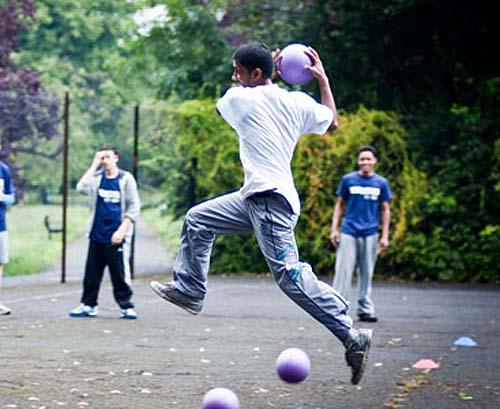
LSE recommends investment in 'solo' sport such as jogging and running Credit: London School of Economics
Young people living in poverty are being priced out of sport participation, with the cost of leisure centres and sports facilities “too high”, according to a recent report by the London School of Economics (LSE).

The research, prepared by LSE Housing and Communities Research Team in association with charity StreetGames, interviewed 135 people in five of the most deprived areas of the country - East Ham, Newham; Burngreave, Sheffield; Lache, Chester; St Pauls, Bristol; Gurnos, Merthyr Tydfil - about how their living conditions affected their sporting participation.

According to the study, young people above the school age (18+) in poor parts of the country cannot afford to use the facilities due to “poor work opportunities” and “extremely low incomes”.

Using gyms and playing team sports were also highlighted as areas of interest by the study’s participants, but fees for memberships and kits were the biggest barrier for involvement.

More than 60 of the participants were people between the ages of 14-25, while parents, teachers, youth leaders, local councillors and leisure organisers made up the rest of the sample.

A further barrier to participation highlighted by the report was the lack of supervision in parks, open spaces and streets, with parents fearful of letting their children use the spaces. Despite offering sport and activities for free, youth clubs also made parents nervous to the prospect of their children being exposed to “bad examples and negative influences”.

The need for more informal sports, which involve participants of lower ability more effectively, was also flagged, while the period immediately after leaving school was highlighted as a “cliff edge” for sport participation. The research suggested adolescents tend to prefer drinking, smoking and taking drugs together in these areas.

LSE’s report, which aims to “shape government policy”, detailed some recommendations to increase participation in deprived areas, including the organisation of informal activities and the close supervision of parks, streets and clubs.

Specific activities for girls and less rigid team sports for boys were recommended, as well as the need to invest in “solo” sports - jogging, cycling, swimming, skateboarding and walking.

Government-backed area-based programmes to improve overall areas - including jobs, crime, education, housing, environment, social and community conditions - should be “urgently reinstated”.

Finally, schools should “open up their facilities more widely” after hours to deliver more comprehensive sporting activities.
RELATED STORIES
  60,000 UK youngsters take part in activity initiative targeting deprived areas


Approximately 7,500 trained sports leaders helped over 61,000 young people run, jump, skip and dance their way to activity participation this summer as part of a widespread schools initiative.
  Sport England invests £7.5m in developing sports in deprived areas


The latest round of Sport England’s £47.5m Community Sport Activation Fund has opened, with £7.5m specifically dedicated to boost sporting opportunities in deprived communities. A further £7.5m is available for for what Sport England calls innovative, local projects anywhere in the country that meet local demand.
MORE NEWS
Les Mills calls on the industry to support UNICEF
Global group exercise specialist, Les Mills, is inviting operators to sign up to its Workout for the World event on 20 June, in support of UNICEF.
HUM2N opens longevity clinic at Six Senses London
Global luxury hospitality brand, Six Senses, has partnered with longevity healthcare provider, HUM2N, to launch a clinic at Six Senses London, at The Whiteley.
KX Chelsea invests £15 million to upgrade its wellness offering
Premium London health club, KX Chelsea, will imminently unveil its most significant redevelopment since its launch in 2002 to create an integrated wellness model combining training, recovery and relaxation.
Researchers identify a drug which reduces muscle loss when using GLP-1 medications
Researchers in the US have identified an antibody which could greatly reduce the loss of lean muscle mass in people who are taking weight-loss medications.
+ More news   
LATEST JOBS
GP Exercise Referral Instructor
Everyone Active
Salary: £33,000pa + benefits
Job location: Harrow, Middlesex , United Kingdom
Self Employed Personal Trainer
Everyone Active
Salary: Competitive
Job location: Enderby
+ More jobs  

FEATURED SUPPLIERS

Supporting long-term health: why whole body vibration belongs in clinical settings
As healthcare continues to shift towards prevention, there’s a growing focus on helping people stay active, independent and feeling good for longer. [more...]

Reaching the people most gyms miss: Bedford Gym & Swim Campaign delivers 410 new members
One of the biggest mistakes the fitness industry still makes is advertising almost exclusively to people who already look and live like gym members. [more...]
+ More featured suppliers  
COMPANY PROFILES
Orbit4

With Orbit4, you’ll always have full visibility of your equipment inventory, the true market value [more...]
Safe Space Lockers

We provide a full turn-key solution for clients from design and consultation, through to bespoke man [more...]
+ More profiles  
CATALOGUE GALLERY
 
+ More catalogues  

DIRECTORY
+ More directory  
DIARY


09-12 Jun 2026

W3Spa EMEA

Hotel Cascais Miragem Health & Spa, Portugal
13-13 Jun 2026

Global Wellness Day

Worldwide, Various,
+ More diary  
 
ABOUT LEISURE MEDIA
LEISURE MEDIA MAGAZINES
LEISURE MEDIA HANDBOOKS
LEISURE MEDIA WEBSITES
LEISURE MEDIA PRODUCT SEARCH
 
HCM
LEISURE OPPORTUNITIES
HEALTH CLUB HANDBOOK
PRINT SUBSCRIPTIONS
FREE DIGITAL SUBSCRIPTIONS
ADVERTISE . CONTACT US

Leisure Media
Tel: +44 (0)1462 431385

©Cybertrek 2026
Get HCM digital magazine and ezines FREE
Sign up here ▸
Jobs    News   Products   Magazine
NEWS
Cost of sport prohibitive for disadvantaged young people
POSTED 08 Dec 2015 . BY Matthew Campelli
LSE recommends investment in 'solo' sport such as jogging and running Credit: London School of Economics
Young people living in poverty are being priced out of sport participation, with the cost of leisure centres and sports facilities “too high”, according to a recent report by the London School of Economics (LSE).

The research, prepared by LSE Housing and Communities Research Team in association with charity StreetGames, interviewed 135 people in five of the most deprived areas of the country - East Ham, Newham; Burngreave, Sheffield; Lache, Chester; St Pauls, Bristol; Gurnos, Merthyr Tydfil - about how their living conditions affected their sporting participation.

According to the study, young people above the school age (18+) in poor parts of the country cannot afford to use the facilities due to “poor work opportunities” and “extremely low incomes”.

Using gyms and playing team sports were also highlighted as areas of interest by the study’s participants, but fees for memberships and kits were the biggest barrier for involvement.

More than 60 of the participants were people between the ages of 14-25, while parents, teachers, youth leaders, local councillors and leisure organisers made up the rest of the sample.

A further barrier to participation highlighted by the report was the lack of supervision in parks, open spaces and streets, with parents fearful of letting their children use the spaces. Despite offering sport and activities for free, youth clubs also made parents nervous to the prospect of their children being exposed to “bad examples and negative influences”.

The need for more informal sports, which involve participants of lower ability more effectively, was also flagged, while the period immediately after leaving school was highlighted as a “cliff edge” for sport participation. The research suggested adolescents tend to prefer drinking, smoking and taking drugs together in these areas.

LSE’s report, which aims to “shape government policy”, detailed some recommendations to increase participation in deprived areas, including the organisation of informal activities and the close supervision of parks, streets and clubs.

Specific activities for girls and less rigid team sports for boys were recommended, as well as the need to invest in “solo” sports - jogging, cycling, swimming, skateboarding and walking.

Government-backed area-based programmes to improve overall areas - including jobs, crime, education, housing, environment, social and community conditions - should be “urgently reinstated”.

Finally, schools should “open up their facilities more widely” after hours to deliver more comprehensive sporting activities.
RELATED STORIES
60,000 UK youngsters take part in activity initiative targeting deprived areas


Approximately 7,500 trained sports leaders helped over 61,000 young people run, jump, skip and dance their way to activity participation this summer as part of a widespread schools initiative.
Sport England invests £7.5m in developing sports in deprived areas


The latest round of Sport England’s £47.5m Community Sport Activation Fund has opened, with £7.5m specifically dedicated to boost sporting opportunities in deprived communities. A further £7.5m is available for for what Sport England calls innovative, local projects anywhere in the country that meet local demand.
MORE NEWS
Les Mills calls on the industry to support UNICEF
Global group exercise specialist, Les Mills, is inviting operators to sign up to its Workout for the World event on 20 June, in support of UNICEF.
HUM2N opens longevity clinic at Six Senses London
Global luxury hospitality brand, Six Senses, has partnered with longevity healthcare provider, HUM2N, to launch a clinic at Six Senses London, at The Whiteley.
KX Chelsea invests £15 million to upgrade its wellness offering
Premium London health club, KX Chelsea, will imminently unveil its most significant redevelopment since its launch in 2002 to create an integrated wellness model combining training, recovery and relaxation.
Researchers identify a drug which reduces muscle loss when using GLP-1 medications
Researchers in the US have identified an antibody which could greatly reduce the loss of lean muscle mass in people who are taking weight-loss medications.
Peloton signals potential move into reformer Pilates with Skop acquisition
Peloton has made the strategic acquisition of the Pilates start-up, Skōp, to support the expansion of its strength ecosystem.
Crunch Fitness creates more affordable reformer Pilates concept
Crunch Fitness has announced the launch of Crunch Reform Pilates – its own reformer concept designed to bring this fast growing, but rather expensive, modality into the mainstream.
+ More news   
 
FEATURED SUPPLIERS

Supporting long-term health: why whole body vibration belongs in clinical settings
As healthcare continues to shift towards prevention, there’s a growing focus on helping people stay active, independent and feeling good for longer. [more...]

Reaching the people most gyms miss: Bedford Gym & Swim Campaign delivers 410 new members
One of the biggest mistakes the fitness industry still makes is advertising almost exclusively to people who already look and live like gym members. [more...]
+ More featured suppliers  
COMPANY PROFILES
Orbit4

With Orbit4, you’ll always have full visibility of your equipment inventory, the true market value [more...]
+ More profiles  
CATALOGUE GALLERY
+ More catalogues  

DIRECTORY
+ More directory  
DIARY


09-12 Jun 2026

W3Spa EMEA

Hotel Cascais Miragem Health & Spa, Portugal
13-13 Jun 2026

Global Wellness Day

Worldwide, Various,
+ More diary  


ADVERTISE . CONTACT US

Leisure Media
Tel: +44 (0)1462 431385

©Cybertrek 2026

ABOUT LEISURE MEDIA
LEISURE MEDIA MAGAZINES
LEISURE MEDIA HANDBOOKS
LEISURE MEDIA WEBSITES
LEISURE MEDIA PRODUCT SEARCH
PRINT SUBSCRIPTIONS
FREE DIGITAL SUBSCRIPTIONS