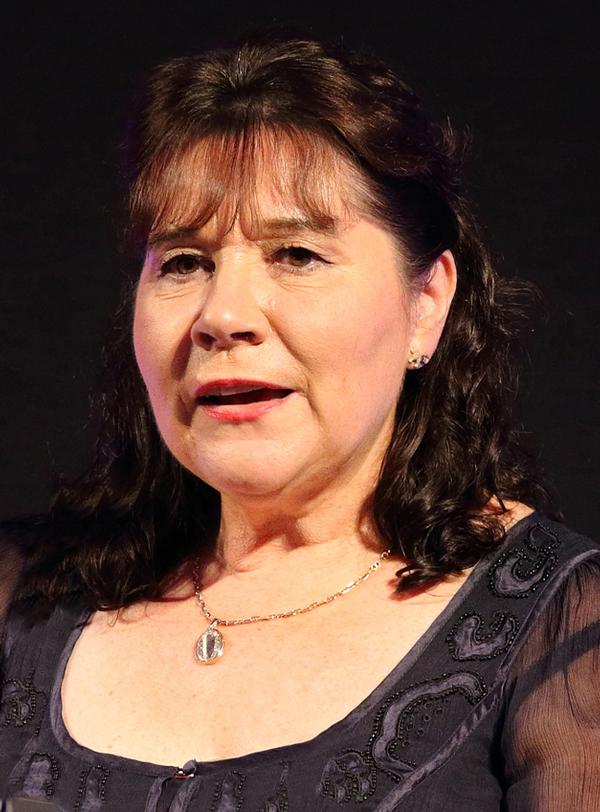
Having led Swim England in an interim role for almost 12 months,
Jane Nickerson was appointed CEO
When you type ‘ASA’ into Google you get two results: the Advertising Standards Authority and the Amateur Swimming Association.
While that might not have been the sole driver behind the decision to rebrand the latter, the creation of a distinctive and unambiguous new name seems like a no-brainer for an organisation with big plans.
Swim England is the “does what it says on the tin” title for the sport’s national governing body (NGB), says chief executive Jane Nickerson, although she stresses that ASA will be retained as the body’s “constitutional brand”.
“We have a history of nearly 150 years and we’re not going to throw that away,” she says. “The traditional ASA logo is part of the Royal Standard and we’re the only national governing body allowed to use that.”
Nickerson was appointed by Swim England as its permanent chief executive earlier in 2017, although she has been with the organisation for a number of years and held the interim CEO role for almost a year following the departure of Adam Paker.
Fresh start Despite the continuation, it does feel like a time of change for Swim England. To coincide with its rebrand, the governing body published its latest four-year strategy, Towards A Nation Swimming – its first since the grassroots sporting landscape was turned on its head by the government’s Sporting Future strategy and the subsequent Sport England delivery blueprint.
The focus has shifted away from just the number of people participating in sport – although as an NGB, Swim England will be expected to keep its core market of regular swimmers engaged with the sport after receiving £10.6m in Sport England funding.
Additionally, sports are now expected to treat people as consumers rather than participants, and make participation as easy and enjoyable as possible.
Nickerson is pleased with the direction of travel. “Customer service is very close to my heart. My background prior to swimming was in hotels and catering, and customer service was absolutely drilled into me. We must treat people who participate in the sport as customers.”
She explains that while the organisation’s raison d’être is still to “make sure everybody learns to swim” and “give everybody the opportunity to swim”, the new strategy changes the way it does that. Insight and research is at the heart of most of the decisions it makes now.
“We have an excellent insight and research team headed up by people with a commercial background who understand customer experience and working out the needs and wants of people,” Nickerson says.
The insight has led to a number of initiatives around engaging with people from hard-to-reach demographics.
Broadening appeal Almost 600 leisure centre staff have been trained to help people with dementia get in the water as part of Swim England’s dementia-friendly project. Signage, colour scheme and changing room layouts have been altered in a number of facilities to make the experience of swimming less daunting to those with the condition.
Nickerson also talks with enthusiasm about a scheme in Bury, Greater Manchester, in which a leisure centre has accommodated swimming lessons for practicing Muslim women, with blacked-out windows, women-only classes and exclusive use of changing rooms.
“We taught one of the women involved to become a swimming teacher, and she’s now working with people from her community and teaching them to swim in a safe environment,” she adds.
The NGB has also relaxed rules around full-body swimming outfits so women with strict religious beliefs or pre-existing medical conditions can compete.
“Following the rule relaxation, I had a lovely letter from a young Muslim lady who said she could now pursue her passion for swimming at a competitive level while feeling totally comfortable about her swimwear.”
After several years of participation decline, recent Active People surveys – and the latest Active Lives Survey – have shown that the rate has steadied. Nickerson says that Swim England’s own participation tracker has shown that “numbers are going up”.
Swim England launched its Just Swim app that allows swimmers to measure progress against friends and family, making it more social.
Pool ownership Nickerson also wants to see swimming clubs become owners of their own pools to “create their own environment” over the four-year strategy period.
She explains: “We had an initial meeting of seven clubs interested in partnering with a provider to enable them to own the pool. The provider will give advice and guidance on revenue generation and how to run the pool.
“We will narrow that down to two in the first instance, and how quickly we move on that will depend on the clubs. I think this is something we can pull together in the next two or three years.”
CoverMe, the global leader in fitness workforce management, today launches CoverMe PT, an
on-demand personal training platform that connects the right personal trainer to the right
client in under 10 seconds. [more...]
Elevate is set to celebrate its 10th anniversary in style this June, with organisers
confirming the event’s largest-ever drinks reception as registrations continue to run more
than 10% ahead of last year. [more...]
+ More featured suppliers
COMPANY PROFILES
Everyone Active
Everyone Active operates leisure centres in partnership with local councils across the UK. Today, Ev [more...]
Having led Swim England in an interim role for almost 12 months,
Jane Nickerson was appointed CEO
When you type ‘ASA’ into Google you get two results: the Advertising Standards Authority and the Amateur Swimming Association.
While that might not have been the sole driver behind the decision to rebrand the latter, the creation of a distinctive and unambiguous new name seems like a no-brainer for an organisation with big plans.
Swim England is the “does what it says on the tin” title for the sport’s national governing body (NGB), says chief executive Jane Nickerson, although she stresses that ASA will be retained as the body’s “constitutional brand”.
“We have a history of nearly 150 years and we’re not going to throw that away,” she says. “The traditional ASA logo is part of the Royal Standard and we’re the only national governing body allowed to use that.”
Nickerson was appointed by Swim England as its permanent chief executive earlier in 2017, although she has been with the organisation for a number of years and held the interim CEO role for almost a year following the departure of Adam Paker.
Fresh start Despite the continuation, it does feel like a time of change for Swim England. To coincide with its rebrand, the governing body published its latest four-year strategy, Towards A Nation Swimming – its first since the grassroots sporting landscape was turned on its head by the government’s Sporting Future strategy and the subsequent Sport England delivery blueprint.
The focus has shifted away from just the number of people participating in sport – although as an NGB, Swim England will be expected to keep its core market of regular swimmers engaged with the sport after receiving £10.6m in Sport England funding.
Additionally, sports are now expected to treat people as consumers rather than participants, and make participation as easy and enjoyable as possible.
Nickerson is pleased with the direction of travel. “Customer service is very close to my heart. My background prior to swimming was in hotels and catering, and customer service was absolutely drilled into me. We must treat people who participate in the sport as customers.”
She explains that while the organisation’s raison d’être is still to “make sure everybody learns to swim” and “give everybody the opportunity to swim”, the new strategy changes the way it does that. Insight and research is at the heart of most of the decisions it makes now.
“We have an excellent insight and research team headed up by people with a commercial background who understand customer experience and working out the needs and wants of people,” Nickerson says.
The insight has led to a number of initiatives around engaging with people from hard-to-reach demographics.
Broadening appeal Almost 600 leisure centre staff have been trained to help people with dementia get in the water as part of Swim England’s dementia-friendly project. Signage, colour scheme and changing room layouts have been altered in a number of facilities to make the experience of swimming less daunting to those with the condition.
Nickerson also talks with enthusiasm about a scheme in Bury, Greater Manchester, in which a leisure centre has accommodated swimming lessons for practicing Muslim women, with blacked-out windows, women-only classes and exclusive use of changing rooms.
“We taught one of the women involved to become a swimming teacher, and she’s now working with people from her community and teaching them to swim in a safe environment,” she adds.
The NGB has also relaxed rules around full-body swimming outfits so women with strict religious beliefs or pre-existing medical conditions can compete.
“Following the rule relaxation, I had a lovely letter from a young Muslim lady who said she could now pursue her passion for swimming at a competitive level while feeling totally comfortable about her swimwear.”
After several years of participation decline, recent Active People surveys – and the latest Active Lives Survey – have shown that the rate has steadied. Nickerson says that Swim England’s own participation tracker has shown that “numbers are going up”.
Swim England launched its Just Swim app that allows swimmers to measure progress against friends and family, making it more social.
Pool ownership Nickerson also wants to see swimming clubs become owners of their own pools to “create their own environment” over the four-year strategy period.
She explains: “We had an initial meeting of seven clubs interested in partnering with a provider to enable them to own the pool. The provider will give advice and guidance on revenue generation and how to run the pool.
“We will narrow that down to two in the first instance, and how quickly we move on that will depend on the clubs. I think this is something we can pull together in the next two or three years.”
Global luxury hospitality brand, Six Senses, has partnered with longevity healthcare provider,
HUM2N, to launch a clinic at Six Senses London, at The Whiteley.
Premium London health club, KX Chelsea, will imminently unveil its most significant
redevelopment since its launch in 2002 to create an integrated wellness model combining
training, recovery and relaxation.
Researchers in the US have identified an antibody which could greatly reduce the loss of lean
muscle mass in people who are taking weight-loss medications.
Crunch Fitness has announced the launch of Crunch Reform Pilates – its own reformer concept
designed to bring this fast growing, but rather expensive, modality into the mainstream.
The 20th State of the Industry Report reveals a resilient, expanding and competitive
sector, the
importance of differentiation and the ongoing challenge of tackling inequalities.
Nuffield Health has told HCM that it takes its responsibilities towards its colleagues seriously
and is committed to meeting all legal obligations after news of a tribunal has made national
headlines.
Technogym has announced the launch of the Run X World Treadmill Championship, the first
world championship for running on connected treadmills over five kilometres.
CoverMe, the global leader in fitness workforce management, today launches CoverMe PT, an
on-demand personal training platform that connects the right personal trainer to the right
client in under 10 seconds. [more...]
Elevate is set to celebrate its 10th anniversary in style this June, with organisers
confirming the event’s largest-ever drinks reception as registrations continue to run more
than 10% ahead of last year. [more...]
+ More featured suppliers
COMPANY PROFILES
Everyone Active Everyone Active operates leisure centres in partnership with local councils across the UK. Today, Ev [more...]