Get HCM digital magazine and ezines FREE
Sign up here ▸
Jobs   News   Features   Products   Magazine      Advertise  
NEWS
Sport England uses behavioural theory to boost participation
POSTED 23 Nov 2015 . BY Matthew Campelli
Jennie Price warned against arbitrary measurements of people's’ activity Credit: Sport England
Sport England is gearing up to launch programmes based on behavioural change theory in a bid to boost participation.

The governing body for grassroots sport will implement its strategy, based on the Cabinet Office’s EAST model, after data from its Active People Survey and supplementary research revealed that behavioural change was a constant journey, and that people rarely fell into categories of ‘active’ and ‘inactive’.

The EAST framework, devised last April, was designed to encourage a behaviour by making it Easy, Attractive, Social and Timely.

Sport England is in the process of developing programmes based on this theory. For example, the body is devising an initiative alongside the Amateur Swimming Association (ASA) to create provisions for towels and hairdryers, making it easy for people to swim, and creating little nudges for continued involvement.

Chief executive of Sport England, Jennie Price (pictured), talked about the ongoing initiative at last week’s Substance National Conference: A Whole New Ball Game?, in a speech that warned against arbitrary measurements of people's’ activity.

She used Prochaska and Di Clemente’s Transtheoretical Model of Behaviour Change to illustrate the public’s attitude to sport and physical activity. The model highlights five stages - pre-contemplation, contemplation, preparation, action and maintenance - as the various states of activity the population finds itself in relation to sport.

The former describes the state in which people are oblivious to taking part in physical activity or sport, while at the contemplation stage the thought of participating is starting to creep in. Preparation could be signing up to a gym or buying a bicycle, while action is actually taking part. Maintenance refers to a sustained routine of participation.

Talking to Sports Management after the event, Naomi Shearon, Sport England’s strategic lead for behaviour change, insight, said it was important for the body to grasp the cause of people’s behaviours.

She highlighted research that suggested that events such as moving house disrupted participation, particularly for males, while emotional barriers were as noteworthy as lack of time or money.

Shearon, who joined in December 2014 to help shape the strategy, added that there was an added focus for Sport England to highlight the short-term of goals of physical activity, such as a boost to self-esteem, to people who participate less, as research showed that short-term benefits often trumped long-term goals, such as good health, for individuals.

“Thinking about people as active or inactive in binary terms is not helpful,” said Shearon. “We need to understand what is important to individuals, so that we can better understand what people need to get active, and why people lapse when it comes to exercise.”

Sport England’s latest Active People Survey, covering October 2014 to March 2015, revealed that 222,000 dip in people doing “some kind of sport, once a week, every week”.



RELATED STORIES
MORE NEWS
HUM2N opens longevity clinic at Six Senses London
Global luxury hospitality brand, Six Senses, has partnered with longevity healthcare provider, HUM2N, to launch a clinic at Six Senses London, at The Whiteley.
KX Chelsea invests £15 million to upgrade its wellness offering
Premium London health club, KX Chelsea, will imminently unveil its most significant redevelopment since its launch in 2002 to create an integrated wellness model combining training, recovery and relaxation.
Researchers identify a drug which reduces muscle loss when using GLP-1 medications
Researchers in the US have identified an antibody which could greatly reduce the loss of lean muscle mass in people who are taking weight-loss medications.
Peloton signals potential move into reformer Pilates with Skop acquisition
Peloton has made the strategic acquisition of the Pilates start-up, Skōp, to support the expansion of its strength ecosystem.
+ More news   
LATEST JOBS
GP Exercise Referral Instructor
Everyone Active
Salary: £33,000pa + benefits
Job location: Harrow, Middlesex , United Kingdom
Self Employed Personal Trainer
Everyone Active
Salary: Competitive
Job location: Enderby
+ More jobs  

FEATURED SUPPLIERS

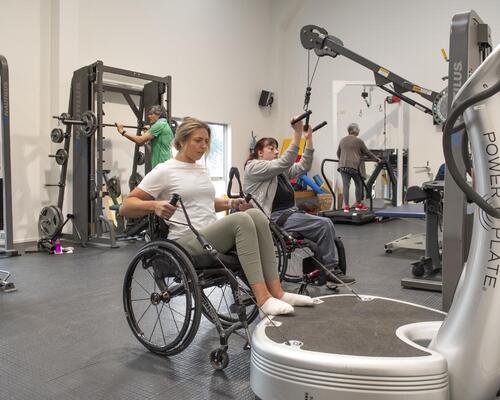
Supporting long-term health: why whole body vibration belongs in clinical settings
As healthcare continues to shift towards prevention, there’s a growing focus on helping people stay active, independent and feeling good for longer. [more...]

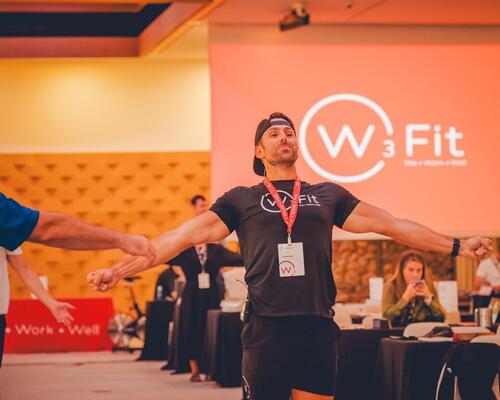
W3Fit EMEA celebrates its fifth anniversary
Celebrating its milestone 5th anniversary, W3Fit EMEA returns in 2026 with an unmissable gathering of the Health & Fitness industry’s most influential leaders. [more...]
+ More featured suppliers  
COMPANY PROFILES
Orbit4

With Orbit4, you’ll always have full visibility of your equipment inventory, the true market value [more...]
Serco Leisure

Serco Leisure Operating Limited is one of the UK’s leading national operators of leisure centres, de [more...]
+ More profiles  
CATALOGUE GALLERY
 
+ More catalogues  

DIRECTORY
+ More directory  
DIARY


09-12 Jun 2026

W3Spa EMEA

Hotel Cascais Miragem Health & Spa, Portugal
13-13 Jun 2026

Global Wellness Day

Worldwide, Various,
+ More diary  
 
ABOUT LEISURE MEDIA
LEISURE MEDIA MAGAZINES
LEISURE MEDIA HANDBOOKS
LEISURE MEDIA WEBSITES
LEISURE MEDIA PRODUCT SEARCH
 
HCM
LEISURE OPPORTUNITIES
HEALTH CLUB HANDBOOK
PRINT SUBSCRIPTIONS
FREE DIGITAL SUBSCRIPTIONS
ADVERTISE . CONTACT US

Leisure Media
Tel: +44 (0)1462 431385

©Cybertrek 2026
Get HCM digital magazine and ezines FREE
Sign up here ▸
Jobs    News   Products   Magazine
NEWS
Sport England uses behavioural theory to boost participation
POSTED 23 Nov 2015 . BY Matthew Campelli
Jennie Price warned against arbitrary measurements of people's’ activity Credit: Sport England
Sport England is gearing up to launch programmes based on behavioural change theory in a bid to boost participation.

The governing body for grassroots sport will implement its strategy, based on the Cabinet Office’s EAST model, after data from its Active People Survey and supplementary research revealed that behavioural change was a constant journey, and that people rarely fell into categories of ‘active’ and ‘inactive’.

The EAST framework, devised last April, was designed to encourage a behaviour by making it Easy, Attractive, Social and Timely.

Sport England is in the process of developing programmes based on this theory. For example, the body is devising an initiative alongside the Amateur Swimming Association (ASA) to create provisions for towels and hairdryers, making it easy for people to swim, and creating little nudges for continued involvement.

Chief executive of Sport England, Jennie Price (pictured), talked about the ongoing initiative at last week’s Substance National Conference: A Whole New Ball Game?, in a speech that warned against arbitrary measurements of people's’ activity.

She used Prochaska and Di Clemente’s Transtheoretical Model of Behaviour Change to illustrate the public’s attitude to sport and physical activity. The model highlights five stages - pre-contemplation, contemplation, preparation, action and maintenance - as the various states of activity the population finds itself in relation to sport.

The former describes the state in which people are oblivious to taking part in physical activity or sport, while at the contemplation stage the thought of participating is starting to creep in. Preparation could be signing up to a gym or buying a bicycle, while action is actually taking part. Maintenance refers to a sustained routine of participation.

Talking to Sports Management after the event, Naomi Shearon, Sport England’s strategic lead for behaviour change, insight, said it was important for the body to grasp the cause of people’s behaviours.

She highlighted research that suggested that events such as moving house disrupted participation, particularly for males, while emotional barriers were as noteworthy as lack of time or money.

Shearon, who joined in December 2014 to help shape the strategy, added that there was an added focus for Sport England to highlight the short-term of goals of physical activity, such as a boost to self-esteem, to people who participate less, as research showed that short-term benefits often trumped long-term goals, such as good health, for individuals.

“Thinking about people as active or inactive in binary terms is not helpful,” said Shearon. “We need to understand what is important to individuals, so that we can better understand what people need to get active, and why people lapse when it comes to exercise.”

Sport England’s latest Active People Survey, covering October 2014 to March 2015, revealed that 222,000 dip in people doing “some kind of sport, once a week, every week”.

RELATED STORIES
MORE NEWS
HUM2N opens longevity clinic at Six Senses London
Global luxury hospitality brand, Six Senses, has partnered with longevity healthcare provider, HUM2N, to launch a clinic at Six Senses London, at The Whiteley.
KX Chelsea invests £15 million to upgrade its wellness offering
Premium London health club, KX Chelsea, will imminently unveil its most significant redevelopment since its launch in 2002 to create an integrated wellness model combining training, recovery and relaxation.
Researchers identify a drug which reduces muscle loss when using GLP-1 medications
Researchers in the US have identified an antibody which could greatly reduce the loss of lean muscle mass in people who are taking weight-loss medications.
Peloton signals potential move into reformer Pilates with Skop acquisition
Peloton has made the strategic acquisition of the Pilates start-up, Skōp, to support the expansion of its strength ecosystem.
Crunch Fitness creates more affordable reformer Pilates concept
Crunch Fitness has announced the launch of Crunch Reform Pilates – its own reformer concept designed to bring this fast growing, but rather expensive, modality into the mainstream.
As the 20th State of the Industry Report is released, LeisureDB rebrands to Evolve
The 20th State of the Industry Report reveals a resilient, expanding and competitive sector, the importance of differentiation and the ongoing challenge of tackling inequalities.
+ More news   
 
FEATURED SUPPLIERS

Supporting long-term health: why whole body vibration belongs in clinical settings
As healthcare continues to shift towards prevention, there’s a growing focus on helping people stay active, independent and feeling good for longer. [more...]

W3Fit EMEA celebrates its fifth anniversary
Celebrating its milestone 5th anniversary, W3Fit EMEA returns in 2026 with an unmissable gathering of the Health & Fitness industry’s most influential leaders. [more...]
+ More featured suppliers  
COMPANY PROFILES
Orbit4

With Orbit4, you’ll always have full visibility of your equipment inventory, the true market value [more...]
+ More profiles  
CATALOGUE GALLERY
+ More catalogues  

DIRECTORY
+ More directory  
DIARY


09-12 Jun 2026

W3Spa EMEA

Hotel Cascais Miragem Health & Spa, Portugal
13-13 Jun 2026

Global Wellness Day

Worldwide, Various,
+ More diary  


ADVERTISE . CONTACT US

Leisure Media
Tel: +44 (0)1462 431385

©Cybertrek 2026

ABOUT LEISURE MEDIA
LEISURE MEDIA MAGAZINES
LEISURE MEDIA HANDBOOKS
LEISURE MEDIA WEBSITES
LEISURE MEDIA PRODUCT SEARCH
PRINT SUBSCRIPTIONS
FREE DIGITAL SUBSCRIPTIONS