When you’re running a gym you know that having the right flooring underpins the entire member experience. Steph Eaves asks the experts to advise on this expensive purchase
By Steph Eaves | Published in Health Club Management 2017 issue 6
Whenever a club is looking at options for new flooring, the main thing to be considered in great detail is usage. It’s essential that the forces and exertions that the flooring will need to tolerate are fully understood. That includes thinking about the users, the types of exercise that will be carried out in the area and also the equipment that will be used.
Just as important as the flooring itself is what’s happening below it. A full site survey is essential in order to establish the type of subfloor that is in place, and whether any work is needed to upgrade this before the installation of the new gym flooring product can be carried out.
Floor failure, which can be very costly and hugely disruptive, most commonly results from poor subfloor preparation and incorrect product choice. Each flooring type reacts differently to the forces placed on it. Some products have the elasticity and shock absorption needed for plyometric workouts, others are suited for studio use, while some are suited to the demands of free weights.
By fully understanding the demands that will be placed on your new flooring and the environment in which it will be installed, it’s possible to ensure the longevity and durability that is needed to give years of successful use, while also being easy to clean and maintain.
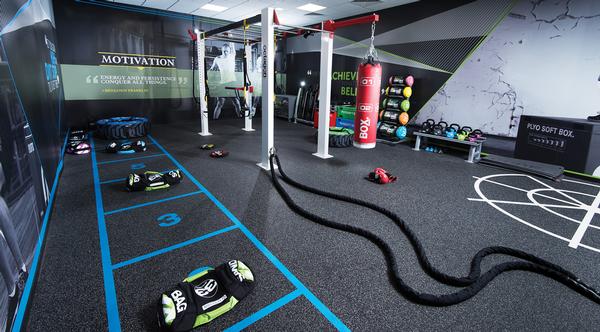
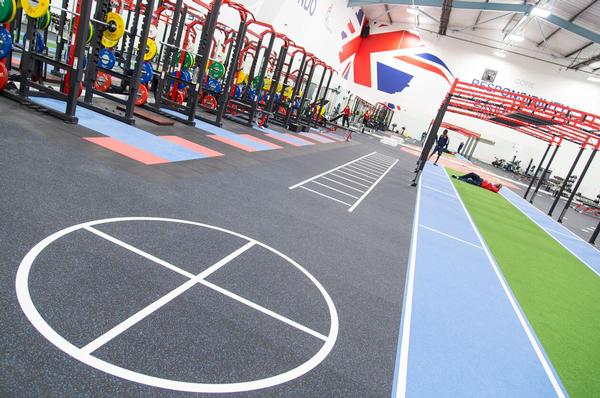
The floor in a functional training zone has very particular needs
Getting interactive
Steve Shaw
Steve ShawPavigym
It’s worthwhile looking carefully at opportunities to commercialise your gym floor space. For instance, floor markings can help to coordinate movement, map traffic for training spaces and encourage more people to do their workouts simultaneously.
Flooring can even constitute a training element in its own right. Recently we’ve focused on ways to take flooring from being a passive to an active or even interactive element of a gym.
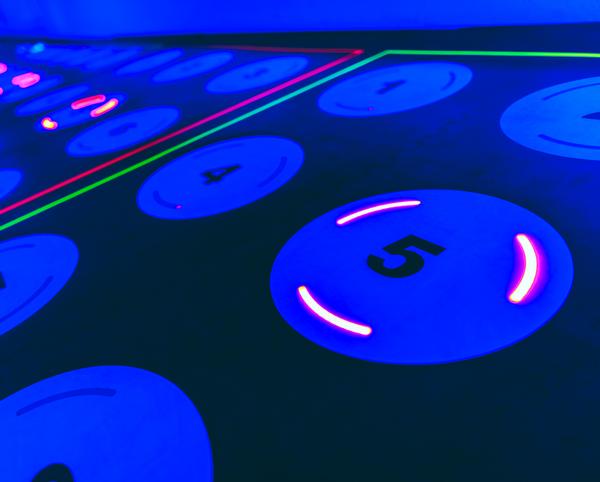
With the use of LED-enriched stations and pressure-sensitive floors and walls, we’ve taken the first step to converting a floor into an interactive element. We’ve also developed education and programming to convert this technology into a fitness experience in its own right.
"We’ve focused on ways to take flooring from being a passive to an active or even interactive element of a gym" - Steve Shaw, Pavigym
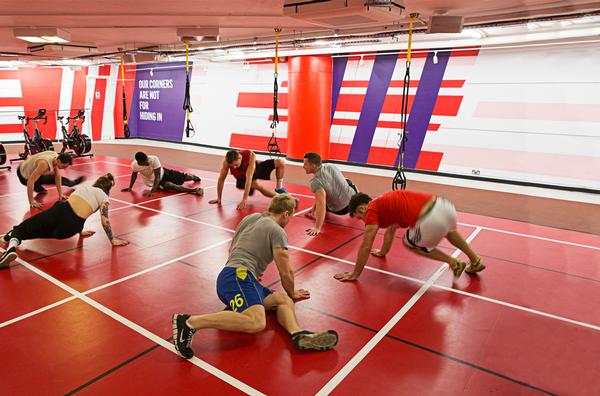
LED stations can turn a floor into a standalone fitness experience
Environmental exercise
Paul Farrell
Paul FarrellPhysical Company
When considering which flooring to use, one option is recycled rubber. There are plenty of colour options and surface designs showing target zones, tracks and grids.
Correct subfloor preparation is essential to laying eco rubber flooring: rubber expands and contracts at different temperatures so the rubber must acclimatise within the building before it’s laid. You also need a strong adhesive to hold it and to give it enough flex.
An eco choice shouldn’t be a compromise – Ecore flooring is a genuine environmental choice, last year reusing over 86 million (of 90 million) pounds of truck tyres destined for landfill.
Environmental exercise
Safety and comfort
Darren Wood
Darren WoodSport & Fitness Flooring
We spend a significant amount of time considering the benefits of fitness equipment in our clubs, yet a studio or functional floor can be the most important piece of kit in the building.
To ensure the safety of members and to provide an effective performance space, consider the following factors:
• The level of ‘energy restitution’ determines the energy feedback members receive as their foot lands. If the impact dissipates completely, this leaves them feeling flat footed.
• The surface needs to provide the user with a good level of force reduction in order to reduce the risk of repetitive stress injury.
• How much the floor flexes will affect foot traction and comfort.
• The flooring must have the right grip – too much or too little can result in injuries.
A studio or functional floor can be the most important part of a gym
Lasting luxury
Nicholas Egan
Nicholas EganGerflor
Health and fitness specifiers are typically more interested in a finished product that will last longer and work better, even if this might cost a little more up front.
Factors such as whole life-cycle costs, durability and maintenance requirements must be taken into account when making a decision.
Other factors include the need for multi-use flooring that facilitates different room uses, as well as having the right aesthetic appeal.
Another consideration is safety, including finishes that minimise the risk of friction burns and help prevent the spread of bacteria and microorganisms, with their related skin infections.
Luxury vinyl tiles and specialist, heavy-duty interlocking vinyl tiles can be the best solution. These are waterproof and come with a 10-year guarantee.
The right flooring can help prevent the spread of
bacteria and microorganisms
Aesthetic and practical
Rudy Fabiano
Rudy FabianoFabiano Designs
The choice of flooring in fitness facilities requires expert selection, because most combine multiple programming spaces, which have different performance and safety criteria. It’s also important to consider whether the look and feel of the product is appropriate to the image and identity of the gym.
With the rise of functional training, artificial turf has become popular inside our clubs, although traditional stone, ceramics and porcelain tiles still cover the bulk of public spaces, with recycled rubber being the go-to product in the fitness areas. It’s unlikely that one type of flooring would be able to accommodate the needs of an entire facility.
In order of selection criteria: safety should come first, then performance, durability, cost and aesthetics. As designers, we enjoy the challenge of meeting criteria while maintaining the aesthetics that result in the user’s elevated perception of the gym.
Choose a floor that matches the aesthetic identity of the gym
Panatta brought together four of the most influential figures in bodybuilding history on the
stage of RiminiWellness 2026: Phil Heath, Lee Haney, Ronnie Coleman and Hany Rambod. [more...]
Active Blackpool is deploying Cornerstone Connect, a new digital interface allowing
disparate information from multiple systems to be aggregated into one dataset, to support
its focus on reducing health inequalities and improving healthy life expectancy. [more...]
When you’re running a gym you know that having the right flooring underpins the entire member experience. Steph Eaves asks the experts to advise on this expensive purchase
By Steph Eaves | Published in Health Club Management 2017 issue 6
Whenever a club is looking at options for new flooring, the main thing to be considered in great detail is usage. It’s essential that the forces and exertions that the flooring will need to tolerate are fully understood. That includes thinking about the users, the types of exercise that will be carried out in the area and also the equipment that will be used.
Just as important as the flooring itself is what’s happening below it. A full site survey is essential in order to establish the type of subfloor that is in place, and whether any work is needed to upgrade this before the installation of the new gym flooring product can be carried out.
Floor failure, which can be very costly and hugely disruptive, most commonly results from poor subfloor preparation and incorrect product choice. Each flooring type reacts differently to the forces placed on it. Some products have the elasticity and shock absorption needed for plyometric workouts, others are suited for studio use, while some are suited to the demands of free weights.
By fully understanding the demands that will be placed on your new flooring and the environment in which it will be installed, it’s possible to ensure the longevity and durability that is needed to give years of successful use, while also being easy to clean and maintain.
The floor in a functional training zone has very particular needs
Getting interactive
Steve Shaw
Steve ShawPavigym
It’s worthwhile looking carefully at opportunities to commercialise your gym floor space. For instance, floor markings can help to coordinate movement, map traffic for training spaces and encourage more people to do their workouts simultaneously.
Flooring can even constitute a training element in its own right. Recently we’ve focused on ways to take flooring from being a passive to an active or even interactive element of a gym.
With the use of LED-enriched stations and pressure-sensitive floors and walls, we’ve taken the first step to converting a floor into an interactive element. We’ve also developed education and programming to convert this technology into a fitness experience in its own right.
"We’ve focused on ways to take flooring from being a passive to an active or even interactive element of a gym" - Steve Shaw, Pavigym
LED stations can turn a floor into a standalone fitness experience
Environmental exercise
Paul Farrell
Paul FarrellPhysical Company
When considering which flooring to use, one option is recycled rubber. There are plenty of colour options and surface designs showing target zones, tracks and grids.
Correct subfloor preparation is essential to laying eco rubber flooring: rubber expands and contracts at different temperatures so the rubber must acclimatise within the building before it’s laid. You also need a strong adhesive to hold it and to give it enough flex.
An eco choice shouldn’t be a compromise – Ecore flooring is a genuine environmental choice, last year reusing over 86 million (of 90 million) pounds of truck tyres destined for landfill.
Environmental exercise
Safety and comfort
Darren Wood
Darren WoodSport & Fitness Flooring
We spend a significant amount of time considering the benefits of fitness equipment in our clubs, yet a studio or functional floor can be the most important piece of kit in the building.
To ensure the safety of members and to provide an effective performance space, consider the following factors:
• The level of ‘energy restitution’ determines the energy feedback members receive as their foot lands. If the impact dissipates completely, this leaves them feeling flat footed.
• The surface needs to provide the user with a good level of force reduction in order to reduce the risk of repetitive stress injury.
• How much the floor flexes will affect foot traction and comfort.
• The flooring must have the right grip – too much or too little can result in injuries.
A studio or functional floor can be the most important part of a gym
Lasting luxury
Nicholas Egan
Nicholas EganGerflor
Health and fitness specifiers are typically more interested in a finished product that will last longer and work better, even if this might cost a little more up front.
Factors such as whole life-cycle costs, durability and maintenance requirements must be taken into account when making a decision.
Other factors include the need for multi-use flooring that facilitates different room uses, as well as having the right aesthetic appeal.
Another consideration is safety, including finishes that minimise the risk of friction burns and help prevent the spread of bacteria and microorganisms, with their related skin infections.
Luxury vinyl tiles and specialist, heavy-duty interlocking vinyl tiles can be the best solution. These are waterproof and come with a 10-year guarantee.
The right flooring can help prevent the spread of
bacteria and microorganisms
Aesthetic and practical
Rudy Fabiano
Rudy FabianoFabiano Designs
The choice of flooring in fitness facilities requires expert selection, because most combine multiple programming spaces, which have different performance and safety criteria. It’s also important to consider whether the look and feel of the product is appropriate to the image and identity of the gym.
With the rise of functional training, artificial turf has become popular inside our clubs, although traditional stone, ceramics and porcelain tiles still cover the bulk of public spaces, with recycled rubber being the go-to product in the fitness areas. It’s unlikely that one type of flooring would be able to accommodate the needs of an entire facility.
In order of selection criteria: safety should come first, then performance, durability, cost and aesthetics. As designers, we enjoy the challenge of meeting criteria while maintaining the aesthetics that result in the user’s elevated perception of the gym.
Choose a floor that matches the aesthetic identity of the gym
According to research which tracked more than 147,000 people for 30 years, 90-120 minutes
of strength training a week may deliver some of the biggest long-term health rewards.
The UK's four Chief Medical Officers have published a refreshed edition of Physical activity
guidelines: UK Chief Medical Officers' report, updating the evidence that underpins the nation's
physical activity recommendations and placing greater emphasis on strength, balance, reducing
sedentary behaviour and, for the first time, supporting people taking weight loss medications.
Places Leisure has exchanged contracts to build and operate a flagship £60m water and leisure
destination on behalf of Basingstoke and Deane Borough Council.
The Republic of Ireland will become the latest market in PureGym’s expanding international
portfolio, with the first launch planned for Dublin in 2027.
Anytime Fitness opened more than one club a day in 2025 and is on track to maintain this rate
of growth this year, as parent company Purpose Brands targets further international expansion.
The £33.9 million Leighton Leisure and Community Centre has opened in Leighton Buzzard, UK,
creating a next-generation public leisure, health and wellbeing hub for the local community.
Walnuts Leisure Centre in Orpington, in the London Borough of Bromley, has reopened following
a £17m transformation designed to secure the long-term future of the public leisure asset and
reposition it as a community wellbeing hub.
The Gym Group, has announced that it's sustained positive trading momentum has continued
through the first half of 2026 and the company remains confident about the outlook.
Panatta brought together four of the most influential figures in bodybuilding history on the
stage of RiminiWellness 2026: Phil Heath, Lee Haney, Ronnie Coleman and Hany Rambod. [more...]
Active Blackpool is deploying Cornerstone Connect, a new digital interface allowing
disparate information from multiple systems to be aggregated into one dataset, to support
its focus on reducing health inequalities and improving healthy life expectancy. [more...]