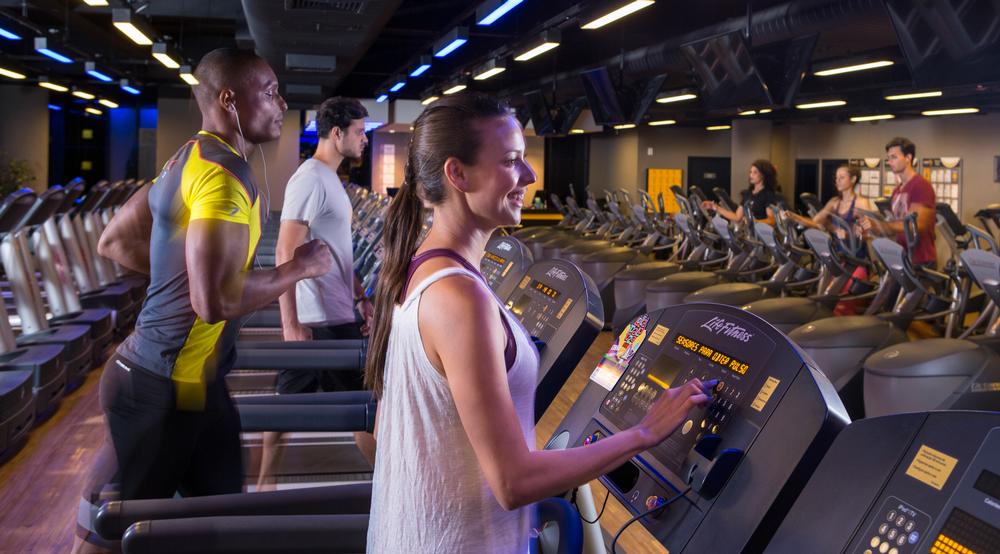
The majority of clubs in Latin America belong to Smartfit, which owns 340 gyms throughout the region
Last month, IHRSA released The IHRSA Latin American Report (Second Edition), which is sponsored by Hoist Fitness. This research publication, an update to the groundbreaking 2012 report, was produced in collaboration with Mercado Fitness (Argentina) and supported by trade body Fitness Brasil.
A healthy industry According to the report, the health club industry in Latin America is robust. The 18 Latin American markets analysed generate US$6 billion in revenue from more than 65,000 clubs. Nearly 20 million Latin Americans are members of a health club. Brazil alone accounts for more than half of the health clubs in Latin America with 34,509 facilities. Argentina has the highest penetration rate among all the markets, as 6.8 per cent of Argentineans currently belong to a health club.
“The health club landscape in Latin America is dynamic and has undergone significant developments since 2012,” said Guillermo Velez, editor of the report and director of Mercado Fitness. “In addition to the growth of the low-cost segment, other developments, including economic indicators, increasingly savvy consumers, technology, the boutique phenomenon and professionalisation have all impacted and shaped the industry in Latin America.”
Room for growth While club operators and industry experts have observed growth amidst market developments in the region, opportunities abound in Latin America. The report shows an average penetration rate of 2.15 per cent, signifying potential for growth. Along with Argentina’s 6.8 per cent, Brazil and Mexico both have member penetration rates exceeding 3 per cent, at 4.6 per cent and 3.2 per cent, respectively.
Highlights from the report
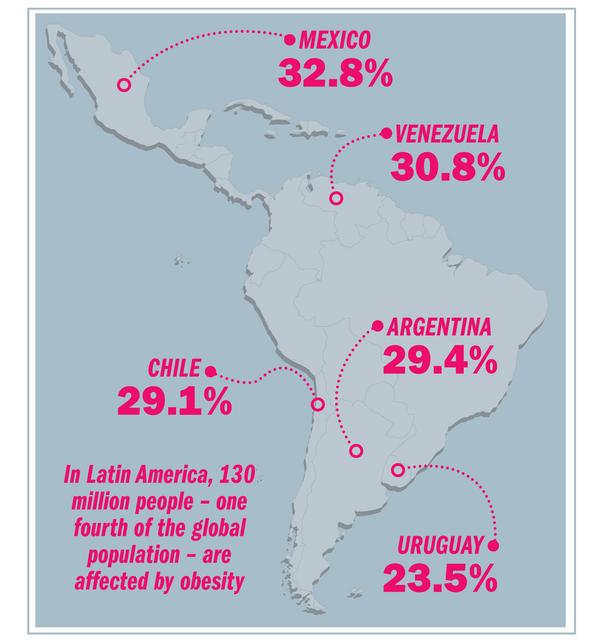
• Overcoming obesity In Latin America, 130 million people – one fourth of the global population – are affected by obesity. These figures could reach 191 million by 2030. The countries with the highest rates of obesity are Mexico (32.8 per cent), Venezuela (30.8 per cent), Argentina (29.4 per cent), Chile (29.1 per cent) and Uruguay (23.5 per cent).
Obesity is a global pandemic: a person with obesity lives 10 years less than someone with a healthy weight. World Bank reports indicate that if this tendency continues, by 2030 the number of people in Latin America with obesity will reach 30 per cent of the population.
• The problem of inactivity World Health Organization data points out that in Latin America 60 per cent of the population is sedentary. This same agency indicates that in this region physical inactivity causes one out of every 10 deaths. This is nearly the same impact that smoking has on the population, according to scientists.
• Embracing low cost When the last regional IHRSA report was published in 2012, there were only two low cost chains in two countries in Latin America. Today, less than five years later, there are at least 23 different brands with a total of 448 gyms (340 of these belong to SmartFit) in 12 countries throughout the region.
Undeniably, this phenomenon has only just begun. As consultant Ray Algar explains, “it’s not only a matter of pricing, but more an all-embracing organisational philosophy”. As far as consumers are concerned, “they know that high costs do not necessarily guarantee quality service and they’re less obsessed with paying more just to prove status – they value their money and are convinced that paying less is more savvy”.
Several specialists agree that the low cost offer stimulates a new demand and does not necessarily encourage less spending. However, they also remark that this model’s growth will affect health clubs in the mid market.
Traditional gyms – full service in theory – must review their value propositions in order to validate higher pricing. “Those who don’t will be less valued and become irrelevant” claims Algar. The market tends to polarise itself and in between poles there will be nothing left.
• A diverse offering In competitive scenarios, with consumers eager for an enhanced experience, the fitness industry is undergoing a substantial diversification process. While premium health clubs and low cost gyms consolidate opposite poles within the market, boutique fitness studios – also known as Micro Gyms – thrive in Latin America as well as globally.
OBESITY PERCENTAGE RATES IN LATIN AMERICA
Guillermo Velez
“The growth of the low-cost gym market, increasingly savvy consumers, technology, the boutique phenomenon and professionalisation have all shaped the industry in Latin America” - Guillermo Velez
Get the Report
The IHRSA Latin American Report (Second Edition) [77 pages] is available as a PDF at www.ihrsa.org/latin-american-report
ABOUT IHRSA
Founded in 1981, IHRSA – the International Health, Racquet & Sportsclub Association – is the only global trade association, representing more than 10,000 health and fitness facilities and suppliers worldwide. Locate an IHRSA club at www.healthclubs.com
To learn how IHRSA can help your business thrive, visit www.ihrsa.org
Panatta brought together four of the most influential figures in bodybuilding history on the
stage of RiminiWellness 2026: Phil Heath, Lee Haney, Ronnie Coleman and Hany Rambod. [more...]
Active Blackpool is deploying Cornerstone Connect, a new digital interface allowing
disparate information from multiple systems to be aggregated into one dataset, to support
its focus on reducing health inequalities and improving healthy life expectancy. [more...]
+ More featured suppliers
COMPANY PROFILES
Precor
Precor promises precision-quality products with steadfast reliability that are inspired by exerciser [more...]
Alliance Leisure
Alliance Leisure Services was specifically
established to respond to the changing
development need [more...]
The majority of clubs in Latin America belong to Smartfit, which owns 340 gyms throughout the region
Last month, IHRSA released The IHRSA Latin American Report (Second Edition), which is sponsored by Hoist Fitness. This research publication, an update to the groundbreaking 2012 report, was produced in collaboration with Mercado Fitness (Argentina) and supported by trade body Fitness Brasil.
A healthy industry According to the report, the health club industry in Latin America is robust. The 18 Latin American markets analysed generate US$6 billion in revenue from more than 65,000 clubs. Nearly 20 million Latin Americans are members of a health club. Brazil alone accounts for more than half of the health clubs in Latin America with 34,509 facilities. Argentina has the highest penetration rate among all the markets, as 6.8 per cent of Argentineans currently belong to a health club.
“The health club landscape in Latin America is dynamic and has undergone significant developments since 2012,” said Guillermo Velez, editor of the report and director of Mercado Fitness. “In addition to the growth of the low-cost segment, other developments, including economic indicators, increasingly savvy consumers, technology, the boutique phenomenon and professionalisation have all impacted and shaped the industry in Latin America.”
Room for growth While club operators and industry experts have observed growth amidst market developments in the region, opportunities abound in Latin America. The report shows an average penetration rate of 2.15 per cent, signifying potential for growth. Along with Argentina’s 6.8 per cent, Brazil and Mexico both have member penetration rates exceeding 3 per cent, at 4.6 per cent and 3.2 per cent, respectively.
Highlights from the report
• Overcoming obesity In Latin America, 130 million people – one fourth of the global population – are affected by obesity. These figures could reach 191 million by 2030. The countries with the highest rates of obesity are Mexico (32.8 per cent), Venezuela (30.8 per cent), Argentina (29.4 per cent), Chile (29.1 per cent) and Uruguay (23.5 per cent).
Obesity is a global pandemic: a person with obesity lives 10 years less than someone with a healthy weight. World Bank reports indicate that if this tendency continues, by 2030 the number of people in Latin America with obesity will reach 30 per cent of the population.
• The problem of inactivity World Health Organization data points out that in Latin America 60 per cent of the population is sedentary. This same agency indicates that in this region physical inactivity causes one out of every 10 deaths. This is nearly the same impact that smoking has on the population, according to scientists.
• Embracing low cost When the last regional IHRSA report was published in 2012, there were only two low cost chains in two countries in Latin America. Today, less than five years later, there are at least 23 different brands with a total of 448 gyms (340 of these belong to SmartFit) in 12 countries throughout the region.
Undeniably, this phenomenon has only just begun. As consultant Ray Algar explains, “it’s not only a matter of pricing, but more an all-embracing organisational philosophy”. As far as consumers are concerned, “they know that high costs do not necessarily guarantee quality service and they’re less obsessed with paying more just to prove status – they value their money and are convinced that paying less is more savvy”.
Several specialists agree that the low cost offer stimulates a new demand and does not necessarily encourage less spending. However, they also remark that this model’s growth will affect health clubs in the mid market.
Traditional gyms – full service in theory – must review their value propositions in order to validate higher pricing. “Those who don’t will be less valued and become irrelevant” claims Algar. The market tends to polarise itself and in between poles there will be nothing left.
• A diverse offering In competitive scenarios, with consumers eager for an enhanced experience, the fitness industry is undergoing a substantial diversification process. While premium health clubs and low cost gyms consolidate opposite poles within the market, boutique fitness studios – also known as Micro Gyms – thrive in Latin America as well as globally.
OBESITY PERCENTAGE RATES IN LATIN AMERICA
Guillermo Velez
“The growth of the low-cost gym market, increasingly savvy consumers, technology, the boutique phenomenon and professionalisation have all shaped the industry in Latin America” - Guillermo Velez
Get the Report
The IHRSA Latin American Report (Second Edition) [77 pages] is available as a PDF at www.ihrsa.org/latin-american-report
ABOUT IHRSA
Founded in 1981, IHRSA – the International Health, Racquet & Sportsclub Association – is the only global trade association, representing more than 10,000 health and fitness facilities and suppliers worldwide. Locate an IHRSA club at www.healthclubs.com
To learn how IHRSA can help your business thrive, visit www.ihrsa.org
According to research which tracked more than 147,000 people for 30 years, 90-120 minutes
of strength training a week may deliver some of the biggest long-term health rewards.
The UK's four Chief Medical Officers have published a refreshed edition of Physical activity
guidelines: UK Chief Medical Officers' report, updating the evidence that underpins the nation's
physical activity recommendations and placing greater emphasis on strength, balance, reducing
sedentary behaviour and, for the first time, supporting people taking weight loss medications.
Places Leisure has exchanged contracts to build and operate a flagship £60m water and leisure
destination on behalf of Basingstoke and Deane Borough Council.
The Republic of Ireland will become the latest market in PureGym’s expanding international
portfolio, with the first launch planned for Dublin in 2027.
Anytime Fitness opened more than one club a day in 2025 and is on track to maintain this rate
of growth this year, as parent company Purpose Brands targets further international expansion.
The £33.9 million Leighton Leisure and Community Centre has opened in Leighton Buzzard, UK,
creating a next-generation public leisure, health and wellbeing hub for the local community.
Walnuts Leisure Centre in Orpington, in the London Borough of Bromley, has reopened following
a £17m transformation designed to secure the long-term future of the public leisure asset and
reposition it as a community wellbeing hub.
The Gym Group, has announced that it's sustained positive trading momentum has continued
through the first half of 2026 and the company remains confident about the outlook.
Panatta brought together four of the most influential figures in bodybuilding history on the
stage of RiminiWellness 2026: Phil Heath, Lee Haney, Ronnie Coleman and Hany Rambod. [more...]
Active Blackpool is deploying Cornerstone Connect, a new digital interface allowing
disparate information from multiple systems to be aggregated into one dataset, to support
its focus on reducing health inequalities and improving healthy life expectancy. [more...]
+ More featured suppliers
COMPANY PROFILES
Precor Precor promises precision-quality products with steadfast reliability that are inspired by exerciser [more...]