In its mission to provide humanitarian and developmental assistance to children worldwide, Unicef UK is using sport as a key vehicle. Unicef’s sports specialist Liz Twyford explains
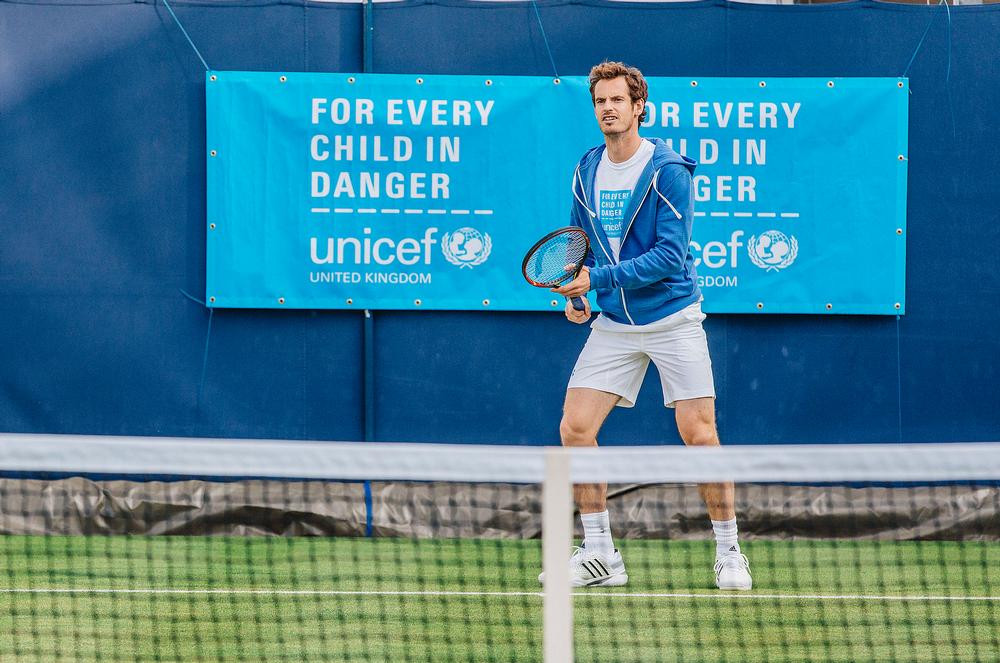
Unicef UK’s ambassadors play a key role in spreading its message, Andy Murray
How does Unicef use sport? Unicef’s work is all about protecting and promoting children’s rights, and when it comes to sport you can categorise the work we do into three different strands – ”in”, “around” and “through” sport.
By “in” sport, we mean ensuring that when children take part in sport, they do so in a safe and supportive environment. Since 2012 Unicef UK has been heading up a coalition of organisations called The International Safeguarding Children in Sport Working Group. The group has collectively been developing new safeguards for children in sport. We’ll soon be in the process of publishing and sharing those with as many sporting organisations globally as possible.
“Around” sport, meanwhile, consists of the work we do to look at how children’s rights are – and can be – impacted by sport, particularly during and by mega sporting events. We do a lot of work to understand how major events can affect both children living locally and children who take part as athletes – as well as children affected by the supply chain of sporting events.
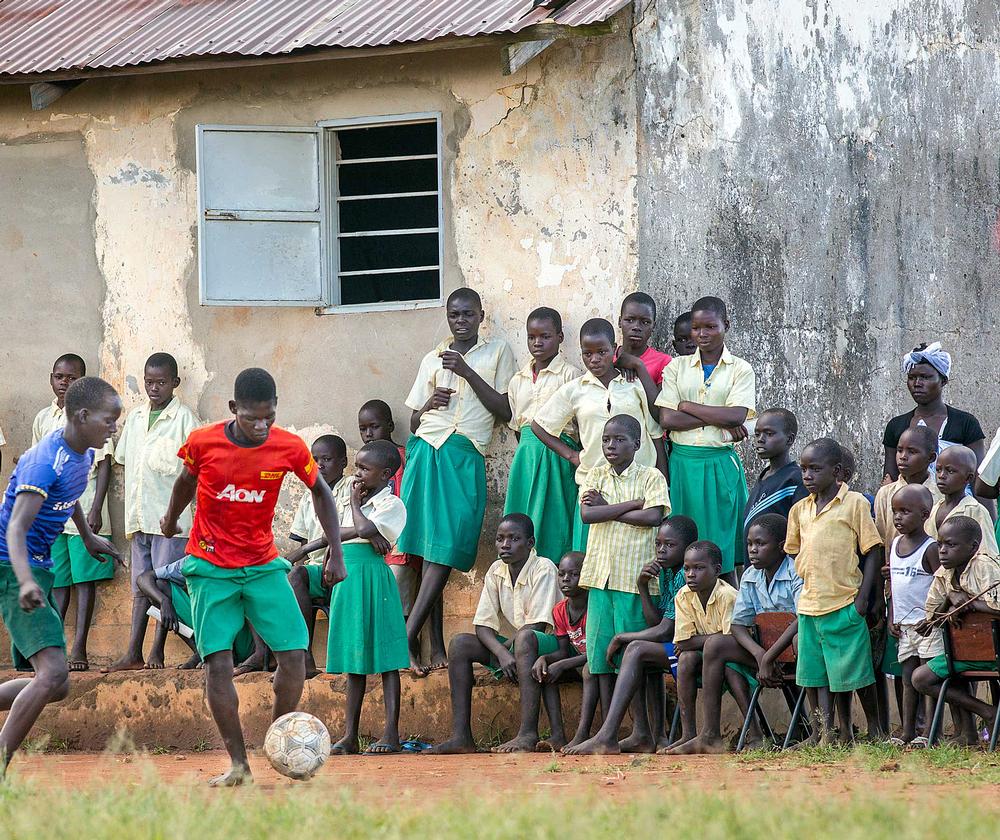
The third strand, “through” sport, is all about using sport for international development. One of the major pieces of Unicef’s work in this category has been the International Inspiration project, which was one of the key London 2012 Olympics legacy projects. Through International Inspiration we’ve been able to reach more than 12 million children across 20 countries, using sports for development. And the work goes on.
Could you give a few examples of your work in sport? A major area of work is the one we do with our sporting ambassadors. We’re very lucky to have the support of the likes of David Beckham, Andy Murray, Sir Chris Hoy and Dame Tanni Grey-Thompson – to name a few. Sport speaks to people, and our ambassadors help us carry out our message – about children and children’s rights – to a wider audience.
David Beckham has been an amazing ambassador for Unicef, helping us raise global awareness of issues affecting children such as malnutrition, violence and AIDS. In 2015 he launched 7: The David Beckham UNICEF Fund to help protect children from danger. Through 7 David is using his powerful global voice, influence and connections to raise vital funds and advocate for change for children across every region of the world and in every aspect of Unicef’s work for children.
We also have strong partnerships with sports clubs, like Manchester United, with whom we’ve had a close relationship for 17 years. The partnerships have afforded lots of opportunities – raising funds is part of that, but also using the powerful brands of the clubs and the popularity of the players to make a difference for children around the world.
I remember once being in Indonesia, in front of a classroom of children, and asking whether they knew where Wales was. There were a lot of blank faces and the guesses included ”an island in the Pacific”. But when I asked whether anyone knew anyone Welsh – every single child put their hand up and shouted, “Ryan Giggs”! It gives you a sense of the reach and impact that sportspeople can have – and that’s what we utilise in our work.
An example of the influence that athletes can have was a billboard campaign we ran in Sierra Leone, where famous footballers lent their faces to a campaign to encourage people to get tested for HIV. As the campaign kicked off, there was an immediate and significant increase in the number of people testing themselves at facilities across the capital, Freetown.
How important is sport to unicef? In terms of our relationships and partnerships, it’s really quite fundamental. Over the past five years, Unicef UK has been directly involved in supporting more than 20 million children by developing supportive and healthy environments through sport. And that’s just Unicef UK – so you can get a sense of the scale. Globally, Unicef has a number of partnerships, like the one with FC Barcelona.
You can’t overstate the importance of sport’s role as a powerful tool. One factor that makes it so powerful is its versatility. It can be used to support children to access education, in disaster preparation and to raise awareness around health and healthy living.
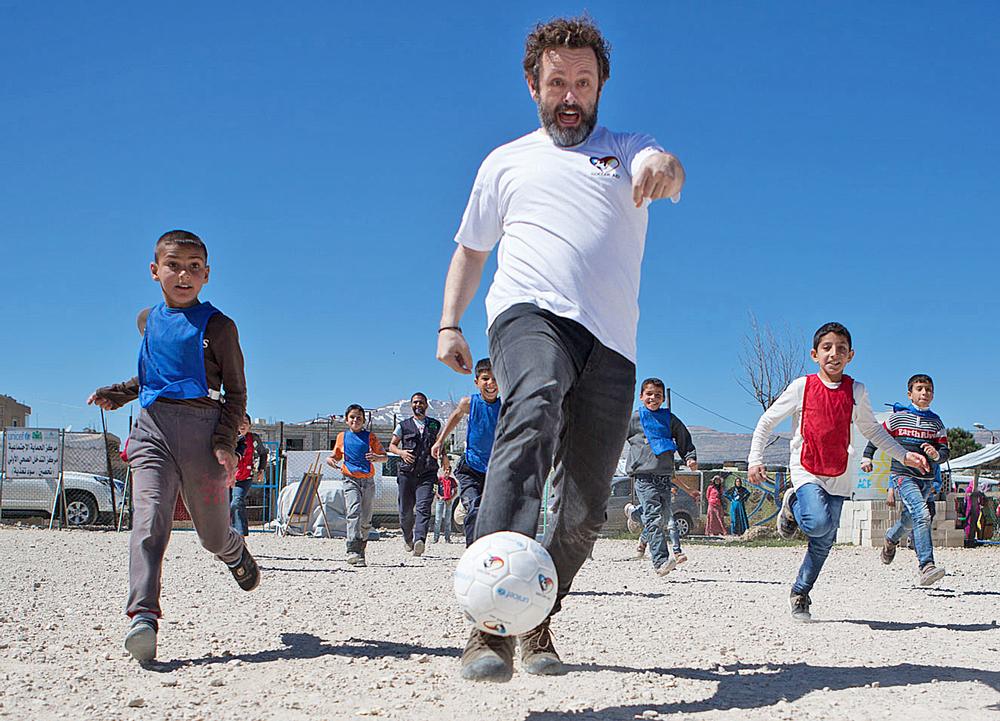
Sport is also used quite often in post conflict aid efforts as part of a fun and social support to help children to just be children again – for example in cases where children have made dangerous journeys to get to safety.
What makes sport such a good development vehicle? Because sport is attractive to so many children. If you put children in a place with sports equipment, a large portion of them will want to try the kit and play sport.
It’s also a great entry point for doing many different things that help protect and promote children’s rights – and there is so much diversity in sport you can utilise. For example, we put together a programme in Bangladesh – a country where more than 17,000 children drown every year.
We set up a project that works with young people to train them up as community swimming coaches. And the coaches have gone on to train around 250,000 young children to swim – so that they now have a crucial life skill, should they fall into the water when the annual floods come along. It’s an example of the way sport can be used to improve – or even save – lives.
Soccer Aid Soccer Aid is a biennial event that has so far raised more than £24m in aid of Unicef UK, through ticket sales and private donations. The event is a football match between two teams – one representing England and the other the Rest of the World – made up of celebrities and former professional players.
Last year’s edition, Soccer Aid 2016, took place at a packed out Old Trafford and raised a record-breaking £6.6m for life-saving work for children. The money raised will help Unicef to improve health and nutrition for more than 1.2m women and children in Zimbabwe, Myanmar and Ethiopia, as well as providing children all over the world with life-saving food, vaccines and clean water, and protecting them from violence, exploitation and abuse.
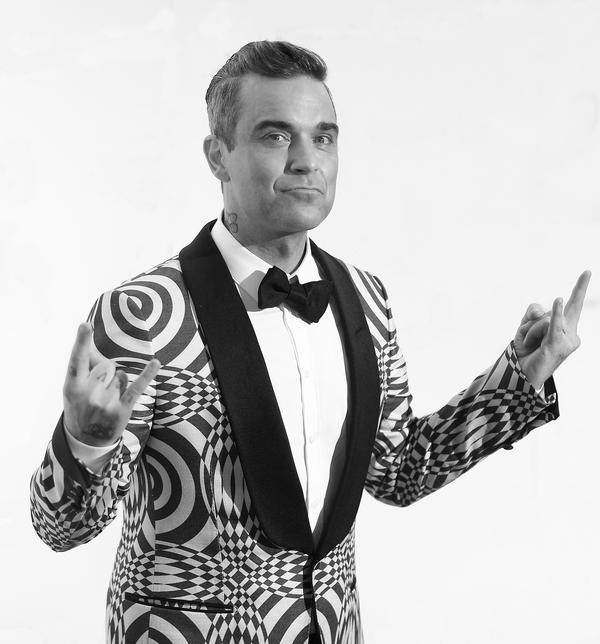
The Soccer Aid event has been created in partnership between Unicef UK and one of its most famous ambassadors – pop star Robbie Williams. “Last year, we said we wanted to smash our fundraising record for Unicef and we did it,” Williams says.
Image:PA
Robbie Williams – passionate about
Soccer Aid for Unicef
Unicef Commonwealth Games partnership Unicef has secured a unique partnership with the Commonwealth Games Federation (CGF), which will see it help CGF integrate human and child rights ‘due diligence’ into all aspects of future editions of the Commonwealth Games.
As part of the partnership, Unicef will work together with the CGF to ensure children’s rights are incorporated into the “plan, bid, delivery and legacy life-cycle” of each Games.
“We are looking to develop a series of bid criteria that take people into account,” says Liz Twyford. “It will be a way to future proof the process and ensure that when potential hosts put their bids together, they are all already thinking about the impact the Games will have on people.
“It doesn’t mean we have any say in who is selected as host, but it does mean that each Games will be very human rights aware.”
Twyford says the long-term plan is to get other major events on board too.
“Interestingly, FIFA has said it will look at its bid criteria for 2026 to ensure human rights are referenced,” she says. “I do think there’s a move being made generally towards the recognition of rights in the sports space – similar to the way the environmental movement developed.”
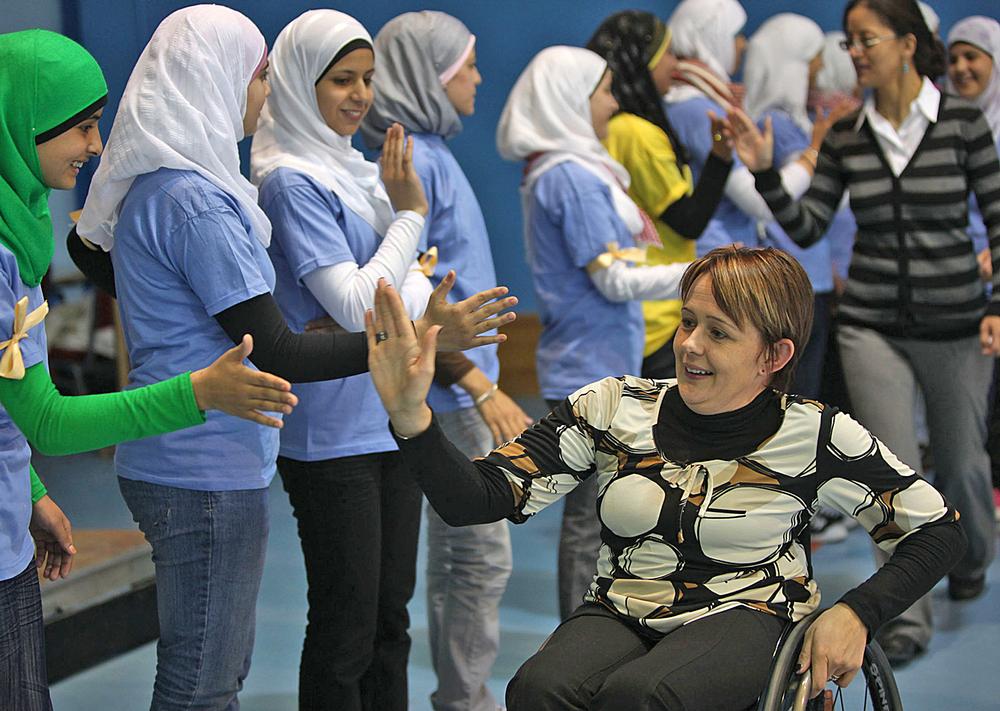
Unicef UK’s ambassadors play a key role in spreading its message, Tanni Grey-Thompson
Unicef UK’s ambassadors play a key role in spreading its message, Tanni Grey-Thompson
Soccer Aid has raised £24m for children since it began 10 years ago
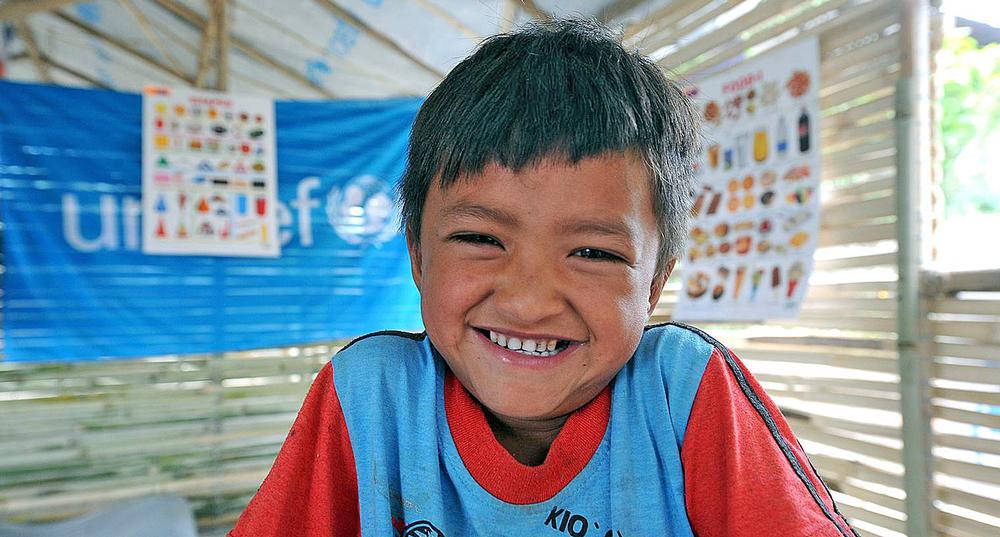
Twyford: “Sport can help children to just be children again”
Twyford says sport offers children
a safe and supportive environment
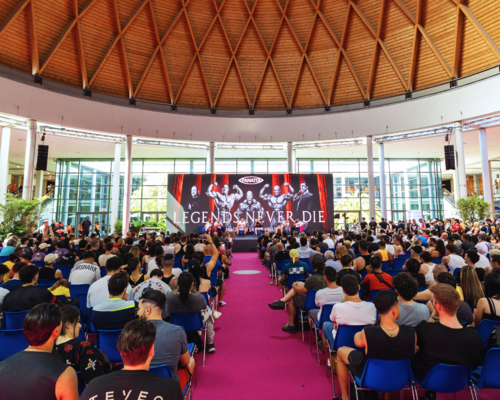
Panatta brought together four of the most influential figures in bodybuilding history on the
stage of RiminiWellness 2026: Phil Heath, Lee Haney, Ronnie Coleman and Hany Rambod. [more...]
In its mission to provide humanitarian and developmental assistance to children worldwide, Unicef UK is using sport as a key vehicle. Unicef’s sports specialist Liz Twyford explains
Unicef UK’s ambassadors play a key role in spreading its message, Andy Murray
How does Unicef use sport? Unicef’s work is all about protecting and promoting children’s rights, and when it comes to sport you can categorise the work we do into three different strands – ”in”, “around” and “through” sport.
By “in” sport, we mean ensuring that when children take part in sport, they do so in a safe and supportive environment. Since 2012 Unicef UK has been heading up a coalition of organisations called The International Safeguarding Children in Sport Working Group. The group has collectively been developing new safeguards for children in sport. We’ll soon be in the process of publishing and sharing those with as many sporting organisations globally as possible.
“Around” sport, meanwhile, consists of the work we do to look at how children’s rights are – and can be – impacted by sport, particularly during and by mega sporting events. We do a lot of work to understand how major events can affect both children living locally and children who take part as athletes – as well as children affected by the supply chain of sporting events.
The third strand, “through” sport, is all about using sport for international development. One of the major pieces of Unicef’s work in this category has been the International Inspiration project, which was one of the key London 2012 Olympics legacy projects. Through International Inspiration we’ve been able to reach more than 12 million children across 20 countries, using sports for development. And the work goes on.
Could you give a few examples of your work in sport? A major area of work is the one we do with our sporting ambassadors. We’re very lucky to have the support of the likes of David Beckham, Andy Murray, Sir Chris Hoy and Dame Tanni Grey-Thompson – to name a few. Sport speaks to people, and our ambassadors help us carry out our message – about children and children’s rights – to a wider audience.
David Beckham has been an amazing ambassador for Unicef, helping us raise global awareness of issues affecting children such as malnutrition, violence and AIDS. In 2015 he launched 7: The David Beckham UNICEF Fund to help protect children from danger. Through 7 David is using his powerful global voice, influence and connections to raise vital funds and advocate for change for children across every region of the world and in every aspect of Unicef’s work for children.
We also have strong partnerships with sports clubs, like Manchester United, with whom we’ve had a close relationship for 17 years. The partnerships have afforded lots of opportunities – raising funds is part of that, but also using the powerful brands of the clubs and the popularity of the players to make a difference for children around the world.
I remember once being in Indonesia, in front of a classroom of children, and asking whether they knew where Wales was. There were a lot of blank faces and the guesses included ”an island in the Pacific”. But when I asked whether anyone knew anyone Welsh – every single child put their hand up and shouted, “Ryan Giggs”! It gives you a sense of the reach and impact that sportspeople can have – and that’s what we utilise in our work.
An example of the influence that athletes can have was a billboard campaign we ran in Sierra Leone, where famous footballers lent their faces to a campaign to encourage people to get tested for HIV. As the campaign kicked off, there was an immediate and significant increase in the number of people testing themselves at facilities across the capital, Freetown.
How important is sport to unicef? In terms of our relationships and partnerships, it’s really quite fundamental. Over the past five years, Unicef UK has been directly involved in supporting more than 20 million children by developing supportive and healthy environments through sport. And that’s just Unicef UK – so you can get a sense of the scale. Globally, Unicef has a number of partnerships, like the one with FC Barcelona.
You can’t overstate the importance of sport’s role as a powerful tool. One factor that makes it so powerful is its versatility. It can be used to support children to access education, in disaster preparation and to raise awareness around health and healthy living.
Sport is also used quite often in post conflict aid efforts as part of a fun and social support to help children to just be children again – for example in cases where children have made dangerous journeys to get to safety.
What makes sport such a good development vehicle? Because sport is attractive to so many children. If you put children in a place with sports equipment, a large portion of them will want to try the kit and play sport.
It’s also a great entry point for doing many different things that help protect and promote children’s rights – and there is so much diversity in sport you can utilise. For example, we put together a programme in Bangladesh – a country where more than 17,000 children drown every year.
We set up a project that works with young people to train them up as community swimming coaches. And the coaches have gone on to train around 250,000 young children to swim – so that they now have a crucial life skill, should they fall into the water when the annual floods come along. It’s an example of the way sport can be used to improve – or even save – lives.
Soccer Aid Soccer Aid is a biennial event that has so far raised more than £24m in aid of Unicef UK, through ticket sales and private donations. The event is a football match between two teams – one representing England and the other the Rest of the World – made up of celebrities and former professional players.
Last year’s edition, Soccer Aid 2016, took place at a packed out Old Trafford and raised a record-breaking £6.6m for life-saving work for children. The money raised will help Unicef to improve health and nutrition for more than 1.2m women and children in Zimbabwe, Myanmar and Ethiopia, as well as providing children all over the world with life-saving food, vaccines and clean water, and protecting them from violence, exploitation and abuse.
The Soccer Aid event has been created in partnership between Unicef UK and one of its most famous ambassadors – pop star Robbie Williams. “Last year, we said we wanted to smash our fundraising record for Unicef and we did it,” Williams says.
Image:PA
Robbie Williams – passionate about
Soccer Aid for Unicef
Unicef Commonwealth Games partnership Unicef has secured a unique partnership with the Commonwealth Games Federation (CGF), which will see it help CGF integrate human and child rights ‘due diligence’ into all aspects of future editions of the Commonwealth Games.
As part of the partnership, Unicef will work together with the CGF to ensure children’s rights are incorporated into the “plan, bid, delivery and legacy life-cycle” of each Games.
“We are looking to develop a series of bid criteria that take people into account,” says Liz Twyford. “It will be a way to future proof the process and ensure that when potential hosts put their bids together, they are all already thinking about the impact the Games will have on people.
“It doesn’t mean we have any say in who is selected as host, but it does mean that each Games will be very human rights aware.”
Twyford says the long-term plan is to get other major events on board too.
“Interestingly, FIFA has said it will look at its bid criteria for 2026 to ensure human rights are referenced,” she says. “I do think there’s a move being made generally towards the recognition of rights in the sports space – similar to the way the environmental movement developed.”
Unicef UK’s ambassadors play a key role in spreading its message, Tanni Grey-Thompson
Unicef UK’s ambassadors play a key role in spreading its message, Tanni Grey-Thompson
Soccer Aid has raised £24m for children since it began 10 years ago
Twyford: “Sport can help children to just be children again”
Twyford says sport offers children
a safe and supportive environment
Italian Exhibition Group – the organiser behind industry events Dubai Active and Dubai Muscle
Show – has been appointed to deliver the Health and Wellness Expo and Fire and Safety Expo at
the 16th World Firefighters Games.
It’s been five years since the fitness industry reopened after the last lockdown – long enough
to look back on the impact the pandemic had on the sector and what might come next.
Wattbike has announced a new integration with EGYM, which enables the bikes to contribute to
the Cardio BioAge score of individuals via a VO2 max result.
Les Mills has launched a reformer Pilates workout. The 45-minute workout blends traditional
reformer movements and more contemporary exercises, choreographed to music.
According to research which tracked more than 147,000 people for 30 years, 90-120 minutes
of strength training a week may deliver some of the biggest long-term health rewards.
The UK's four Chief Medical Officers have published a refreshed edition of Physical activity
guidelines: UK Chief Medical Officers' report, updating the evidence that underpins the nation's
physical activity recommendations and placing greater emphasis on strength, balance, reducing
sedentary behaviour and, for the first time, supporting people taking weight loss medications.
Places Leisure has exchanged contracts to build and operate a flagship £60m water and leisure
destination on behalf of Basingstoke and Deane Borough Council.
The Republic of Ireland will become the latest market in PureGym’s expanding international
portfolio, with the first launch planned for Dublin in 2027.
Panatta brought together four of the most influential figures in bodybuilding history on the
stage of RiminiWellness 2026: Phil Heath, Lee Haney, Ronnie Coleman and Hany Rambod. [more...]