A new study has found that inactivity puts older people at a higher risk of dementia, on a par with those who have a genetic predisposition to the condition
By Steph Eaves | Published in Health Club Management 2017 issue 5
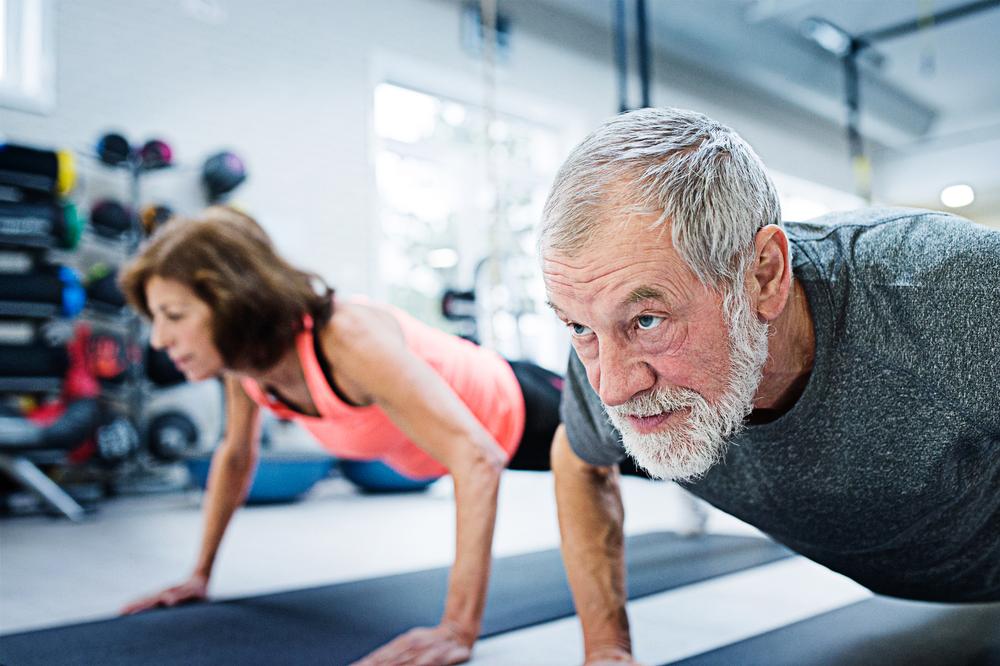
People who exercised regularly were half as likely to develop dementia as those who were sedentary / photo: shutterstock.com
We all know exercise is good for us, but generally we think of the ways it benefits our muscles and lungs, rather than our brain. Still, it should come as no surprise that exercise – wonder drug that it is – has a positive effect on this too.
A recent study from McMaster University in Ontario, Canada has found a strong link between a sedentary lifestyle and dementia. The study followed 1,646 adults over the age of 65, none of whom had any cognitive impairment when the study began.
At the beginning of the study, all participants had their blood tested for the presence of apolipoprotein E allele, the genetic marker most strongly associated with dementia. Five years later, the team went back to see who had been diagnosed with dementia. They also surveyed the participants about their exercise habits.
During the five years, 331 individuals had been diagnosed with some form of dementia. By comparing the initial blood test results with the dementia diagnoses and survey responses, the team was able to see the interactions between these factors.
Exercise some control They found that those who had tested positive for the apolipoprotein E allele were twice as likely to have developed dementia during the past five years as those who did not have the allele. This confirmed the serious risk that a genetic predisposition poses.
In those without the allele, exercise was key. Individuals who reported a mostly sedentary lifestyle, with little or no exercise, were found to be twice as likely to have developed dementia as those who reported that they exercised regularly. In other words, a lack of exercise conferred the same level of dementia risk as a genetic predisposition.
The obvious difference is that one of these factors is out of our control, while the other is very much within it.
“The important message here is that being inactive may completely negate the protective effects of a healthy set of genes,” said co-author of the study Jennifer Heisz, assistant professor in the Department of Kinesiology at McMaster University.
Get walking The researchers followed up with those who had said they exercised regularly, to find out what kind of exercise they did and how often they did it. Walking was the most popular form of exercise among these participants, with most doing it approximately three times a week.
Although further studies are needed to determine the causative factors, the body of research linking physical activity to lower dementia risk provides a convincing reason for people to get moving.
“Given that most individuals are not at genetic risk, physical exercise may be an effective prevention strategy,” said Heisz.
The next step is to discover which types of exercise provide the greatest protection against dementia. Researchers at McMasters University are currently involved in an ongoing study comparing the benefits of high-intensity interval training (HIIT) versus moderate continuous training in older adults. ?
*Fenesi, B et al. Physical exercise moderates the relationship of apolipoprotein E (APOE) genotype and dementia risk: a population-based study. Journal of Alzheimer’s Disease. November 2016.
Active Blackpool is deploying Cornerstone Connect, a new digital interface allowing
disparate information from multiple systems to be aggregated into one dataset, to support
its focus on reducing health inequalities and improving healthy life expectancy. [more...]
Panatta brought together four of the most influential figures in bodybuilding history on the
stage of RiminiWellness 2026: Phil Heath, Lee Haney, Ronnie Coleman and Hany Rambod. [more...]
+ More featured suppliers
COMPANY PROFILES
Precor
Precor promises precision-quality products with steadfast reliability that are inspired by exerciser [more...]
IndigoFitness
At IndigoFitness, we create intelligent training spaces that elevate fitness facilities across indus [more...]
A new study has found that inactivity puts older people at a higher risk of dementia, on a par with those who have a genetic predisposition to the condition
By Steph Eaves | Published in Health Club Management 2017 issue 5
People who exercised regularly were half as likely to develop dementia as those who were sedentary / photo: shutterstock.com
We all know exercise is good for us, but generally we think of the ways it benefits our muscles and lungs, rather than our brain. Still, it should come as no surprise that exercise – wonder drug that it is – has a positive effect on this too.
A recent study from McMaster University in Ontario, Canada has found a strong link between a sedentary lifestyle and dementia. The study followed 1,646 adults over the age of 65, none of whom had any cognitive impairment when the study began.
At the beginning of the study, all participants had their blood tested for the presence of apolipoprotein E allele, the genetic marker most strongly associated with dementia. Five years later, the team went back to see who had been diagnosed with dementia. They also surveyed the participants about their exercise habits.
During the five years, 331 individuals had been diagnosed with some form of dementia. By comparing the initial blood test results with the dementia diagnoses and survey responses, the team was able to see the interactions between these factors.
Exercise some control They found that those who had tested positive for the apolipoprotein E allele were twice as likely to have developed dementia during the past five years as those who did not have the allele. This confirmed the serious risk that a genetic predisposition poses.
In those without the allele, exercise was key. Individuals who reported a mostly sedentary lifestyle, with little or no exercise, were found to be twice as likely to have developed dementia as those who reported that they exercised regularly. In other words, a lack of exercise conferred the same level of dementia risk as a genetic predisposition.
The obvious difference is that one of these factors is out of our control, while the other is very much within it.
“The important message here is that being inactive may completely negate the protective effects of a healthy set of genes,” said co-author of the study Jennifer Heisz, assistant professor in the Department of Kinesiology at McMaster University.
Get walking The researchers followed up with those who had said they exercised regularly, to find out what kind of exercise they did and how often they did it. Walking was the most popular form of exercise among these participants, with most doing it approximately three times a week.
Although further studies are needed to determine the causative factors, the body of research linking physical activity to lower dementia risk provides a convincing reason for people to get moving.
“Given that most individuals are not at genetic risk, physical exercise may be an effective prevention strategy,” said Heisz.
The next step is to discover which types of exercise provide the greatest protection against dementia. Researchers at McMasters University are currently involved in an ongoing study comparing the benefits of high-intensity interval training (HIIT) versus moderate continuous training in older adults. ?
*Fenesi, B et al. Physical exercise moderates the relationship of apolipoprotein E (APOE) genotype and dementia risk: a population-based study. Journal of Alzheimer’s Disease. November 2016.
According to research which tracked more than 147,000 people for 30 years, 90-120 minutes
of strength training a week may deliver some of the biggest long-term health rewards.
The UK's four Chief Medical Officers have published a refreshed edition of Physical activity
guidelines: UK Chief Medical Officers' report, updating the evidence that underpins the nation's
physical activity recommendations and placing greater emphasis on strength, balance, reducing
sedentary behaviour and, for the first time, supporting people taking weight loss medications.
Places Leisure has exchanged contracts to build and operate a flagship £60m water and leisure
destination on behalf of Basingstoke and Deane Borough Council.
The Republic of Ireland will become the latest market in PureGym’s expanding international
portfolio, with the first launch planned for Dublin in 2027.
Anytime Fitness opened more than one club a day in 2025 and is on track to maintain this rate
of growth this year, as parent company Purpose Brands targets further international expansion.
The £33.9 million Leighton Leisure and Community Centre has opened in Leighton Buzzard, UK,
creating a next-generation public leisure, health and wellbeing hub for the local community.
Walnuts Leisure Centre in Orpington, in the London Borough of Bromley, has reopened following
a £17m transformation designed to secure the long-term future of the public leisure asset and
reposition it as a community wellbeing hub.
The Gym Group, has announced that it's sustained positive trading momentum has continued
through the first half of 2026 and the company remains confident about the outlook.
Active Blackpool is deploying Cornerstone Connect, a new digital interface allowing
disparate information from multiple systems to be aggregated into one dataset, to support
its focus on reducing health inequalities and improving healthy life expectancy. [more...]
Panatta brought together four of the most influential figures in bodybuilding history on the
stage of RiminiWellness 2026: Phil Heath, Lee Haney, Ronnie Coleman and Hany Rambod. [more...]
+ More featured suppliers
COMPANY PROFILES
Precor Precor promises precision-quality products with steadfast reliability that are inspired by exerciser [more...]