The physical activity sector is making good progress in Westminster, but there are many battles ahead. ukactive executive director Steven Ward explains
By Steven Ward | Published in Health Club Management 2017 issue 5
£415m of funding will promote activity and healthy eating in schools / Photograph: SHUTTERSTOCK.COM
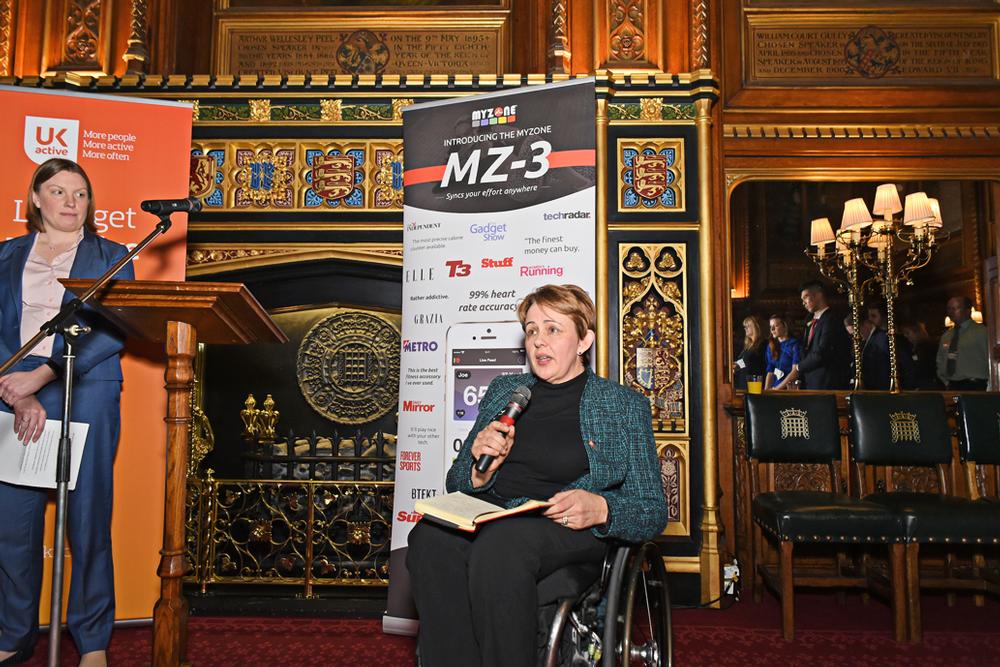
How far up the political agenda has the physical activity sector progressed in recent years? A heck of a long way, according to sports minister Tracey Crouch. At the recent ukactive Parliamentary Reception, the MP for Chatham and Aylesford noted that “partnerships like those with ukactive and the wider physical activity sector have a major role to play in supporting the government to deliver a healthier nation”.
We have an awfully long way to go before we can say we’ve truly turned the tide on our physical activity epidemic, but we’re heading in the right direction. The reception brought ukactive members and partners together with nearly 50 leading parliamentarians for a valuable evening of networking and discussion.
Our sector has a crucial role to play in helping the government to deliver on its core agenda of creating a healthier, more productive nation. We know that physical inactivity costs the economy £20bn per year, while the majority of Britain’s 131 million annual sick days are due to back, neck and muscle pain, which can largely be avoided through regular movement and strength exercises.
Best possible use Many of these problems start in the playground, so it’s hugely encouraging that the government has recently pledged to ring-fence £415m of funding from the Soft Drinks Industry Levy to promote activity and healthy eating in schools. However, we believe this money will have a limited impact unless schools adopt fitness measurements nationwide. The ukactive public affairs team has been working to build cross-party consensus behind this flagship policy objective.
In fact, the team has held meetings with more than 50 senior parliamentarians over the past year, growing support for pro-physical activity policies and a £1bn capital investment in our country’s leisure stock. These endeavours have also led to dozens of activity-focused questions being asked in the House of Commons and I’m confident that our unrelenting efforts will soon be rewarded with a significant breakthrough.
Fighting for fitness Physical activity’s growing standing in Westminster leaves much room for optimism, but the Spring Budget was a sobering reminder that there are many battles ahead. Chancellor Philip Hammond confirmed that sport and physical activity will be omitted from the 15 core employment pathways as part of the new Post-16 Skills Plan for vocational and technical education recommended by the Sainsbury Review. This glaring omission drastically underestimates the importance of our sector to the future of UK PLC.
By failing to provide a clear career pathway into the physical activity sector for young people, the government risks weakening the workforce at a time when it’s never been needed more. The physical activity and sport sector employs over 500,000 people and holds the key to some of the biggest societal challenges that we face today. We’re winning some friends in Westminster, but we must strive to win many more hearts and minds.
Tanni Grey-Thompson (right) with Tracey Crouch (left)
Active Blackpool is deploying Cornerstone Connect, a new digital interface allowing
disparate information from multiple systems to be aggregated into one dataset, to support
its focus on reducing health inequalities and improving healthy life expectancy. [more...]
Panatta brought together four of the most influential figures in bodybuilding history on the
stage of RiminiWellness 2026: Phil Heath, Lee Haney, Ronnie Coleman and Hany Rambod. [more...]
The physical activity sector is making good progress in Westminster, but there are many battles ahead. ukactive executive director Steven Ward explains
By Steven Ward | Published in Health Club Management 2017 issue 5
£415m of funding will promote activity and healthy eating in schools / Photograph: SHUTTERSTOCK.COM
How far up the political agenda has the physical activity sector progressed in recent years? A heck of a long way, according to sports minister Tracey Crouch. At the recent ukactive Parliamentary Reception, the MP for Chatham and Aylesford noted that “partnerships like those with ukactive and the wider physical activity sector have a major role to play in supporting the government to deliver a healthier nation”.
We have an awfully long way to go before we can say we’ve truly turned the tide on our physical activity epidemic, but we’re heading in the right direction. The reception brought ukactive members and partners together with nearly 50 leading parliamentarians for a valuable evening of networking and discussion.
Our sector has a crucial role to play in helping the government to deliver on its core agenda of creating a healthier, more productive nation. We know that physical inactivity costs the economy £20bn per year, while the majority of Britain’s 131 million annual sick days are due to back, neck and muscle pain, which can largely be avoided through regular movement and strength exercises.
Best possible use Many of these problems start in the playground, so it’s hugely encouraging that the government has recently pledged to ring-fence £415m of funding from the Soft Drinks Industry Levy to promote activity and healthy eating in schools. However, we believe this money will have a limited impact unless schools adopt fitness measurements nationwide. The ukactive public affairs team has been working to build cross-party consensus behind this flagship policy objective.
In fact, the team has held meetings with more than 50 senior parliamentarians over the past year, growing support for pro-physical activity policies and a £1bn capital investment in our country’s leisure stock. These endeavours have also led to dozens of activity-focused questions being asked in the House of Commons and I’m confident that our unrelenting efforts will soon be rewarded with a significant breakthrough.
Fighting for fitness Physical activity’s growing standing in Westminster leaves much room for optimism, but the Spring Budget was a sobering reminder that there are many battles ahead. Chancellor Philip Hammond confirmed that sport and physical activity will be omitted from the 15 core employment pathways as part of the new Post-16 Skills Plan for vocational and technical education recommended by the Sainsbury Review. This glaring omission drastically underestimates the importance of our sector to the future of UK PLC.
By failing to provide a clear career pathway into the physical activity sector for young people, the government risks weakening the workforce at a time when it’s never been needed more. The physical activity and sport sector employs over 500,000 people and holds the key to some of the biggest societal challenges that we face today. We’re winning some friends in Westminster, but we must strive to win many more hearts and minds.
Tanni Grey-Thompson (right) with Tracey Crouch (left)
According to research which tracked more than 147,000 people for 30 years, 90-120 minutes
of strength training a week may deliver some of the biggest long-term health rewards.
The UK's four Chief Medical Officers have published a refreshed edition of Physical activity
guidelines: UK Chief Medical Officers' report, updating the evidence that underpins the nation's
physical activity recommendations and placing greater emphasis on strength, balance, reducing
sedentary behaviour and, for the first time, supporting people taking weight loss medications.
Places Leisure has exchanged contracts to build and operate a flagship £60m water and leisure
destination on behalf of Basingstoke and Deane Borough Council.
The Republic of Ireland will become the latest market in PureGym’s expanding international
portfolio, with the first launch planned for Dublin in 2027.
Anytime Fitness opened more than one club a day in 2025 and is on track to maintain this rate
of growth this year, as parent company Purpose Brands targets further international expansion.
The £33.9 million Leighton Leisure and Community Centre has opened in Leighton Buzzard, UK,
creating a next-generation public leisure, health and wellbeing hub for the local community.
Walnuts Leisure Centre in Orpington, in the London Borough of Bromley, has reopened following
a £17m transformation designed to secure the long-term future of the public leisure asset and
reposition it as a community wellbeing hub.
The Gym Group, has announced that it's sustained positive trading momentum has continued
through the first half of 2026 and the company remains confident about the outlook.
Active Blackpool is deploying Cornerstone Connect, a new digital interface allowing
disparate information from multiple systems to be aggregated into one dataset, to support
its focus on reducing health inequalities and improving healthy life expectancy. [more...]
Panatta brought together four of the most influential figures in bodybuilding history on the
stage of RiminiWellness 2026: Phil Heath, Lee Haney, Ronnie Coleman and Hany Rambod. [more...]