Exergaming brings significant activity benefits for children with autism: study
POSTED 24 Sep 2015 . BY Jak Phillips
Brittany Jenkins, first year master's degree occupational therapy student at UTMB, in the Makoto Arena Credit: University of Texas Medical Branch at Galveston
Combining exercise and gaming – known as exergaming – can help improve physical and mental fitness in children with autism spectrum disorders (ASD), scientists have found.
Researchers at the University of Texas Medical Branch (UTMB) at Galveston found that exergaming – particularly using the Makoto arena – could serve as a valuable addition to therapies for children on the autism spectrum who have motor and executive function (the ability to plan and organise) impairments.
Children with ASD often experience these impairments and are also less active than children without ASD. As they get older, their physical activity tends to decline further and they face more obesity problems than other children.
As a way to combat a lack of physical activity, researchers investigated the use of the Makoto arena, a triangular shaped arena with pillars at each point, each with lights and sounds at various levels of the pillars. Those playing the game must hit the correct spots as they light up on different pillars.
The study, published in the International Journal for Sports and Exercise Medicine, used 17 school-aged children and adolescents with ASD in two-minute sessions in the Makoto arena. The speed of the game increased when the participants reached 95 per cent accuracy. Subjects competed in the Makoto arena for an average of six sessions per week over five weeks.
The study saw significant improvements across several physical and mental areas, including response speed. All areas of executive function increased, especially working memory. Motor ability also improved, particularly in the areas of strength and agility.
"We think that the exertion of participating in this type of game helps to improve the neural connections in the brains of these children," said Claudia Hilton, UTMB associate professor.
"This is a small pilot study, but we hope to obtain grant funding to confirm these findings in a larger group of children with autism and to examine the changes that are occurring in the brain."
It’s been five years since the fitness industry reopened after the last lockdown – long enough
to look back on the impact the pandemic had on the sector and what might come next.
Wattbike has announced a new integration with EGYM, which enables the bikes to contribute to
the Cardio BioAge score of individuals via a VO2 max result.
Les Mills has launched a reformer Pilates workout. The 45-minute workout blends traditional
reformer movements and more contemporary exercises, choreographed to music.
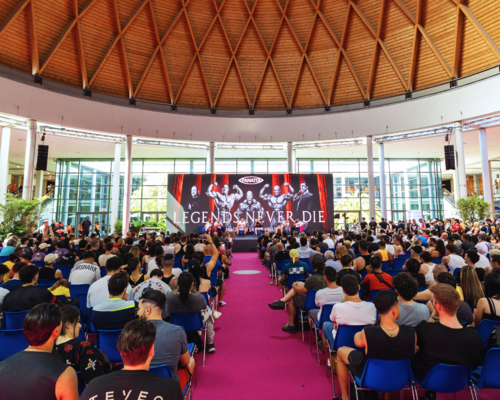
Panatta brought together four of the most influential figures in bodybuilding history on the
stage of RiminiWellness 2026: Phil Heath, Lee Haney, Ronnie Coleman and Hany Rambod. [more...]
Exergaming brings significant activity benefits for children with autism: study
POSTED 24 Sep 2015 . BY Jak Phillips
Brittany Jenkins, first year master's degree occupational therapy student at UTMB, in the Makoto Arena Credit: University of Texas Medical Branch at Galveston
Combining exercise and gaming – known as exergaming – can help improve physical and mental fitness in children with autism spectrum disorders (ASD), scientists have found.
Researchers at the University of Texas Medical Branch (UTMB) at Galveston found that exergaming – particularly using the Makoto arena – could serve as a valuable addition to therapies for children on the autism spectrum who have motor and executive function (the ability to plan and organise) impairments.
Children with ASD often experience these impairments and are also less active than children without ASD. As they get older, their physical activity tends to decline further and they face more obesity problems than other children.
As a way to combat a lack of physical activity, researchers investigated the use of the Makoto arena, a triangular shaped arena with pillars at each point, each with lights and sounds at various levels of the pillars. Those playing the game must hit the correct spots as they light up on different pillars.
The study, published in the International Journal for Sports and Exercise Medicine, used 17 school-aged children and adolescents with ASD in two-minute sessions in the Makoto arena. The speed of the game increased when the participants reached 95 per cent accuracy. Subjects competed in the Makoto arena for an average of six sessions per week over five weeks.
The study saw significant improvements across several physical and mental areas, including response speed. All areas of executive function increased, especially working memory. Motor ability also improved, particularly in the areas of strength and agility.
"We think that the exertion of participating in this type of game helps to improve the neural connections in the brains of these children," said Claudia Hilton, UTMB associate professor.
"This is a small pilot study, but we hope to obtain grant funding to confirm these findings in a larger group of children with autism and to examine the changes that are occurring in the brain."
It’s been five years since the fitness industry reopened after the last lockdown – long enough
to look back on the impact the pandemic had on the sector and what might come next.
Wattbike has announced a new integration with EGYM, which enables the bikes to contribute to
the Cardio BioAge score of individuals via a VO2 max result.
Les Mills has launched a reformer Pilates workout. The 45-minute workout blends traditional
reformer movements and more contemporary exercises, choreographed to music.
According to research which tracked more than 147,000 people for 30 years, 90-120 minutes
of strength training a week may deliver some of the biggest long-term health rewards.
Panatta brought together four of the most influential figures in bodybuilding history on the
stage of RiminiWellness 2026: Phil Heath, Lee Haney, Ronnie Coleman and Hany Rambod. [more...]