Childhood obesity is a global issue. Could the answer to curbing it be found in western Finland, where a city’s holistic approach to wellness has caught the attention of the World Health Organization? Tom Walker reports
By Tom Walker | Published in Health Club Management 2017 issue 4
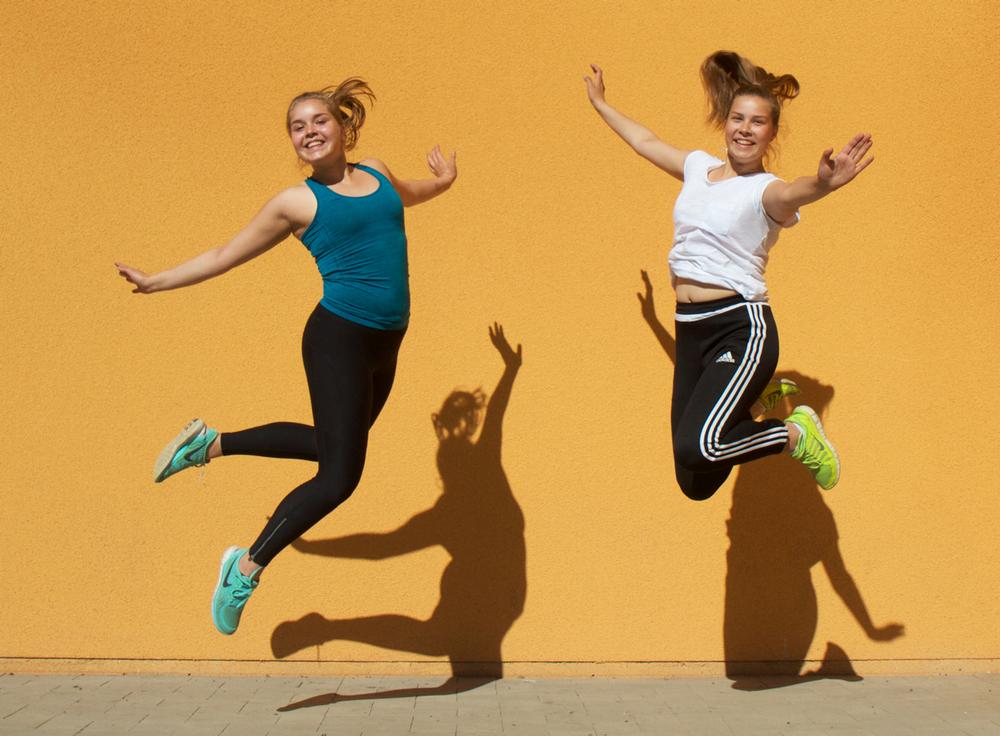
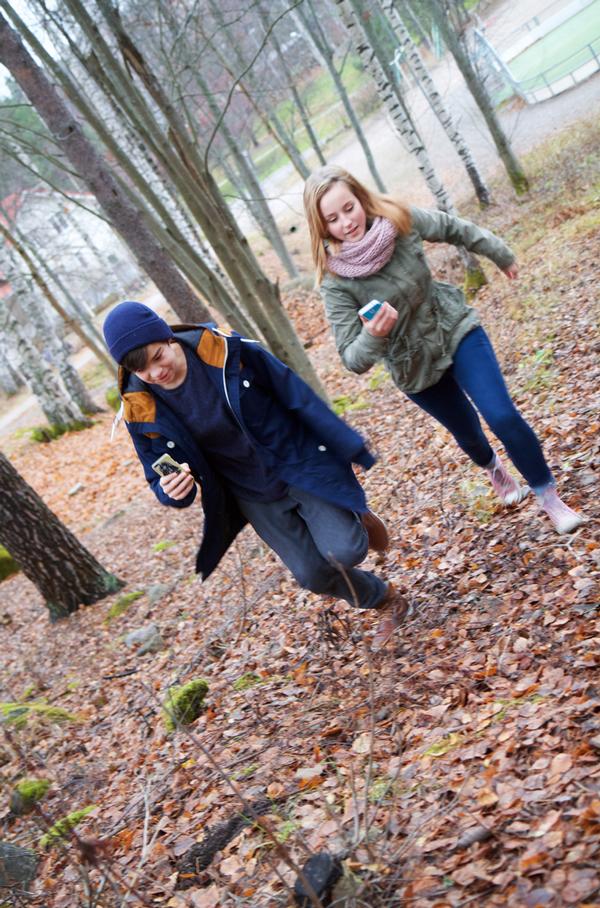
The Lihavuus Laskuun programme translates as ‘overcoming obesity’ / Schools on the Move/Jouni Kallio
This isn’t your average maths class. A group of seven-year-olds are taking part in an impromptu race around the school gym, while other groups play basketball and bounce on trampolines. All around the place, children are being active, burning energy – until a teacher blows her whistle. At the sound of it, the pupils stop and head back to the classroom where they settle down to their work stations – consisting of a gym ball and a desk – and get on with the matter in hand, times tables.
This is what an active classroom looks like in Seinäjoki, a city in western Finland, which has adopted a holistic plan for tackling childhood obesity.
The programme, entitled ‘Lihavuus Laskuun’ (which roughly translates as “Overcoming Obesity”), incorporates all aspects of public services: child care, nutrition, recreation, urban planning – and education. As part of Lihavuus Laskuun, most of the schools in the city have signed up to a scheme called Schools on the Move.
ACTIVE SCHOOLS Now a nationwide programme of Schools on the Move aims to ensure that Finnish children remain physically active throughout the school day. It has introduced an entirely new model for learning to Finland’s schools – one in which studying is regularly interrupted, not by restless students, but by approved bouts of physical activity.
“The idea is to mix education with movement and avoid children having to sit down for long periods of time,” says Antti Blom, national programme director for Schools on the Move.
“You could say that Schools on the Move introduces functional learning in all its forms. As well as scheduled exercise breaks before and after lessons, many schools offer students the opportunity to stay active during learning.
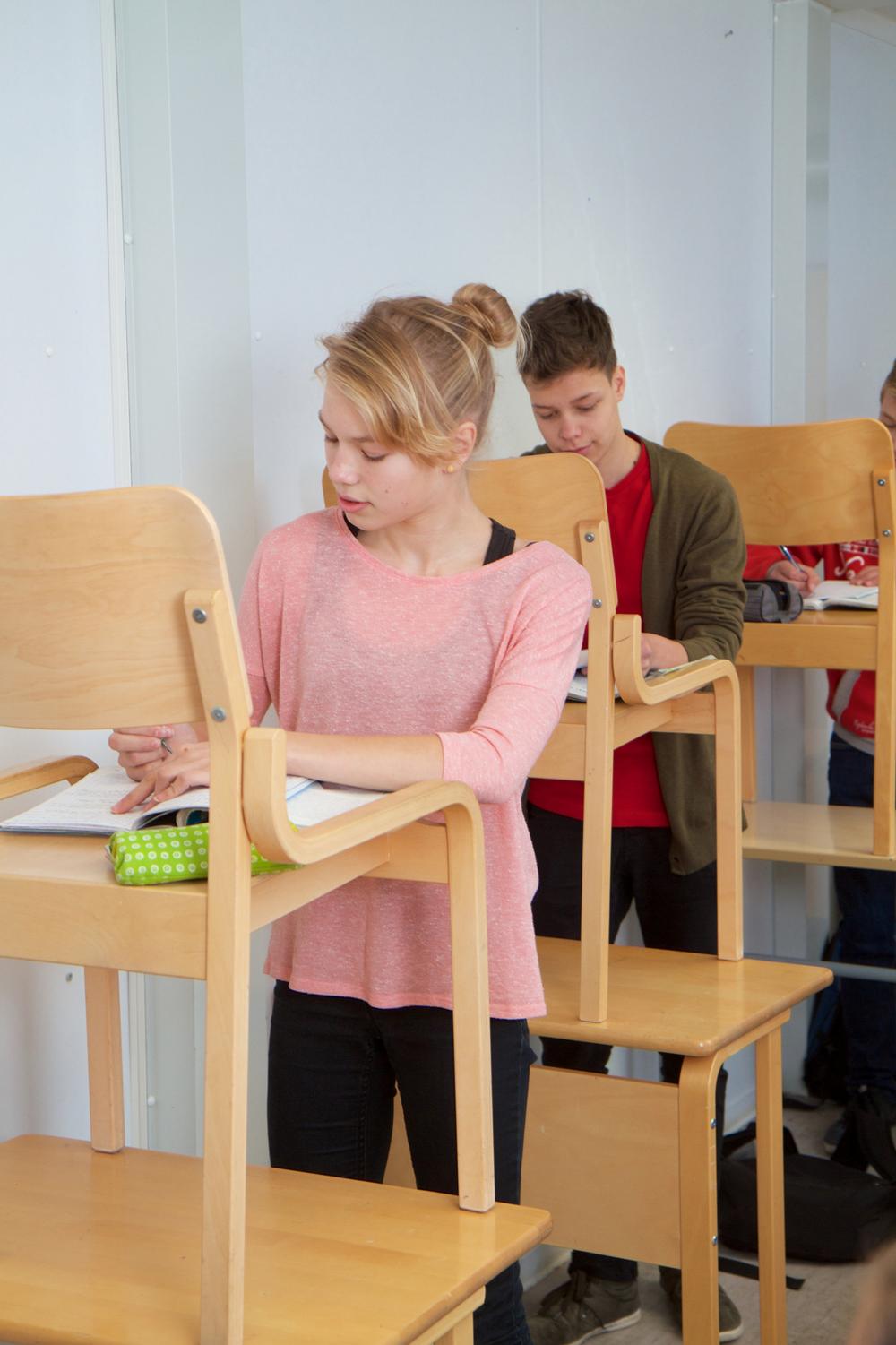
“Teachers incorporate activities into learning, and chairs are being replaced by gym balls or standing desks to allow the children to strengthen their core muscles while they study.” (see box, ‘Active classrooms’, on p78)
Schools on the Move is funded by the Finnish Ministry of Education and Culture (MEC) and operated by the Board of Education, in partnership with local government authorities and agencies. Local councils and city authorities can apply for funding from an annual pot of €7m, which is distributed evenly across the country. Any authority wishing to receive funding has to match the funding that it receives. Therefore, the annual cost of Schools on the Move to the taxpayer can be calculated as being around €14m a year.
NOTABLE IMPACT The scheme was first launched as a two-year pilot in 2010, when 45 Finnish primary schools (for children aged seven to 12 years) and secondary schools (13- to 16-year-olds) took part. Early results were so encouraging that the programme was expanded for 2014.
By 2015, 31 per cent of all Finnish schools had adopted the programme. Today, more than 80 per cent of Finnish children under the age of 16 are part of the Schools on the Move network.
Research into the impact of the programme has shown that the approach works. A report in 2016 showed that 70 per cent of all primary school children now achieve the national target of one hour of physical activity in the school day.
The scheme has also had a positive effect on learning. Ninety per cent of teaching staff surveyed on the effects of Schools on the Move responded by saying that the increased physical activities during recesses contributed to a “peaceful learning environment”.
The success of the scheme resulted in the government last year (2016) announcing that the programme would be further expanded to cover colleges and other upper secondary school institutions (for children aged 16+).
According to Blom, the programme’s success is down to its bottom-up approach, where the schools are placed at the centre of the programme. “While we provide the framework, recommendations and targets, we don’t directly tell schools what they should be doing,” Blom explains. “It’s the schools that come up with the ideas and innovations regarding how activities can best be mixed with learning in their own environment.
“We then collect examples of the actions that schools have implemented and share the knowledge centrally with other schools. That way, we’re able to establish benchmarks and methods that actually work – and schools can learn and pick up ideas from each other.”
CITY-WIDE APPROACH The city of Seinäjoki embraced Schools on the Move as part of a city-wide adoption of Lihavuus Laskuun. Its widespread action plan to improve public health and wellness was deemed necessary in 2009, when a study found that nearly one in five (17 per cent) of the city’s five-year-olds was either classed as overweight or obese.
“We realised we had to do something,” says Ulla Frantti-Malinen, co-ordinator of health and welfare promotion for the City of Seinäjoki Council. “And what we did was get every department in the local authority together to get them working towards a common goal: tackling obesity.”
Frantti-Malinen says that since then, the city’s health department has worked together with the childcare, education, nutrition, recreation and urban planning departments – as well as outside agencies such as Schools on the Move – on a number of new initiatives.
“The urban planning department has improved school playgrounds and other outdoor leisure spaces to make access to physical activity easier, while the schools have adopted the Schools on the Move programme”, she says.“The foundations for a healthy lifestyle are built in cooperation with the families. We begin at family planning and maternity clinics, where expectant mothers receive advice on diet and lifestyles, and continue it throughout children’s school lives.”
The measures introduced under the Lihavuus Laskuun programme have had a major impact. In 2011, a study showed 14 per cent of Seinäjoki’s seven-year-olds and 16.1 per cent of 11-year-olds were overweight. By 2015, the figures had fallen to 8.7 per cent and 8.2 per cent respectively.
According to Frantti-Malinen, the success is very much down to all local authority departments pulling together. “We now have a strong commitment to the programme across the city,” she says. “This isn’t just a project – it’s a new approach to doing things, from how we plan our environment to the way that we deliver education.
“By curbing childhood obesity early and introducing healthy lifestyles, we can help ensure that children grow up to be healthy adults – which will ultimately have positive implications on healthcare costs and future planning decisions.”
EXPORTING WELLNESS As childhood obesity is increasingly a global problem, the results of the ‘Seinäjoki experiment’ haven’t gone unnoticed outside Finland. In 2015, the World Health Organization hailed the programme as an example of how a “health in all policies” approach can deliver impressive results.
There’s also a direct copy of the Lihavuus Laskuun programme currently in the works. A delegation from the South Korean capital, Seoul, visited Seinäjoki in 2016 with the aim of kickstarting a similar plan of action across the city’s Gangdong district.
“Obesity is a growing problem in South Korea,” says Eun Sook Moon, senior researcher from the Seoul Institute. “When searching for ways to tackle the problem, we came across Seinäjoki and what the city has done – and we were impressed. It’s the preventative aspect that interests us the most.”
For Frantti-Malinen, the interest shown in what Seinäjoki is doing – by a city on the other side of the world nearly 20 times its size – is an example of how tackling inactivity is now a global issue.
“The network of people tackling the problem of obesity and improving wellness is no longer a local, regional or national one,” she says. “It’s a global problem. And we’re proud that we’re doing something that’s getting such recognition.”
Active classrooms
Juha-Matti Matilainen
Juha-Matti MatilainenCo-ordinator of physical education and Schools on the MoveSeinäjoki City, Finland
“One of the main aims is to reduce the time pupils are sedentary. Short exercise breaks within lessons are very popular and can also be used as an educational device. For example, classrooms can be fitted with equipment that allows the quick setting up of impromptu games and activities to reward learning – such as a table tennis net that can be attached to a desk. But it can also be something very simple, such as placing text books away from students – and then giving them tasks in which they have to retrieve the answers from the books by jumping or hopping to them.
“Longer recesses are also popular. Many schools now combine lessons to make space for one or two longer breaks during the day. This allows children to properly set up an outdoor game of sport or a play session.
“There are great ways to activate children outside the classroom too. Many schools place different markers around the hallways and pathways, to persuade children to walk differently. For example, footprints that encourage children to take longer strides, jump sideways or take running steps – or lines that act as a kind of ‘tightrope’.
“There are also signs you can hang from the ceiling, at different heights, encouraging children to see how high they can jump and whether they can make progress by reaching a higher one, say, next week.
“Horizontal climbing walls are also very popular. The placements and holds are located along the wall and low enough so that no cushioned flooring is needed.”
Standing desks allow pupils to strengthen core muscles while studying / Schools on the Move/Jouni Kallio
Outdoor spaces have been made more accessible, to encourage activity beyond school too
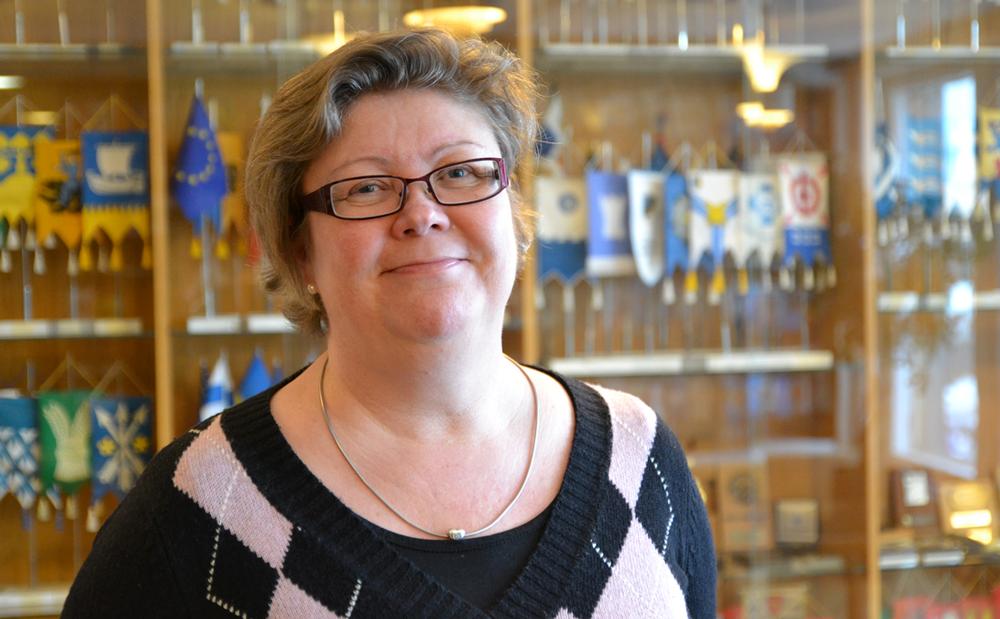
Frantti-Malinen: Council departments now work together against obesity
The Finnish programme has had a major impact on pupils’ health
Panatta brought together four of the most influential figures in bodybuilding history on the
stage of RiminiWellness 2026: Phil Heath, Lee Haney, Ronnie Coleman and Hany Rambod. [more...]
Active Blackpool is deploying Cornerstone Connect, a new digital interface allowing
disparate information from multiple systems to be aggregated into one dataset, to support
its focus on reducing health inequalities and improving healthy life expectancy. [more...]
Childhood obesity is a global issue. Could the answer to curbing it be found in western Finland, where a city’s holistic approach to wellness has caught the attention of the World Health Organization? Tom Walker reports
By Tom Walker | Published in Health Club Management 2017 issue 4
The Lihavuus Laskuun programme translates as ‘overcoming obesity’ / Schools on the Move/Jouni Kallio
This isn’t your average maths class. A group of seven-year-olds are taking part in an impromptu race around the school gym, while other groups play basketball and bounce on trampolines. All around the place, children are being active, burning energy – until a teacher blows her whistle. At the sound of it, the pupils stop and head back to the classroom where they settle down to their work stations – consisting of a gym ball and a desk – and get on with the matter in hand, times tables.
This is what an active classroom looks like in Seinäjoki, a city in western Finland, which has adopted a holistic plan for tackling childhood obesity.
The programme, entitled ‘Lihavuus Laskuun’ (which roughly translates as “Overcoming Obesity”), incorporates all aspects of public services: child care, nutrition, recreation, urban planning – and education. As part of Lihavuus Laskuun, most of the schools in the city have signed up to a scheme called Schools on the Move.
ACTIVE SCHOOLS Now a nationwide programme of Schools on the Move aims to ensure that Finnish children remain physically active throughout the school day. It has introduced an entirely new model for learning to Finland’s schools – one in which studying is regularly interrupted, not by restless students, but by approved bouts of physical activity.
“The idea is to mix education with movement and avoid children having to sit down for long periods of time,” says Antti Blom, national programme director for Schools on the Move.
“You could say that Schools on the Move introduces functional learning in all its forms. As well as scheduled exercise breaks before and after lessons, many schools offer students the opportunity to stay active during learning.
“Teachers incorporate activities into learning, and chairs are being replaced by gym balls or standing desks to allow the children to strengthen their core muscles while they study.” (see box, ‘Active classrooms’, on p78)
Schools on the Move is funded by the Finnish Ministry of Education and Culture (MEC) and operated by the Board of Education, in partnership with local government authorities and agencies. Local councils and city authorities can apply for funding from an annual pot of €7m, which is distributed evenly across the country. Any authority wishing to receive funding has to match the funding that it receives. Therefore, the annual cost of Schools on the Move to the taxpayer can be calculated as being around €14m a year.
NOTABLE IMPACT The scheme was first launched as a two-year pilot in 2010, when 45 Finnish primary schools (for children aged seven to 12 years) and secondary schools (13- to 16-year-olds) took part. Early results were so encouraging that the programme was expanded for 2014.
By 2015, 31 per cent of all Finnish schools had adopted the programme. Today, more than 80 per cent of Finnish children under the age of 16 are part of the Schools on the Move network.
Research into the impact of the programme has shown that the approach works. A report in 2016 showed that 70 per cent of all primary school children now achieve the national target of one hour of physical activity in the school day.
The scheme has also had a positive effect on learning. Ninety per cent of teaching staff surveyed on the effects of Schools on the Move responded by saying that the increased physical activities during recesses contributed to a “peaceful learning environment”.
The success of the scheme resulted in the government last year (2016) announcing that the programme would be further expanded to cover colleges and other upper secondary school institutions (for children aged 16+).
According to Blom, the programme’s success is down to its bottom-up approach, where the schools are placed at the centre of the programme. “While we provide the framework, recommendations and targets, we don’t directly tell schools what they should be doing,” Blom explains. “It’s the schools that come up with the ideas and innovations regarding how activities can best be mixed with learning in their own environment.
“We then collect examples of the actions that schools have implemented and share the knowledge centrally with other schools. That way, we’re able to establish benchmarks and methods that actually work – and schools can learn and pick up ideas from each other.”
CITY-WIDE APPROACH The city of Seinäjoki embraced Schools on the Move as part of a city-wide adoption of Lihavuus Laskuun. Its widespread action plan to improve public health and wellness was deemed necessary in 2009, when a study found that nearly one in five (17 per cent) of the city’s five-year-olds was either classed as overweight or obese.
“We realised we had to do something,” says Ulla Frantti-Malinen, co-ordinator of health and welfare promotion for the City of Seinäjoki Council. “And what we did was get every department in the local authority together to get them working towards a common goal: tackling obesity.”
Frantti-Malinen says that since then, the city’s health department has worked together with the childcare, education, nutrition, recreation and urban planning departments – as well as outside agencies such as Schools on the Move – on a number of new initiatives.
“The urban planning department has improved school playgrounds and other outdoor leisure spaces to make access to physical activity easier, while the schools have adopted the Schools on the Move programme”, she says.“The foundations for a healthy lifestyle are built in cooperation with the families. We begin at family planning and maternity clinics, where expectant mothers receive advice on diet and lifestyles, and continue it throughout children’s school lives.”
The measures introduced under the Lihavuus Laskuun programme have had a major impact. In 2011, a study showed 14 per cent of Seinäjoki’s seven-year-olds and 16.1 per cent of 11-year-olds were overweight. By 2015, the figures had fallen to 8.7 per cent and 8.2 per cent respectively.
According to Frantti-Malinen, the success is very much down to all local authority departments pulling together. “We now have a strong commitment to the programme across the city,” she says. “This isn’t just a project – it’s a new approach to doing things, from how we plan our environment to the way that we deliver education.
“By curbing childhood obesity early and introducing healthy lifestyles, we can help ensure that children grow up to be healthy adults – which will ultimately have positive implications on healthcare costs and future planning decisions.”
EXPORTING WELLNESS As childhood obesity is increasingly a global problem, the results of the ‘Seinäjoki experiment’ haven’t gone unnoticed outside Finland. In 2015, the World Health Organization hailed the programme as an example of how a “health in all policies” approach can deliver impressive results.
There’s also a direct copy of the Lihavuus Laskuun programme currently in the works. A delegation from the South Korean capital, Seoul, visited Seinäjoki in 2016 with the aim of kickstarting a similar plan of action across the city’s Gangdong district.
“Obesity is a growing problem in South Korea,” says Eun Sook Moon, senior researcher from the Seoul Institute. “When searching for ways to tackle the problem, we came across Seinäjoki and what the city has done – and we were impressed. It’s the preventative aspect that interests us the most.”
For Frantti-Malinen, the interest shown in what Seinäjoki is doing – by a city on the other side of the world nearly 20 times its size – is an example of how tackling inactivity is now a global issue.
“The network of people tackling the problem of obesity and improving wellness is no longer a local, regional or national one,” she says. “It’s a global problem. And we’re proud that we’re doing something that’s getting such recognition.”
Active classrooms
Juha-Matti Matilainen
Juha-Matti MatilainenCo-ordinator of physical education and Schools on the MoveSeinäjoki City, Finland
“One of the main aims is to reduce the time pupils are sedentary. Short exercise breaks within lessons are very popular and can also be used as an educational device. For example, classrooms can be fitted with equipment that allows the quick setting up of impromptu games and activities to reward learning – such as a table tennis net that can be attached to a desk. But it can also be something very simple, such as placing text books away from students – and then giving them tasks in which they have to retrieve the answers from the books by jumping or hopping to them.
“Longer recesses are also popular. Many schools now combine lessons to make space for one or two longer breaks during the day. This allows children to properly set up an outdoor game of sport or a play session.
“There are great ways to activate children outside the classroom too. Many schools place different markers around the hallways and pathways, to persuade children to walk differently. For example, footprints that encourage children to take longer strides, jump sideways or take running steps – or lines that act as a kind of ‘tightrope’.
“There are also signs you can hang from the ceiling, at different heights, encouraging children to see how high they can jump and whether they can make progress by reaching a higher one, say, next week.
“Horizontal climbing walls are also very popular. The placements and holds are located along the wall and low enough so that no cushioned flooring is needed.”
Standing desks allow pupils to strengthen core muscles while studying / Schools on the Move/Jouni Kallio
Outdoor spaces have been made more accessible, to encourage activity beyond school too
Frantti-Malinen: Council departments now work together against obesity
The Finnish programme has had a major impact on pupils’ health
According to research which tracked more than 147,000 people for 30 years, 90-120 minutes
of strength training a week may deliver some of the biggest long-term health rewards.
The UK's four Chief Medical Officers have published a refreshed edition of Physical activity
guidelines: UK Chief Medical Officers' report, updating the evidence that underpins the nation's
physical activity recommendations and placing greater emphasis on strength, balance, reducing
sedentary behaviour and, for the first time, supporting people taking weight loss medications.
Places Leisure has exchanged contracts to build and operate a flagship £60m water and leisure
destination on behalf of Basingstoke and Deane Borough Council.
The Republic of Ireland will become the latest market in PureGym’s expanding international
portfolio, with the first launch planned for Dublin in 2027.
Anytime Fitness opened more than one club a day in 2025 and is on track to maintain this rate
of growth this year, as parent company Purpose Brands targets further international expansion.
The £33.9 million Leighton Leisure and Community Centre has opened in Leighton Buzzard, UK,
creating a next-generation public leisure, health and wellbeing hub for the local community.
Walnuts Leisure Centre in Orpington, in the London Borough of Bromley, has reopened following
a £17m transformation designed to secure the long-term future of the public leisure asset and
reposition it as a community wellbeing hub.
The Gym Group, has announced that it's sustained positive trading momentum has continued
through the first half of 2026 and the company remains confident about the outlook.
Panatta brought together four of the most influential figures in bodybuilding history on the
stage of RiminiWellness 2026: Phil Heath, Lee Haney, Ronnie Coleman and Hany Rambod. [more...]
Active Blackpool is deploying Cornerstone Connect, a new digital interface allowing
disparate information from multiple systems to be aggregated into one dataset, to support
its focus on reducing health inequalities and improving healthy life expectancy. [more...]