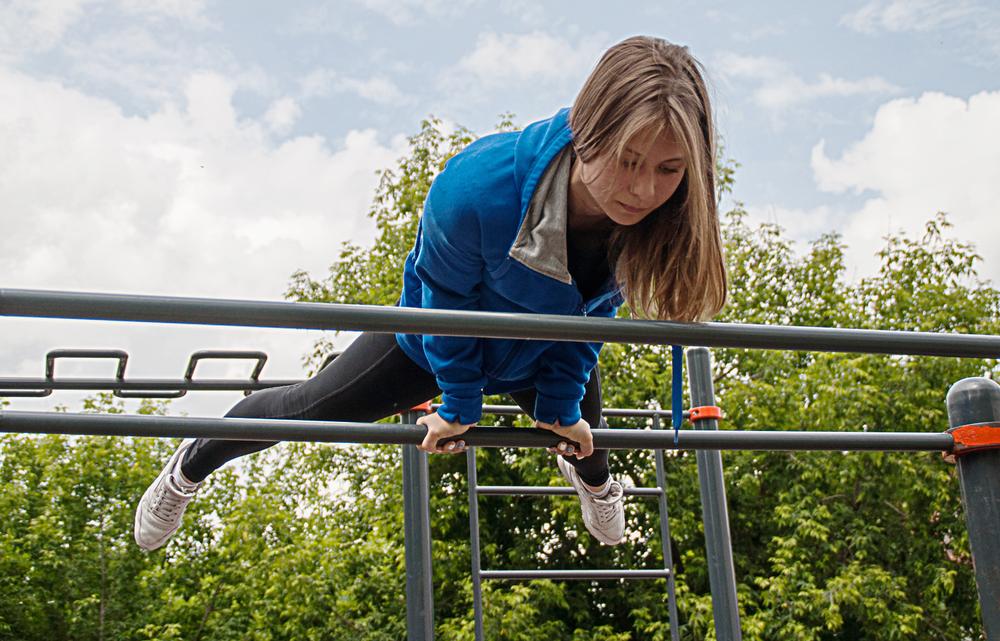
? British Gymnastics will focus on its role as a ‘foundation sport’ for kids / Evgeniia Freeman / shutterstock
The way Sport England uses National Lottery and government funding to invest in and work with national governing bodies of sport is changing. Significantly.
The days of Whole Sport Plans are over. They served a very important purpose throughout the last eight years, highlighting the need to get more people participating in sport. But Sport England is now taking a different approach, starting with the individual consumer and their behaviour.
We’re no longer looking for NGBs to be all things to everyone. We’re no longer asking them to cater to both the keen and committed regulars and the deconditioned population. We’re asking NGBs to focus on those who have a strong affinity with their sport and a habit of regular participation, including talented young athletes.
Why? Well, firstly this was a strong message that came out of the sector during our strategy consultation. Secondly, even though 35 per cent of people have a regular sporting habit, our work isn’t done with them. Life can still get in the way. Moving house, going off to college, having a baby or getting injured can take even the keenest participant away from their sport. We want to help NGBs focus their efforts on making those disruptions easy to overcome.
At the other end of the behaviour scale, we want to encourage people who are inactive to get moving. This requires some serious investment, and to fund this, we need to spend less money on those who already play sport. A reduced subsidy of governing bodies is the inevitable result.
Challenge accepted I’ve been delighted with the way NGBs have responded to the challenge so far, and the plans they’ve developed. There’s a real maturity to the plans – an understanding of what makes a regular player and that commercial income needs to play a bigger role and a genuine commitment to helping under-represented groups.
British Gymnastics, for example, clearly recognises its role as a ‘foundation sport’, teaching young people the physical skills to be competent and confident in other sports. British Tennis will spend most of its time and money in local parks rather than clubs, and will be making tennis venues more inclusive for people with disabilities.
The Rugby Football Union wants to create more ‘pitch up and play’ opportunities, especially for women. England Netball has ambitious plans for its Super League. Basketball England has great new partnerships with both the global brand that is the NBA and local community charities.
Of course, being in receipt of public money is a tremendous responsibility, and not one pound of this funding can be invested unless organisations meet the requirements of the Code for Sports Governance that we published with UK Sport last year. Again, the challenge is tough but the response has been really encouraging, with a commitment to positive change.
Time will tell how well the reality will match the ambition. But the evidence so far tells me that the sports industry believes in the direction we’re taking.
Phil Smith is the director of sport at Sport England. sportengland.org
As healthcare continues to shift towards prevention, there’s a growing focus on helping
people stay active, independent and feeling good for longer. [more...]
One of the biggest mistakes the fitness industry still makes is advertising almost
exclusively to people who already look and live like gym members. [more...]
+ More featured suppliers
COMPANY PROFILES
Safe Space Lockers
We provide a full turn-key solution for clients from design and consultation, through to bespoke man [more...]
ukactive
ukactive is the UK’s leading trade body for the physical activity sector, bringing together more tha [more...]
? British Gymnastics will focus on its role as a ‘foundation sport’ for kids / Evgeniia Freeman / shutterstock
The way Sport England uses National Lottery and government funding to invest in and work with national governing bodies of sport is changing. Significantly.
The days of Whole Sport Plans are over. They served a very important purpose throughout the last eight years, highlighting the need to get more people participating in sport. But Sport England is now taking a different approach, starting with the individual consumer and their behaviour.
We’re no longer looking for NGBs to be all things to everyone. We’re no longer asking them to cater to both the keen and committed regulars and the deconditioned population. We’re asking NGBs to focus on those who have a strong affinity with their sport and a habit of regular participation, including talented young athletes.
Why? Well, firstly this was a strong message that came out of the sector during our strategy consultation. Secondly, even though 35 per cent of people have a regular sporting habit, our work isn’t done with them. Life can still get in the way. Moving house, going off to college, having a baby or getting injured can take even the keenest participant away from their sport. We want to help NGBs focus their efforts on making those disruptions easy to overcome.
At the other end of the behaviour scale, we want to encourage people who are inactive to get moving. This requires some serious investment, and to fund this, we need to spend less money on those who already play sport. A reduced subsidy of governing bodies is the inevitable result.
Challenge accepted I’ve been delighted with the way NGBs have responded to the challenge so far, and the plans they’ve developed. There’s a real maturity to the plans – an understanding of what makes a regular player and that commercial income needs to play a bigger role and a genuine commitment to helping under-represented groups.
British Gymnastics, for example, clearly recognises its role as a ‘foundation sport’, teaching young people the physical skills to be competent and confident in other sports. British Tennis will spend most of its time and money in local parks rather than clubs, and will be making tennis venues more inclusive for people with disabilities.
The Rugby Football Union wants to create more ‘pitch up and play’ opportunities, especially for women. England Netball has ambitious plans for its Super League. Basketball England has great new partnerships with both the global brand that is the NBA and local community charities.
Of course, being in receipt of public money is a tremendous responsibility, and not one pound of this funding can be invested unless organisations meet the requirements of the Code for Sports Governance that we published with UK Sport last year. Again, the challenge is tough but the response has been really encouraging, with a commitment to positive change.
Time will tell how well the reality will match the ambition. But the evidence so far tells me that the sports industry believes in the direction we’re taking.
Phil Smith is the director of sport at Sport England. sportengland.org
Global luxury hospitality brand, Six Senses, has partnered with longevity healthcare provider,
HUM2N, to launch a clinic at Six Senses London, at The Whiteley.
Premium London health club, KX Chelsea, will imminently unveil its most significant
redevelopment since its launch in 2002 to create an integrated wellness model combining
training, recovery and relaxation.
Researchers in the US have identified an antibody which could greatly reduce the loss of lean
muscle mass in people who are taking weight-loss medications.
Crunch Fitness has announced the launch of Crunch Reform Pilates – its own reformer concept
designed to bring this fast growing, but rather expensive, modality into the mainstream.
The 20th State of the Industry Report reveals a resilient, expanding and competitive
sector, the
importance of differentiation and the ongoing challenge of tackling inequalities.
Nuffield Health has told HCM that it takes its responsibilities towards its colleagues seriously
and is committed to meeting all legal obligations after news of a tribunal has made national
headlines.
Technogym has announced the launch of the Run X World Treadmill Championship, the first
world championship for running on connected treadmills over five kilometres.
As healthcare continues to shift towards prevention, there’s a growing focus on helping
people stay active, independent and feeling good for longer. [more...]
One of the biggest mistakes the fitness industry still makes is advertising almost
exclusively to people who already look and live like gym members. [more...]
+ More featured suppliers
COMPANY PROFILES
Safe Space Lockers We provide a full turn-key solution for clients from design and consultation, through to bespoke man [more...]