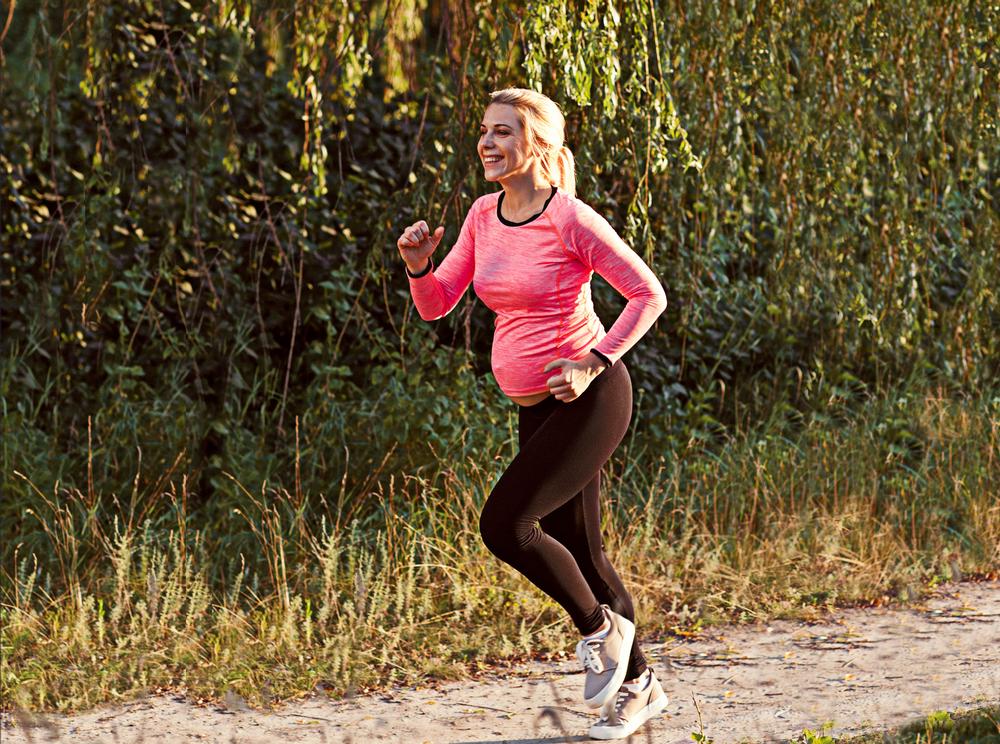
Exercising while pregnant could protect your children against type 2 diabetes in later life / photo: shutterstock.com
While we know that exercise is beneficial for our own health, less is known about the benefits it might have on the long-term health of our children. Studies on mice have shown that pregnant mothers who exercise may be protecting their unborn children from future health complications*.
Dr Kevin Pearson – an associate professor in the Department of Pharmacology and Nutritional Sciences at the University of Kentucky, where these studies took place – is involved in ongoing research into maternal exercise during pregnancy. He and his team aim to find behavioural and nutritional interventions that improve long-term health outcomes in the next generation.
“Pregnancy in humans is roughly 40 weeks, whereas the average lifespan is close to 4,000 weeks. Thus, pregnancy involves a one per cent investment of time when you can improve your diet and behaviours so that a future child can potentially enjoy a lifetime of health benefits,” he says.
“In a mouse study, we observed that voluntary exercise during pregnancy and nursing protected against chemical-induced carcinogenesis in adult male and female offspring. Markers of oxidative stress and inflammation were also decreased in offspring born to exercised mothers compared to sedentary mothers.
“In a separate study, we found that both male and female mouse offspring born to exercised mothers had significantly enhanced insulin sensitivity during adulthood compared to offspring born to sedentary mothers.
“Enhancing stress resistance and improving insulin sensitivity could help delay the onset of numerous age-associated diseases,” says Pearson.
Future benefits The children of mothers who exercised while pregnant showed these benefits continued into adulthood. According to Pearson, these findings suggest that children could be protected against diseases like obesity, type 2 diabetes, cancer and heart disease in later life. He hopes that by demonstrating this through research, pregnant women will be more likely to adhere to exercise during pregnancy.
While these studies have been done on mice, Pearson and his team are now in the early stages of human studies. A new pilot study involves giving Fitbits to pregnant women and using these to track physical activity. Then, after birth, the health of the offspring will be tracked. This will, of course, take much longer to produce results than the mice studies and the team is still working to procure funding.
“The use of animal models allows us to control for certain variables that would not be possible in humans, and we can investigate more detailed mechanisms in these samples,” explains Pearson.
Of mice and mums He is reasonably confident, however, that the results of mice studies are likely to apply to humans. “We know that exercise has a lot of beneficial effects in humans. It’s hard to know whether the mechanisms and protections that we see in animals will translate directly to humans, but it’s reasonable to predict that will be the case,” he says.
“Epidemiological data exists which demonstrates that human babies born to mothers who exercise tend to have lower body mass indexes during childhood.”
*Pearson, K. ‘Exercise during Pregnancy and Long-Term Impact on Offspring Health’. American Physiological Society meeting: The Integrative Biology of Exercise 7, Nov 2016
Active Blackpool is deploying Cornerstone Connect, a new digital interface allowing
disparate information from multiple systems to be aggregated into one dataset, to support
its focus on reducing health inequalities and improving healthy life expectancy. [more...]
Panatta brought together four of the most influential figures in bodybuilding history on the
stage of RiminiWellness 2026: Phil Heath, Lee Haney, Ronnie Coleman and Hany Rambod. [more...]
+ More featured suppliers
COMPANY PROFILES
ukactive
ukactive is the UK’s leading trade body for the physical activity sector, bringing together more tha [more...]
Exercising while pregnant could protect your children against type 2 diabetes in later life / photo: shutterstock.com
While we know that exercise is beneficial for our own health, less is known about the benefits it might have on the long-term health of our children. Studies on mice have shown that pregnant mothers who exercise may be protecting their unborn children from future health complications*.
Dr Kevin Pearson – an associate professor in the Department of Pharmacology and Nutritional Sciences at the University of Kentucky, where these studies took place – is involved in ongoing research into maternal exercise during pregnancy. He and his team aim to find behavioural and nutritional interventions that improve long-term health outcomes in the next generation.
“Pregnancy in humans is roughly 40 weeks, whereas the average lifespan is close to 4,000 weeks. Thus, pregnancy involves a one per cent investment of time when you can improve your diet and behaviours so that a future child can potentially enjoy a lifetime of health benefits,” he says.
“In a mouse study, we observed that voluntary exercise during pregnancy and nursing protected against chemical-induced carcinogenesis in adult male and female offspring. Markers of oxidative stress and inflammation were also decreased in offspring born to exercised mothers compared to sedentary mothers.
“In a separate study, we found that both male and female mouse offspring born to exercised mothers had significantly enhanced insulin sensitivity during adulthood compared to offspring born to sedentary mothers.
“Enhancing stress resistance and improving insulin sensitivity could help delay the onset of numerous age-associated diseases,” says Pearson.
Future benefits The children of mothers who exercised while pregnant showed these benefits continued into adulthood. According to Pearson, these findings suggest that children could be protected against diseases like obesity, type 2 diabetes, cancer and heart disease in later life. He hopes that by demonstrating this through research, pregnant women will be more likely to adhere to exercise during pregnancy.
While these studies have been done on mice, Pearson and his team are now in the early stages of human studies. A new pilot study involves giving Fitbits to pregnant women and using these to track physical activity. Then, after birth, the health of the offspring will be tracked. This will, of course, take much longer to produce results than the mice studies and the team is still working to procure funding.
“The use of animal models allows us to control for certain variables that would not be possible in humans, and we can investigate more detailed mechanisms in these samples,” explains Pearson.
Of mice and mums He is reasonably confident, however, that the results of mice studies are likely to apply to humans. “We know that exercise has a lot of beneficial effects in humans. It’s hard to know whether the mechanisms and protections that we see in animals will translate directly to humans, but it’s reasonable to predict that will be the case,” he says.
“Epidemiological data exists which demonstrates that human babies born to mothers who exercise tend to have lower body mass indexes during childhood.”
*Pearson, K. ‘Exercise during Pregnancy and Long-Term Impact on Offspring Health’. American Physiological Society meeting: The Integrative Biology of Exercise 7, Nov 2016
According to research which tracked more than 147,000 people for 30 years, 90-120 minutes
of strength training a week may deliver some of the biggest long-term health rewards.
The UK's four Chief Medical Officers have published a refreshed edition of Physical activity
guidelines: UK Chief Medical Officers' report, updating the evidence that underpins the nation's
physical activity recommendations and placing greater emphasis on strength, balance, reducing
sedentary behaviour and, for the first time, supporting people taking weight loss medications.
Places Leisure has exchanged contracts to build and operate a flagship £60m water and leisure
destination on behalf of Basingstoke and Deane Borough Council.
The Republic of Ireland will become the latest market in PureGym’s expanding international
portfolio, with the first launch planned for Dublin in 2027.
Anytime Fitness opened more than one club a day in 2025 and is on track to maintain this rate
of growth this year, as parent company Purpose Brands targets further international expansion.
The £33.9 million Leighton Leisure and Community Centre has opened in Leighton Buzzard, UK,
creating a next-generation public leisure, health and wellbeing hub for the local community.
Walnuts Leisure Centre in Orpington, in the London Borough of Bromley, has reopened following
a £17m transformation designed to secure the long-term future of the public leisure asset and
reposition it as a community wellbeing hub.
The Gym Group, has announced that it's sustained positive trading momentum has continued
through the first half of 2026 and the company remains confident about the outlook.
Active Blackpool is deploying Cornerstone Connect, a new digital interface allowing
disparate information from multiple systems to be aggregated into one dataset, to support
its focus on reducing health inequalities and improving healthy life expectancy. [more...]
Panatta brought together four of the most influential figures in bodybuilding history on the
stage of RiminiWellness 2026: Phil Heath, Lee Haney, Ronnie Coleman and Hany Rambod. [more...]
+ More featured suppliers
COMPANY PROFILES
ukactive ukactive is the UK’s leading trade body for the physical activity sector, bringing together more tha [more...]