Inactivity initiative aims to engage ‘the non 13 per cent’ through national roll-out
POSTED 24 Jul 2015 . BY Jak Phillips
Life Leisure now hopes other leisure providers will utilise the specialist products as a solution for helping inactive people become more active
Life Leisure is aiming for a national roll-out of its pioneering public health programme which uses web analytics, technology and specialist coaching to place inactive adults on the path towards a healthier lifestyle.
Inactive patients can be referred by their GP for the scheme via their local clinical commissioning group (CCG). After an initial 1-1 consultation with an exercise professional, patients receive a ‘pebble’ activity tracker and placed on an eight-week ‘conditioning phase’. Individual activity goals are set and then monitored each week (via an online portal that displays data from the ‘pebble’) by an exercise professional who then contacts the participant to help motivate them and amend goals according to progress.
After the eight weeks, participants are then signposted into coach-led sports sessions designed for ‘non-sporty people’, ranging from badminton and table tennis to netball, swimming, cycling and running. Over the next 20 weeks these classes progress in skill level and intensity as the participants’ fitness levels and confidence increase.
The initial actiSport scheme has produced encouraging results, with the average participant improving their health stats by 20 per cent during the scheme, while 60 per cent of participants reduced their body fat. Having spent two years perfecting the actiLife and actiSport schemes, Life Leisure now hopes other leisure providers will utilise the specialist products as a solution for helping inactive people become more active.
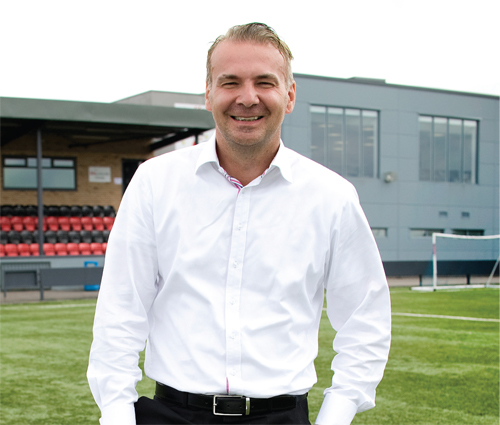
“After almost two years of development we have created a scalable and replicable model which would enable leisure operators to better engage with inactive populations, providing them with longer term potential for new gym members and a fitness market,” said Life Leisure managing director Malcolm McPhail.
“Technology has traditionally been used to help people improve their performance – quicker times, longer distances, heart rate improvements. We are also looking to improve people’s performance but from a very different perspective – getting people who do nothing or very little to doing something and then maybe a little bit more, and of course keep them doing it.”
RELATED STORIES
FEATURE: Interview: Malcolm McPhail POSTED 30 Sep 2014. CEO of Life Leisure on the importance
of tapping into the 87 per cent of the
population who are physically inactive
FEATURE: Letters: Write to reply POSTED 03 Jun 2014. Clubs must strive to become welcoming, community-focused ‘health hubs', says Malcolm McPhail, CEO of Life Leisure
Mark Bremner’s 3d Leisure launches fitness facility at Lambeth Academy POSTED 23 Apr 2014. BY Jak Phillips After overcoming several hurdles on its way to launch, it was somewhat fitting
that LA ActiveLife leisure centre was opened recently by someone well-
acquainted with conquering mountains: the youngest woman to ever climb
Mount Everest, Bonita Norries.
Les Mills has launched a reformer Pilates workout. The 45-minute workout blends traditional
reformer movements and more contemporary exercises, choreographed to music.
According to research which tracked more than 147,000 people for 30 years, 90-120 minutes
of strength training a week may deliver some of the biggest long-term health rewards.
Panatta brought together four of the most influential figures in bodybuilding history on the
stage of RiminiWellness 2026: Phil Heath, Lee Haney, Ronnie Coleman and Hany Rambod. [more...]
Inactivity initiative aims to engage ‘the non 13 per cent’ through national roll-out
POSTED 24 Jul 2015 . BY Jak Phillips
Life Leisure now hopes other leisure providers will utilise the specialist products as a solution for helping inactive people become more active
Life Leisure is aiming for a national roll-out of its pioneering public health programme which uses web analytics, technology and specialist coaching to place inactive adults on the path towards a healthier lifestyle.
Inactive patients can be referred by their GP for the scheme via their local clinical commissioning group (CCG). After an initial 1-1 consultation with an exercise professional, patients receive a ‘pebble’ activity tracker and placed on an eight-week ‘conditioning phase’. Individual activity goals are set and then monitored each week (via an online portal that displays data from the ‘pebble’) by an exercise professional who then contacts the participant to help motivate them and amend goals according to progress.
After the eight weeks, participants are then signposted into coach-led sports sessions designed for ‘non-sporty people’, ranging from badminton and table tennis to netball, swimming, cycling and running. Over the next 20 weeks these classes progress in skill level and intensity as the participants’ fitness levels and confidence increase.
The initial actiSport scheme has produced encouraging results, with the average participant improving their health stats by 20 per cent during the scheme, while 60 per cent of participants reduced their body fat. Having spent two years perfecting the actiLife and actiSport schemes, Life Leisure now hopes other leisure providers will utilise the specialist products as a solution for helping inactive people become more active.
“After almost two years of development we have created a scalable and replicable model which would enable leisure operators to better engage with inactive populations, providing them with longer term potential for new gym members and a fitness market,” said Life Leisure managing director Malcolm McPhail.
“Technology has traditionally been used to help people improve their performance – quicker times, longer distances, heart rate improvements. We are also looking to improve people’s performance but from a very different perspective – getting people who do nothing or very little to doing something and then maybe a little bit more, and of course keep them doing it.”
RELATED STORIES
FEATURE: Interview: Malcolm McPhail POSTED 30 Sep 2014. CEO of Life Leisure on the importance
of tapping into the 87 per cent of the
population who are physically inactive
FEATURE: Letters: Write to reply POSTED 03 Jun 2014. Clubs must strive to become welcoming, community-focused ‘health hubs', says Malcolm McPhail, CEO of Life Leisure
Mark Bremner’s 3d Leisure launches fitness facility at Lambeth Academy POSTED 23 Apr 2014. BY Jak Phillips After overcoming several hurdles on its way to launch, it was somewhat fitting
that LA ActiveLife leisure centre was opened recently by someone well-
acquainted with conquering mountains: the youngest woman to ever climb
Mount Everest, Bonita Norries.
Les Mills has launched a reformer Pilates workout. The 45-minute workout blends traditional
reformer movements and more contemporary exercises, choreographed to music.
According to research which tracked more than 147,000 people for 30 years, 90-120 minutes
of strength training a week may deliver some of the biggest long-term health rewards.
The UK's four Chief Medical Officers have published a refreshed edition of Physical activity
guidelines: UK Chief Medical Officers' report, updating the evidence that underpins the nation's
physical activity recommendations and placing greater emphasis on strength, balance, reducing
sedentary behaviour and, for the first time, supporting people taking weight loss medications.
Places Leisure has exchanged contracts to build and operate a flagship £60m water and leisure
destination on behalf of Basingstoke and Deane Borough Council.
Panatta brought together four of the most influential figures in bodybuilding history on the
stage of RiminiWellness 2026: Phil Heath, Lee Haney, Ronnie Coleman and Hany Rambod. [more...]