How much consideration do you give to potential issues with vibration and noise when constructing a gym? Martin McNulty explains why it should be a top priority
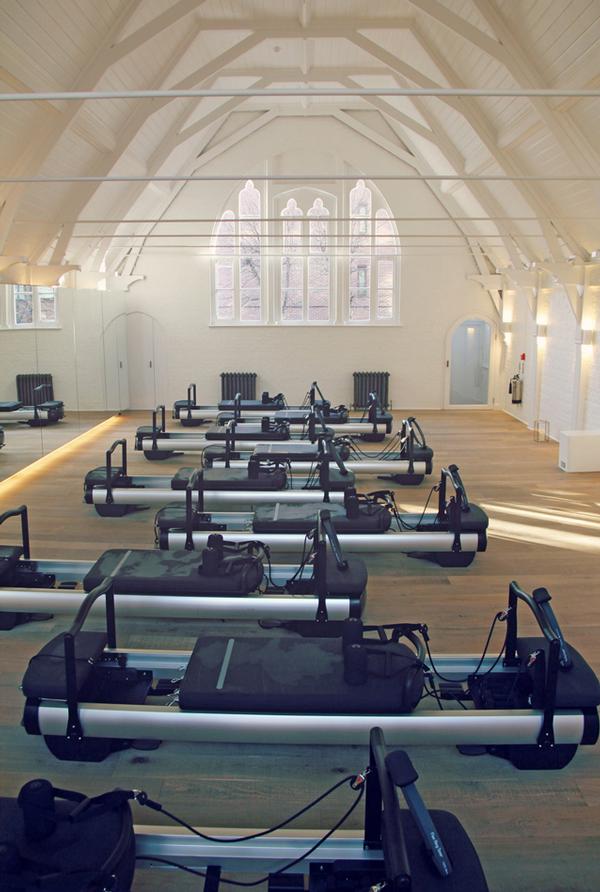
For operators using interesting old buildings not originally designed for gym use, pre-empting and addressing noise and vibration issues is key
A gym is often at the top of apartment seekers’ wish lists, with prospective tenants willing to pay a premium for this luxury. This demand has resulted in a surge in fitness facilities within residential and mixed-use developments, particularly in prime inner city locations – and with these locations, of course, come neighbours.
Unfortunately, most buildings are not designed for gym use so, if not planned appropriately, fitness centres can bring with them significant noise and vibration problems for neighbours – problems which are neither simple nor cheap to fix.
With 24-hour gym access now vital due to today’s busy lifestyles, complaints associated with noise from gyms are on the rise – particularly in relation to treadmill pounding, free weights and resistance machines, and other high-impact activities such as dance classes.
How much is too much? In the world of acoustic and vibration consultancy, a lack of accepted industry-wide design guidance creates uncertainty when determining noise levels. This means the resolution process for problem cases can be protracted, litigious and expensive.
To complicate matters, assessing a space for a gym and predicting sound and vibration is a complex process, unique to each structure. That said, there is advice to bear in mind either when considering new locations, or when working to resolve issues in older spaces.
Whether the development is old or new, it’s likely that mitigation measures will be required, and the gym operator will have a multitude of products to consider. Invariably, the final choice will be cost-driven, but most operators will also consider the technical performance stated within brochures and data sheets. At face value, these may promise an attractive reduction in noise – enough to permit worry-free gym use. However, the reality is that products frequently underperform in the frequency range of interest – for gyms, this is mainly low-frequency structure-borne noise (the bass frequency range) and tangible vibration – and in some instances can even exacerbate issues.
We should also be alert to the extent to which noise and vibration needs to be reduced, as this will vary depending on the neighbour. Residents of a luxury apartment complex, for example, may have a greater reason to complain than occupants of a busy open-plan office. In areas shared with residential dwellings, mitigation may only be deemed satisfactory when noise or vibration cannot be perceived. Acquiring this level of control may not be practical unless working within the most forgiving of structures – for example, those which have high inherent mass and stiffness, or are orientated so there are buffer zones between properties.
Acoustic testing So mitigation measures, and the target levels they should achieve, pose difficult questions. The most reliable way for operators to establish (and perhaps show the local authority) that a site and its proposed fit-out finishes will be fit for purpose is to undertake acoustic tests prior to any tenant agreement. This might also reinforce the gym operator’s position should a dispute with neighbours arise.
Testing methods can be relatively inexpensive and crude by modern standards. In the case of free weights, all that’s required is a test patch of flooring and weights representative of those to be used, which are dropped on it from a range of heights corresponding to the height of various gym users.
Testing of items such as treadmills is more difficult due to the logistics of installing a machine prior to fit-out. Furthermore, some structures may not respond to the effects of a single treadmill, so multiple machines may be needed to get the structure into motion. That said, to an experienced practitioner, the free weight drop tests can impart a great deal of knowledge about a structure and its ability to curtail noise and vibration, and these characteristics can then be interpreted for treadmill machines.
Avoiding issues Finally, it should be noted that in highly sensitive areas, or in structures prone to being easily excited by vibrational sources, floor build-ups designed to mitigate noise and vibration can be excessive. In many cases, for example, an isolated concrete platform mounted on springs is required to reduce the impact of the gym on the building – but this poses questions not only about cost, but also about structural integrity given the additional loading. If this need is determined early in the site-acquisition process, an informed decision can be made about whether to proceed.
By gathering information early in the process, the operator might be saved from costly, and perhaps ultimately unfeasible, mitigation measures further down the line. If results are favourable at the outset, the gym operator can proceed knowing they have anticipated and averted problems, and are well-placed should a dispute arise.
New build or refurb?
Refurbishments Recently constructed or refurbishment schemes pose a unique problem, because it’s unlikely there will be adequate knowledge about how the structure controls noise or vibration transmission – and the structure may also be defective. Many gym operators sign on the dotted line without testing the suitability of a location and, once in, measures can be difficult to implement.
New builds In new-build developments, a gym operator may not have been the tenant foreseen from the outset, so it’s unlikely the property will have been built with a gym in mind; robustness of the construction may have been overlooked. The incoming operator may assume that modest mitigation measures such as matting will be sufficient, but in practice such measures rarely suffice.
On a positive note, new-build schemes give the acoustician an opportunity to work with the structural engineer to design a construction that’s resistant to vibration from treadmills and free weights.
About the author
Martin McNulty
Martin McNulty is an executive acoustic engineer and leader of the vibration team at Hoare Lea Acoustics, one of the largest independent acoustic groups in the UK.
Panatta brought together four of the most influential figures in bodybuilding history on the
stage of RiminiWellness 2026: Phil Heath, Lee Haney, Ronnie Coleman and Hany Rambod. [more...]
Active Blackpool is deploying Cornerstone Connect, a new digital interface allowing
disparate information from multiple systems to be aggregated into one dataset, to support
its focus on reducing health inequalities and improving healthy life expectancy. [more...]
+ More featured suppliers
COMPANY PROFILES
Safe Space Lockers
We provide a full turn-key solution for clients from design and consultation, through to bespoke man [more...]
Alliance Leisure
Alliance Leisure Services was specifically
established to respond to the changing
development need [more...]
How much consideration do you give to potential issues with vibration and noise when constructing a gym? Martin McNulty explains why it should be a top priority
For operators using interesting old buildings not originally designed for gym use, pre-empting and addressing noise and vibration issues is key
A gym is often at the top of apartment seekers’ wish lists, with prospective tenants willing to pay a premium for this luxury. This demand has resulted in a surge in fitness facilities within residential and mixed-use developments, particularly in prime inner city locations – and with these locations, of course, come neighbours.
Unfortunately, most buildings are not designed for gym use so, if not planned appropriately, fitness centres can bring with them significant noise and vibration problems for neighbours – problems which are neither simple nor cheap to fix.
With 24-hour gym access now vital due to today’s busy lifestyles, complaints associated with noise from gyms are on the rise – particularly in relation to treadmill pounding, free weights and resistance machines, and other high-impact activities such as dance classes.
How much is too much? In the world of acoustic and vibration consultancy, a lack of accepted industry-wide design guidance creates uncertainty when determining noise levels. This means the resolution process for problem cases can be protracted, litigious and expensive.
To complicate matters, assessing a space for a gym and predicting sound and vibration is a complex process, unique to each structure. That said, there is advice to bear in mind either when considering new locations, or when working to resolve issues in older spaces.
Whether the development is old or new, it’s likely that mitigation measures will be required, and the gym operator will have a multitude of products to consider. Invariably, the final choice will be cost-driven, but most operators will also consider the technical performance stated within brochures and data sheets. At face value, these may promise an attractive reduction in noise – enough to permit worry-free gym use. However, the reality is that products frequently underperform in the frequency range of interest – for gyms, this is mainly low-frequency structure-borne noise (the bass frequency range) and tangible vibration – and in some instances can even exacerbate issues.
We should also be alert to the extent to which noise and vibration needs to be reduced, as this will vary depending on the neighbour. Residents of a luxury apartment complex, for example, may have a greater reason to complain than occupants of a busy open-plan office. In areas shared with residential dwellings, mitigation may only be deemed satisfactory when noise or vibration cannot be perceived. Acquiring this level of control may not be practical unless working within the most forgiving of structures – for example, those which have high inherent mass and stiffness, or are orientated so there are buffer zones between properties.
Acoustic testing So mitigation measures, and the target levels they should achieve, pose difficult questions. The most reliable way for operators to establish (and perhaps show the local authority) that a site and its proposed fit-out finishes will be fit for purpose is to undertake acoustic tests prior to any tenant agreement. This might also reinforce the gym operator’s position should a dispute with neighbours arise.
Testing methods can be relatively inexpensive and crude by modern standards. In the case of free weights, all that’s required is a test patch of flooring and weights representative of those to be used, which are dropped on it from a range of heights corresponding to the height of various gym users.
Testing of items such as treadmills is more difficult due to the logistics of installing a machine prior to fit-out. Furthermore, some structures may not respond to the effects of a single treadmill, so multiple machines may be needed to get the structure into motion. That said, to an experienced practitioner, the free weight drop tests can impart a great deal of knowledge about a structure and its ability to curtail noise and vibration, and these characteristics can then be interpreted for treadmill machines.
Avoiding issues Finally, it should be noted that in highly sensitive areas, or in structures prone to being easily excited by vibrational sources, floor build-ups designed to mitigate noise and vibration can be excessive. In many cases, for example, an isolated concrete platform mounted on springs is required to reduce the impact of the gym on the building – but this poses questions not only about cost, but also about structural integrity given the additional loading. If this need is determined early in the site-acquisition process, an informed decision can be made about whether to proceed.
By gathering information early in the process, the operator might be saved from costly, and perhaps ultimately unfeasible, mitigation measures further down the line. If results are favourable at the outset, the gym operator can proceed knowing they have anticipated and averted problems, and are well-placed should a dispute arise.
New build or refurb?
Refurbishments Recently constructed or refurbishment schemes pose a unique problem, because it’s unlikely there will be adequate knowledge about how the structure controls noise or vibration transmission – and the structure may also be defective. Many gym operators sign on the dotted line without testing the suitability of a location and, once in, measures can be difficult to implement.
New builds In new-build developments, a gym operator may not have been the tenant foreseen from the outset, so it’s unlikely the property will have been built with a gym in mind; robustness of the construction may have been overlooked. The incoming operator may assume that modest mitigation measures such as matting will be sufficient, but in practice such measures rarely suffice.
On a positive note, new-build schemes give the acoustician an opportunity to work with the structural engineer to design a construction that’s resistant to vibration from treadmills and free weights.
About the author
Martin McNulty
Martin McNulty is an executive acoustic engineer and leader of the vibration team at Hoare Lea Acoustics, one of the largest independent acoustic groups in the UK.
According to research which tracked more than 147,000 people for 30 years, 90-120 minutes
of strength training a week may deliver some of the biggest long-term health rewards.
The UK's four Chief Medical Officers have published a refreshed edition of Physical activity
guidelines: UK Chief Medical Officers' report, updating the evidence that underpins the nation's
physical activity recommendations and placing greater emphasis on strength, balance, reducing
sedentary behaviour and, for the first time, supporting people taking weight loss medications.
Places Leisure has exchanged contracts to build and operate a flagship £60m water and leisure
destination on behalf of Basingstoke and Deane Borough Council.
The Republic of Ireland will become the latest market in PureGym’s expanding international
portfolio, with the first launch planned for Dublin in 2027.
Anytime Fitness opened more than one club a day in 2025 and is on track to maintain this rate
of growth this year, as parent company Purpose Brands targets further international expansion.
The £33.9 million Leighton Leisure and Community Centre has opened in Leighton Buzzard, UK,
creating a next-generation public leisure, health and wellbeing hub for the local community.
Walnuts Leisure Centre in Orpington, in the London Borough of Bromley, has reopened following
a £17m transformation designed to secure the long-term future of the public leisure asset and
reposition it as a community wellbeing hub.
The Gym Group, has announced that it's sustained positive trading momentum has continued
through the first half of 2026 and the company remains confident about the outlook.
Panatta brought together four of the most influential figures in bodybuilding history on the
stage of RiminiWellness 2026: Phil Heath, Lee Haney, Ronnie Coleman and Hany Rambod. [more...]
Active Blackpool is deploying Cornerstone Connect, a new digital interface allowing
disparate information from multiple systems to be aggregated into one dataset, to support
its focus on reducing health inequalities and improving healthy life expectancy. [more...]
+ More featured suppliers
COMPANY PROFILES
Safe Space Lockers We provide a full turn-key solution for clients from design and consultation, through to bespoke man [more...]