The industry attracts passionate people, but it must also nurture them / Photograph: SHUTTERSTOCK.COM
Clear career progression, regular sharpening of skills and targeted talent development are the bedrock of many industries. But in the physical activity sector, we often rely more on the natural drive and passion of our people to achieve success in our workplaces. Is that enough?
Having experienced first-hand the ukactive Future Leaders learning programme at the world-class IESE business school in Barcelona this summer, I can now clearly see that it’s time for a new approach. The nature of our service-driven environments make it a challenge to step back from the day-to-day business, but this is essential to assess where we’re going. Only through regular reassessment can we identify the real change that will lead to sustained business growth and development in our sector.
A need for top talent As former Fitness First CEO Andy Cosslett explained when he addressed the group one evening, in terms of our staff, we’ve won half the battle in attracting them, but there’s a long way to go before we win the war. People are the most important element of our sector and there was an overriding sense, even from our most gifted young leaders, that their skills are being undernourished.
“The winning mindset of the people we attract is fantastic, but our development of them is key,” said Cosslett. “Creating an environment where people feel respected and are given the opportunities to learn will set our teams up for success and ultimately ensure that our businesses will thrive.”
We should also consider the reasons why, as a sector, we generally fail to attract Oxbridge/Russell Group graduates. All too often, they’re tempted away from us by industries with more tangible career paths and professional reputations, including clear graduate-level entry routes. These are sectors where programmes such as Future Leaders are commonplace.
That’s not to say we necessarily need top-flight graduates to transform our businesses, but we shouldn’t hide from the fact that the sector’s struggles to attract top talent reflect a need for stronger programmes for management, fast-tracking and leadership.
Breaking the mould Investing in our teams is the best investment we can make. A recent ACAS report estimated that it costs more than £30,000 to replace a single employee; there can be no doubt that retaining or re-training staff is often a much more cost-effective solution.
At IESE, a highlight for me was witnessing the huge thirst for knowledge and development shared by each individual present at this inaugural programme. We know that the best results for our sector will come from those with vision and clarity of thought, rather than those who simply follow what has gone before. We need a generation of leaders who are ready to break the mould and find new models of success – people who will question everything we know and interrogate the assumptions of the past. These leaders will be eager for innovation and genuinely excited by the chance to shape the future.
In times of certainty and prosperity, a winning mindset may well be enough. But as our sector matures to face volatile and complex challenges, do our teams possess the skills to tackle these problems and transform threat into opportunity?
Want to know more?
To understand more about Future Leaders, or to discuss the need for programmes that develop our next generation of leaders, contact [email protected]
Active Blackpool is deploying Cornerstone Connect, a new digital interface allowing
disparate information from multiple systems to be aggregated into one dataset, to support
its focus on reducing health inequalities and improving healthy life expectancy. [more...]
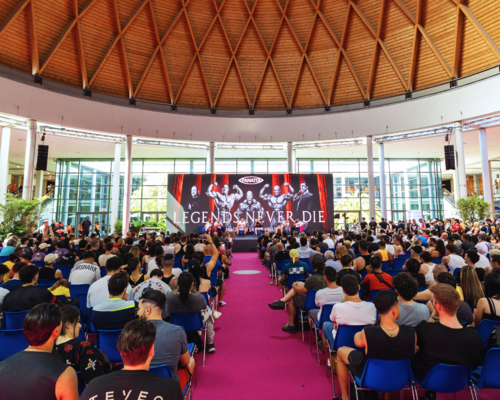
Panatta brought together four of the most influential figures in bodybuilding history on the
stage of RiminiWellness 2026: Phil Heath, Lee Haney, Ronnie Coleman and Hany Rambod. [more...]
+ More featured suppliers
COMPANY PROFILES
IndigoFitness
At IndigoFitness, we create intelligent training spaces that elevate fitness facilities across indus [more...]
ukactive
ukactive is the UK’s leading trade body for the physical activity sector, bringing together more tha [more...]
The industry attracts passionate people, but it must also nurture them / Photograph: SHUTTERSTOCK.COM
Clear career progression, regular sharpening of skills and targeted talent development are the bedrock of many industries. But in the physical activity sector, we often rely more on the natural drive and passion of our people to achieve success in our workplaces. Is that enough?
Having experienced first-hand the ukactive Future Leaders learning programme at the world-class IESE business school in Barcelona this summer, I can now clearly see that it’s time for a new approach. The nature of our service-driven environments make it a challenge to step back from the day-to-day business, but this is essential to assess where we’re going. Only through regular reassessment can we identify the real change that will lead to sustained business growth and development in our sector.
A need for top talent As former Fitness First CEO Andy Cosslett explained when he addressed the group one evening, in terms of our staff, we’ve won half the battle in attracting them, but there’s a long way to go before we win the war. People are the most important element of our sector and there was an overriding sense, even from our most gifted young leaders, that their skills are being undernourished.
“The winning mindset of the people we attract is fantastic, but our development of them is key,” said Cosslett. “Creating an environment where people feel respected and are given the opportunities to learn will set our teams up for success and ultimately ensure that our businesses will thrive.”
We should also consider the reasons why, as a sector, we generally fail to attract Oxbridge/Russell Group graduates. All too often, they’re tempted away from us by industries with more tangible career paths and professional reputations, including clear graduate-level entry routes. These are sectors where programmes such as Future Leaders are commonplace.
That’s not to say we necessarily need top-flight graduates to transform our businesses, but we shouldn’t hide from the fact that the sector’s struggles to attract top talent reflect a need for stronger programmes for management, fast-tracking and leadership.
Breaking the mould Investing in our teams is the best investment we can make. A recent ACAS report estimated that it costs more than £30,000 to replace a single employee; there can be no doubt that retaining or re-training staff is often a much more cost-effective solution.
At IESE, a highlight for me was witnessing the huge thirst for knowledge and development shared by each individual present at this inaugural programme. We know that the best results for our sector will come from those with vision and clarity of thought, rather than those who simply follow what has gone before. We need a generation of leaders who are ready to break the mould and find new models of success – people who will question everything we know and interrogate the assumptions of the past. These leaders will be eager for innovation and genuinely excited by the chance to shape the future.
In times of certainty and prosperity, a winning mindset may well be enough. But as our sector matures to face volatile and complex challenges, do our teams possess the skills to tackle these problems and transform threat into opportunity?
Want to know more?
To understand more about Future Leaders, or to discuss the need for programmes that develop our next generation of leaders, contact [email protected]
According to research which tracked more than 147,000 people for 30 years, 90-120 minutes
of strength training a week may deliver some of the biggest long-term health rewards.
The UK's four Chief Medical Officers have published a refreshed edition of Physical activity
guidelines: UK Chief Medical Officers' report, updating the evidence that underpins the nation's
physical activity recommendations and placing greater emphasis on strength, balance, reducing
sedentary behaviour and, for the first time, supporting people taking weight loss medications.
Places Leisure has exchanged contracts to build and operate a flagship £60m water and leisure
destination on behalf of Basingstoke and Deane Borough Council.
The Republic of Ireland will become the latest market in PureGym’s expanding international
portfolio, with the first launch planned for Dublin in 2027.
Anytime Fitness opened more than one club a day in 2025 and is on track to maintain this rate
of growth this year, as parent company Purpose Brands targets further international expansion.
The £33.9 million Leighton Leisure and Community Centre has opened in Leighton Buzzard, UK,
creating a next-generation public leisure, health and wellbeing hub for the local community.
Walnuts Leisure Centre in Orpington, in the London Borough of Bromley, has reopened following
a £17m transformation designed to secure the long-term future of the public leisure asset and
reposition it as a community wellbeing hub.
The Gym Group, has announced that it's sustained positive trading momentum has continued
through the first half of 2026 and the company remains confident about the outlook.
Active Blackpool is deploying Cornerstone Connect, a new digital interface allowing
disparate information from multiple systems to be aggregated into one dataset, to support
its focus on reducing health inequalities and improving healthy life expectancy. [more...]
Panatta brought together four of the most influential figures in bodybuilding history on the
stage of RiminiWellness 2026: Phil Heath, Lee Haney, Ronnie Coleman and Hany Rambod. [more...]
+ More featured suppliers
COMPANY PROFILES
IndigoFitness At IndigoFitness, we create intelligent training spaces that elevate fitness facilities across indus [more...]