In the second of a two-part series, Stephen Tharrett and Mark Williamson, co-founders of ClubIntel, speak to some of the mainstream US operators who are now launching their own boutique studios
Pure Gym, Third Space and Fitness First Middle East. These were some of the operators we spoke to in the last edition of Health Club Management, who explained how and why they’d taken the plunge into the boutique fitness segment.
In this second part of the series, we speak to a selection of traditional club operators in the US who have also ventured into the boutique arena.
ACAC’s boutique Brand Edge
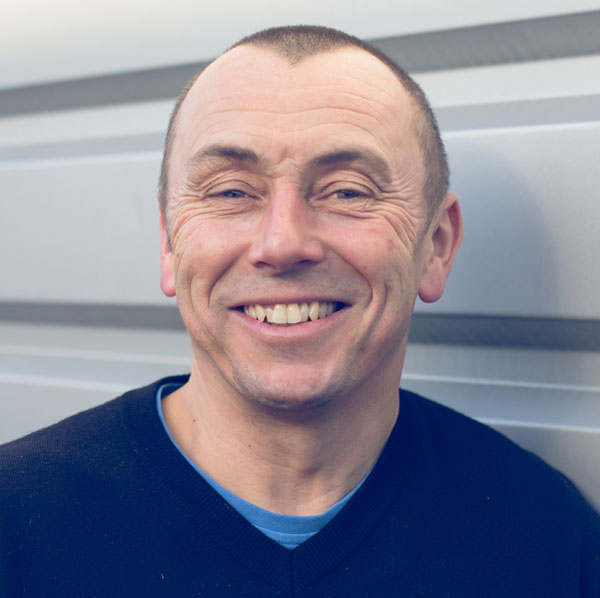
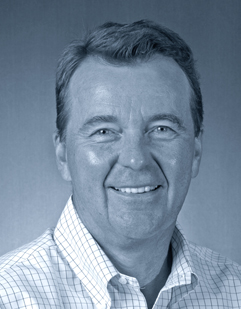
Interview with CEO Greg Wells Pictured:Greg Wells
Atlantic Coast Athletic Clubs (ACAC) opened its first club in 1984 and has since evolved into an 11-club chain of premium wellness and fitness centres serving members in Virginia, Maryland and Pennsylvania. The company has been at the leading edge of the medical fitness movement in the US, having developed and licensed its own proprietary Physician Referred Exercise Programme (P.R.E.P.). In 2015, the company introduced a boutique fitness studio, Edge, to its home market of Charlottesville. The studio offers three distinct experiences: yoga, cycling, and youth athletic performance.
What drove your decision to open a boutique fitness studio? There were two reasons for taking the plunge. First was to leverage existing trends in the market: we’d recently seen an explosion of boutique fitness studios and a growing demand for the boutique experience. Second was to probe a research and development angle – we wanted to see if we could leverage our expertise in the health club business and successfully operate a boutique brand that would complement our existing offerings in the community.
And why a standalone, separately branded studio? If we’d incorporated the new brand into our existing clubs, it would have been extremely confusing for our members and would have prevented us from creating a uniquely branded offering that we could charge people extra for.
What are the key differences between operating a chain of premium health clubs and operating a boutique studio like Edge? One major difference revolves around marketing. While traditional marketing strategies play a key role in our clubs, for the studio it’s entirely driven by word-of-mouth and social media – and specifically the micro social networks of the instructors themselves. The social media bang has to come from the instructors carrying on dialogue with their clients, not the studio itself trying to post.
Have there been any unexpected issues when rolling out Edge? There were several, some of which remain with us even nine months after opening.
For example, it was extremely hard to differentiate classes at the Edge from the classes we already offered in our three local clubs. ACAC has an established reputation for great classes, so it was hard to create a strong brand differentiation for Edge in the minds of members and consumers.
The quality of the instructors is also critical to the studio experience: you need the best, most dynamic instructors in the market. Unfortunately, due to the small pool of instructors in the Charlottesville market and the fact that most of the best instructors already taught at ACAC clubs, it was hard to bring in anyone who offered anything more dynamic or inspiring than what our clubs already offered.
In addition it was, and continues to be, incredibly challenging to foster a sense of ownership among the instructors. In a traditional studio, the instructors take a pride of ownership: it’s their life. In the case of our Edge studio, however, which is part of a larger organisation, it was challenging to try and generate this same sense of entrepreneurship and ownership.
Finally, there were challenges around offering three types of experiences whose tribes didn’t align. The mix of cycling clients, yoga clients and youth sports performance clients didn’t mesh, making it hard to create the tribal communities that are essential to the boutique studio experience.
Has Edge performed to the company’s expectations? After nine months, the studio is still performing below our expectations. However, it’s continuing to grow as we address some of the errors that were made at the onset.
What advice would you offer traditional operators who might be considering opening a boutique studio? Firstly, make sure the studio brand offers an experience that can be supported by the market. In particular, make sure you select the right offerings so you can foster the right tribal atmosphere.
Make sure there’s a big enough pool of extremely talented and inspiring instructors to pull from. The instructors are critical to differentiating the product.
Understand how important social media and word-of-mouth are to your marketing efforts, and in particular how important your instructors are to this effort. You need a grassroots-driven buzz by people who really take a sense of ownership of the product.
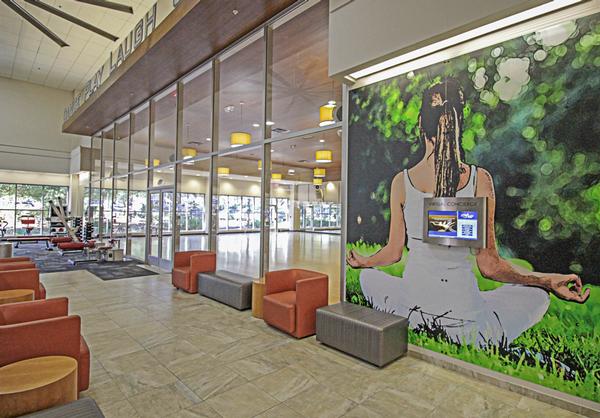
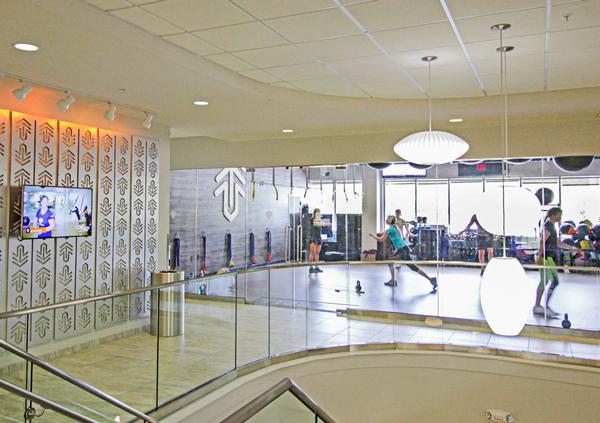
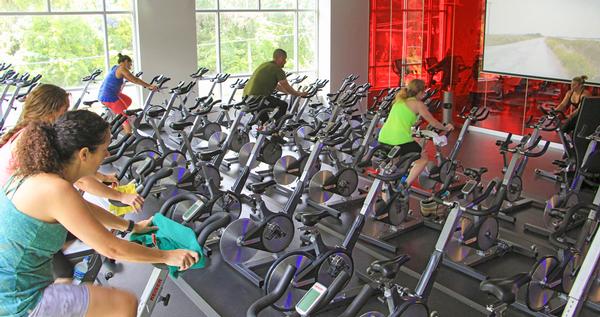
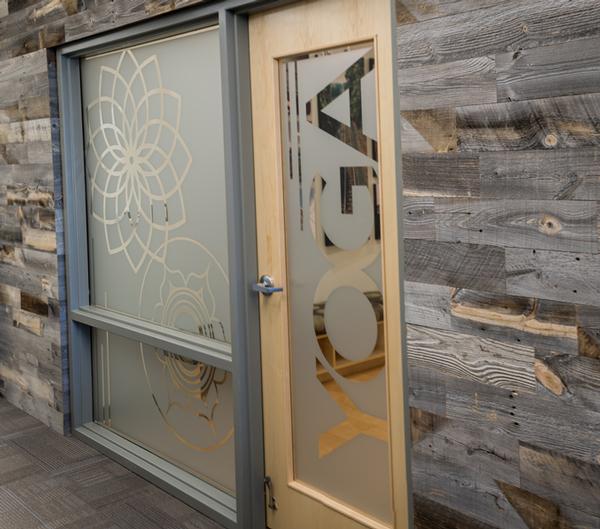
Egde offers boutique yoga, cycling and youth athletic performance
For boutique concepts, the tribal mix must work – yoga aficionados might not easily mesh with cycling clients
Egde offers boutique yoga, cycling and youth athletic performance
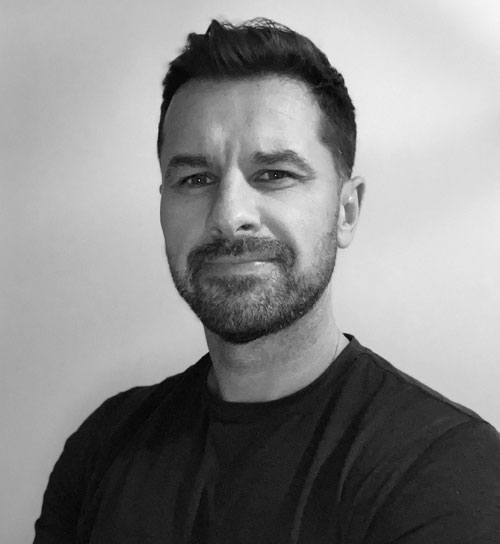
The Studio by Leisure Sports Interview with Vice President Erin Gilmour Pictured: Erin Gilmour
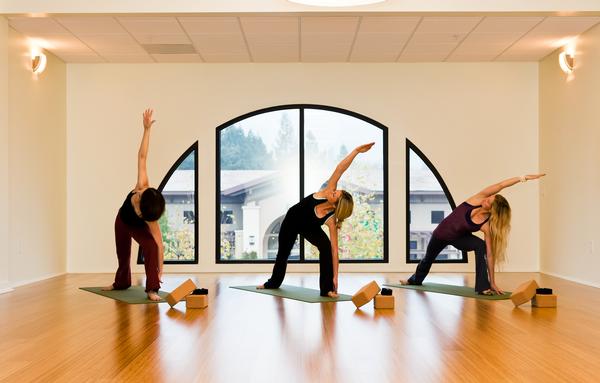
Leisure Sports opened its first club in northern California the early 1980s. Today, the company owns and operates six large, high-end fitness resorts with locations in California, Nevada and Oregon – two of which are aligned with premium hotel properties. The company recently opened a boutique fitness studio in Danville, CA, called The Studio – a high-style boutique club that offers three distinct training zones (mind-body, cycling and HIIT) served by five studios, along with full amenities, locker rooms, massage, child-sitting area and fitness equipment. Consumers can purchase a membership to The Studio by Leisure Sports for US$169 a month.
What drove your decision to open a boutique fitness studio? The decision was a strategic one from the very beginning. We’d kept abreast of the growth in boutique fitness studios and, after we’d visited several, realised these studios were doing something our large clubs had trouble achieving at scale: providing a unique and engaging experience that fostered a community of passionate fans.
Furthermore, the market for large-scale fitness resorts was shrinking, so we knew we needed a new business model to continue growing. The decision was made to pursue a ‘proof of concept’ for a boutique studio, with a view to opening additional boutiques in the future.
What was your approach to branding and managing the studio? From the beginning, we understood that the studio and our existing clubs were two different businesses. As a result, we appointed a team to have responsibility for, and authority over, the introduction and delivery of The Studio brand. The management team for The Studio is only involved in operating The Studio, although as a vice president of the company I do stay abreast of what’s happening on the club side.
In addition, we realised we had to brand The Studio separately from the other clubs if we wanted to communicate its unique experience and foster a community around the brand. However, we also understood there was cachet in our name, and as a result wanted to bring that credibility forward. The decision was made to call it The Studio by Leisure Sports.
What are the key differences between operating a chain of premium clubs and a boutique studio? We’ve found there to be several differences, including the fact that the boutique requires a more vigilant approach to ongoing refinement across the various touchpoints of the experience. Every interaction between staff and member is heightened in the boutique, and consequently greater attention has to be given to understanding each interaction and elevating the game.
The level of training for the staff has been considerably more extensive than in our traditional properties too. As the interactions between staff and members are more intimate, it requires everyone to understand what’s required across every touchpoint of the experience.
The success of the boutique is far more dependent on fostering a strong community than a traditional club. A studio is a community.
Social media is king. Having a strong social media presence that’s built around connecting the community (members) is very different from the way you approach marketing for a traditional club. Pricing is also very different. We underpriced our offering out of the box. We made pricing assumptions based on our club experience rather than fully understanding the pricing dynamics of the studio market.
Tell us more about the marketing In the studio segment, word-of-mouth and social media are the name of the game – not direct mail, not email blasts, not print ads. At the moment, our number one source of new clients and members is from member referral. Furthermore, the ability to leverage social media to build community reinforces the word-of-mouth and fosters heightened interest in the brand.
What advice would you offer traditional club operators considering opening a boutique fitness studio? Make building a community your number one priority. Second to this is fostering a highly attractive, inspirational experience
Zig when others zag While the objective of this article was to share the experiences and insights of traditional operators which have ventured into the boutique studio business, we would not be doing readers justice unless we shared some alternative perspectives. We therefore spoke to Joe Cirulli, founder and CEO of Gainesville Health and Fitness Center in the US and former president of IHRSA.
Cirulli’s club group is one of the most successful and respected health and fitness club groups in the US: it first opened its doors in 1978 and still boasts retention levels of close to 80 per cent. Cirulli himself has been honoured for his entrepreneurial excellence by numerous business publications.
The Studio is a standalone business with its own management team
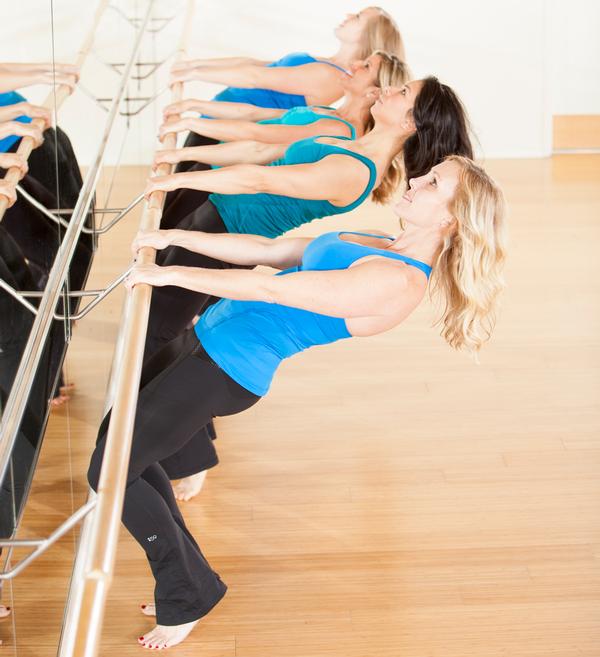
The Studio’s mind-body classes command a premium price
The Gainsville approach Interview with Joe Cirulli, founder and CEO Pictured: Joe Cirulli
You’ve taken a different approach to leveraging the boutique fitness trend in your club. Can you share your thinking? Five years ago, I read a book entitled New Rules of Retail – Competing in the world’s toughest marketplace. In the book, the authors tell the story of how some traditional retailers such as Bloomingdales moved away from a generic shopping experience to one supported by multiple boutique-like experiences, where shoppers could engage with a variety of novel brands within their own themed spaces (Lululemon, Coach, etc).
The book became the driving force for reinventing our club, changing it from a singular generic fitness club to a ‘lifestyle mall’ with multiple internal boutiques.
Over the past five years, we’ve changed our club to a destination with numerous boutique fitness options designed to appeal to the interests of different communities of members.
Can you share a few more details about your approach? We decided the answer didn’t lie in creating generic spaces for multiple uses, but rather in creating uniquely branded spaces, each with a specific purpose, to offer different experiences within the club.
In most cases, but not all, each studio and its accompanying programme carries an additional cost to members. For example, we created an X-Force Body Studio that houses our X-Force programme. It has its own tone, attitude, voice and image. We also have the Tribe Studio, which looks and feels entirely different from X-Force or our other studios within the club.
The same is true for Crossfit, pilates and personal training. In essence, we’ve created a club composed of multiple branded boutique-styled experiences that appeal to different communities of members. Once our members enter the club, they have the opportunity to choose their experience.
Are there any additional insights you would like to share regarding your approach? First, we realised that – because each of these boutique-style experiences is highly specialised – we had to assign a leader to each studio. That leader is empowered to foster the experience the respective community is seeking. Each experience is managed as its own business.
Second, we have a strong internal culture that serves as the foundation for everything we do. We wanted the cultural DNA of Gainsville Health and Fitness to be the foundation of every programme we offer.
While our goal is to continue evolving this approach inside the Gainesville club, we’ve recently opened our first free-standing X-Force Studio in a different market. What we’ve learned inside our clubs has given us great insight into how to move some of these programmes outside of our centres.
The Gainesville club operates like a ‘wellness mall’
Each zone at Gainesville has different branding
Gainesville members can choose their tribe
Six lessons for operators interested in launching a boutique 1. Evolving your health and fitness business requires a different way of thinking. As Albert Einstein said: “We cannot solve our problems with the same thinking we used when we created them.” Stay abreast of trends, both in the club industry and the general marketplace. Be open to new ways of evolving the value proposition of your business. For some that might mean extending the brand through a standalone boutique fitness studio; for others it might be about adapting the delivery of the present value proposition to leverage the innovation offered by boutiques.
2. Understand the core competencies and brand promise of your business, then determine if these align with operating a boutique experience. Several of our interviewees said boutique operation requires specialist experience – in particular when it comes to the level of talent required among instructors and staff, the quality of the programmes, the building of communities, and marketing. What you can’t do is take what your club presently does and dump it into a studio; it won’t work. Also, ask yourself if you have the talent to make it work. Finally, ask yourself if it might not be better to stick to what you do best, but evolve it to the demands of today’s consumer preferences. Don’t dilute your own brand’s strengths in an effort to try and be something you aren’t.
3. If you decide to operate a boutique studio, separate from the traditional business, both in management and branding. A common theme expressed by many of our interviewees, and supported by research our firm has conducted, is the importance of separating the DNA of your existing business from the studio’s DNA. A studio requires different thinking and different actions, and as a result must be distinctly separate from your existing cultural DNA.
Furthermore, the boutique studio needs to be a distinctly different brand, with its own promise, attitude, voice and persona.
Along these same lines, it appears the studio needs its own location, as locating it within your existing facilities precludes the creation of a separate cultural DNA and brand promise.
4. Marketing the studio requires an entirely different approach compared to marketing a traditional fitness club. Word-of-mouth and social media lie at the core of the studio marketing approach. Furthermore, it’s about your people building micro-communities using instructor social networks as well as those of their fans. It also requires your social media strategy to possess a high degree of trusted authenticity.
5. Studios are about helping people find their tribe. While every club has a few small, organically-driven tribes among its membership, studios thrive or die based on their ability to foster a strong, passionate, social community. And building community doesn’t happen passively – it requires disciplined effort.
The studio has to be relevant, aspirational, trusted and intimate in the way that it speaks to its audience. Nothing about the experience can be cookie-cutter or artificial.
6. The instructors and staff have to feel it’s their life. Your studio staff have to develop a powerful sense of ownership of the studio experience. If they just feel like employees, they will never buy into the studio’s vision, and consequently your business will never be able to generate the necessary buzz and commitment.
In addition, your instructors really have to be the crème de la crème – the very best instructors in the market.
PHOTO: SHUTTERSTOCK.COM
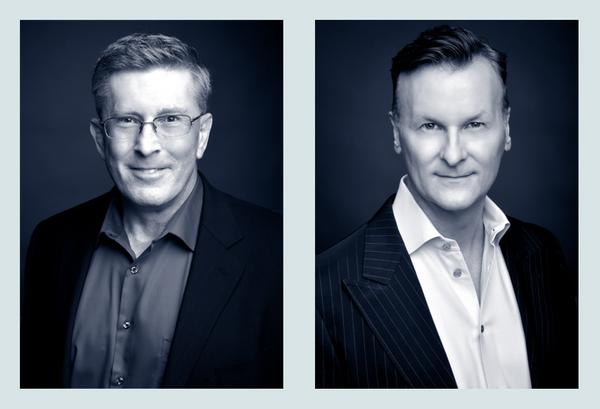
About the authors Stephen Tharrett is a 35-year veteran of the fitness industry, having served in multiple leadership roles, including CEO of the Russian Fitness Group, SVP for ClubCorp and president of IHRSA.
Mark Williamson has over 25 years’ experience in market research, working for some of the largest hospitality brands in the world.
Stephen and Mark are the co-founders of ClubIntel (www.club-intel.com), a brand insights firm based in the US. Stephen can be reached at [email protected]
Active Blackpool is deploying Cornerstone Connect, a new digital interface allowing
disparate information from multiple systems to be aggregated into one dataset, to support
its focus on reducing health inequalities and improving healthy life expectancy. [more...]
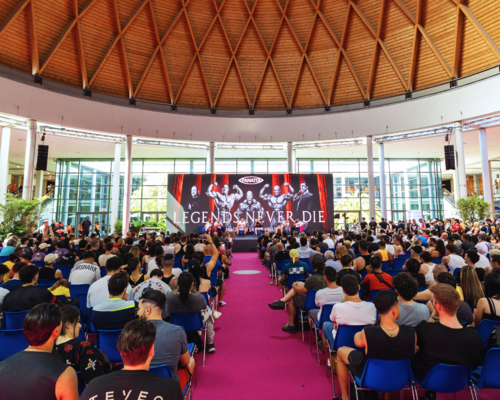
Panatta brought together four of the most influential figures in bodybuilding history on the
stage of RiminiWellness 2026: Phil Heath, Lee Haney, Ronnie Coleman and Hany Rambod. [more...]
+ More featured suppliers
COMPANY PROFILES
Safe Space Lockers
We provide a full turn-key solution for clients from design and consultation, through to bespoke man [more...]
Orbit4
With Orbit4, you’ll always have full visibility
of your equipment inventory, the true
market value [more...]
In the second of a two-part series, Stephen Tharrett and Mark Williamson, co-founders of ClubIntel, speak to some of the mainstream US operators who are now launching their own boutique studios
Pure Gym, Third Space and Fitness First Middle East. These were some of the operators we spoke to in the last edition of Health Club Management, who explained how and why they’d taken the plunge into the boutique fitness segment.
In this second part of the series, we speak to a selection of traditional club operators in the US who have also ventured into the boutique arena.
ACAC’s boutique Brand Edge
Interview with CEO Greg Wells Pictured:Greg Wells
Atlantic Coast Athletic Clubs (ACAC) opened its first club in 1984 and has since evolved into an 11-club chain of premium wellness and fitness centres serving members in Virginia, Maryland and Pennsylvania. The company has been at the leading edge of the medical fitness movement in the US, having developed and licensed its own proprietary Physician Referred Exercise Programme (P.R.E.P.). In 2015, the company introduced a boutique fitness studio, Edge, to its home market of Charlottesville. The studio offers three distinct experiences: yoga, cycling, and youth athletic performance.
What drove your decision to open a boutique fitness studio? There were two reasons for taking the plunge. First was to leverage existing trends in the market: we’d recently seen an explosion of boutique fitness studios and a growing demand for the boutique experience. Second was to probe a research and development angle – we wanted to see if we could leverage our expertise in the health club business and successfully operate a boutique brand that would complement our existing offerings in the community.
And why a standalone, separately branded studio? If we’d incorporated the new brand into our existing clubs, it would have been extremely confusing for our members and would have prevented us from creating a uniquely branded offering that we could charge people extra for.
What are the key differences between operating a chain of premium health clubs and operating a boutique studio like Edge? One major difference revolves around marketing. While traditional marketing strategies play a key role in our clubs, for the studio it’s entirely driven by word-of-mouth and social media – and specifically the micro social networks of the instructors themselves. The social media bang has to come from the instructors carrying on dialogue with their clients, not the studio itself trying to post.
Have there been any unexpected issues when rolling out Edge? There were several, some of which remain with us even nine months after opening.
For example, it was extremely hard to differentiate classes at the Edge from the classes we already offered in our three local clubs. ACAC has an established reputation for great classes, so it was hard to create a strong brand differentiation for Edge in the minds of members and consumers.
The quality of the instructors is also critical to the studio experience: you need the best, most dynamic instructors in the market. Unfortunately, due to the small pool of instructors in the Charlottesville market and the fact that most of the best instructors already taught at ACAC clubs, it was hard to bring in anyone who offered anything more dynamic or inspiring than what our clubs already offered.
In addition it was, and continues to be, incredibly challenging to foster a sense of ownership among the instructors. In a traditional studio, the instructors take a pride of ownership: it’s their life. In the case of our Edge studio, however, which is part of a larger organisation, it was challenging to try and generate this same sense of entrepreneurship and ownership.
Finally, there were challenges around offering three types of experiences whose tribes didn’t align. The mix of cycling clients, yoga clients and youth sports performance clients didn’t mesh, making it hard to create the tribal communities that are essential to the boutique studio experience.
Has Edge performed to the company’s expectations? After nine months, the studio is still performing below our expectations. However, it’s continuing to grow as we address some of the errors that were made at the onset.
What advice would you offer traditional operators who might be considering opening a boutique studio? Firstly, make sure the studio brand offers an experience that can be supported by the market. In particular, make sure you select the right offerings so you can foster the right tribal atmosphere.
Make sure there’s a big enough pool of extremely talented and inspiring instructors to pull from. The instructors are critical to differentiating the product.
Understand how important social media and word-of-mouth are to your marketing efforts, and in particular how important your instructors are to this effort. You need a grassroots-driven buzz by people who really take a sense of ownership of the product.
Egde offers boutique yoga, cycling and youth athletic performance
For boutique concepts, the tribal mix must work – yoga aficionados might not easily mesh with cycling clients
Egde offers boutique yoga, cycling and youth athletic performance
The Studio by Leisure Sports Interview with Vice President Erin Gilmour Pictured: Erin Gilmour
Leisure Sports opened its first club in northern California the early 1980s. Today, the company owns and operates six large, high-end fitness resorts with locations in California, Nevada and Oregon – two of which are aligned with premium hotel properties. The company recently opened a boutique fitness studio in Danville, CA, called The Studio – a high-style boutique club that offers three distinct training zones (mind-body, cycling and HIIT) served by five studios, along with full amenities, locker rooms, massage, child-sitting area and fitness equipment. Consumers can purchase a membership to The Studio by Leisure Sports for US$169 a month.
What drove your decision to open a boutique fitness studio? The decision was a strategic one from the very beginning. We’d kept abreast of the growth in boutique fitness studios and, after we’d visited several, realised these studios were doing something our large clubs had trouble achieving at scale: providing a unique and engaging experience that fostered a community of passionate fans.
Furthermore, the market for large-scale fitness resorts was shrinking, so we knew we needed a new business model to continue growing. The decision was made to pursue a ‘proof of concept’ for a boutique studio, with a view to opening additional boutiques in the future.
What was your approach to branding and managing the studio? From the beginning, we understood that the studio and our existing clubs were two different businesses. As a result, we appointed a team to have responsibility for, and authority over, the introduction and delivery of The Studio brand. The management team for The Studio is only involved in operating The Studio, although as a vice president of the company I do stay abreast of what’s happening on the club side.
In addition, we realised we had to brand The Studio separately from the other clubs if we wanted to communicate its unique experience and foster a community around the brand. However, we also understood there was cachet in our name, and as a result wanted to bring that credibility forward. The decision was made to call it The Studio by Leisure Sports.
What are the key differences between operating a chain of premium clubs and a boutique studio? We’ve found there to be several differences, including the fact that the boutique requires a more vigilant approach to ongoing refinement across the various touchpoints of the experience. Every interaction between staff and member is heightened in the boutique, and consequently greater attention has to be given to understanding each interaction and elevating the game.
The level of training for the staff has been considerably more extensive than in our traditional properties too. As the interactions between staff and members are more intimate, it requires everyone to understand what’s required across every touchpoint of the experience.
The success of the boutique is far more dependent on fostering a strong community than a traditional club. A studio is a community.
Social media is king. Having a strong social media presence that’s built around connecting the community (members) is very different from the way you approach marketing for a traditional club. Pricing is also very different. We underpriced our offering out of the box. We made pricing assumptions based on our club experience rather than fully understanding the pricing dynamics of the studio market.
Tell us more about the marketing In the studio segment, word-of-mouth and social media are the name of the game – not direct mail, not email blasts, not print ads. At the moment, our number one source of new clients and members is from member referral. Furthermore, the ability to leverage social media to build community reinforces the word-of-mouth and fosters heightened interest in the brand.
What advice would you offer traditional club operators considering opening a boutique fitness studio? Make building a community your number one priority. Second to this is fostering a highly attractive, inspirational experience
Zig when others zag While the objective of this article was to share the experiences and insights of traditional operators which have ventured into the boutique studio business, we would not be doing readers justice unless we shared some alternative perspectives. We therefore spoke to Joe Cirulli, founder and CEO of Gainesville Health and Fitness Center in the US and former president of IHRSA.
Cirulli’s club group is one of the most successful and respected health and fitness club groups in the US: it first opened its doors in 1978 and still boasts retention levels of close to 80 per cent. Cirulli himself has been honoured for his entrepreneurial excellence by numerous business publications.
The Studio is a standalone business with its own management team
The Studio’s mind-body classes command a premium price
The Gainsville approach Interview with Joe Cirulli, founder and CEO Pictured: Joe Cirulli
You’ve taken a different approach to leveraging the boutique fitness trend in your club. Can you share your thinking? Five years ago, I read a book entitled New Rules of Retail – Competing in the world’s toughest marketplace. In the book, the authors tell the story of how some traditional retailers such as Bloomingdales moved away from a generic shopping experience to one supported by multiple boutique-like experiences, where shoppers could engage with a variety of novel brands within their own themed spaces (Lululemon, Coach, etc).
The book became the driving force for reinventing our club, changing it from a singular generic fitness club to a ‘lifestyle mall’ with multiple internal boutiques.
Over the past five years, we’ve changed our club to a destination with numerous boutique fitness options designed to appeal to the interests of different communities of members.
Can you share a few more details about your approach? We decided the answer didn’t lie in creating generic spaces for multiple uses, but rather in creating uniquely branded spaces, each with a specific purpose, to offer different experiences within the club.
In most cases, but not all, each studio and its accompanying programme carries an additional cost to members. For example, we created an X-Force Body Studio that houses our X-Force programme. It has its own tone, attitude, voice and image. We also have the Tribe Studio, which looks and feels entirely different from X-Force or our other studios within the club.
The same is true for Crossfit, pilates and personal training. In essence, we’ve created a club composed of multiple branded boutique-styled experiences that appeal to different communities of members. Once our members enter the club, they have the opportunity to choose their experience.
Are there any additional insights you would like to share regarding your approach? First, we realised that – because each of these boutique-style experiences is highly specialised – we had to assign a leader to each studio. That leader is empowered to foster the experience the respective community is seeking. Each experience is managed as its own business.
Second, we have a strong internal culture that serves as the foundation for everything we do. We wanted the cultural DNA of Gainsville Health and Fitness to be the foundation of every programme we offer.
While our goal is to continue evolving this approach inside the Gainesville club, we’ve recently opened our first free-standing X-Force Studio in a different market. What we’ve learned inside our clubs has given us great insight into how to move some of these programmes outside of our centres.
The Gainesville club operates like a ‘wellness mall’
Each zone at Gainesville has different branding
Gainesville members can choose their tribe
Six lessons for operators interested in launching a boutique 1. Evolving your health and fitness business requires a different way of thinking. As Albert Einstein said: “We cannot solve our problems with the same thinking we used when we created them.” Stay abreast of trends, both in the club industry and the general marketplace. Be open to new ways of evolving the value proposition of your business. For some that might mean extending the brand through a standalone boutique fitness studio; for others it might be about adapting the delivery of the present value proposition to leverage the innovation offered by boutiques.
2. Understand the core competencies and brand promise of your business, then determine if these align with operating a boutique experience. Several of our interviewees said boutique operation requires specialist experience – in particular when it comes to the level of talent required among instructors and staff, the quality of the programmes, the building of communities, and marketing. What you can’t do is take what your club presently does and dump it into a studio; it won’t work. Also, ask yourself if you have the talent to make it work. Finally, ask yourself if it might not be better to stick to what you do best, but evolve it to the demands of today’s consumer preferences. Don’t dilute your own brand’s strengths in an effort to try and be something you aren’t.
3. If you decide to operate a boutique studio, separate from the traditional business, both in management and branding. A common theme expressed by many of our interviewees, and supported by research our firm has conducted, is the importance of separating the DNA of your existing business from the studio’s DNA. A studio requires different thinking and different actions, and as a result must be distinctly separate from your existing cultural DNA.
Furthermore, the boutique studio needs to be a distinctly different brand, with its own promise, attitude, voice and persona.
Along these same lines, it appears the studio needs its own location, as locating it within your existing facilities precludes the creation of a separate cultural DNA and brand promise.
4. Marketing the studio requires an entirely different approach compared to marketing a traditional fitness club. Word-of-mouth and social media lie at the core of the studio marketing approach. Furthermore, it’s about your people building micro-communities using instructor social networks as well as those of their fans. It also requires your social media strategy to possess a high degree of trusted authenticity.
5. Studios are about helping people find their tribe. While every club has a few small, organically-driven tribes among its membership, studios thrive or die based on their ability to foster a strong, passionate, social community. And building community doesn’t happen passively – it requires disciplined effort.
The studio has to be relevant, aspirational, trusted and intimate in the way that it speaks to its audience. Nothing about the experience can be cookie-cutter or artificial.
6. The instructors and staff have to feel it’s their life. Your studio staff have to develop a powerful sense of ownership of the studio experience. If they just feel like employees, they will never buy into the studio’s vision, and consequently your business will never be able to generate the necessary buzz and commitment.
In addition, your instructors really have to be the crème de la crème – the very best instructors in the market.
PHOTO: SHUTTERSTOCK.COM
About the authors Stephen Tharrett is a 35-year veteran of the fitness industry, having served in multiple leadership roles, including CEO of the Russian Fitness Group, SVP for ClubCorp and president of IHRSA.
Mark Williamson has over 25 years’ experience in market research, working for some of the largest hospitality brands in the world.
Stephen and Mark are the co-founders of ClubIntel (www.club-intel.com), a brand insights firm based in the US. Stephen can be reached at [email protected]
According to research which tracked more than 147,000 people for 30 years, 90-120 minutes
of strength training a week may deliver some of the biggest long-term health rewards.
The UK's four Chief Medical Officers have published a refreshed edition of Physical activity
guidelines: UK Chief Medical Officers' report, updating the evidence that underpins the nation's
physical activity recommendations and placing greater emphasis on strength, balance, reducing
sedentary behaviour and, for the first time, supporting people taking weight loss medications.
Places Leisure has exchanged contracts to build and operate a flagship £60m water and leisure
destination on behalf of Basingstoke and Deane Borough Council.
The Republic of Ireland will become the latest market in PureGym’s expanding international
portfolio, with the first launch planned for Dublin in 2027.
Anytime Fitness opened more than one club a day in 2025 and is on track to maintain this rate
of growth this year, as parent company Purpose Brands targets further international expansion.
The £33.9 million Leighton Leisure and Community Centre has opened in Leighton Buzzard, UK,
creating a next-generation public leisure, health and wellbeing hub for the local community.
Walnuts Leisure Centre in Orpington, in the London Borough of Bromley, has reopened following
a £17m transformation designed to secure the long-term future of the public leisure asset and
reposition it as a community wellbeing hub.
The Gym Group, has announced that it's sustained positive trading momentum has continued
through the first half of 2026 and the company remains confident about the outlook.
Active Blackpool is deploying Cornerstone Connect, a new digital interface allowing
disparate information from multiple systems to be aggregated into one dataset, to support
its focus on reducing health inequalities and improving healthy life expectancy. [more...]
Panatta brought together four of the most influential figures in bodybuilding history on the
stage of RiminiWellness 2026: Phil Heath, Lee Haney, Ronnie Coleman and Hany Rambod. [more...]
+ More featured suppliers
COMPANY PROFILES
Safe Space Lockers We provide a full turn-key solution for clients from design and consultation, through to bespoke man [more...]





 Pictured:Greg Wells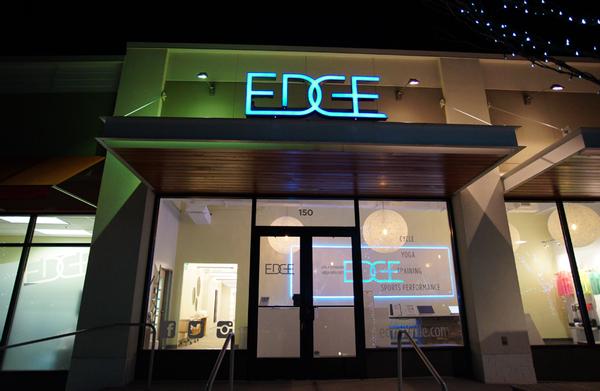
 Pictured: Erin Gilmour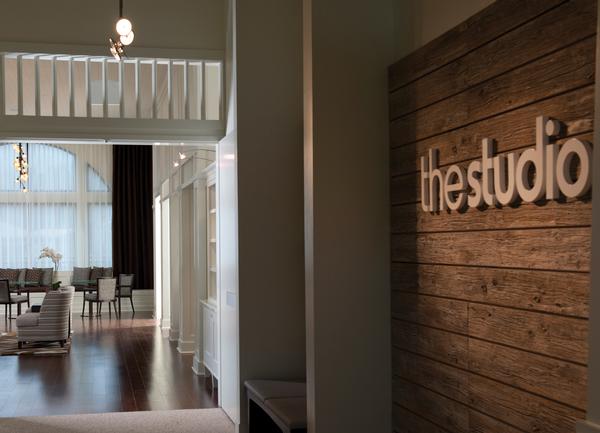
 Pictured: Joe Cirulli