Any company that can successfully maintain a leadership position within an industry for five or more years must have success embedded in its DNA. But just as DNA strands differ, so no two companies share the same road map to long-term viability.
Every business leader can point to attributes that have helped set their company apart – a clearly stated mission and commitment to it; a highly knowledgeable and experienced management team; a well-trained, customer-focused staff – or a business model that genuinely solves a problem for consumers.
IHRSA spoke with three such organisations – Anytime Fitness, 24 Hour Fitness and GoodLife Fitness – about their rise to prominence, and their ability to maintain their front-runner status year after year on the annual IHRSA Global 25 lists, in an increasingly competitive health and fitness club environment.
Anytime Fitness Franchisors face a particular challenge compared to other operators: they need to maintain quality and uniformity in their offerings, yet there’s only so much they can dictate to franchisees – who tend to be entrepreneurial by nature – before they begin to rebel.
What sets Anytime Fitness apart, according to Chuck Runyon – the co-founder and president of the US-based, 3,200-unit franchisor – is its ability to leverage that desire for independence and flexibility to its advantage.
“We’ve intentionally designed elasticity into the model. Our operators have the space and autonomy they need to offer small group, functional, virtual and traditional PT to members,” he explains. “This approach harnesses the varying expertise and passions of our diverse ownership group, and they appreciate the nimbleness this methodology affords.”
It’s challenging for a franchisor to find a balance between system-wide uniformity and local autonomy, but the combination of a turnkey system with a bit of freedom has, says Runyon, been “very attractive to our franchise owners”.
He continues: “In addition, due to the relatively small size of our gyms, we have the opportunity to understand and know our members better than many other fitness brands have."
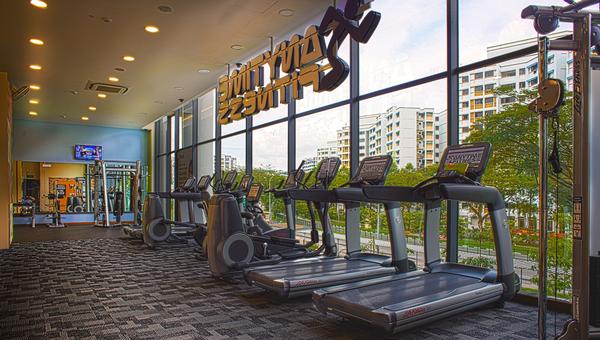
Anytime Fitness has been in the IHRSA Global 25 for over 10 years
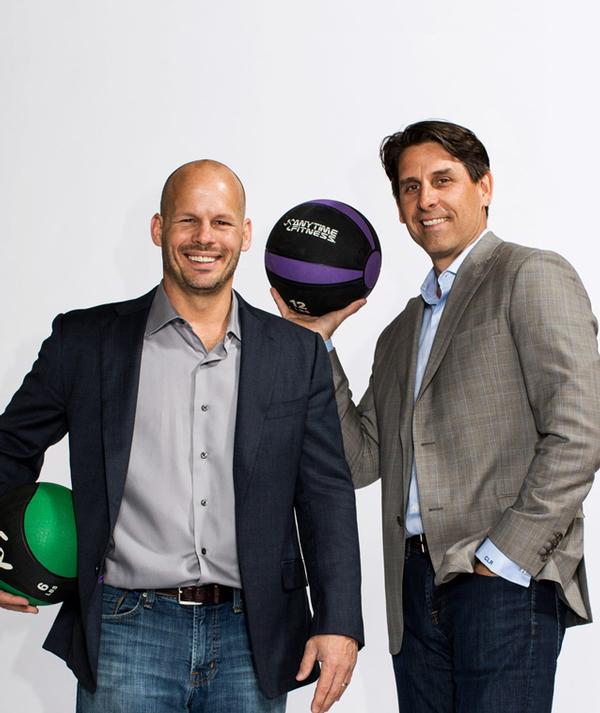
Anytime co-founders Dave Mortensen and Chuck Runyon
24 Hour Fitness US operator 24 Hour Fitness has been an IHRSA Global 25 stalwart since the organisation began tracking the leading international players nearly 20 years ago. While the organisation can point to a wide range of factors behind its success, current CEO Mark Smith puts the management team it’s had over the years firmly at the top of the list.
Smith and the new company president Frank Napolitano joined 24 Hour Fitness in 2014, with “as few changes as possible” thanks to an already strong team. However, they have made some refinements to strengthen the company even further, as Smith explains: “We’ve changed our marketing to speak directly to our demographics as they grow.
"We’ve developed targeted campaigns for millennials, women and the growing active 50-plus audience. And the way we speak to those audiences has changed with the times too; we’re making greater use of social media and digital messaging.
“As a result, we’re highly engaged with our members. They provide immediate feedback on everything from our new equipment to programmes. When you combine our industry knowledge with our ability to innovate, we have the tools to keep members involved, motivated, and moving forward to achieve their own health and fitness goals. That’s a powerful combination we don’t take for granted.
"It’s a strong reminder about the role we’re able to play in contributing to our members’ healthy and active lives.”
“They trust us, and that loyalty is the result of a consistently good product and service at a reasonable price point,” Napolitano concludes.
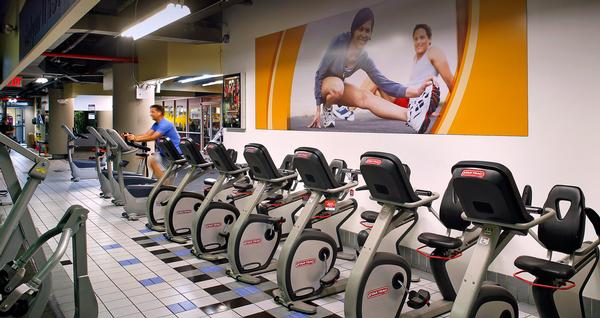
24 Hour members provide feedback on equipment and programmes
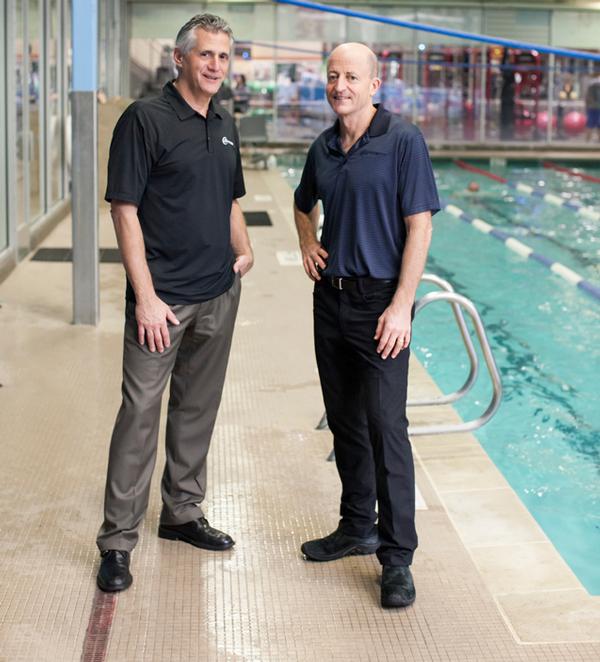
24 Hour's Napolitano and Smith
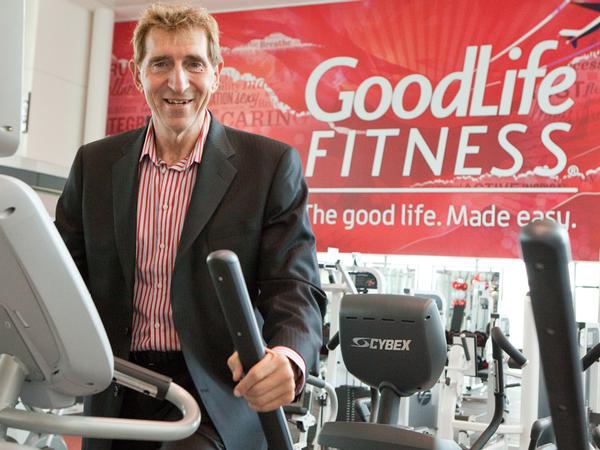
GoodLife Fitness Very few companies have managed to accomplish what GoodLife Fitness has achieved. Based in Canada, the company has been thriving for more than 35 years with the same owner in place: CEO David ‘Patch’ Patchell-Evans – a five-time Canadian rowing champion, marathoner and avid heli-skier – has been at the helm since he founded GoodLife in 1979.
Patchell-Evans sums up the chain’s strategy in one word: growth... and specifically the company’s mission to have clubs wherever people want to work out.
“We’ve always had a key focus on growth,” he explains. “We know one of the biggest factors in ensuring people continue to work out on a regular basis is having convenient locations close to their work or home. Because of our size and breadth, Canadians can work out in our clubs almost anywhere in Canada – and in much of the US too, through our reciprocal agreement with 24 Hour Fitness.”
GoodLife pursues two core goals: to meet the market’s changing programming needs, and to create club models that take into account shifting member desires – what Patchell-Evans refers to as “club model diversity”.
To deliver on these goals, GoodLife continues to introduce distinct, cutting-edge programming targeting different segments of the population, such as teens and older adults. It also offers leading education and development options for its group fitness instructors, personal trainers and club managers.
The company has forged partnerships – including with Les Mills and Visual Fitness Planner – that are designed to keep members excited and engaged, and it has also established collaborations in the field of cardiovascular disease prevention and rehabilitation to address the significant health challenges faced by Canadians. That effort has positioned GoodLife as an integral part of the country’s healthcare solution.
“On the staffing side, we’ve introduced a strategic recruitment strategy to promote lifelong career opportunities with GoodLife,” says Patchell-Evans. “And we consistently update older clubs based on changing demographics.”
In terms of “club model diversity”, GoodLife has both unisex and women-only clubs, and a budget club chain called Fit4Less by GoodLife (or Éconofitness by Énergie Cardio in Quebec); this brand has grown to almost 100 facilities since 2011.
Ultimately, concludes Patchell-Evans, GoodLife measures itself not just against the best clubs in the world, but also against the best businesses in the world.
Patchell-Evans founded GoodLife in 1979
Want to know more?
To learn more about the companies that make up IHRSA Global 25 listings as well as the current state of the health club industry worldwide, download The 2016 IHRSA Global Report at ihrsa.org/ihrsa-global-report
Active Blackpool is deploying Cornerstone Connect, a new digital interface allowing
disparate information from multiple systems to be aggregated into one dataset, to support
its focus on reducing health inequalities and improving healthy life expectancy. [more...]
Panatta brought together four of the most influential figures in bodybuilding history on the
stage of RiminiWellness 2026: Phil Heath, Lee Haney, Ronnie Coleman and Hany Rambod. [more...]
+ More featured suppliers
COMPANY PROFILES
Precor
Precor promises precision-quality products with steadfast reliability that are inspired by exerciser [more...]
Any company that can successfully maintain a leadership position within an industry for five or more years must have success embedded in its DNA. But just as DNA strands differ, so no two companies share the same road map to long-term viability.
Every business leader can point to attributes that have helped set their company apart – a clearly stated mission and commitment to it; a highly knowledgeable and experienced management team; a well-trained, customer-focused staff – or a business model that genuinely solves a problem for consumers.
IHRSA spoke with three such organisations – Anytime Fitness, 24 Hour Fitness and GoodLife Fitness – about their rise to prominence, and their ability to maintain their front-runner status year after year on the annual IHRSA Global 25 lists, in an increasingly competitive health and fitness club environment.
Anytime Fitness Franchisors face a particular challenge compared to other operators: they need to maintain quality and uniformity in their offerings, yet there’s only so much they can dictate to franchisees – who tend to be entrepreneurial by nature – before they begin to rebel.
What sets Anytime Fitness apart, according to Chuck Runyon – the co-founder and president of the US-based, 3,200-unit franchisor – is its ability to leverage that desire for independence and flexibility to its advantage.
“We’ve intentionally designed elasticity into the model. Our operators have the space and autonomy they need to offer small group, functional, virtual and traditional PT to members,” he explains. “This approach harnesses the varying expertise and passions of our diverse ownership group, and they appreciate the nimbleness this methodology affords.”
It’s challenging for a franchisor to find a balance between system-wide uniformity and local autonomy, but the combination of a turnkey system with a bit of freedom has, says Runyon, been “very attractive to our franchise owners”.
He continues: “In addition, due to the relatively small size of our gyms, we have the opportunity to understand and know our members better than many other fitness brands have."
Anytime Fitness has been in the IHRSA Global 25 for over 10 years
Anytime co-founders Dave Mortensen and Chuck Runyon
24 Hour Fitness US operator 24 Hour Fitness has been an IHRSA Global 25 stalwart since the organisation began tracking the leading international players nearly 20 years ago. While the organisation can point to a wide range of factors behind its success, current CEO Mark Smith puts the management team it’s had over the years firmly at the top of the list.
Smith and the new company president Frank Napolitano joined 24 Hour Fitness in 2014, with “as few changes as possible” thanks to an already strong team. However, they have made some refinements to strengthen the company even further, as Smith explains: “We’ve changed our marketing to speak directly to our demographics as they grow.
"We’ve developed targeted campaigns for millennials, women and the growing active 50-plus audience. And the way we speak to those audiences has changed with the times too; we’re making greater use of social media and digital messaging.
“As a result, we’re highly engaged with our members. They provide immediate feedback on everything from our new equipment to programmes. When you combine our industry knowledge with our ability to innovate, we have the tools to keep members involved, motivated, and moving forward to achieve their own health and fitness goals. That’s a powerful combination we don’t take for granted.
"It’s a strong reminder about the role we’re able to play in contributing to our members’ healthy and active lives.”
“They trust us, and that loyalty is the result of a consistently good product and service at a reasonable price point,” Napolitano concludes.
24 Hour members provide feedback on equipment and programmes
24 Hour's Napolitano and Smith
GoodLife Fitness Very few companies have managed to accomplish what GoodLife Fitness has achieved. Based in Canada, the company has been thriving for more than 35 years with the same owner in place: CEO David ‘Patch’ Patchell-Evans – a five-time Canadian rowing champion, marathoner and avid heli-skier – has been at the helm since he founded GoodLife in 1979.
Patchell-Evans sums up the chain’s strategy in one word: growth... and specifically the company’s mission to have clubs wherever people want to work out.
“We’ve always had a key focus on growth,” he explains. “We know one of the biggest factors in ensuring people continue to work out on a regular basis is having convenient locations close to their work or home. Because of our size and breadth, Canadians can work out in our clubs almost anywhere in Canada – and in much of the US too, through our reciprocal agreement with 24 Hour Fitness.”
GoodLife pursues two core goals: to meet the market’s changing programming needs, and to create club models that take into account shifting member desires – what Patchell-Evans refers to as “club model diversity”.
To deliver on these goals, GoodLife continues to introduce distinct, cutting-edge programming targeting different segments of the population, such as teens and older adults. It also offers leading education and development options for its group fitness instructors, personal trainers and club managers.
The company has forged partnerships – including with Les Mills and Visual Fitness Planner – that are designed to keep members excited and engaged, and it has also established collaborations in the field of cardiovascular disease prevention and rehabilitation to address the significant health challenges faced by Canadians. That effort has positioned GoodLife as an integral part of the country’s healthcare solution.
“On the staffing side, we’ve introduced a strategic recruitment strategy to promote lifelong career opportunities with GoodLife,” says Patchell-Evans. “And we consistently update older clubs based on changing demographics.”
In terms of “club model diversity”, GoodLife has both unisex and women-only clubs, and a budget club chain called Fit4Less by GoodLife (or Éconofitness by Énergie Cardio in Quebec); this brand has grown to almost 100 facilities since 2011.
Ultimately, concludes Patchell-Evans, GoodLife measures itself not just against the best clubs in the world, but also against the best businesses in the world.
Patchell-Evans founded GoodLife in 1979
Want to know more?
To learn more about the companies that make up IHRSA Global 25 listings as well as the current state of the health club industry worldwide, download The 2016 IHRSA Global Report at ihrsa.org/ihrsa-global-report
The UK's four Chief Medical Officers have published a refreshed edition of Physical activity
guidelines: UK Chief Medical Officers' report, updating the evidence that underpins the nation's
physical activity recommendations and placing greater emphasis on strength, balance, reducing
sedentary behaviour and, for the first time, supporting people taking weight loss medications.
Places Leisure has exchanged contracts to build and operate a flagship £60m water and leisure
destination on behalf of Basingstoke and Deane Borough Council.
The Republic of Ireland will become the latest market in PureGym’s expanding international
portfolio, with the first launch planned for Dublin in 2027.
Anytime Fitness opened more than one club a day in 2025 and is on track to maintain this rate
of growth this year, as parent company Purpose Brands targets further international expansion.
The £33.9 million Leighton Leisure and Community Centre has opened in Leighton Buzzard, UK,
creating a next-generation public leisure, health and wellbeing hub for the local community.
Walnuts Leisure Centre in Orpington, in the London Borough of Bromley, has reopened following
a £17m transformation designed to secure the long-term future of the public leisure asset and
reposition it as a community wellbeing hub.
The Gym Group, has announced that it's sustained positive trading momentum has continued
through the first half of 2026 and the company remains confident about the outlook.
Active Blackpool is deploying Cornerstone Connect, a new digital interface allowing
disparate information from multiple systems to be aggregated into one dataset, to support
its focus on reducing health inequalities and improving healthy life expectancy. [more...]
Panatta brought together four of the most influential figures in bodybuilding history on the
stage of RiminiWellness 2026: Phil Heath, Lee Haney, Ronnie Coleman and Hany Rambod. [more...]
+ More featured suppliers
COMPANY PROFILES
Precor Precor promises precision-quality products with steadfast reliability that are inspired by exerciser [more...]