New-build spas should aim to provide disabled access to all facilities
We know spas and the facilities they offer provide a host of physical and mental benefits – so why aren’t more of them accessible to those who arguably need them most?
New spas can be designed to accommodate the needs of those with disabilities, but it can be far more challenging in older properties, where compromises often have to made.
And while regulations exist to ensure access for disabled people, some experts say they’re ill-defined and therefore open to interpretation: it’s down to individual operators to weigh up the cost of investing in accessible spa facilities – for what is, after all, a minority audience – against the potential cost of not paying due consideration to legislation. We talk to spa experts to get their views.
Gerard McCarthySales DirectorDalesauna
Gerard McCarthy
Despite DDA legislation being around for some time, many architects still don’t consider the full implications of the regulations in thermal and wet areas. The regulations are woolly and can be open to interpretation.
For example, one new-build spa we worked on recently had four thermal rooms, none of which were designed by the architect to be DDA-compliant.
One of the key issues we come across is the 1,500mm wheelchair turning circle required in ‘rooms’ – which applies, or can be interpreted as applying, to thermal rooms such as saunas and steamrooms. If this 1,500mm circle is applied, it either requires the seating area in most conventionally-sized saunas and steamrooms to be almost completely removed, or it makes the available space for able-bodied users so small that it’s hardly worth doing. Alternatively, operators can make the rooms bigger, which has a big impact on budget for the relatively few times it will be used.
In older buildings, it’s often simply not practical or cost-effective to provide full DDA compliance, and ‘best endeavours’ take over. You have to demonstrate that you’ve given due consideration to DDA regulations, but if you can’t achieve them then compromises have to be made. All of our installations take DDA into consideration, be it via DDA-compliant doors as standard or through the application of the DDA 1,500mm circle – depending on the type of use, whether it’s a new build or a refurbishment, and so on.
My advice is to consider the law in the first instance. It can be woolly so ask an expert, who will always come down on the side of ‘more is better’ – we’d always suggest veering towards DDA compliance.
But also consider your market: will it affect your membership in a positive manner, or will it upset existing members due to the institutional appearance often created by the installation of handrails and hoists?
"Despite DDA legislation being around for some time, many architects still don’t consider the full implications in thermal and wet areas" - Gerard McCarthy, Dalesauna
Abi WrightCo-founder and Managing DirectorSpabreaks.com
Abi Wright
We launched ‘Spa for All’ to make the spa industry more accessible to a wider audience. Within the Spa for All umbrella, we have Recovery Retreats – which offer spa days and breaks for those with, or recovering from, cancer – and Accessible Spas, which highlight venues with facilities that cater for a range of disabilities, from impaired hearing and vision to mobility issues.
We also offer packages where anyone who has a carer can take their carer on the spa break with them, to use the facilities and help them enjoy their spa experience – at no extra cost.
It’s much easier for venues being built now to make facilities accessible: criteria have changed over the years and awareness about accessibility is much better than it used to be. However, for historic properties with tiny corridors and narrow stairways, it’s very difficult and expensive to make the buildings accessible – or else operators may find they can cater for one or two people, but don’t have the capacity to cater properly for everyone who needs improved accessibility.
For the most part, though, the people we work with very much want to make the changes. It just takes time, so it’s our job to highlight how important it is and the reasons it needs to become a priority.
There’s an argument to say there’s not enough of a market among people with disabilities to justify the costs of implementing accessible facilities a lot of the time, but the reality is that any of us could be in need of accessible facilities – whether temporarily, with a broken leg or an illness that affects your ability to move about, or permanently.
We also have an ageing population, so I can only see accessibility becoming more important. It’s about enhancing the experience for the market as a whole.
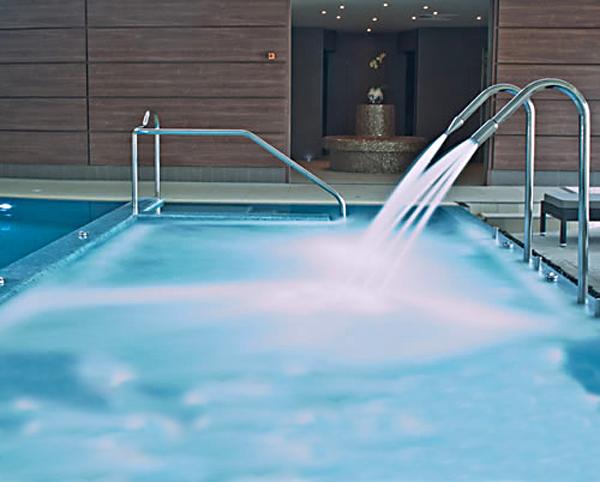
Best practice: Mere Health Club & Spa With a five-bubble rating from The Good Spa Guide, facilities at the Mere Health Club & Spa in Cheshire include a 20m pool, hydrotherapy pool and a thermal zone offering a salt room, steamroom and caladium.
For guests with disabilities, there’s a ramp into the spa and resort for ease of access; accessible changing facilities for male and female users; automatic doors to the pool and wet areas; a phone by the pool; wide steps into the pool rather than ladder steps; and wide corridors for wheelchairs. A carer policy has also been introduced, allowing carers to accompany their patients and use the spa facilities for free.
Claire Lomas, who became a paraplegic after a riding accident and now campaigns and raises funds to find a cure for paralysis, praises the Mere Spa as “a great spa and hotel for wheelchair users, making it struggle-free and relaxing”.
Mere Health Club & Spa
Ian CotgraveManaging DirectorCreateability
Ian Cotgrave
Building regulations require facilities to integrate disability access from the outset. It’s no longer enough to have bolt-on options – it’s a legal requirement. It’s vital to consider the range of users of the space, which could include wheelchair as well as walking disabled and visually- or hearing-impaired people, all of which will impact different elements of the spa’s interior design.
Doorway and corridors must be wide enough to accommodate free movement around the facility and allow for the turning of wheelchairs, whereas tactile surfaces and contrasting colours to differentiate between doors and frames can be helpful for partially-sighted or blind users. Semi-able bodied people may need grab rails for support, while smooth, uninterrupted floor surfaces can help avoid trip hazards.
Each treatment room, sauna or steamroom should be designed for compliance, to include either a dedicated area for wheelchairs or removable benches or seating where wheelchairs can be accommodated.
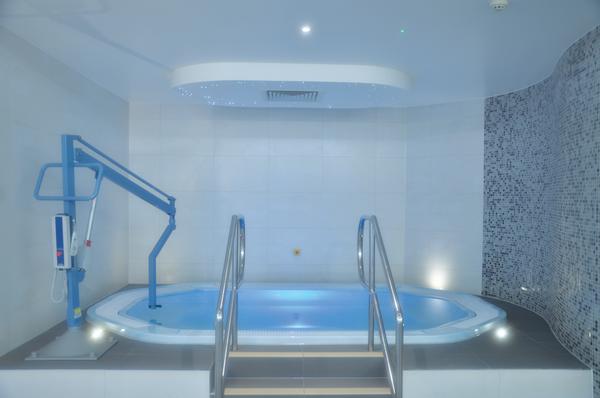
In the case of spas or hydrotherapy pools, deck-level access should be considered – or a dedicated overhead hoist system will need to be installed – and the height of showers and other features that need to be reached, such as ice fountains, should also be looked at in terms of accessibility.
Panic alarms with pull cords that reach the floor should be installed in all areas of the facility to ensure users can get help should they fall. These often form part of an integrated security system, which also includes flashing fire alarm beacons to alert hearing-impaired users. These need to be visible from any position within the facility, which could mean installing them in steamrooms and saunas that don’t have fully glazed doors.
"Building regulations require disability access to beintegrated from the outset. It’s no longer enough to have bolt-on options" - Ian Cotgrave, Createability
Best practice: Larkfield Leisure Centre Spa Tonbridge & Malling Leisure Trust (TMLT) and Tonbridge & Malling Borough Council co-funded a £400,000 upgrade of the spa at Larkfield Leisure Centre in Aylesford, UK, this spring.
The spa was stripped back to its shell and redesigned to accommodate a wider range of facilities including a sauna, steamroom, spa bath, ice feature and showers, and to make the spa accessible. To this end, the spa now has level access and features a hoist, allowing those with limited mobility to use the spa bath. Meanwhile the sauna and steamroom are accessible to wheelchair users. A fully Part M-compliant disabled changing facility is located next to the spa.
“As an inclusive operator, we want our facilities to be used by as many residents as possible to encourage mental and physical wellbeing,” says Martin Guyton, chief executive of TMLT. “This is reflected in the design of the new facility. We have a wide range of users with disabilities who access the spa, including many of our GP referral users.”
Active Blackpool is deploying Cornerstone Connect, a new digital interface allowing
disparate information from multiple systems to be aggregated into one dataset, to support
its focus on reducing health inequalities and improving healthy life expectancy. [more...]
Panatta brought together four of the most influential figures in bodybuilding history on the
stage of RiminiWellness 2026: Phil Heath, Lee Haney, Ronnie Coleman and Hany Rambod. [more...]
+ More featured suppliers
COMPANY PROFILES
Serco Leisure
Serco Leisure Operating Limited is one of the UK’s leading national operators of leisure centres, de [more...]
PSLT Ltd
PSLT Fitness Solutions manufacture, remanufacture and buy back commercial gym equipment. [more...]
New-build spas should aim to provide disabled access to all facilities
We know spas and the facilities they offer provide a host of physical and mental benefits – so why aren’t more of them accessible to those who arguably need them most?
New spas can be designed to accommodate the needs of those with disabilities, but it can be far more challenging in older properties, where compromises often have to made.
And while regulations exist to ensure access for disabled people, some experts say they’re ill-defined and therefore open to interpretation: it’s down to individual operators to weigh up the cost of investing in accessible spa facilities – for what is, after all, a minority audience – against the potential cost of not paying due consideration to legislation. We talk to spa experts to get their views.
Gerard McCarthySales DirectorDalesauna
Gerard McCarthy
Despite DDA legislation being around for some time, many architects still don’t consider the full implications of the regulations in thermal and wet areas. The regulations are woolly and can be open to interpretation.
For example, one new-build spa we worked on recently had four thermal rooms, none of which were designed by the architect to be DDA-compliant.
One of the key issues we come across is the 1,500mm wheelchair turning circle required in ‘rooms’ – which applies, or can be interpreted as applying, to thermal rooms such as saunas and steamrooms. If this 1,500mm circle is applied, it either requires the seating area in most conventionally-sized saunas and steamrooms to be almost completely removed, or it makes the available space for able-bodied users so small that it’s hardly worth doing. Alternatively, operators can make the rooms bigger, which has a big impact on budget for the relatively few times it will be used.
In older buildings, it’s often simply not practical or cost-effective to provide full DDA compliance, and ‘best endeavours’ take over. You have to demonstrate that you’ve given due consideration to DDA regulations, but if you can’t achieve them then compromises have to be made. All of our installations take DDA into consideration, be it via DDA-compliant doors as standard or through the application of the DDA 1,500mm circle – depending on the type of use, whether it’s a new build or a refurbishment, and so on.
My advice is to consider the law in the first instance. It can be woolly so ask an expert, who will always come down on the side of ‘more is better’ – we’d always suggest veering towards DDA compliance.
But also consider your market: will it affect your membership in a positive manner, or will it upset existing members due to the institutional appearance often created by the installation of handrails and hoists?
"Despite DDA legislation being around for some time, many architects still don’t consider the full implications in thermal and wet areas" - Gerard McCarthy, Dalesauna
Abi WrightCo-founder and Managing DirectorSpabreaks.com
Abi Wright
We launched ‘Spa for All’ to make the spa industry more accessible to a wider audience. Within the Spa for All umbrella, we have Recovery Retreats – which offer spa days and breaks for those with, or recovering from, cancer – and Accessible Spas, which highlight venues with facilities that cater for a range of disabilities, from impaired hearing and vision to mobility issues.
We also offer packages where anyone who has a carer can take their carer on the spa break with them, to use the facilities and help them enjoy their spa experience – at no extra cost.
It’s much easier for venues being built now to make facilities accessible: criteria have changed over the years and awareness about accessibility is much better than it used to be. However, for historic properties with tiny corridors and narrow stairways, it’s very difficult and expensive to make the buildings accessible – or else operators may find they can cater for one or two people, but don’t have the capacity to cater properly for everyone who needs improved accessibility.
For the most part, though, the people we work with very much want to make the changes. It just takes time, so it’s our job to highlight how important it is and the reasons it needs to become a priority.
There’s an argument to say there’s not enough of a market among people with disabilities to justify the costs of implementing accessible facilities a lot of the time, but the reality is that any of us could be in need of accessible facilities – whether temporarily, with a broken leg or an illness that affects your ability to move about, or permanently.
We also have an ageing population, so I can only see accessibility becoming more important. It’s about enhancing the experience for the market as a whole.
Best practice: Mere Health Club & Spa With a five-bubble rating from The Good Spa Guide, facilities at the Mere Health Club & Spa in Cheshire include a 20m pool, hydrotherapy pool and a thermal zone offering a salt room, steamroom and caladium.
For guests with disabilities, there’s a ramp into the spa and resort for ease of access; accessible changing facilities for male and female users; automatic doors to the pool and wet areas; a phone by the pool; wide steps into the pool rather than ladder steps; and wide corridors for wheelchairs. A carer policy has also been introduced, allowing carers to accompany their patients and use the spa facilities for free.
Claire Lomas, who became a paraplegic after a riding accident and now campaigns and raises funds to find a cure for paralysis, praises the Mere Spa as “a great spa and hotel for wheelchair users, making it struggle-free and relaxing”.
Mere Health Club & Spa
Ian CotgraveManaging DirectorCreateability
Ian Cotgrave
Building regulations require facilities to integrate disability access from the outset. It’s no longer enough to have bolt-on options – it’s a legal requirement. It’s vital to consider the range of users of the space, which could include wheelchair as well as walking disabled and visually- or hearing-impaired people, all of which will impact different elements of the spa’s interior design.
Doorway and corridors must be wide enough to accommodate free movement around the facility and allow for the turning of wheelchairs, whereas tactile surfaces and contrasting colours to differentiate between doors and frames can be helpful for partially-sighted or blind users. Semi-able bodied people may need grab rails for support, while smooth, uninterrupted floor surfaces can help avoid trip hazards.
Each treatment room, sauna or steamroom should be designed for compliance, to include either a dedicated area for wheelchairs or removable benches or seating where wheelchairs can be accommodated.
In the case of spas or hydrotherapy pools, deck-level access should be considered – or a dedicated overhead hoist system will need to be installed – and the height of showers and other features that need to be reached, such as ice fountains, should also be looked at in terms of accessibility.
Panic alarms with pull cords that reach the floor should be installed in all areas of the facility to ensure users can get help should they fall. These often form part of an integrated security system, which also includes flashing fire alarm beacons to alert hearing-impaired users. These need to be visible from any position within the facility, which could mean installing them in steamrooms and saunas that don’t have fully glazed doors.
"Building regulations require disability access to beintegrated from the outset. It’s no longer enough to have bolt-on options" - Ian Cotgrave, Createability
Best practice: Larkfield Leisure Centre Spa Tonbridge & Malling Leisure Trust (TMLT) and Tonbridge & Malling Borough Council co-funded a £400,000 upgrade of the spa at Larkfield Leisure Centre in Aylesford, UK, this spring.
The spa was stripped back to its shell and redesigned to accommodate a wider range of facilities including a sauna, steamroom, spa bath, ice feature and showers, and to make the spa accessible. To this end, the spa now has level access and features a hoist, allowing those with limited mobility to use the spa bath. Meanwhile the sauna and steamroom are accessible to wheelchair users. A fully Part M-compliant disabled changing facility is located next to the spa.
“As an inclusive operator, we want our facilities to be used by as many residents as possible to encourage mental and physical wellbeing,” says Martin Guyton, chief executive of TMLT. “This is reflected in the design of the new facility. We have a wide range of users with disabilities who access the spa, including many of our GP referral users.”
The UK's four Chief Medical Officers have published a refreshed edition of Physical activity
guidelines: UK Chief Medical Officers' report, updating the evidence that underpins the nation's
physical activity recommendations and placing greater emphasis on strength, balance, reducing
sedentary behaviour and, for the first time, supporting people taking weight loss medications.
Places Leisure has exchanged contracts to build and operate a flagship £60m water and leisure
destination on behalf of Basingstoke and Deane Borough Council.
The Republic of Ireland will become the latest market in PureGym’s expanding international
portfolio, with the first launch planned for Dublin in 2027.
Anytime Fitness opened more than one club a day in 2025 and is on track to maintain this rate
of growth this year, as parent company Purpose Brands targets further international expansion.
The £33.9 million Leighton Leisure and Community Centre has opened in Leighton Buzzard, UK,
creating a next-generation public leisure, health and wellbeing hub for the local community.
Walnuts Leisure Centre in Orpington, in the London Borough of Bromley, has reopened following
a £17m transformation designed to secure the long-term future of the public leisure asset and
reposition it as a community wellbeing hub.
The Gym Group, has announced that it's sustained positive trading momentum has continued
through the first half of 2026 and the company remains confident about the outlook.
Active Blackpool is deploying Cornerstone Connect, a new digital interface allowing
disparate information from multiple systems to be aggregated into one dataset, to support
its focus on reducing health inequalities and improving healthy life expectancy. [more...]
Panatta brought together four of the most influential figures in bodybuilding history on the
stage of RiminiWellness 2026: Phil Heath, Lee Haney, Ronnie Coleman and Hany Rambod. [more...]
+ More featured suppliers
COMPANY PROFILES
Serco Leisure Serco Leisure Operating Limited is one of the UK’s leading national operators of leisure centres, de [more...]