Get HCM digital magazine and ezines FREE
Sign up here ▸
Jobs   News   Features   Products   Magazine      Advertise  
NEWS
How can we tackle problematic inactivity levels in the UK?
POSTED 20 May 2014 . BY Chris Dodd
A number of experts have called for more discussion across different sectors Credit: Shutterstock.com/bikeriderlondon
Talk of addressing the problem of inactivity levels in the UK has grown in prominence in recent years, with 25 per cent of Britain’s population now being classed as inactive.

Research shows that this worrying trend is on the rise too.

Projections estimate that inactivity levels are likely to increase by a further 15 per cent come the year 2030, while WHO cites inactivity as the fourth leading cause of global mortality.

The problem isn’t being ignored, however, with debate currently raging surrounding the methods, procedures and actions required to bring these levels down by increasing activity and participation.

The recent Turning the Tide report published by ukactive has called for a one per cent increase in levels of activity each year for five years - but is this achievable, and if so, how could it be done?

“Arrangements of a partnership with Public Health England are being finalised,” says Dave Stalker, CEO of ukactive.

"This will take a localised approach putting in place a regular, free regional event programme, pulling together interested parties on a regular basis to share their expertise, experience and plans through established regional networks."

Another idea would be to encourage gyms to take a larger interest in encouraging a shift towards educating about comfortable with exercise.

“Gyms have a vital role to play in promoting the industrial shift that’s needed to get people moving and make children physically literate,” adds Stalker.

Yet one major issue surrounds engaging those in lower socioeconomic groups – a section of society where inactivity is often at its highest due to price barriers that often prevent people from taking part.

“The sector will have to collaborate with organisations that already have direct access to inactive people – for example, youth groups, charities for older people and housing associations,” says Dr Paul Bedford, director of Retention Guru.

The industry and its employees may also need to do more to help establish emotional connections to provide support for inactive members of society.

“We have to get better at the emotional connections, offering real and effective support – both in the clubs and at home – and continuing to harness expertise in understanding behavioural change,” admits Georgina Ford, director of CK Academy.

“We must attract educated, passionate, enthusiastic empathetic staff who enjoy supporting inactive people to develop lifestyle changes that are practical, lasting and have impact.”

More views on tackling inactivity levels in the UK are available in the May edition of Health Club Management magazine

RELATED STORIES
MORE NEWS
Researchers find that 90-120 minutes of strength training a week has longevity benefits
According to research which tracked more than 147,000 people for 30 years, 90-120 minutes of strength training a week may deliver some of the biggest long-term health rewards.
Everlast pushes internationally with Dublin site
Everlast Gyms expands its footprint outside of the UK this month with the imminent launch of a club in Dublin.
UK updates physical activity guidelines with focus on daily movement
The UK's four Chief Medical Officers have published a refreshed edition of Physical activity guidelines: UK Chief Medical Officers' report, updating the evidence that underpins the nation's physical activity recommendations and placing greater emphasis on strength, balance, reducing sedentary behaviour and, for the first time, supporting people taking weight loss medications.
Places Leisure is working with Roberts Limbrick to build £60m wellness flagship in Basingstoke
Places Leisure has exchanged contracts to build and operate a flagship £60m water and leisure destination on behalf of Basingstoke and Deane Borough Council.
+ More news   
LATEST JOBS
Fitness Motivator and Personal Trainer
Everyone Active
Salary:
Job location: Aldershot
GP Exercise Referral Instructor
Everyone Active
Salary: £33,000pa + benefits
Job location: Harrow, Middlesex , United Kingdom
Self Employed Personal Trainer
Everyone Active
Salary: Competitive
Job location: Middlesbrough
+ More jobs  

FEATURED SUPPLIERS

Cornerstone Connect helps Active Blackpool tackle health inequalities
Active Blackpool is deploying Cornerstone Connect, a new digital interface allowing disparate information from multiple systems to be aggregated into one dataset, to support its focus on reducing health inequalities and improving healthy life expectancy. [more...]

Legends never die: four legends, four philosophies of life
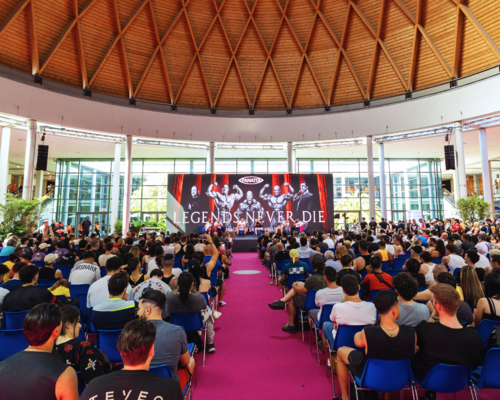
Panatta brought together four of the most influential figures in bodybuilding history on the stage of RiminiWellness 2026: Phil Heath, Lee Haney, Ronnie Coleman and Hany Rambod. [more...]
+ More featured suppliers  
COMPANY PROFILES
Everyone Active

Everyone Active operates leisure centres in partnership with local councils across the UK. Today, Ev [more...]
Total Vibration Solutions Ltd (TVS Group)

TVS Group includes TVS Sports Surfaces, TVS Gym Flooring, TVS Play Surfaces and TVS Acoustics. [more...]
+ More profiles  
CATALOGUE GALLERY
 
+ More catalogues  

DIRECTORY
+ More directory  
DIARY


23-26 Aug 2026

Elevate Spa Riviera Maya Edition

The Riviera Maya Edition Kanai, Playa del Carmen, Mexico
10-12 Sep 2026

ASEAN Patio Pool Spa Expo 2026

MITEC Kuala Lumpur,Malaysia, Malaysia
+ More diary  
 
ABOUT LEISURE MEDIA
LEISURE MEDIA MAGAZINES
LEISURE MEDIA HANDBOOKS
LEISURE MEDIA WEBSITES
LEISURE MEDIA PRODUCT SEARCH
 
HCM
LEISURE OPPORTUNITIES
HEALTH CLUB HANDBOOK
PRINT SUBSCRIPTIONS
FREE DIGITAL SUBSCRIPTIONS
ADVERTISE . CONTACT US

Leisure Media
Tel: +44 (0)1462 431385

©Cybertrek 2026
Get HCM digital magazine and ezines FREE
Sign up here ▸
Jobs    News   Products   Magazine
NEWS
How can we tackle problematic inactivity levels in the UK?
POSTED 20 May 2014 . BY Chris Dodd
A number of experts have called for more discussion across different sectors Credit: Shutterstock.com/bikeriderlondon
Talk of addressing the problem of inactivity levels in the UK has grown in prominence in recent years, with 25 per cent of Britain’s population now being classed as inactive.

Research shows that this worrying trend is on the rise too.

Projections estimate that inactivity levels are likely to increase by a further 15 per cent come the year 2030, while WHO cites inactivity as the fourth leading cause of global mortality.

The problem isn’t being ignored, however, with debate currently raging surrounding the methods, procedures and actions required to bring these levels down by increasing activity and participation.

The recent Turning the Tide report published by ukactive has called for a one per cent increase in levels of activity each year for five years - but is this achievable, and if so, how could it be done?

“Arrangements of a partnership with Public Health England are being finalised,” says Dave Stalker, CEO of ukactive.

"This will take a localised approach putting in place a regular, free regional event programme, pulling together interested parties on a regular basis to share their expertise, experience and plans through established regional networks."

Another idea would be to encourage gyms to take a larger interest in encouraging a shift towards educating about comfortable with exercise.

“Gyms have a vital role to play in promoting the industrial shift that’s needed to get people moving and make children physically literate,” adds Stalker.

Yet one major issue surrounds engaging those in lower socioeconomic groups – a section of society where inactivity is often at its highest due to price barriers that often prevent people from taking part.

“The sector will have to collaborate with organisations that already have direct access to inactive people – for example, youth groups, charities for older people and housing associations,” says Dr Paul Bedford, director of Retention Guru.

The industry and its employees may also need to do more to help establish emotional connections to provide support for inactive members of society.

“We have to get better at the emotional connections, offering real and effective support – both in the clubs and at home – and continuing to harness expertise in understanding behavioural change,” admits Georgina Ford, director of CK Academy.

“We must attract educated, passionate, enthusiastic empathetic staff who enjoy supporting inactive people to develop lifestyle changes that are practical, lasting and have impact.”

More views on tackling inactivity levels in the UK are available in the May edition of Health Club Management magazine
RELATED STORIES
MORE NEWS
Researchers find that 90-120 minutes of strength training a week has longevity benefits
According to research which tracked more than 147,000 people for 30 years, 90-120 minutes of strength training a week may deliver some of the biggest long-term health rewards.
Everlast pushes internationally with Dublin site
Everlast Gyms expands its footprint outside of the UK this month with the imminent launch of a club in Dublin.
UK updates physical activity guidelines with focus on daily movement
The UK's four Chief Medical Officers have published a refreshed edition of Physical activity guidelines: UK Chief Medical Officers' report, updating the evidence that underpins the nation's physical activity recommendations and placing greater emphasis on strength, balance, reducing sedentary behaviour and, for the first time, supporting people taking weight loss medications.
Places Leisure is working with Roberts Limbrick to build £60m wellness flagship in Basingstoke
Places Leisure has exchanged contracts to build and operate a flagship £60m water and leisure destination on behalf of Basingstoke and Deane Borough Council.
PureGym announces expansion into Ireland
The Republic of Ireland will become the latest market in PureGym’s expanding international portfolio, with the first launch planned for Dublin in 2027.
Total Fitness CEO Sophie Lawler launches leadership coaching venture
Sophie Lawler, CEO of Total Fitness, has launched a leadership coaching business aimed at helping women realise their professional potential.
+ More news   
 
FEATURED SUPPLIERS

Cornerstone Connect helps Active Blackpool tackle health inequalities
Active Blackpool is deploying Cornerstone Connect, a new digital interface allowing disparate information from multiple systems to be aggregated into one dataset, to support its focus on reducing health inequalities and improving healthy life expectancy. [more...]

Legends never die: four legends, four philosophies of life
Panatta brought together four of the most influential figures in bodybuilding history on the stage of RiminiWellness 2026: Phil Heath, Lee Haney, Ronnie Coleman and Hany Rambod. [more...]
+ More featured suppliers  
COMPANY PROFILES
Everyone Active

Everyone Active operates leisure centres in partnership with local councils across the UK. Today, Ev [more...]
+ More profiles  
CATALOGUE GALLERY
+ More catalogues  

DIRECTORY
+ More directory  
DIARY


23-26 Aug 2026

Elevate Spa Riviera Maya Edition

The Riviera Maya Edition Kanai, Playa del Carmen, Mexico
10-12 Sep 2026

ASEAN Patio Pool Spa Expo 2026

MITEC Kuala Lumpur,Malaysia, Malaysia
+ More diary  


ADVERTISE . CONTACT US

Leisure Media
Tel: +44 (0)1462 431385

©Cybertrek 2026

ABOUT LEISURE MEDIA
LEISURE MEDIA MAGAZINES
LEISURE MEDIA HANDBOOKS
LEISURE MEDIA WEBSITES
LEISURE MEDIA PRODUCT SEARCH
PRINT SUBSCRIPTIONS
FREE DIGITAL SUBSCRIPTIONS