Nick Humby joined the newly-formed BBF in January 2016
“One of the things that strikes me about basketball is the perception of the sport,” says British Basketball Federation (BBF) chair Nick Humby. “It’s not seen as being up there with the major sports, but in reality the participation numbers tell you that it is.”
Humby – along with his colleagues at the newly-formed BBF – wants to make basketball the second-largest team participation sport in the country behind football, usurping cricket and rugby. Far from a throwaway remark on Humby’s part, the ambition is enshrined in the BBF’s strategy for growing the sport.
Setting the targets So how does the former Football Association executive suggest this can be achieved? According to Humby, basketball isn’t that far off, and if you solely take participation figures into account he’s right.
He points to the latest Sport England Active People Survey figures which show that basketball is the fourth largest team sport in terms of people taking part with 163,800 participants – just shy of rugby union (191,900) and cricket (179,900). Football is the largest by a distance with 1.8m regular players.
While Humby concedes that basketball sits on the fringes of mainstream English society – in contrast to football, rugby and cricket which are “embedded in the culture of the country and school curriculum” – he is confident that the 2016-2028 plan he’s overseen will lay strong foundations for basketball’s future successes.
Transforming Basketball in Britain Together lays out six outcomes – which are underpinned by ten strategic priorities (see page 18). As well as growing opportunities to play the game and opening the door to participation, the BBF is also aiming to increase the awareness and profile of basketball, develop talent pathways and create quality leagues and clubs, which should, in theory, lead to successful GB teams and a have further knock-on effect on participation.
The BBF has been established to account for the changing landscape of British basketball. It will become the official governing body for the sport, supporting Basketball England, Basketball Scotland and Basketball Wales, although those organisations will still exist. As a result, the English, Scottish and Welsh national teams will merge and compete as Team GB permanently from October 2016.
Court orders Humby says the change has been the catalyst for the strategy, and explains the need to “create a clear vision of what we’re trying to do together, what needs to be done and to create accountability”.
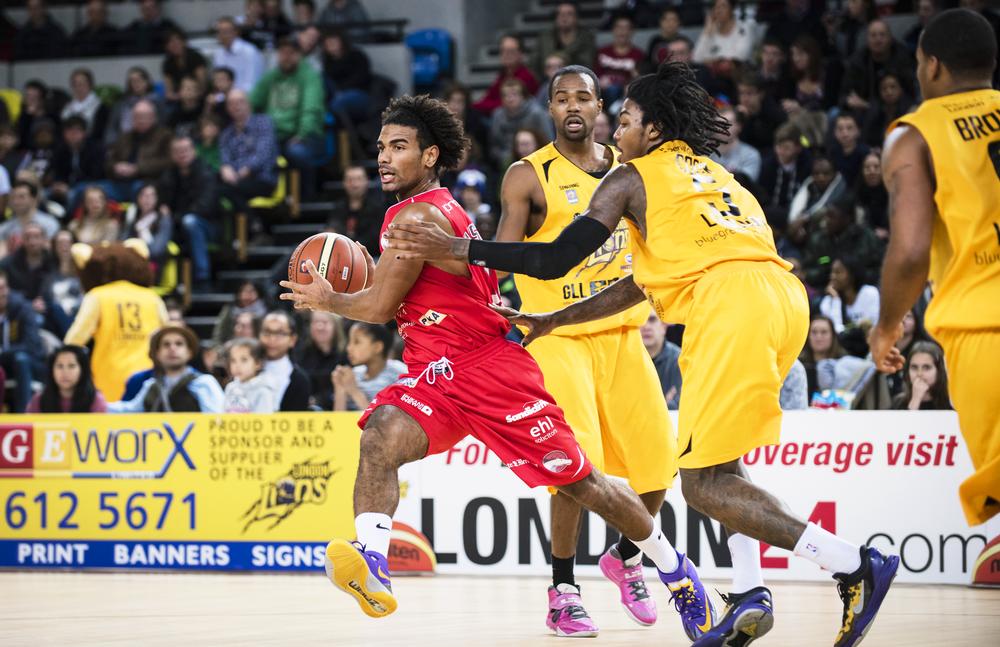
One of those visions is the development of a comprehensive facilities plan which will have the dual effect of providing hubs to foster grassroots basketball and create purpose-built arenas for British Basketball League and Women’s British Basketball League teams to thrive. Leicester Riders, Newcastle Eagles and Sheffield Sharks are at varying points of their journey to develop owner-occupier arenas – with the former opening a new £6m facility earlier this year – but Humby is concerned that the projects are occurring in isolation, with no joined up plan.
The chair highlights that while there are more than 4,500 three-court sport halls in England that accommodate basketball, there was a need to create “central hubs in the community” which he believes will be “critical to the long-term growth of the sport”.
“During the consultation process I talked a lot about this with England Basketball CEO Stuart Kellett,” he says. “We need a clearer strategy to support how we roll these facilities out, to make them work more efficiently and potentially create some sort of central funding pot.”
The central funding pot, Humby explains, is at an aspiration stage, but if it were to come to fruition he suggests that it would be similar to the FA Parklife hubs initiative in which quality grassroots football facilities are being built in urban areas around the country.
“We need to create the same operation in basketball, but it won’t be the same scale of investment,” he adds. “We have to work with local authorities, Sport England and other funders. That is quite an important strategic element of this – facilities make sport more sustainable.”
Funding issues Sport England funding may not be that easy to come by, however. Its new strategy shows that core money for national governing bodies is to decrease, although the organisation could bid for other funding if they have projects aimed at tackling one or more of the outcomes of the government’s Sporting Future blueprint – including physical and mental health, social cohesion and economic development.
Humby is confident that the BBF can “make the case that basketball is in the position to deliver those outcomes more effectively than other smaller sports”.
He emphasises the fact that basketball connects with what the government calls hard-to-reach demographics, with 50 per cent of weekly participants from black, Asian and ethnic minority (BAME) backgrounds. Humby adds that basketball has the ability to “attract kids in from a very young age until their early 20s to get into a sporting habit”.
Humby says: “What we need first of all is a vision for basketball, and that’s what the strategy is about. But, as we say in the document, we think that if we get this right the outcomes that will flow from this will absolutely marry with the Sport England and government strategies.”
Very few clubs have their own facilities, but Leicester Riders now own a newly-built £6m arena
Celebrating its milestone 5th anniversary, W3Fit EMEA returns in 2026 with an unmissable
gathering of the Health & Fitness industry’s most influential leaders. [more...]
CoverMe, the global leader in fitness workforce management, today launches CoverMe PT, an
on-demand personal training platform that connects the right personal trainer to the right
client in under 10 seconds. [more...]
+ More featured suppliers
COMPANY PROFILES
Orbit4
With Orbit4, you’ll always have full visibility
of your equipment inventory, the true
market value [more...]
Safe Space Lockers
We provide a full turn-key solution for clients from design and consultation, through to bespoke man [more...]
Nick Humby joined the newly-formed BBF in January 2016
“One of the things that strikes me about basketball is the perception of the sport,” says British Basketball Federation (BBF) chair Nick Humby. “It’s not seen as being up there with the major sports, but in reality the participation numbers tell you that it is.”
Humby – along with his colleagues at the newly-formed BBF – wants to make basketball the second-largest team participation sport in the country behind football, usurping cricket and rugby. Far from a throwaway remark on Humby’s part, the ambition is enshrined in the BBF’s strategy for growing the sport.
Setting the targets So how does the former Football Association executive suggest this can be achieved? According to Humby, basketball isn’t that far off, and if you solely take participation figures into account he’s right.
He points to the latest Sport England Active People Survey figures which show that basketball is the fourth largest team sport in terms of people taking part with 163,800 participants – just shy of rugby union (191,900) and cricket (179,900). Football is the largest by a distance with 1.8m regular players.
While Humby concedes that basketball sits on the fringes of mainstream English society – in contrast to football, rugby and cricket which are “embedded in the culture of the country and school curriculum” – he is confident that the 2016-2028 plan he’s overseen will lay strong foundations for basketball’s future successes.
Transforming Basketball in Britain Together lays out six outcomes – which are underpinned by ten strategic priorities (see page 18). As well as growing opportunities to play the game and opening the door to participation, the BBF is also aiming to increase the awareness and profile of basketball, develop talent pathways and create quality leagues and clubs, which should, in theory, lead to successful GB teams and a have further knock-on effect on participation.
The BBF has been established to account for the changing landscape of British basketball. It will become the official governing body for the sport, supporting Basketball England, Basketball Scotland and Basketball Wales, although those organisations will still exist. As a result, the English, Scottish and Welsh national teams will merge and compete as Team GB permanently from October 2016.
Court orders Humby says the change has been the catalyst for the strategy, and explains the need to “create a clear vision of what we’re trying to do together, what needs to be done and to create accountability”.
One of those visions is the development of a comprehensive facilities plan which will have the dual effect of providing hubs to foster grassroots basketball and create purpose-built arenas for British Basketball League and Women’s British Basketball League teams to thrive. Leicester Riders, Newcastle Eagles and Sheffield Sharks are at varying points of their journey to develop owner-occupier arenas – with the former opening a new £6m facility earlier this year – but Humby is concerned that the projects are occurring in isolation, with no joined up plan.
The chair highlights that while there are more than 4,500 three-court sport halls in England that accommodate basketball, there was a need to create “central hubs in the community” which he believes will be “critical to the long-term growth of the sport”.
“During the consultation process I talked a lot about this with England Basketball CEO Stuart Kellett,” he says. “We need a clearer strategy to support how we roll these facilities out, to make them work more efficiently and potentially create some sort of central funding pot.”
The central funding pot, Humby explains, is at an aspiration stage, but if it were to come to fruition he suggests that it would be similar to the FA Parklife hubs initiative in which quality grassroots football facilities are being built in urban areas around the country.
“We need to create the same operation in basketball, but it won’t be the same scale of investment,” he adds. “We have to work with local authorities, Sport England and other funders. That is quite an important strategic element of this – facilities make sport more sustainable.”
Funding issues Sport England funding may not be that easy to come by, however. Its new strategy shows that core money for national governing bodies is to decrease, although the organisation could bid for other funding if they have projects aimed at tackling one or more of the outcomes of the government’s Sporting Future blueprint – including physical and mental health, social cohesion and economic development.
Humby is confident that the BBF can “make the case that basketball is in the position to deliver those outcomes more effectively than other smaller sports”.
He emphasises the fact that basketball connects with what the government calls hard-to-reach demographics, with 50 per cent of weekly participants from black, Asian and ethnic minority (BAME) backgrounds. Humby adds that basketball has the ability to “attract kids in from a very young age until their early 20s to get into a sporting habit”.
Humby says: “What we need first of all is a vision for basketball, and that’s what the strategy is about. But, as we say in the document, we think that if we get this right the outcomes that will flow from this will absolutely marry with the Sport England and government strategies.”
Very few clubs have their own facilities, but Leicester Riders now own a newly-built £6m arena
Premium London health club, KX Chelsea, will imminently unveil its most significant
redevelopment since its launch in 2002 to create an integrated wellness model combining
training, recovery and relaxation.
Researchers in the US have identified an antibody which could greatly reduce the loss of lean
muscle mass in people who are taking weight-loss medications.
Crunch Fitness has announced the launch of Crunch Reform Pilates – its own reformer concept
designed to bring this fast growing, but rather expensive, modality into the mainstream.
The 20th State of the Industry Report reveals a resilient, expanding and competitive
sector, the
importance of differentiation and the ongoing challenge of tackling inequalities.
Nuffield Health has told HCM that it takes its responsibilities towards its colleagues seriously
and is committed to meeting all legal obligations after news of a tribunal has made national
headlines.
Technogym has announced the launch of the Run X World Treadmill Championship, the first
world championship for running on connected treadmills over five kilometres.
Celebrating its milestone 5th anniversary, W3Fit EMEA returns in 2026 with an unmissable
gathering of the Health & Fitness industry’s most influential leaders. [more...]
CoverMe, the global leader in fitness workforce management, today launches CoverMe PT, an
on-demand personal training platform that connects the right personal trainer to the right
client in under 10 seconds. [more...]
+ More featured suppliers
COMPANY PROFILES
Orbit4 With Orbit4, you’ll always have full visibility
of your equipment inventory, the true
market value [more...]