While Tottenham’s new Populous-designed stadium aims to be the most “technologically advanced” in the world, the architect and club believe community lies at its heart
By Matthew Campelli | Published in Sports Management 30 May 2016 issue 121
Populous senior principal Christopher Lee is behind the design / populous
Up until the last few weeks of the Premier League season it looked like a credible possibility that Tottenham Hotspur might win its first league title since 1961. Although the club’s challenge ultimately faltered, with Spurs ending the season third behind champions Leicester and North London rival Arsenal, the campaign did much to boost supporters’ optimism that success isn’t too far away.
New era While demonstrable improvements have been made on the field with the club registering its best top flight finish of the Premier League era in 2015/16, Tottenham can look forward to the construction of its new 61,000-capacity stadium – the second-largest in the Premier League, and the first stadium with a retractable natural turf surface to accommodate football and NFL matches.
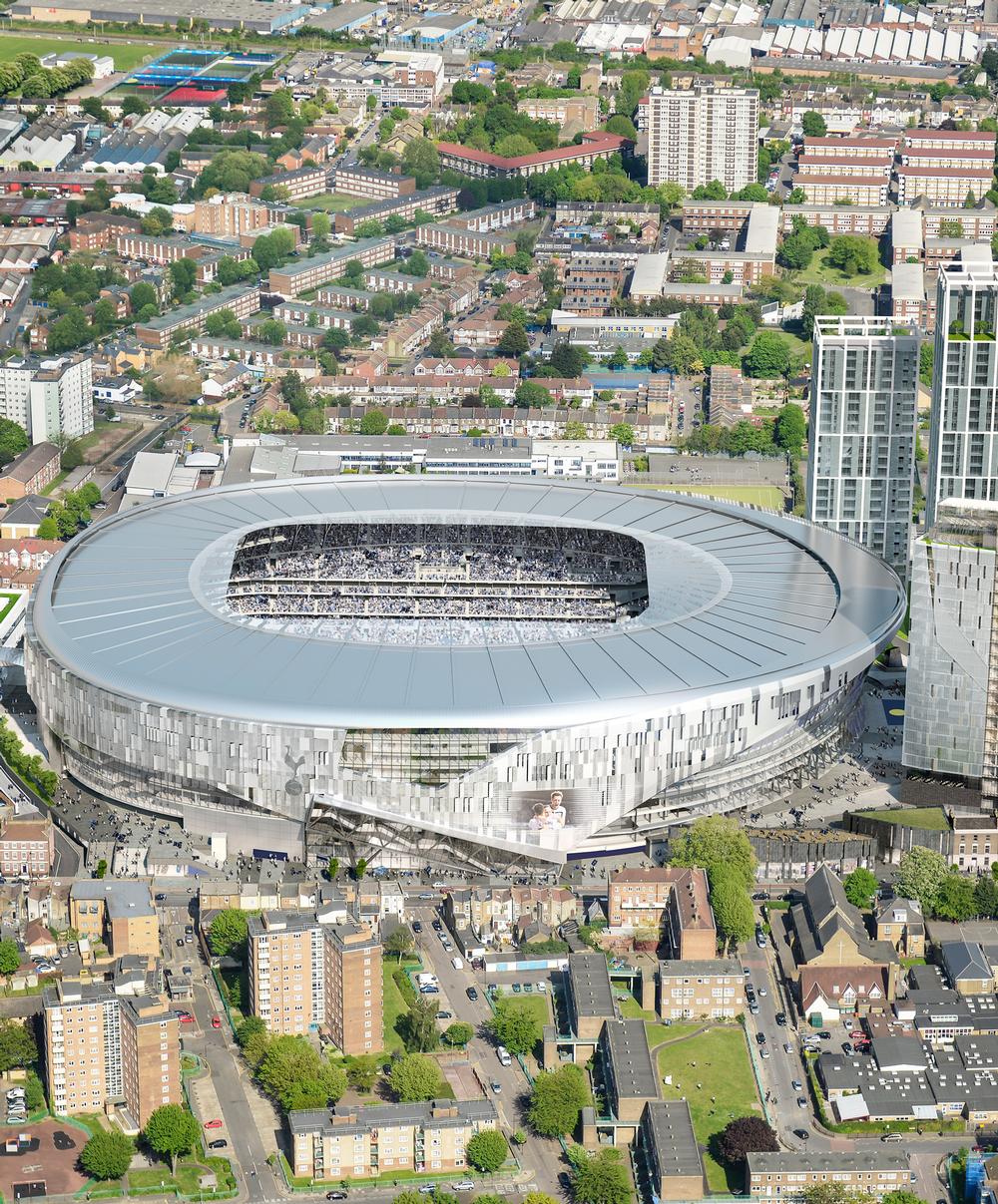
It’s a project of some ambition which will form part of a large regeneration initiative between White Hart Lane train station and Northumberland Park. However, at the heart of it all lies the theme of “community” says Populous senior principal Christopher Lee.
Talking at the Telegraph Business of Sport Conference 2016 earlier this month, Lee, who also worked on Arsenal’s Emirates Stadium, says plans for the new stadium very much fits with Populous’ desire to keep sporting arenas within the city boundary and become the “catalyst for regeneration”.
To crystallise his point, Lee highlights the work of Archibald Leitch who designed stadiums which “evolved as the local community evolved”.
“Fifty years after the Leitch English stadiums there was a big move in the US and Europe to move these facilities outside the city limits,” he explains. “They were pushed to the outskirts and produced a wholly unsatisfactory experience for the spectators and left a huge gap in the community. What we’re keen to do is keep these clubs in their local environment.”
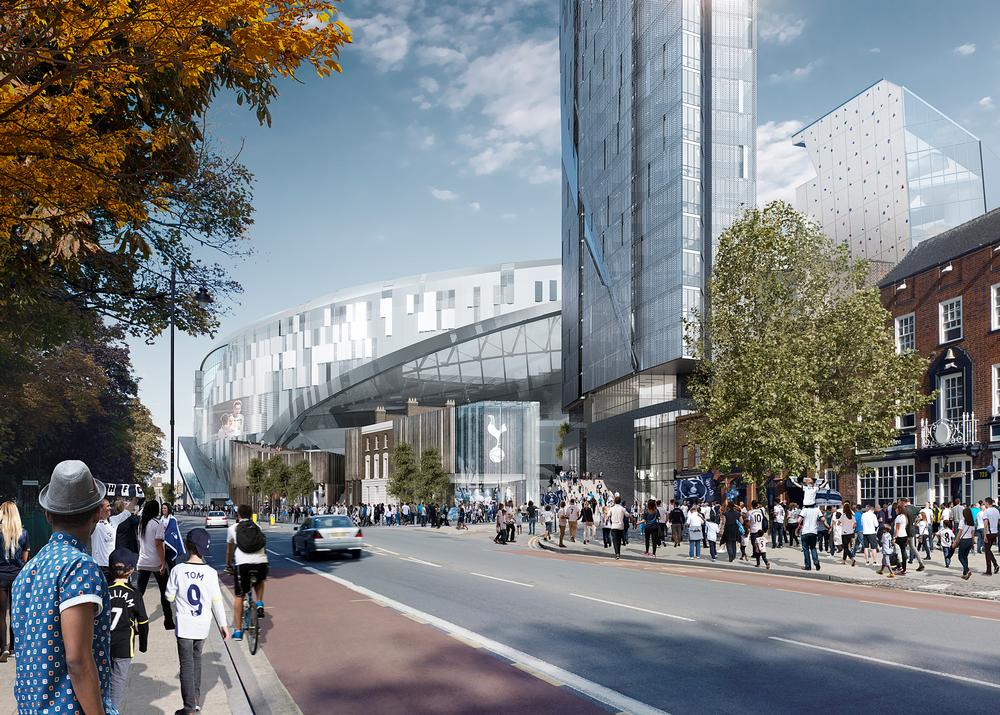
Residential areas, a 180-bedroom hotel, a museum, community facilities and shops will spring up around the £400m stadium, while local residents will be able to enjoy a public area the size of Trafalgar Square which Lee describes as a “fantastic civic space”.
An extreme sports building will also be present in the grounds of the stadium development, which will include the largest international dive tank and a climbing wall.
A wider community But for Lee and Sanjeev Katwa, Tottenham Hotspur’s head of technology solutions, community doesn’t just mean the individuals who live in close proximity to the ground. Match day supporters are an important part of the community the pair has envisaged.
Katwa reveals that the club had done extensive research on fan opinion before devising the stadium masterplan with Populous, which helped formulate ideas such as the steep, 17,000-seat single tier stand behind the goal to increase the match day atmosphere.
“It goes back to the identity of the great old stadiums,” says Lee, referencing Liverpool’s iconic Kop End at its Anfield Road stadium and Borussia Dortmund’s ‘Yellow Wall’ as inspirations.
He adds: “The reason I love being involved in stadiums is the rare moment you get being part of this community and sensing 60,000 people wanting something, sharing something – it’s very rare to have that amount of people with the same common objective.”
Trying to draw in younger supporters is a priority for both Tottenham and Populous, and Lee suggests that the stadium could incorporate family-specific areas and youth areas, while plans to add crèches are being talked about.
NFL plans The experience of American football fans will also be taken into account with the stadium doubling up as a “bespoke” NFL venue. A number of exhibition matches are expected to take place in the stadium – with a London-based franchise also being mooted – and the technology in the arena reflects this.
A retractable football pitch will lie on top of an astroturf NFL field, so that the former can slide out before an American football match. According to Lee, the innovation ensures ideal sightlines for both sports, while lighting systems will be state of the art.
In addition, changing rooms will be built to accommodate 60 people, which is crucial for NFL games where there are a significant number of technical staff present for each franchise.
“NFL matches and other events will have a longer dwell time than the 90 minutes required for football,” says Katwa. “NFL games could be five hours long, so technology has been built in to ensure the right number of communication rooms and data centres and the right number of wifi access points.”
Indeed, Katwa reveals that he expects the stadium to be the “most technically advanced in the world”; a bold claim he concedes, but founded on the idea that the facility is being developed to accommodate changing technology in the future.
But with thoughts geared towards smartphone ticketing, quality wifi and innovative F&B operations, he stresses that even the most technical aspects of the stadium will have the customer and community at their heart. Wifi connection, for example, might be turned off during some matches so nothing is taken away from the atmosphere.
“We feel technology is really going to support us to create that unrivalled fan experience, but keeping the same level of atmosphere.”
The stadium will anchor a large regeneration initiative in Northumberland Park, North London / populous
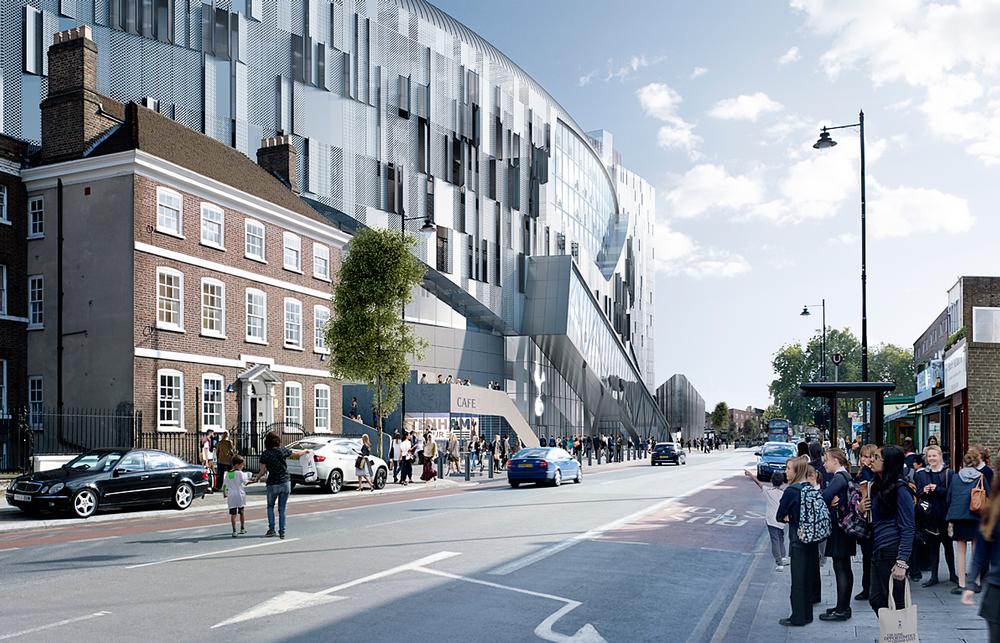
The design takes inspiration from classic stadiums of the past / populous
The design takes inspiration from classic stadiums of the past / populous
The design will allow regular NFL games to take place during the English football season / populous
Celebrating its milestone 5th anniversary, W3Fit EMEA returns in 2026 with an unmissable
gathering of the Health & Fitness industry’s most influential leaders. [more...]
Elevate is set to celebrate its 10th anniversary in style this June, with organisers
confirming the event’s largest-ever drinks reception as registrations continue to run more
than 10% ahead of last year. [more...]
While Tottenham’s new Populous-designed stadium aims to be the most “technologically advanced” in the world, the architect and club believe community lies at its heart
By Matthew Campelli | Published in Sports Management 30 May 2016 issue 121
Populous senior principal Christopher Lee is behind the design / populous
Up until the last few weeks of the Premier League season it looked like a credible possibility that Tottenham Hotspur might win its first league title since 1961. Although the club’s challenge ultimately faltered, with Spurs ending the season third behind champions Leicester and North London rival Arsenal, the campaign did much to boost supporters’ optimism that success isn’t too far away.
New era While demonstrable improvements have been made on the field with the club registering its best top flight finish of the Premier League era in 2015/16, Tottenham can look forward to the construction of its new 61,000-capacity stadium – the second-largest in the Premier League, and the first stadium with a retractable natural turf surface to accommodate football and NFL matches.
It’s a project of some ambition which will form part of a large regeneration initiative between White Hart Lane train station and Northumberland Park. However, at the heart of it all lies the theme of “community” says Populous senior principal Christopher Lee.
Talking at the Telegraph Business of Sport Conference 2016 earlier this month, Lee, who also worked on Arsenal’s Emirates Stadium, says plans for the new stadium very much fits with Populous’ desire to keep sporting arenas within the city boundary and become the “catalyst for regeneration”.
To crystallise his point, Lee highlights the work of Archibald Leitch who designed stadiums which “evolved as the local community evolved”.
“Fifty years after the Leitch English stadiums there was a big move in the US and Europe to move these facilities outside the city limits,” he explains. “They were pushed to the outskirts and produced a wholly unsatisfactory experience for the spectators and left a huge gap in the community. What we’re keen to do is keep these clubs in their local environment.”
Residential areas, a 180-bedroom hotel, a museum, community facilities and shops will spring up around the £400m stadium, while local residents will be able to enjoy a public area the size of Trafalgar Square which Lee describes as a “fantastic civic space”.
An extreme sports building will also be present in the grounds of the stadium development, which will include the largest international dive tank and a climbing wall.
A wider community But for Lee and Sanjeev Katwa, Tottenham Hotspur’s head of technology solutions, community doesn’t just mean the individuals who live in close proximity to the ground. Match day supporters are an important part of the community the pair has envisaged.
Katwa reveals that the club had done extensive research on fan opinion before devising the stadium masterplan with Populous, which helped formulate ideas such as the steep, 17,000-seat single tier stand behind the goal to increase the match day atmosphere.
“It goes back to the identity of the great old stadiums,” says Lee, referencing Liverpool’s iconic Kop End at its Anfield Road stadium and Borussia Dortmund’s ‘Yellow Wall’ as inspirations.
He adds: “The reason I love being involved in stadiums is the rare moment you get being part of this community and sensing 60,000 people wanting something, sharing something – it’s very rare to have that amount of people with the same common objective.”
Trying to draw in younger supporters is a priority for both Tottenham and Populous, and Lee suggests that the stadium could incorporate family-specific areas and youth areas, while plans to add crèches are being talked about.
NFL plans The experience of American football fans will also be taken into account with the stadium doubling up as a “bespoke” NFL venue. A number of exhibition matches are expected to take place in the stadium – with a London-based franchise also being mooted – and the technology in the arena reflects this.
A retractable football pitch will lie on top of an astroturf NFL field, so that the former can slide out before an American football match. According to Lee, the innovation ensures ideal sightlines for both sports, while lighting systems will be state of the art.
In addition, changing rooms will be built to accommodate 60 people, which is crucial for NFL games where there are a significant number of technical staff present for each franchise.
“NFL matches and other events will have a longer dwell time than the 90 minutes required for football,” says Katwa. “NFL games could be five hours long, so technology has been built in to ensure the right number of communication rooms and data centres and the right number of wifi access points.”
Indeed, Katwa reveals that he expects the stadium to be the “most technically advanced in the world”; a bold claim he concedes, but founded on the idea that the facility is being developed to accommodate changing technology in the future.
But with thoughts geared towards smartphone ticketing, quality wifi and innovative F&B operations, he stresses that even the most technical aspects of the stadium will have the customer and community at their heart. Wifi connection, for example, might be turned off during some matches so nothing is taken away from the atmosphere.
“We feel technology is really going to support us to create that unrivalled fan experience, but keeping the same level of atmosphere.”
The stadium will anchor a large regeneration initiative in Northumberland Park, North London / populous
The design takes inspiration from classic stadiums of the past / populous
The design takes inspiration from classic stadiums of the past / populous
The design will allow regular NFL games to take place during the English football season / populous
Premium London health club, KX Chelsea, will imminently unveil its most significant
redevelopment since its launch in 2002 to create an integrated wellness model combining
training, recovery and relaxation.
Researchers in the US have identified an antibody which could greatly reduce the loss of lean
muscle mass in people who are taking weight-loss medications.
Crunch Fitness has announced the launch of Crunch Reform Pilates – its own reformer concept
designed to bring this fast growing, but rather expensive, modality into the mainstream.
The 20th State of the Industry Report reveals a resilient, expanding and competitive
sector, the
importance of differentiation and the ongoing challenge of tackling inequalities.
Nuffield Health has told HCM that it takes its responsibilities towards its colleagues seriously
and is committed to meeting all legal obligations after news of a tribunal has made national
headlines.
Technogym has announced the launch of the Run X World Treadmill Championship, the first
world championship for running on connected treadmills over five kilometres.
Celebrating its milestone 5th anniversary, W3Fit EMEA returns in 2026 with an unmissable
gathering of the Health & Fitness industry’s most influential leaders. [more...]
Elevate is set to celebrate its 10th anniversary in style this June, with organisers
confirming the event’s largest-ever drinks reception as registrations continue to run more
than 10% ahead of last year. [more...]