Movement during pregnancy may influence foetal development / photo:www.shutterstock.com
Researchers from the Baylor College of Medicine in Texas, US, have discovered that female mice which voluntarily exercise during pregnancy have offspring that are more physically active as adults. The research was published in the March edition of The FASEB Journal*.
The senior author of the work, Dr Robert A Waterland – associate professor of paediatrics-nutrition and of molecular and human genetics at the USDA/ARS Children’s Nutrition Research Center, at Baylor and Texas Children’s Hospital – noted that although their research studied mice, “several human studies have reported results consistent with ours”.
Indeed, observational studies have found that women who are physically active while pregnant have children who tend to be more physically active. However, it hasn’t been firmly established whether these results can be attributed to the mothers’ influence on the children after they were born, or if mothers can pass a genetic predisposition to be physically active on to their offspring.
“Our study in a mouse model is important because we can take all those effects out of the equation,” said Waterland. “We studied genetically identical mice and carefully controlled the amount of physical activity among the mothers before pregnancy.”
Run with the idea The Baylor team selected female mice which all enjoyed running, then divided them into two groups. One was allowed access to running wheels before and during pregnancy, and the other was not.
During early pregnancy, the females with the running wheels ran an average of 10km every night. They ran less as the pregnancy progressed, but even by the beginning of their third trimester they were still running (or walking) for around 3km each night.
Influence in the womb The mice born to mothers which exercised during pregnancy were about 50 per cent more physically active than those born to mothers which did not exercise.
Importantly, their increased levels of activity continued into later adulthood, and was even found to improve their ability to lose fat during a three-week voluntary exercise programme.
The study supports the idea that movement during pregnancy influences foetal brain development, ensuring that the offspring tend to be more physically active throughout life.
“Although most people assume that an individual’s tendency to be physically active is determined by genetics, our results clearly show that the environment can play an important role during foetal development,” Waterland said.
If a similar effect can be confirmed in people, it could potentially lead to an effective strategy to counteract the current worldwide epidemic of physical inactivity and obesity.
“I think our results offer a very positive message,” said Waterland. “If expectant mothers know that exercise is not only good for them, but may also offer lifelong benefits for their babies, I think they will be more motivated to get moving.”
*Waterland, RA et al. Maternal exercise during pregnancy promotes physical activity in adult offspring. The FASEB Journal. March 2016
Active Blackpool is deploying Cornerstone Connect, a new digital interface allowing
disparate information from multiple systems to be aggregated into one dataset, to support
its focus on reducing health inequalities and improving healthy life expectancy. [more...]
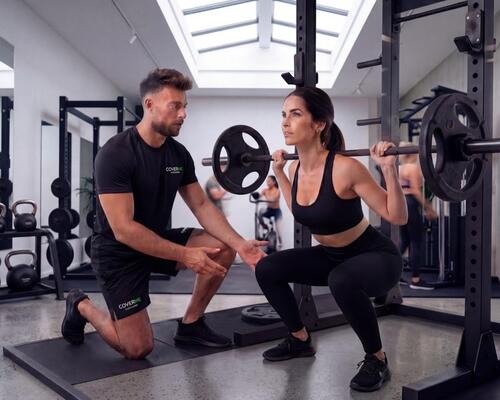
CoverMe, the global leader in fitness workforce management, today launches CoverMe PT, an
on-demand personal training platform that connects the right personal trainer to the right
client in under 10 seconds. [more...]
Movement during pregnancy may influence foetal development / photo:www.shutterstock.com
Researchers from the Baylor College of Medicine in Texas, US, have discovered that female mice which voluntarily exercise during pregnancy have offspring that are more physically active as adults. The research was published in the March edition of The FASEB Journal*.
The senior author of the work, Dr Robert A Waterland – associate professor of paediatrics-nutrition and of molecular and human genetics at the USDA/ARS Children’s Nutrition Research Center, at Baylor and Texas Children’s Hospital – noted that although their research studied mice, “several human studies have reported results consistent with ours”.
Indeed, observational studies have found that women who are physically active while pregnant have children who tend to be more physically active. However, it hasn’t been firmly established whether these results can be attributed to the mothers’ influence on the children after they were born, or if mothers can pass a genetic predisposition to be physically active on to their offspring.
“Our study in a mouse model is important because we can take all those effects out of the equation,” said Waterland. “We studied genetically identical mice and carefully controlled the amount of physical activity among the mothers before pregnancy.”
Run with the idea The Baylor team selected female mice which all enjoyed running, then divided them into two groups. One was allowed access to running wheels before and during pregnancy, and the other was not.
During early pregnancy, the females with the running wheels ran an average of 10km every night. They ran less as the pregnancy progressed, but even by the beginning of their third trimester they were still running (or walking) for around 3km each night.
Influence in the womb The mice born to mothers which exercised during pregnancy were about 50 per cent more physically active than those born to mothers which did not exercise.
Importantly, their increased levels of activity continued into later adulthood, and was even found to improve their ability to lose fat during a three-week voluntary exercise programme.
The study supports the idea that movement during pregnancy influences foetal brain development, ensuring that the offspring tend to be more physically active throughout life.
“Although most people assume that an individual’s tendency to be physically active is determined by genetics, our results clearly show that the environment can play an important role during foetal development,” Waterland said.
If a similar effect can be confirmed in people, it could potentially lead to an effective strategy to counteract the current worldwide epidemic of physical inactivity and obesity.
“I think our results offer a very positive message,” said Waterland. “If expectant mothers know that exercise is not only good for them, but may also offer lifelong benefits for their babies, I think they will be more motivated to get moving.”
*Waterland, RA et al. Maternal exercise during pregnancy promotes physical activity in adult offspring. The FASEB Journal. March 2016
The UK's four Chief Medical Officers have published a refreshed edition of Physical activity
guidelines: UK Chief Medical Officers' report, updating the evidence that underpins the nation's
physical activity recommendations and placing greater emphasis on strength, balance, reducing
sedentary behaviour and, for the first time, supporting people taking weight loss medications.
Places Leisure has exchanged contracts to build and operate a flagship £60m water and leisure
destination on behalf of Basingstoke and Deane Borough Council.
The Republic of Ireland will become the latest market in PureGym’s expanding international
portfolio, with the first launch planned for Dublin in 2027.
Anytime Fitness opened more than one club a day in 2025 and is on track to maintain this rate
of growth this year, as parent company Purpose Brands targets further international expansion.
The £33.9 million Leighton Leisure and Community Centre has opened in Leighton Buzzard, UK,
creating a next-generation public leisure, health and wellbeing hub for the local community.
Walnuts Leisure Centre in Orpington, in the London Borough of Bromley, has reopened following
a £17m transformation designed to secure the long-term future of the public leisure asset and
reposition it as a community wellbeing hub.
The Gym Group, has announced that it's sustained positive trading momentum has continued
through the first half of 2026 and the company remains confident about the outlook.
Luxury boutique Pilates and wellness studio, X-Club, officially launches a
4,000sq ft flagship at
Marylebone on 16 July Built around X-Club’s four pillars of wellness – mind,
movement,
nutrition and therapy – the facility features two group exercise studi
Active Blackpool is deploying Cornerstone Connect, a new digital interface allowing
disparate information from multiple systems to be aggregated into one dataset, to support
its focus on reducing health inequalities and improving healthy life expectancy. [more...]
CoverMe, the global leader in fitness workforce management, today launches CoverMe PT, an
on-demand personal training platform that connects the right personal trainer to the right
client in under 10 seconds. [more...]