Getting kids active has finally moved higher up the political agenda
I’ll admit there’s a common theme that runs through my professional career: fortune. Whether it was working in the first Mayoralty of the newly devolved London City government, or the inspirational 2012 construction project of the Olympic Park, or for British Tennis during a time of historic success, I’ve been lucky. My timing has been good.
And I do believe that fortune has served me well again. It’s great to have joined ukactive at a time when its role, and that of the sector it represents, is enjoying such relevance across a range of national issues. There are many national problems – inactivity levels across all ages, workplace health, skills and workforce development – that this sector not only has an opinion on, but also a lead role in addressing.
Political gains The national debate on inactivity is moving on. Where once the debate was around whether the crisis even existed, now there’s recognition and an urgent requirement for remedies and solutions.
Nowhere has this been more evident than in the government’s radical sport strategy – a cross-departmental plan that places at its core the value of sport in addressing issues relating to inactivity. The recent comments by Sport England’s CEO Jennie Price’s regarding the “enormous role” that health clubs and gyms will play in this new approach highlight the huge opportunities for our sector.
The issue of childhood inactivity was also evident in the recent Budget, where the chancellor pledged an additional £520m for the school sports premium. This is fantastic news. We now need to look at how our sector, and the funding itself, can support the good work taking place in schools during the times when kids are out of school: the school holidays, for example, when parents are increasingly concerned that their kids’ time will be spent in front of the TV or playing computer games.
We have such an opportunity now, with extra funding promised to get children active, to make a real mark on wider health policy in the UK and to create political success stories that will stand our sector in good stead for years to come.
Maintaining momentum But beyond ensuring that more funding comes down from the central pot for activity promotion, we must also ensure we’re getting the most out of the existing funding – for example, putting in place more robust evaluation structures for the Primary Premium to prove its impact, or building broader coalitions of like-minded organisations and providers that want the same thing: to get children moving more.
We have already made great inroads over recent years, raising the profile of activity and fitness for young people and pushing health and wellbeing up a crowded political and media agenda. But now there’s a real sense of action – an appetite to put in place the plans and programmes that can make a real difference on the ground – and we must capitalise on this.
So the ambition is that over this parliament, and also the next one, activity stays high on the agenda of our political leaders. If we can manage to build a coalition of political support that elevates this major issue above the party political knock-about, then hopefully more progress can be made.
It’s a great challenge and I feel very excited, and fortunate, to have a chance to play my part. ?
Active Blackpool is deploying Cornerstone Connect, a new digital interface allowing
disparate information from multiple systems to be aggregated into one dataset, to support
its focus on reducing health inequalities and improving healthy life expectancy. [more...]
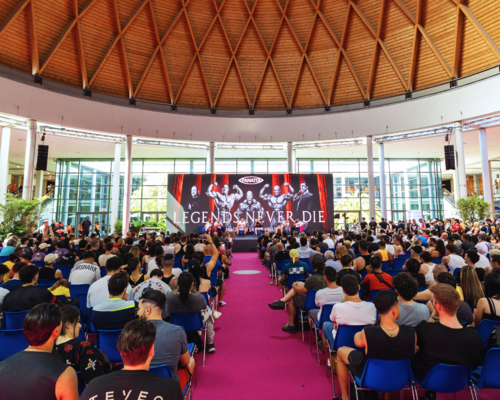
Panatta brought together four of the most influential figures in bodybuilding history on the
stage of RiminiWellness 2026: Phil Heath, Lee Haney, Ronnie Coleman and Hany Rambod. [more...]
Getting kids active has finally moved higher up the political agenda
I’ll admit there’s a common theme that runs through my professional career: fortune. Whether it was working in the first Mayoralty of the newly devolved London City government, or the inspirational 2012 construction project of the Olympic Park, or for British Tennis during a time of historic success, I’ve been lucky. My timing has been good.
And I do believe that fortune has served me well again. It’s great to have joined ukactive at a time when its role, and that of the sector it represents, is enjoying such relevance across a range of national issues. There are many national problems – inactivity levels across all ages, workplace health, skills and workforce development – that this sector not only has an opinion on, but also a lead role in addressing.
Political gains The national debate on inactivity is moving on. Where once the debate was around whether the crisis even existed, now there’s recognition and an urgent requirement for remedies and solutions.
Nowhere has this been more evident than in the government’s radical sport strategy – a cross-departmental plan that places at its core the value of sport in addressing issues relating to inactivity. The recent comments by Sport England’s CEO Jennie Price’s regarding the “enormous role” that health clubs and gyms will play in this new approach highlight the huge opportunities for our sector.
The issue of childhood inactivity was also evident in the recent Budget, where the chancellor pledged an additional £520m for the school sports premium. This is fantastic news. We now need to look at how our sector, and the funding itself, can support the good work taking place in schools during the times when kids are out of school: the school holidays, for example, when parents are increasingly concerned that their kids’ time will be spent in front of the TV or playing computer games.
We have such an opportunity now, with extra funding promised to get children active, to make a real mark on wider health policy in the UK and to create political success stories that will stand our sector in good stead for years to come.
Maintaining momentum But beyond ensuring that more funding comes down from the central pot for activity promotion, we must also ensure we’re getting the most out of the existing funding – for example, putting in place more robust evaluation structures for the Primary Premium to prove its impact, or building broader coalitions of like-minded organisations and providers that want the same thing: to get children moving more.
We have already made great inroads over recent years, raising the profile of activity and fitness for young people and pushing health and wellbeing up a crowded political and media agenda. But now there’s a real sense of action – an appetite to put in place the plans and programmes that can make a real difference on the ground – and we must capitalise on this.
So the ambition is that over this parliament, and also the next one, activity stays high on the agenda of our political leaders. If we can manage to build a coalition of political support that elevates this major issue above the party political knock-about, then hopefully more progress can be made.
It’s a great challenge and I feel very excited, and fortunate, to have a chance to play my part. ?
The UK's four Chief Medical Officers have published a refreshed edition of Physical activity
guidelines: UK Chief Medical Officers' report, updating the evidence that underpins the nation's
physical activity recommendations and placing greater emphasis on strength, balance, reducing
sedentary behaviour and, for the first time, supporting people taking weight loss medications.
Places Leisure has exchanged contracts to build and operate a flagship £60m water and leisure
destination on behalf of Basingstoke and Deane Borough Council.
The Republic of Ireland will become the latest market in PureGym’s expanding international
portfolio, with the first launch planned for Dublin in 2027.
Anytime Fitness opened more than one club a day in 2025 and is on track to maintain this rate
of growth this year, as parent company Purpose Brands targets further international expansion.
The £33.9 million Leighton Leisure and Community Centre has opened in Leighton Buzzard, UK,
creating a next-generation public leisure, health and wellbeing hub for the local community.
Walnuts Leisure Centre in Orpington, in the London Borough of Bromley, has reopened following
a £17m transformation designed to secure the long-term future of the public leisure asset and
reposition it as a community wellbeing hub.
The Gym Group, has announced that it's sustained positive trading momentum has continued
through the first half of 2026 and the company remains confident about the outlook.
Luxury boutique Pilates and wellness studio, X-Club, officially launches a
4,000sq ft flagship at
Marylebone on 16 July Built around X-Club’s four pillars of wellness – mind,
movement,
nutrition and therapy – the facility features two group exercise studi
Active Blackpool is deploying Cornerstone Connect, a new digital interface allowing
disparate information from multiple systems to be aggregated into one dataset, to support
its focus on reducing health inequalities and improving healthy life expectancy. [more...]
Panatta brought together four of the most influential figures in bodybuilding history on the
stage of RiminiWellness 2026: Phil Heath, Lee Haney, Ronnie Coleman and Hany Rambod. [more...]