As new technology, increasing competition and an endless supply of cheap online options flood the fitness market, can personal trainers survive and evolve to meet changing consumer expectations? What are the trends shaping PT today? Niamh Madigan asks the experts
By Niamh Madigan | Published in Health Club Management 2016 issue 5
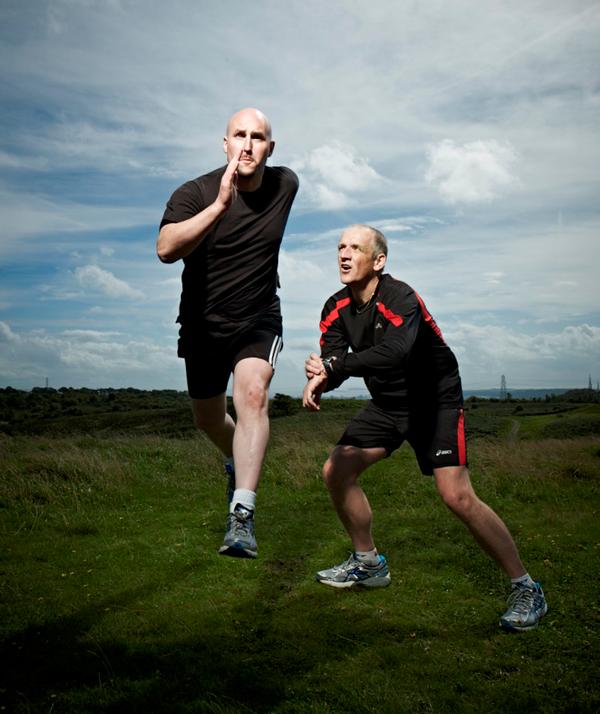
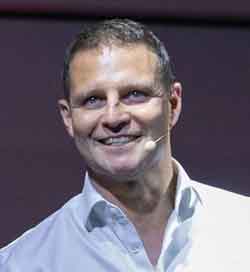
Coleman says his sessions focus as much on the mental as the physical side of fitness
With the growth of the internet and social media, people are looking outside their area for more specialist coaches to achieve that extra 10 per cent. For example, I have clients in New Zealand who I will never meet in person, but I train with them using Skype. Clients don’t even need to leave their offices to do a session – it fits in with their schedule.
Personalisation is the big thing now, and a really good performance coach can bespoke a programme to a client’s needs. They know when exercise will fit in with their daily schedule and clients also get the feedback and praise of a coach.
I see technology as a great complement to what I do, as it gives me information on how hard my clients are working. I’d recommend the Garmin Forerunner 910 XT and the Fitbit Surge.
Looking to trends, I’ve completely dismissed suspension training and I don’t do any kettlebells, because people don’t use them very well. In my sessions I use two 15kg plates, one bench and a dumbbell set. That’s it.
I think health clubs should provide more specialist coaches to help people make more informed choices about food and their lifestyles. There’s also a need to focus on the mental side of things. In my sessions, people believe they’re doing 80 per cent physical and 20 per cent mental, but it’s the other way round: I spend a lot of my time re-training clients’ thought processes.
"I see technology as a great complement to what I do, as it gives me information on how hard my clients are working" - Rory Coleman
I do lots of Armageddon training, which is best described as personal training in a group fitness environment, using the principles of variable intensity interval training (VIIT). Small group training is definitely the future: clients can split the cost, plus it’s motivating and more fun.
When it comes to one-to-one personal training, clients want PTs to fix every facet of their life nowadays, with advice on fitness, diet and lifestyle. If you help them lose weight, you have to fix the cause as well, which takes a deeper level of understanding and experience.
I don’t think enough gym operators appreciate the value of PTs. Some take a big percentage of the PT’s rate – up to 50 per cent – so a trainer is forced to go out on their own. With that comes the responsibility of marketing and running their own business. Gym management must work more closely with PTs to help them run their business effectively.
Fitness is changing all the time with the arrival of new technology and science, and PTs have to keep updating their knowledge and investing in courses. They need to keep their social media up-to-date, find time to train themselves and manage clients. I know a lot of PTs who suffer from depression due to these pressures. In the next few years we’re going to hear a lot more about the truth behind fitness.
“Small group training is definitely the future” – Richard Callender
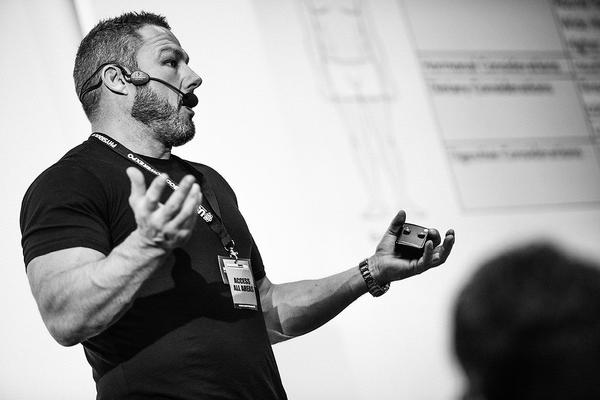
James BreeseFounder/CEOStrength Matters
James Breese
The age group of those using personal training is shifting. With the emergence of CrossFit, there’s now a ‘big group’ dynamic among the under-30s. Meanwhile the 30- to 55-year-old age group want group training on a smaller scale, between two and six people, and it’s the over-55s who want the one-to-one personal training, because they’re more prone to injury.
As a PT, you have to stay ahead of the curve by innovating. You stand out if you’re doing something that looks different from everybody else and gets great results. However, the best advice I can give to a new PT is to invest in customer service and basic business skills. Consumers expect great results and a fantastic experience now. If a PT doesn’t have the business acumen and a good ‘bedside manner’ with clients, they’re never going to succeed.
For every PT studio that opens, two are closing. I see great coaches going out of business all the time and they all say the same thing: they wish they’d known how to do things better. Ten per cent are doing really well, but 90 per cent are struggling and competing at the bottom.
Health club operators who employ PTs should be willing to invest in their education. The more the operator invests, the more the PT will respect you as an organisation and stay longer.
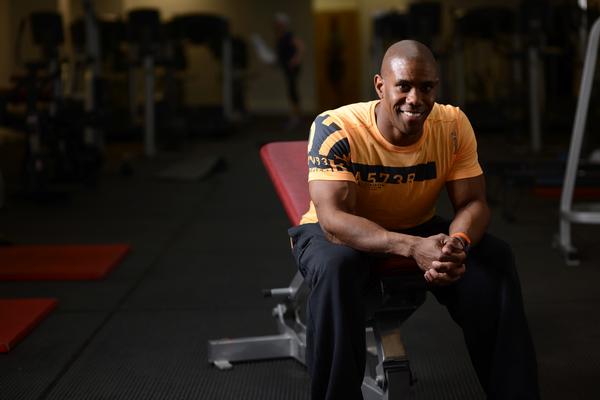
Learney says technology could replace less able PTs
The basic service offered by some PTs is horrendous: they aren’t punctual, they don’t focus on the client during sessions or pay attention to their technique… all the simple things that should be part of a basic service offering. Ultimately, it’s not about who’s the most skillful or knowledgeable – it’s the degree of service offering that defines one PT from another.
For those PTs who don’t deliver good service, fitness trackers could be a threat. Technology is never going to be able to look at someone biomechanically and assess them, so for many personal trainers it will simply complement what they do. However, it could possibly eradicate the poorer trainers out there.
I believe good PTs need to be respected more by health clubs and given consistent revenue. They attract people to gyms and improve retention.
Finally, I think the knowledge people can now get from the internet has expanded the industry and made it far more efficient.
Personal trainers can get very distracted by social media – all the fitness ‘gurus’ with millions of followers on Instagram and Twitter. But would these people be able to run a personal training client base effectively? Possibly not.
Personal training is a business built on trust and referrals, and while there are lots of new training options available now – online programmes, for example – I believe personal trainers are still winning, as a one-to-one service remains the best.
The best coaches have a reputation for seeing clients for a short period of time. I use my six-week fat loss programme, where I work with a client twice a week for six weeks and that’s it, unless they wish to continue. A small but vibrant and active client base is better than a large dormant one.
A notable trend outside of PT, but of significance to PTs, is group training – specifically CrossFit, which has had a big impact over the last three years. Rather than learning from one person, people are being influenced by a whole system.
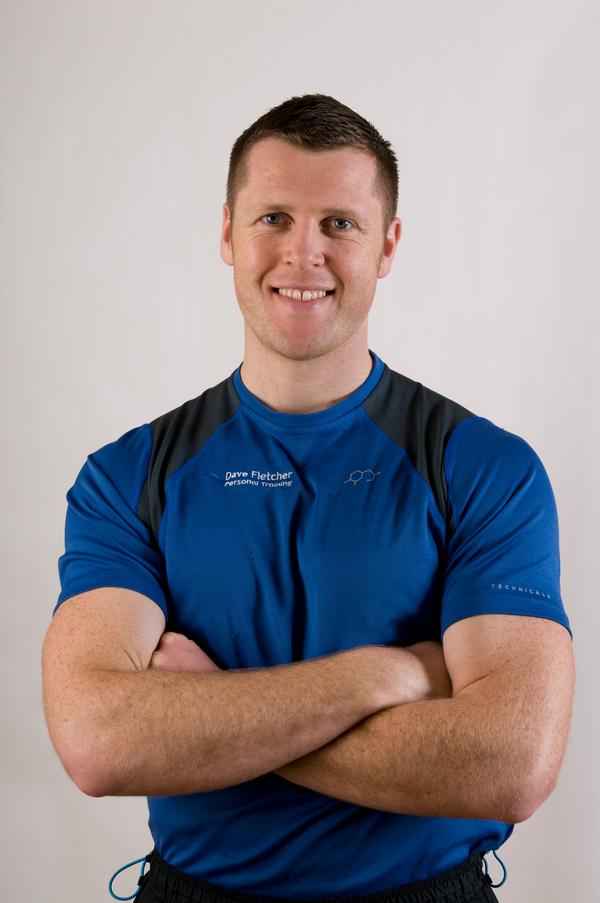
"CrossFit has had a big impact. Rather than learning from one person, people are being influenced by a whole system" - Dave Fletcher
I’m wary of people choosing to use social media to get fit. If so-called fitness gurus are setting unrealistic outcomes – promising people they’ll drop three dress sizes in a week or something along those lines – I’d absolutely steer clear. There are also too many personal trainers out there selling fad diets and products as a way to cash in, rather than to benefit someone’s health and wellbeing.
Trends come and go, but learning how to perform effective exercises safely lasts forever. We introduce new equipment as the times change, but the exercises I do with my clients should be as effective now as they were 20 years ago. I don’t advocate the use of technology in my classes or while training clients. However, I appreciate that certain apps and devices can be highly beneficial to people and are a great way of tracking progress and seeing results.
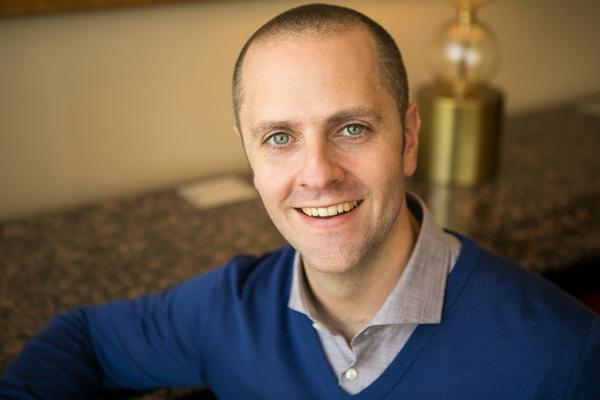
A bespoke, all-inclusive service is key to success, says Ord
All the information available on the internet is a double-edged sword. On the plus side, people are better educated about their health, while social media can be a really powerful tool to motivate people. But on the flipside, it can be confusing and not always based on sound information sources. Yet with all the available knowledge, the gap is widening between those getting fitter and those who aren’t.
Nevertheless, there are now more opportunities for PTs to carve their own niche and reach millions of people. You just have to be more committed than everyone else.
You also have to be careful, as consumer expectations increase, not to become a Jack of all trades and master of none. Personal training remains a luxury for many, but the industry is expanding and competition is growing; you have to be exceptional to stand out, and that means offering a really bespoke all-inclusive service.
Panatta brought together four of the most influential figures in bodybuilding history on the
stage of RiminiWellness 2026: Phil Heath, Lee Haney, Ronnie Coleman and Hany Rambod. [more...]
Active Blackpool is deploying Cornerstone Connect, a new digital interface allowing
disparate information from multiple systems to be aggregated into one dataset, to support
its focus on reducing health inequalities and improving healthy life expectancy. [more...]
+ More featured suppliers
COMPANY PROFILES
PSLT Ltd
PSLT Fitness Solutions manufacture, remanufacture and buy back commercial gym equipment. [more...]
As new technology, increasing competition and an endless supply of cheap online options flood the fitness market, can personal trainers survive and evolve to meet changing consumer expectations? What are the trends shaping PT today? Niamh Madigan asks the experts
By Niamh Madigan | Published in Health Club Management 2016 issue 5
Coleman says his sessions focus as much on the mental as the physical side of fitness
With the growth of the internet and social media, people are looking outside their area for more specialist coaches to achieve that extra 10 per cent. For example, I have clients in New Zealand who I will never meet in person, but I train with them using Skype. Clients don’t even need to leave their offices to do a session – it fits in with their schedule.
Personalisation is the big thing now, and a really good performance coach can bespoke a programme to a client’s needs. They know when exercise will fit in with their daily schedule and clients also get the feedback and praise of a coach.
I see technology as a great complement to what I do, as it gives me information on how hard my clients are working. I’d recommend the Garmin Forerunner 910 XT and the Fitbit Surge.
Looking to trends, I’ve completely dismissed suspension training and I don’t do any kettlebells, because people don’t use them very well. In my sessions I use two 15kg plates, one bench and a dumbbell set. That’s it.
I think health clubs should provide more specialist coaches to help people make more informed choices about food and their lifestyles. There’s also a need to focus on the mental side of things. In my sessions, people believe they’re doing 80 per cent physical and 20 per cent mental, but it’s the other way round: I spend a lot of my time re-training clients’ thought processes.
"I see technology as a great complement to what I do, as it gives me information on how hard my clients are working" - Rory Coleman
I do lots of Armageddon training, which is best described as personal training in a group fitness environment, using the principles of variable intensity interval training (VIIT). Small group training is definitely the future: clients can split the cost, plus it’s motivating and more fun.
When it comes to one-to-one personal training, clients want PTs to fix every facet of their life nowadays, with advice on fitness, diet and lifestyle. If you help them lose weight, you have to fix the cause as well, which takes a deeper level of understanding and experience.
I don’t think enough gym operators appreciate the value of PTs. Some take a big percentage of the PT’s rate – up to 50 per cent – so a trainer is forced to go out on their own. With that comes the responsibility of marketing and running their own business. Gym management must work more closely with PTs to help them run their business effectively.
Fitness is changing all the time with the arrival of new technology and science, and PTs have to keep updating their knowledge and investing in courses. They need to keep their social media up-to-date, find time to train themselves and manage clients. I know a lot of PTs who suffer from depression due to these pressures. In the next few years we’re going to hear a lot more about the truth behind fitness.
“Small group training is definitely the future” – Richard Callender
James BreeseFounder/CEOStrength Matters
James Breese
The age group of those using personal training is shifting. With the emergence of CrossFit, there’s now a ‘big group’ dynamic among the under-30s. Meanwhile the 30- to 55-year-old age group want group training on a smaller scale, between two and six people, and it’s the over-55s who want the one-to-one personal training, because they’re more prone to injury.
As a PT, you have to stay ahead of the curve by innovating. You stand out if you’re doing something that looks different from everybody else and gets great results. However, the best advice I can give to a new PT is to invest in customer service and basic business skills. Consumers expect great results and a fantastic experience now. If a PT doesn’t have the business acumen and a good ‘bedside manner’ with clients, they’re never going to succeed.
For every PT studio that opens, two are closing. I see great coaches going out of business all the time and they all say the same thing: they wish they’d known how to do things better. Ten per cent are doing really well, but 90 per cent are struggling and competing at the bottom.
Health club operators who employ PTs should be willing to invest in their education. The more the operator invests, the more the PT will respect you as an organisation and stay longer.
Learney says technology could replace less able PTs
The basic service offered by some PTs is horrendous: they aren’t punctual, they don’t focus on the client during sessions or pay attention to their technique… all the simple things that should be part of a basic service offering. Ultimately, it’s not about who’s the most skillful or knowledgeable – it’s the degree of service offering that defines one PT from another.
For those PTs who don’t deliver good service, fitness trackers could be a threat. Technology is never going to be able to look at someone biomechanically and assess them, so for many personal trainers it will simply complement what they do. However, it could possibly eradicate the poorer trainers out there.
I believe good PTs need to be respected more by health clubs and given consistent revenue. They attract people to gyms and improve retention.
Finally, I think the knowledge people can now get from the internet has expanded the industry and made it far more efficient.
Personal trainers can get very distracted by social media – all the fitness ‘gurus’ with millions of followers on Instagram and Twitter. But would these people be able to run a personal training client base effectively? Possibly not.
Personal training is a business built on trust and referrals, and while there are lots of new training options available now – online programmes, for example – I believe personal trainers are still winning, as a one-to-one service remains the best.
The best coaches have a reputation for seeing clients for a short period of time. I use my six-week fat loss programme, where I work with a client twice a week for six weeks and that’s it, unless they wish to continue. A small but vibrant and active client base is better than a large dormant one.
A notable trend outside of PT, but of significance to PTs, is group training – specifically CrossFit, which has had a big impact over the last three years. Rather than learning from one person, people are being influenced by a whole system.
"CrossFit has had a big impact. Rather than learning from one person, people are being influenced by a whole system" - Dave Fletcher
I’m wary of people choosing to use social media to get fit. If so-called fitness gurus are setting unrealistic outcomes – promising people they’ll drop three dress sizes in a week or something along those lines – I’d absolutely steer clear. There are also too many personal trainers out there selling fad diets and products as a way to cash in, rather than to benefit someone’s health and wellbeing.
Trends come and go, but learning how to perform effective exercises safely lasts forever. We introduce new equipment as the times change, but the exercises I do with my clients should be as effective now as they were 20 years ago. I don’t advocate the use of technology in my classes or while training clients. However, I appreciate that certain apps and devices can be highly beneficial to people and are a great way of tracking progress and seeing results.
A bespoke, all-inclusive service is key to success, says Ord
All the information available on the internet is a double-edged sword. On the plus side, people are better educated about their health, while social media can be a really powerful tool to motivate people. But on the flipside, it can be confusing and not always based on sound information sources. Yet with all the available knowledge, the gap is widening between those getting fitter and those who aren’t.
Nevertheless, there are now more opportunities for PTs to carve their own niche and reach millions of people. You just have to be more committed than everyone else.
You also have to be careful, as consumer expectations increase, not to become a Jack of all trades and master of none. Personal training remains a luxury for many, but the industry is expanding and competition is growing; you have to be exceptional to stand out, and that means offering a really bespoke all-inclusive service.
The UK's four Chief Medical Officers have published a refreshed edition of Physical activity
guidelines: UK Chief Medical Officers' report, updating the evidence that underpins the nation's
physical activity recommendations and placing greater emphasis on strength, balance, reducing
sedentary behaviour and, for the first time, supporting people taking weight loss medications.
Places Leisure has exchanged contracts to build and operate a flagship £60m water and leisure
destination on behalf of Basingstoke and Deane Borough Council.
The Republic of Ireland will become the latest market in PureGym’s expanding international
portfolio, with the first launch planned for Dublin in 2027.
Anytime Fitness opened more than one club a day in 2025 and is on track to maintain this rate
of growth this year, as parent company Purpose Brands targets further international expansion.
The £33.9 million Leighton Leisure and Community Centre has opened in Leighton Buzzard, UK,
creating a next-generation public leisure, health and wellbeing hub for the local community.
Walnuts Leisure Centre in Orpington, in the London Borough of Bromley, has reopened following
a £17m transformation designed to secure the long-term future of the public leisure asset and
reposition it as a community wellbeing hub.
The Gym Group, has announced that it's sustained positive trading momentum has continued
through the first half of 2026 and the company remains confident about the outlook.
Luxury boutique Pilates and wellness studio, X-Club, officially launches a
4,000sq ft flagship at
Marylebone on 16 July Built around X-Club’s four pillars of wellness – mind,
movement,
nutrition and therapy – the facility features two group exercise studi
Panatta brought together four of the most influential figures in bodybuilding history on the
stage of RiminiWellness 2026: Phil Heath, Lee Haney, Ronnie Coleman and Hany Rambod. [more...]
Active Blackpool is deploying Cornerstone Connect, a new digital interface allowing
disparate information from multiple systems to be aggregated into one dataset, to support
its focus on reducing health inequalities and improving healthy life expectancy. [more...]
+ More featured suppliers
COMPANY PROFILES
PSLT Ltd PSLT Fitness Solutions manufacture, remanufacture and buy back commercial gym equipment. [more...]