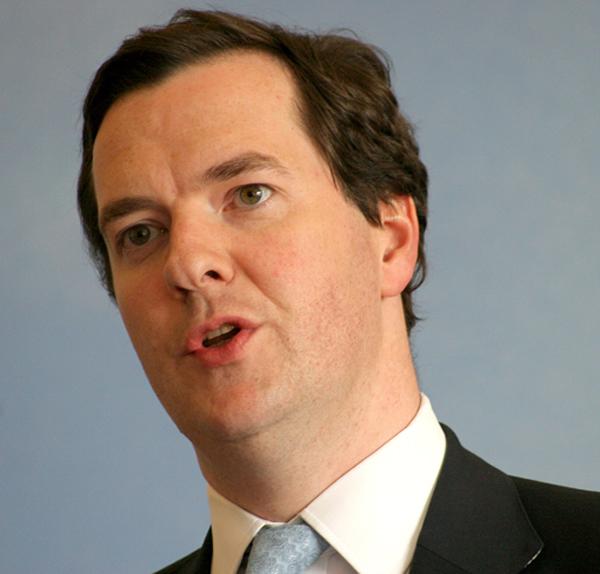
Osborne first announced the scheme as part of his Autumn Statement
Is the government finally wising up to the power of sport? Amid foreign policy challenges in the Middle East and the launch of a transformational new education strategy – not to mention the fast-approaching EU referendum – it’s hard to know where sport sits in terms of priority in 10 Downing Street.
However, one thing is clear – the government now appears to recognise the importance of physical activity in the context of wider priorities, such as healthcare, a more inclusive society and – during a time of austerity – the economy.
Since the government came to power last May it has launched a comprehensive blueprint for the sport sector in its 10-year plan, Sporting Future: A New Strategy for an Active Nation. While the industry generally welcomed the document’s vision and objectives, lots of the detail – particularly in terms of measurement – still needs to be thrashed out.
However, before sports minister Tracey Crouch delivered the strategy last December, her Conservative colleague, chancellor George Osborne, used his Autumn Statement in November to announce that the Treasury would launch a consultation on whether grassroots sports clubs, which are company-owned and generating profit, should become exempt from paying corporation tax.
That consultation paper was published during the back end of last month and drew cautious acclaim for potentially giving grassroots sport the support it needs during difficult economic times.
Emma Boggis, chief executive of the Sport and Recreation Alliance, says the consultation represents a “very welcome financial boost to grassroots sport and the 150,000 sports clubs up and down the country”.
“The new scheme will help grassroots sport to flourish by simplifying the treatment of national governing bodies’ grassroots expenditure and supporting clubs to lever in additional investment from private companies,” she adds.
The chancellor must be reasonably confident that whatever the Treasury loses in corporation tax, it will make up in tax receipts from spending by clubs and private sector funders on sports equipment and potentially new facilities. Osborne’s colleagues at the DCMS will also have one eye on the potential knock on effect on participation rates, as well as societal and health targets set out in Sporting Future.
Rob Wilson, principal lecturer in Sports Management at Sheffield Hallam University, suggests that the tax relief would stimulate private sector investment in social enterprises. He pointed to De Hood – a community boxing group set up in a deprived area of Sheffield – which has helped to lower crime and levels of obesity as the type of sporting organisation which could benefit.
Wilson added that money saved could be spent by clubs on hiring facilities for longer periods, potentially increasing classes and reaching different age groups and demographics, thus giving a boost to participation numbers.
“I hope this will lead to more grassroots clubs popping up, particularly for minority sports. This may be the catalyst they need,” said Wilson.
Stimulating private sector investment is a key pillar of the consultation, particularly in terms of facilities provision, volunteer training and support and coaching. The document’s introduction acknowledges the “need to reduce the over-reliance of some organisations on the public sector and move to a mixed funding model” in times of “continued pressure on public finances”.
“In the time of pressure on the government finances, it is crucial that government, the private sector, and the sport industry work together to consider new ways of ensuring the long-term financial sustainability of the sector,” said David Gauke, financial secretary to the Treasury overseeing the consultation.
That said, exchequer and National Lottery funding for Sport England is guaranteed at £1.4bn until the end of the current parliament in 2020.
While cautiously welcoming the move, Sport England and other NGBs are keeping their powder dry until the consultation period closes on 15 June 2016. Following that, the government will comb through the responses and make a formal response during the 2016 Autumn Statement – a response which may go a long way towards demonstrating its appreciation of the sport and physical activity sector.
Objectives of the corporation tax reform
• Increase percentage of the population taking part in sport and physical activity
• Increase the amount of non-public investment into sport bodies which are in receipt of public investment
• Simplify rules and reduce administrative costs for grassroots sports providers
• Delegate responsibility for funding and projects to the most appropriate and effective level
Money saved from tax cut could go towards new facilites and equipment / shutterstock / Fotokostic
SRA chief executive Emma Boggis said the scheme will provide a financial boost for sports clubs
CoverMe, the global leader in fitness workforce management, today launches CoverMe PT, an
on-demand personal training platform that connects the right personal trainer to the right
client in under 10 seconds. [more...]
Elevate is set to celebrate its 10th anniversary in style this June, with organisers
confirming the event’s largest-ever drinks reception as registrations continue to run more
than 10% ahead of last year. [more...]
Osborne first announced the scheme as part of his Autumn Statement
Is the government finally wising up to the power of sport? Amid foreign policy challenges in the Middle East and the launch of a transformational new education strategy – not to mention the fast-approaching EU referendum – it’s hard to know where sport sits in terms of priority in 10 Downing Street.
However, one thing is clear – the government now appears to recognise the importance of physical activity in the context of wider priorities, such as healthcare, a more inclusive society and – during a time of austerity – the economy.
Since the government came to power last May it has launched a comprehensive blueprint for the sport sector in its 10-year plan, Sporting Future: A New Strategy for an Active Nation. While the industry generally welcomed the document’s vision and objectives, lots of the detail – particularly in terms of measurement – still needs to be thrashed out.
However, before sports minister Tracey Crouch delivered the strategy last December, her Conservative colleague, chancellor George Osborne, used his Autumn Statement in November to announce that the Treasury would launch a consultation on whether grassroots sports clubs, which are company-owned and generating profit, should become exempt from paying corporation tax.
That consultation paper was published during the back end of last month and drew cautious acclaim for potentially giving grassroots sport the support it needs during difficult economic times.
Emma Boggis, chief executive of the Sport and Recreation Alliance, says the consultation represents a “very welcome financial boost to grassroots sport and the 150,000 sports clubs up and down the country”.
“The new scheme will help grassroots sport to flourish by simplifying the treatment of national governing bodies’ grassroots expenditure and supporting clubs to lever in additional investment from private companies,” she adds.
The chancellor must be reasonably confident that whatever the Treasury loses in corporation tax, it will make up in tax receipts from spending by clubs and private sector funders on sports equipment and potentially new facilities. Osborne’s colleagues at the DCMS will also have one eye on the potential knock on effect on participation rates, as well as societal and health targets set out in Sporting Future.
Rob Wilson, principal lecturer in Sports Management at Sheffield Hallam University, suggests that the tax relief would stimulate private sector investment in social enterprises. He pointed to De Hood – a community boxing group set up in a deprived area of Sheffield – which has helped to lower crime and levels of obesity as the type of sporting organisation which could benefit.
Wilson added that money saved could be spent by clubs on hiring facilities for longer periods, potentially increasing classes and reaching different age groups and demographics, thus giving a boost to participation numbers.
“I hope this will lead to more grassroots clubs popping up, particularly for minority sports. This may be the catalyst they need,” said Wilson.
Stimulating private sector investment is a key pillar of the consultation, particularly in terms of facilities provision, volunteer training and support and coaching. The document’s introduction acknowledges the “need to reduce the over-reliance of some organisations on the public sector and move to a mixed funding model” in times of “continued pressure on public finances”.
“In the time of pressure on the government finances, it is crucial that government, the private sector, and the sport industry work together to consider new ways of ensuring the long-term financial sustainability of the sector,” said David Gauke, financial secretary to the Treasury overseeing the consultation.
That said, exchequer and National Lottery funding for Sport England is guaranteed at £1.4bn until the end of the current parliament in 2020.
While cautiously welcoming the move, Sport England and other NGBs are keeping their powder dry until the consultation period closes on 15 June 2016. Following that, the government will comb through the responses and make a formal response during the 2016 Autumn Statement – a response which may go a long way towards demonstrating its appreciation of the sport and physical activity sector.
Objectives of the corporation tax reform
• Increase percentage of the population taking part in sport and physical activity
• Increase the amount of non-public investment into sport bodies which are in receipt of public investment
• Simplify rules and reduce administrative costs for grassroots sports providers
• Delegate responsibility for funding and projects to the most appropriate and effective level
Money saved from tax cut could go towards new facilites and equipment / shutterstock / Fotokostic
SRA chief executive Emma Boggis said the scheme will provide a financial boost for sports clubs
Premium London health club, KX Chelsea, will imminently unveil its most significant
redevelopment since its launch in 2002 to create an integrated wellness model combining
training, recovery and relaxation.
Researchers in the US have identified an antibody which could greatly reduce the loss of lean
muscle mass in people who are taking weight-loss medications.
Crunch Fitness has announced the launch of Crunch Reform Pilates – its own reformer concept
designed to bring this fast growing, but rather expensive, modality into the mainstream.
The 20th State of the Industry Report reveals a resilient, expanding and competitive
sector, the
importance of differentiation and the ongoing challenge of tackling inequalities.
Nuffield Health has told HCM that it takes its responsibilities towards its colleagues seriously
and is committed to meeting all legal obligations after news of a tribunal has made national
headlines.
Technogym has announced the launch of the Run X World Treadmill Championship, the first
world championship for running on connected treadmills over five kilometres.
CoverMe, the global leader in fitness workforce management, today launches CoverMe PT, an
on-demand personal training platform that connects the right personal trainer to the right
client in under 10 seconds. [more...]
Elevate is set to celebrate its 10th anniversary in style this June, with organisers
confirming the event’s largest-ever drinks reception as registrations continue to run more
than 10% ahead of last year. [more...]