You’re about to conclude your term as chair of IHRSA’s board of directors. What can you tell us about the past year? The year has gone very fast, but it’s provided a tremendous opportunity for me to learn, grow and connect with others to better understand the needs of our industry and the people we serve. My position, as the regional director of community services for EXOS/MediFit, is certainly enlightening, but the IHRSA role has broadened my global perspective.
Talented, passionate people are spreading our industry’s benefits across the globe, but each market around the world is unique, with its own nuances, challenges and opportunities. Some cultures employ a more conservative, traditional way of thinking while others, anxious to be first, eagerly embrace innovation and change. For example, the boutique model is exploding in Europe.
No matter the location, culture or business models involved, industry leaders on every continent are predicting growth. However, each market does so at a pace and with a rhythm all of its own.
What, in your opinion, is the most dramatic industry change that’s taken place during your tenure? I can think of several, including the rapid growth of the studio, boutique and niche models, and the continued proliferation of low-cost fitness facilities.
The emergence of offerings that are positioned as ‘premium low-cost’ warrants some serious study to determine the long-term opportunity and market impact they may present.
In addition, the health and fitness market’s obvious appetite for new technology suggests traditional club models are at risk if they fail to study what works and adapt to address consumers’ changing needs and expectations.
And what hasn’t changed in that time – something you’d like to have seen more progress on? Just one? Well, as an industry, we still haven’t moved the needle on obesity or physical inactivity – both global issues. I’d implore each IHRSA member to look in the mirror and ask themselves: Why? What haven’t we tried? What could we do better? What could we do together? I’d further urge them to consider the impact it would have – on global health, as well as our industry’s bottom line – if we could bring even 1 per cent of the world’s inactive population into our clubs.
Do you see technology as a threat or an opportunity? Disruption is hard evidence that a consumer need or desire is being met by a process, product or service – a solution – that wasn’t generally available before. In the case of our industry, it has a lot to do with the access, information and convenience afforded by virtual connectivity.
The key question, though, is why are consumers so interested in virtual access, data, tracking, cloud-community participation and so on? What are they craving? And beyond that, how can clubs satisfy this need via their membership experience in a positive and productive way? We should also ask what experiences clubs can provide that can never be replaced or replicated by technology alone.
Find the answers to these questions and you’ll create a unique and engaging experience – one that will have a lasting impact – for your members.
EXOS/MediFit is a global fitness and wellness management company that works in spheres like corporate wellness. What makes a successful corporate programme? Let’s be honest: lots of corporate fitness and wellness strategies haven’t enjoyed long-term success. Today, the data is showing that it’s not just one thing that makes a difference. Rather, success requires a layered, multi-faceted approach – one that’s supported by a culture with aligned values, and one that produces measurable and sustainable results.
We’ve also discovered that reward systems that are balanced between extrinsic and intrinsic motivation, and buttressed by environmental and social support, produce better outcomes than ones that rely solely on financial incentives.
It’s also important to offer the programming and physical environment that provide the motivation, inspiration and convenience for employees to work out at work, as well as helping them remain connected to achieving their goals even when they’re not at work.
What advice would you offer club operators wanting to tackle the corporate sector? Keep in mind that what works in a traditional health club setting may not translate seamlessly to a corporate environment. You need to do your homework to determine if you’re equipped to produce the value and outcomes that are expected in an on-site facility, and in a way that’s scalable.
Also, ask yourself if pursuing corporate fitness opportunities will really enhance or detract from your core business – and be honest in your response.
Managing clubs requires you to focus on balancing a number of critical factors, including the member experience, the team members’ roles in providing it, the sustainability of the experience, and the club’s unique relationship with the community.
As a management company, though, we function as a partner. We focus on each of our partners’ ‘care-abouts’, and on providing them with unique value, solutions and efficiencies. Sometimes this resembles a more traditional club model, but sometimes we deliver value via programmes or technology. We also focus on the scalability of our solutions and resources in order to produce a broader, sustainable impact.
Finally, what advice would you like to offer the next chair of IHRSA? My advice would be to continue to challenge the thinking of the leaders of our industry and of the association. Think bigger. Think differently. And, when we know better... do better!
A longer version of this article appears in the April 2016 edition of IHRSA’s CBI magazine.
Introducing Molly
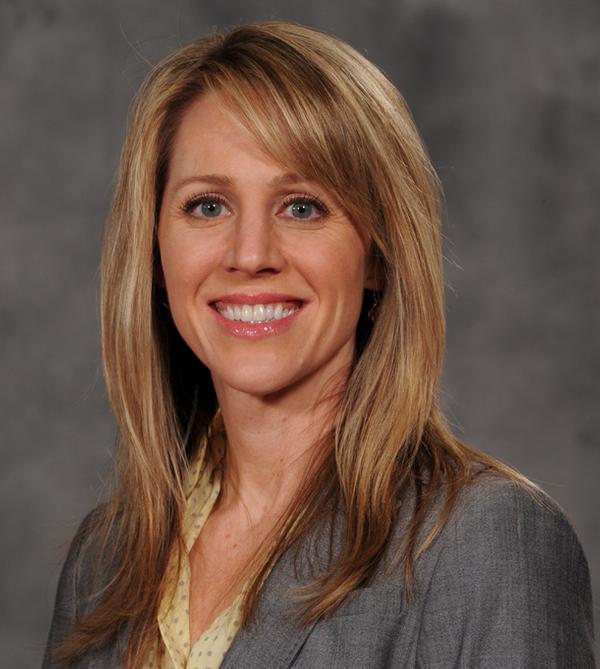
IHRSA chair Molly Kemmer
Molly Kemmer entered the fitness industry as a group exercise instructor at the age of 18. Next came a personal training certification, and a master’s degree in exercise physiology and health promotion from Illinois State University.
After concluding her formal education, she became assistant manager of a small club, and subsequently assumed positions of increasing responsibility at the Greenwood Athletic and Tennis Club, Pura Vida Fitness and Spa, and the Lakeshore Athletic Club-Flatiron – all located near Denver, US.
In 2012, Kemmer joined global fitness and wellness management firm EXOS/MediFit, serving as general manager of the Anschutz Health and Wellness Center at the University of Colorado; in 2014, she became EXOS/MediFit’s regional director of community services.
She joined IHRSA’s board of directors in 2012 and in 2015 was elected chair. Her one-year term ends in June 2016.
Clubs must understand why virtual fitness
is growing, and what people are craving / shutterstock
Active Blackpool is deploying Cornerstone Connect, a new digital interface allowing
disparate information from multiple systems to be aggregated into one dataset, to support
its focus on reducing health inequalities and improving healthy life expectancy. [more...]
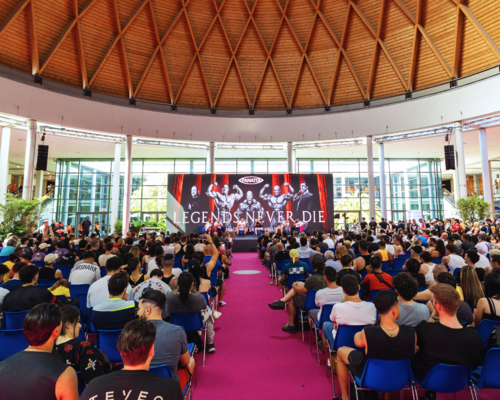
Panatta brought together four of the most influential figures in bodybuilding history on the
stage of RiminiWellness 2026: Phil Heath, Lee Haney, Ronnie Coleman and Hany Rambod. [more...]
+ More featured suppliers
COMPANY PROFILES
Precor
Precor promises precision-quality products with steadfast reliability that are inspired by exerciser [more...]
Orbit4
With Orbit4, you’ll always have full visibility
of your equipment inventory, the true
market value [more...]
You’re about to conclude your term as chair of IHRSA’s board of directors. What can you tell us about the past year? The year has gone very fast, but it’s provided a tremendous opportunity for me to learn, grow and connect with others to better understand the needs of our industry and the people we serve. My position, as the regional director of community services for EXOS/MediFit, is certainly enlightening, but the IHRSA role has broadened my global perspective.
Talented, passionate people are spreading our industry’s benefits across the globe, but each market around the world is unique, with its own nuances, challenges and opportunities. Some cultures employ a more conservative, traditional way of thinking while others, anxious to be first, eagerly embrace innovation and change. For example, the boutique model is exploding in Europe.
No matter the location, culture or business models involved, industry leaders on every continent are predicting growth. However, each market does so at a pace and with a rhythm all of its own.
What, in your opinion, is the most dramatic industry change that’s taken place during your tenure? I can think of several, including the rapid growth of the studio, boutique and niche models, and the continued proliferation of low-cost fitness facilities.
The emergence of offerings that are positioned as ‘premium low-cost’ warrants some serious study to determine the long-term opportunity and market impact they may present.
In addition, the health and fitness market’s obvious appetite for new technology suggests traditional club models are at risk if they fail to study what works and adapt to address consumers’ changing needs and expectations.
And what hasn’t changed in that time – something you’d like to have seen more progress on? Just one? Well, as an industry, we still haven’t moved the needle on obesity or physical inactivity – both global issues. I’d implore each IHRSA member to look in the mirror and ask themselves: Why? What haven’t we tried? What could we do better? What could we do together? I’d further urge them to consider the impact it would have – on global health, as well as our industry’s bottom line – if we could bring even 1 per cent of the world’s inactive population into our clubs.
Do you see technology as a threat or an opportunity? Disruption is hard evidence that a consumer need or desire is being met by a process, product or service – a solution – that wasn’t generally available before. In the case of our industry, it has a lot to do with the access, information and convenience afforded by virtual connectivity.
The key question, though, is why are consumers so interested in virtual access, data, tracking, cloud-community participation and so on? What are they craving? And beyond that, how can clubs satisfy this need via their membership experience in a positive and productive way? We should also ask what experiences clubs can provide that can never be replaced or replicated by technology alone.
Find the answers to these questions and you’ll create a unique and engaging experience – one that will have a lasting impact – for your members.
EXOS/MediFit is a global fitness and wellness management company that works in spheres like corporate wellness. What makes a successful corporate programme? Let’s be honest: lots of corporate fitness and wellness strategies haven’t enjoyed long-term success. Today, the data is showing that it’s not just one thing that makes a difference. Rather, success requires a layered, multi-faceted approach – one that’s supported by a culture with aligned values, and one that produces measurable and sustainable results.
We’ve also discovered that reward systems that are balanced between extrinsic and intrinsic motivation, and buttressed by environmental and social support, produce better outcomes than ones that rely solely on financial incentives.
It’s also important to offer the programming and physical environment that provide the motivation, inspiration and convenience for employees to work out at work, as well as helping them remain connected to achieving their goals even when they’re not at work.
What advice would you offer club operators wanting to tackle the corporate sector? Keep in mind that what works in a traditional health club setting may not translate seamlessly to a corporate environment. You need to do your homework to determine if you’re equipped to produce the value and outcomes that are expected in an on-site facility, and in a way that’s scalable.
Also, ask yourself if pursuing corporate fitness opportunities will really enhance or detract from your core business – and be honest in your response.
Managing clubs requires you to focus on balancing a number of critical factors, including the member experience, the team members’ roles in providing it, the sustainability of the experience, and the club’s unique relationship with the community.
As a management company, though, we function as a partner. We focus on each of our partners’ ‘care-abouts’, and on providing them with unique value, solutions and efficiencies. Sometimes this resembles a more traditional club model, but sometimes we deliver value via programmes or technology. We also focus on the scalability of our solutions and resources in order to produce a broader, sustainable impact.
Finally, what advice would you like to offer the next chair of IHRSA? My advice would be to continue to challenge the thinking of the leaders of our industry and of the association. Think bigger. Think differently. And, when we know better... do better!
A longer version of this article appears in the April 2016 edition of IHRSA’s CBI magazine.
Introducing Molly
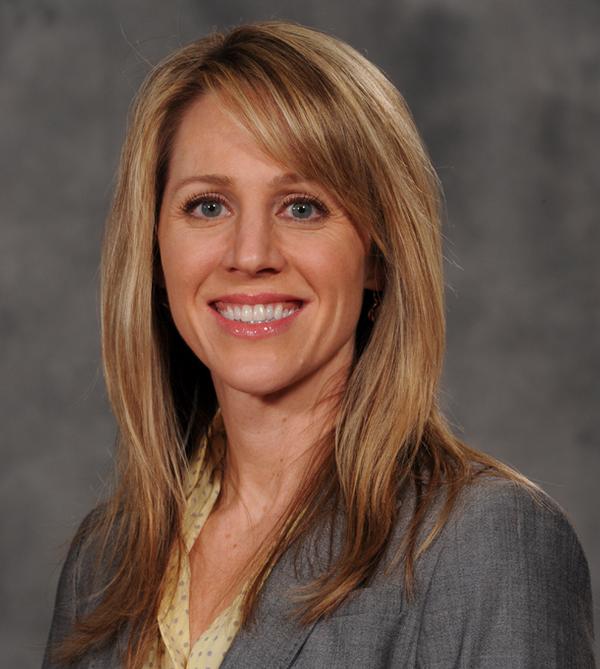
IHRSA chair Molly Kemmer
Molly Kemmer entered the fitness industry as a group exercise instructor at the age of 18. Next came a personal training certification, and a master’s degree in exercise physiology and health promotion from Illinois State University.
After concluding her formal education, she became assistant manager of a small club, and subsequently assumed positions of increasing responsibility at the Greenwood Athletic and Tennis Club, Pura Vida Fitness and Spa, and the Lakeshore Athletic Club-Flatiron – all located near Denver, US.
In 2012, Kemmer joined global fitness and wellness management firm EXOS/MediFit, serving as general manager of the Anschutz Health and Wellness Center at the University of Colorado; in 2014, she became EXOS/MediFit’s regional director of community services.
She joined IHRSA’s board of directors in 2012 and in 2015 was elected chair. Her one-year term ends in June 2016.
Clubs must understand why virtual fitness
is growing, and what people are craving / shutterstock
The UK's four Chief Medical Officers have published a refreshed edition of Physical activity
guidelines: UK Chief Medical Officers' report, updating the evidence that underpins the nation's
physical activity recommendations and placing greater emphasis on strength, balance, reducing
sedentary behaviour and, for the first time, supporting people taking weight loss medications.
Places Leisure has exchanged contracts to build and operate a flagship £60m water and leisure
destination on behalf of Basingstoke and Deane Borough Council.
The Republic of Ireland will become the latest market in PureGym’s expanding international
portfolio, with the first launch planned for Dublin in 2027.
Anytime Fitness opened more than one club a day in 2025 and is on track to maintain this rate
of growth this year, as parent company Purpose Brands targets further international expansion.
The £33.9 million Leighton Leisure and Community Centre has opened in Leighton Buzzard, UK,
creating a next-generation public leisure, health and wellbeing hub for the local community.
Walnuts Leisure Centre in Orpington, in the London Borough of Bromley, has reopened following
a £17m transformation designed to secure the long-term future of the public leisure asset and
reposition it as a community wellbeing hub.
The Gym Group, has announced that it's sustained positive trading momentum has continued
through the first half of 2026 and the company remains confident about the outlook.
Active Blackpool is deploying Cornerstone Connect, a new digital interface allowing
disparate information from multiple systems to be aggregated into one dataset, to support
its focus on reducing health inequalities and improving healthy life expectancy. [more...]
Panatta brought together four of the most influential figures in bodybuilding history on the
stage of RiminiWellness 2026: Phil Heath, Lee Haney, Ronnie Coleman and Hany Rambod. [more...]
+ More featured suppliers
COMPANY PROFILES
Precor Precor promises precision-quality products with steadfast reliability that are inspired by exerciser [more...]