Open platforms, personalised programmes and boutiques within clubs are just some of the trends the experts are identifying for 2016. Kath Hudson reports
By Kath Hudson | Published in Health Club Management 2016 issue 4
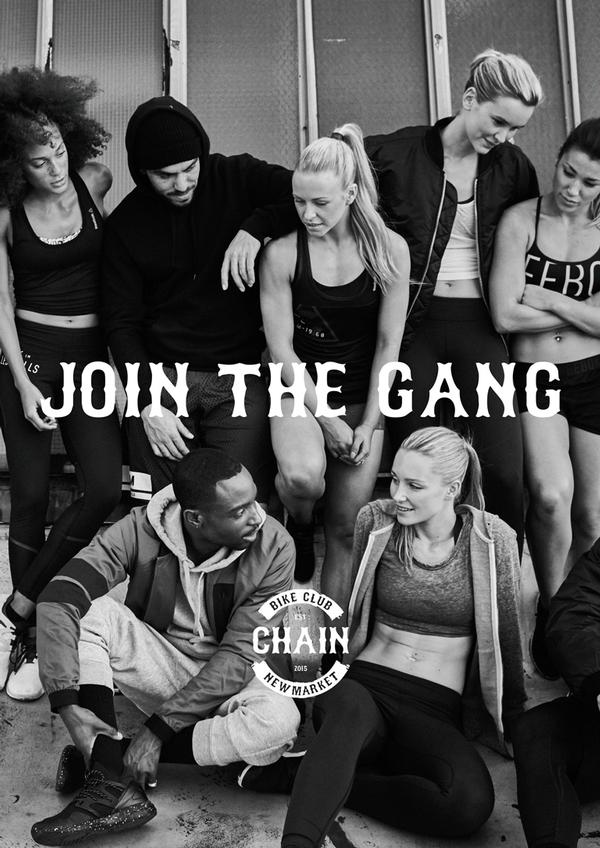
Les Mills’ in-club boutique cycle studio, Chain, targets Millennials with cool imagery
Philipp Roesch-SchlandererCEOeGym
Philipp Roesch-Schlanderer
Gyms need to meet the consumer demand for personalisation and connected fitness. The irony of the present bricks and mortar health club business is that the cost of fitness is decreasing, while the value of fitness and health to the consumer is increasing.
In the short term, I think commoditisation and differentiation will continue to play out, but in the medium term, digital products will transform all of the fitness market, both in and out of the club. This is why it’s so important for suppliers to connect to all parts of the ecosystem. Unconnected and closed systems will wither away.
Going forward, we will move from just having data, to having data and using it. Gyms will be fully digitised and coaches (or automated knowledge workers, as McKinsey calls them) will know everything about their members and be able to optimise their training and diet, using a holistic approach that adopts the latest electronic, software-guided fitness equipment.
Sophisticated CRM software will know about members’ habits both inside and outside of the club, and even how hard they should be training.
The true driving force that will change the shape of the fitness industry will be software – as it is in most industries. Software will play a increasingly big role, and hardware that can’t be integrated into modern software platforms will disappear from the gym altogether.
I certainly have no doubt that software developments in the fitness sector will enable entirely new business models, which is a solution on which eGym is currently working.
"It’s important for suppliers to connect to all parts of the ecosystem. Unconnected and closed systems will wither away" - Philipp Roesch-Schlanderer
Hardware must integrate into modern software platforms, says Roesch-Schlanderer
Phillip MillsCEOLes Mills
Phillip Mills
Now is the time for the industry to innovate and better cater for the Millennial market. If health and fitness facilities don’t take action, as our 2008 Future of Fitness white paper suggests, then they risk a steady demise.
The dominance of the Millennial market is growing – they already make up half of regular exercisers doing gym-type activities – and these savvy exercisers are no longer the compliant consumers we once catered for. Millennials know what they want and they’ll make sure they get it.
With this in mind, it’s highly likely that in the foreseeable future, the popular modes of achieving fitness may become almost unrecognisable.
The market for boutique facilities is significant and growing: last year nearly twice as many exercisers opted for a boutique gym experience than in 2014. More than 40 per cent of the 54 million members of health and fitness facilities in the US now use fitness boutiques.
And boutique offerings aren’t limited to standalone studios. In fact, the addition of boutique solutions within traditional multi-purpose facilities could be the key to long-term success.
This is something the retail industry has done well: during the 1980s, boutique fashion stores began to pop up and the popularity of department stores began to plummet. In recent years, many department stores have driven a renaissance by integrating in-store boutique offerings.
A number of forward-thinking multi-purpose fitness facilities are now taking this same approach. Whether it’s creating high-end, technology-driven cycle studios or blurring the lines between exercise and entertainment, they are re-engineering their overall value proposition, turning up the technology and disrupting the status quo. In doing so, they are better satisfying the demands of Millennials.
"The addition of boutique solutions within traditional multi-purpose facilities could be the key to long-term success" - Phillip Mills
Les Mills’ in-club boutique cycle studio, Chain, targets Millennials with cool imagery
Jon JohnstonMDMatrix Fitness UK
Jon Johnston
Digitisation is a key theme. It probably won’t and ideally shouldn’t be used as a substitute for the human touch, but where there’s a simple, repeatable task that doesn’t require much thought or creativity, digitisation should be employed to support individuals and help them achieve their goals.
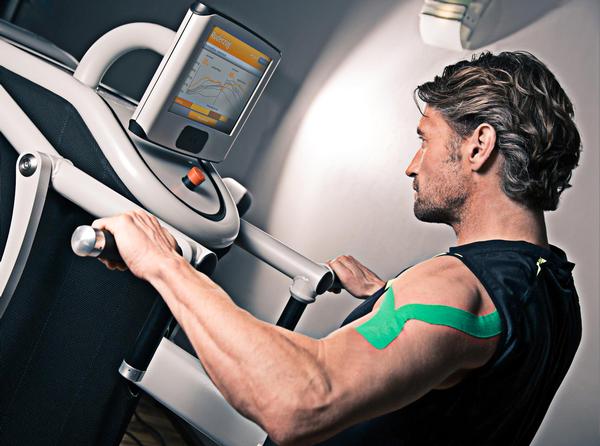
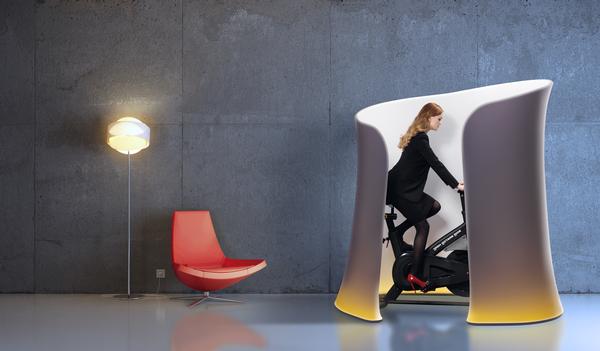
Matrix is currently trialling the High Octane Ride, which combines digitisation, cycling and HIIT into one package. When you log on it gives instructions, and it helps you to visualise an immersive scenario – for example, Neanderthal man sauntering across a plain, then facing a threat and sprinting like crazy. It tells you when to breathe, your power output and draws the power curve of your sprint. It also provides a very connected digital experience: you get an email afterwards and it really makes you feel part of a connected training system.
This is a clever use of technology and sports science to deliver a short, intense workout. Blue chip corporates like Barclays and PwC are trialling this technology in pods in their offices and getting a really good uptake, especially from employees who wouldn’t normally exercise. It’s appealing because you don’t need to get changed, and the experience takes just nine minutes.
This is part of a wider trend towards our industry re-packaging athletic performance training techniques: Matrix is launching the S-Drive performance treadmill, Technogym has launched the SkillMill, and operators are installing athletic performance training zones. Much of the industry’s current strength techniques emerged in the 1970s from adapting body-building ideas, but now athletic performance and sports science is proving to be the way forward: the way pro-athletes train is starting to filter into the rest of the industry, which if done well will be a good thing.
"The way pro-athletes train is starting to filter into the rest of the industry, which if done well will be a good thing" - Jon Johnston
The High Octane Ride takes nine minutes – no need to even get changed
Rob BarkerPresidentPrecor
Rob Barker
2016 looks set to be another exciting year for the fitness industry. Clubs of all price points are becoming more innovative with programme offerings in order to differentiate themselves.
Ray Algar’s Health Club Industry Mid-Market Report shows the growing prominence of the mid-market club. These clubs are investing in small group training and highly branded concepts to differentiate themselves from both the low-cost and boutique clubs, and this trend is fuelling growth in group functional training, group cycling, hybrid studios (combined cardio and functional classes) and networked fitness.
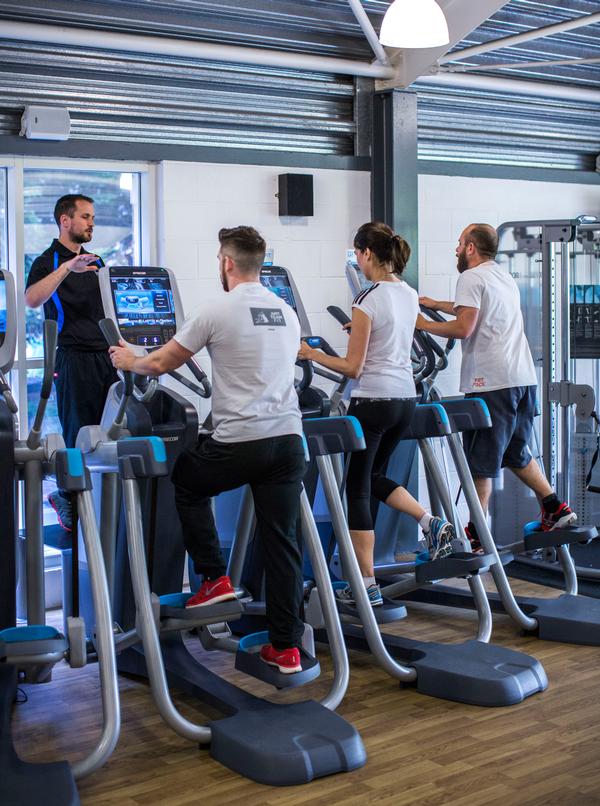
Functional training gives members the ability to vary their training modalities and enables clubs to add more value through their staff, while also increasing personal training revenue. Small group training is also coming to cardio areas on gym floors, with classes on elliptical, treadmills and cross-trainers like Precor’s AMT.
Members are increasingly asking for a more personalised experience, and in 2016 I expect more clubs to invest in networked fitness solutions, which work on cardio equipment and smartphones via an app. The in-club experience will also feature more personalised media to help entertain members, and programming to help them achieve their goals.
Small group training is now coming to the cardio floor
Merrill RichmondVP of marketingCore Health & Fitness:
Merrill Richmond
Technology and community are two exciting trends. The health and fitness space is no longer limited to just one area: there’s now an overlap between the home, leisure time and the health and fitness club.
After listening to feedback from operators, Core Health & Fitness is introducing new cardio equipment that incorporates a console with a flexible, open platform. This allows consumers to aggregate all their data, both in and out of the club, from our equipment as well as from apps like Strava and MapMyRun.
Obstacle racing – 5k and 10k races with added elements such as climbing ropes and jumping fires – is another fast-growing trend around the world and we’re very excited to tap into this through our partnership with obstacle race organiser Spartan Race, which is running events in the UK this year.
In collaboration with Spartan Race, and using its branding, we’ve created workouts on our Stepmill. If members don’t complete an obstacle in the allocated time, they have to do burpees, as they would in a real competition. This is a very vocal community on social media and we think it will create a buzz.
Obstacle racing is a fast-growing trend that clubs should tap into
Dave WrightCEOMYZONE
Dave Wright
As a wearable technology company built entirely for the health and fitness sector, it’s fantastic that the number one trend for 2016 is reported as being wearable technology. It has moved beyond the innovators and early adopters to the vast majority of both operators and consumers seeking a digital health solution.
One issue with wearable technology, however, is that 99 per cent of it isn’t fit for purpose. Wrist-based trackers and accelerometers serve no purpose in the fitness industry due to inaccurate readings, potentially providing unsafe training advice for customers.
Going forward, the main threat to the sector is from consumer brands trying to encroach into the fitness industry space, providing coaching that will take customers away from clubs and make the operator redundant. In response, the industry needs to embrace members’ data within its own ecosystem.
Despite this, the future looks exciting and technology can bring new audiences into our clubs. In the past, the feeders to our industry have been the likes of WeightWatchers and Slimming World – now it will be those who have an activity tracker as a first step to being active.
"In the past, the feeders to our industry have been the likes of WeightWatchers. Now activity trackers will be the first step towards becoming more active" - Dave Wright
Active Blackpool is deploying Cornerstone Connect, a new digital interface allowing
disparate information from multiple systems to be aggregated into one dataset, to support
its focus on reducing health inequalities and improving healthy life expectancy. [more...]
Panatta brought together four of the most influential figures in bodybuilding history on the
stage of RiminiWellness 2026: Phil Heath, Lee Haney, Ronnie Coleman and Hany Rambod. [more...]
Open platforms, personalised programmes and boutiques within clubs are just some of the trends the experts are identifying for 2016. Kath Hudson reports
By Kath Hudson | Published in Health Club Management 2016 issue 4
Les Mills’ in-club boutique cycle studio, Chain, targets Millennials with cool imagery
Philipp Roesch-SchlandererCEOeGym
Philipp Roesch-Schlanderer
Gyms need to meet the consumer demand for personalisation and connected fitness. The irony of the present bricks and mortar health club business is that the cost of fitness is decreasing, while the value of fitness and health to the consumer is increasing.
In the short term, I think commoditisation and differentiation will continue to play out, but in the medium term, digital products will transform all of the fitness market, both in and out of the club. This is why it’s so important for suppliers to connect to all parts of the ecosystem. Unconnected and closed systems will wither away.
Going forward, we will move from just having data, to having data and using it. Gyms will be fully digitised and coaches (or automated knowledge workers, as McKinsey calls them) will know everything about their members and be able to optimise their training and diet, using a holistic approach that adopts the latest electronic, software-guided fitness equipment.
Sophisticated CRM software will know about members’ habits both inside and outside of the club, and even how hard they should be training.
The true driving force that will change the shape of the fitness industry will be software – as it is in most industries. Software will play a increasingly big role, and hardware that can’t be integrated into modern software platforms will disappear from the gym altogether.
I certainly have no doubt that software developments in the fitness sector will enable entirely new business models, which is a solution on which eGym is currently working.
"It’s important for suppliers to connect to all parts of the ecosystem. Unconnected and closed systems will wither away" - Philipp Roesch-Schlanderer
Hardware must integrate into modern software platforms, says Roesch-Schlanderer
Phillip MillsCEOLes Mills
Phillip Mills
Now is the time for the industry to innovate and better cater for the Millennial market. If health and fitness facilities don’t take action, as our 2008 Future of Fitness white paper suggests, then they risk a steady demise.
The dominance of the Millennial market is growing – they already make up half of regular exercisers doing gym-type activities – and these savvy exercisers are no longer the compliant consumers we once catered for. Millennials know what they want and they’ll make sure they get it.
With this in mind, it’s highly likely that in the foreseeable future, the popular modes of achieving fitness may become almost unrecognisable.
The market for boutique facilities is significant and growing: last year nearly twice as many exercisers opted for a boutique gym experience than in 2014. More than 40 per cent of the 54 million members of health and fitness facilities in the US now use fitness boutiques.
And boutique offerings aren’t limited to standalone studios. In fact, the addition of boutique solutions within traditional multi-purpose facilities could be the key to long-term success.
This is something the retail industry has done well: during the 1980s, boutique fashion stores began to pop up and the popularity of department stores began to plummet. In recent years, many department stores have driven a renaissance by integrating in-store boutique offerings.
A number of forward-thinking multi-purpose fitness facilities are now taking this same approach. Whether it’s creating high-end, technology-driven cycle studios or blurring the lines between exercise and entertainment, they are re-engineering their overall value proposition, turning up the technology and disrupting the status quo. In doing so, they are better satisfying the demands of Millennials.
"The addition of boutique solutions within traditional multi-purpose facilities could be the key to long-term success" - Phillip Mills
Les Mills’ in-club boutique cycle studio, Chain, targets Millennials with cool imagery
Jon JohnstonMDMatrix Fitness UK
Jon Johnston
Digitisation is a key theme. It probably won’t and ideally shouldn’t be used as a substitute for the human touch, but where there’s a simple, repeatable task that doesn’t require much thought or creativity, digitisation should be employed to support individuals and help them achieve their goals.
Matrix is currently trialling the High Octane Ride, which combines digitisation, cycling and HIIT into one package. When you log on it gives instructions, and it helps you to visualise an immersive scenario – for example, Neanderthal man sauntering across a plain, then facing a threat and sprinting like crazy. It tells you when to breathe, your power output and draws the power curve of your sprint. It also provides a very connected digital experience: you get an email afterwards and it really makes you feel part of a connected training system.
This is a clever use of technology and sports science to deliver a short, intense workout. Blue chip corporates like Barclays and PwC are trialling this technology in pods in their offices and getting a really good uptake, especially from employees who wouldn’t normally exercise. It’s appealing because you don’t need to get changed, and the experience takes just nine minutes.
This is part of a wider trend towards our industry re-packaging athletic performance training techniques: Matrix is launching the S-Drive performance treadmill, Technogym has launched the SkillMill, and operators are installing athletic performance training zones. Much of the industry’s current strength techniques emerged in the 1970s from adapting body-building ideas, but now athletic performance and sports science is proving to be the way forward: the way pro-athletes train is starting to filter into the rest of the industry, which if done well will be a good thing.
"The way pro-athletes train is starting to filter into the rest of the industry, which if done well will be a good thing" - Jon Johnston
The High Octane Ride takes nine minutes – no need to even get changed
Rob BarkerPresidentPrecor
Rob Barker
2016 looks set to be another exciting year for the fitness industry. Clubs of all price points are becoming more innovative with programme offerings in order to differentiate themselves.
Ray Algar’s Health Club Industry Mid-Market Report shows the growing prominence of the mid-market club. These clubs are investing in small group training and highly branded concepts to differentiate themselves from both the low-cost and boutique clubs, and this trend is fuelling growth in group functional training, group cycling, hybrid studios (combined cardio and functional classes) and networked fitness.
Functional training gives members the ability to vary their training modalities and enables clubs to add more value through their staff, while also increasing personal training revenue. Small group training is also coming to cardio areas on gym floors, with classes on elliptical, treadmills and cross-trainers like Precor’s AMT.
Members are increasingly asking for a more personalised experience, and in 2016 I expect more clubs to invest in networked fitness solutions, which work on cardio equipment and smartphones via an app. The in-club experience will also feature more personalised media to help entertain members, and programming to help them achieve their goals.
Small group training is now coming to the cardio floor
Merrill RichmondVP of marketingCore Health & Fitness:
Merrill Richmond
Technology and community are two exciting trends. The health and fitness space is no longer limited to just one area: there’s now an overlap between the home, leisure time and the health and fitness club.
After listening to feedback from operators, Core Health & Fitness is introducing new cardio equipment that incorporates a console with a flexible, open platform. This allows consumers to aggregate all their data, both in and out of the club, from our equipment as well as from apps like Strava and MapMyRun.
Obstacle racing – 5k and 10k races with added elements such as climbing ropes and jumping fires – is another fast-growing trend around the world and we’re very excited to tap into this through our partnership with obstacle race organiser Spartan Race, which is running events in the UK this year.
In collaboration with Spartan Race, and using its branding, we’ve created workouts on our Stepmill. If members don’t complete an obstacle in the allocated time, they have to do burpees, as they would in a real competition. This is a very vocal community on social media and we think it will create a buzz.
Obstacle racing is a fast-growing trend that clubs should tap into
Dave WrightCEOMYZONE
Dave Wright
As a wearable technology company built entirely for the health and fitness sector, it’s fantastic that the number one trend for 2016 is reported as being wearable technology. It has moved beyond the innovators and early adopters to the vast majority of both operators and consumers seeking a digital health solution.
One issue with wearable technology, however, is that 99 per cent of it isn’t fit for purpose. Wrist-based trackers and accelerometers serve no purpose in the fitness industry due to inaccurate readings, potentially providing unsafe training advice for customers.
Going forward, the main threat to the sector is from consumer brands trying to encroach into the fitness industry space, providing coaching that will take customers away from clubs and make the operator redundant. In response, the industry needs to embrace members’ data within its own ecosystem.
Despite this, the future looks exciting and technology can bring new audiences into our clubs. In the past, the feeders to our industry have been the likes of WeightWatchers and Slimming World – now it will be those who have an activity tracker as a first step to being active.
"In the past, the feeders to our industry have been the likes of WeightWatchers. Now activity trackers will be the first step towards becoming more active" - Dave Wright
The UK's four Chief Medical Officers have published a refreshed edition of Physical activity
guidelines: UK Chief Medical Officers' report, updating the evidence that underpins the nation's
physical activity recommendations and placing greater emphasis on strength, balance, reducing
sedentary behaviour and, for the first time, supporting people taking weight loss medications.
Places Leisure has exchanged contracts to build and operate a flagship £60m water and leisure
destination on behalf of Basingstoke and Deane Borough Council.
The Republic of Ireland will become the latest market in PureGym’s expanding international
portfolio, with the first launch planned for Dublin in 2027.
Anytime Fitness opened more than one club a day in 2025 and is on track to maintain this rate
of growth this year, as parent company Purpose Brands targets further international expansion.
The £33.9 million Leighton Leisure and Community Centre has opened in Leighton Buzzard, UK,
creating a next-generation public leisure, health and wellbeing hub for the local community.
Walnuts Leisure Centre in Orpington, in the London Borough of Bromley, has reopened following
a £17m transformation designed to secure the long-term future of the public leisure asset and
reposition it as a community wellbeing hub.
The Gym Group, has announced that it's sustained positive trading momentum has continued
through the first half of 2026 and the company remains confident about the outlook.
Luxury boutique Pilates and wellness studio, X-Club, officially launches a
4,000sq ft flagship at
Marylebone on 16 July Built around X-Club’s four pillars of wellness – mind,
movement,
nutrition and therapy – the facility features two group exercise studi
Active Blackpool is deploying Cornerstone Connect, a new digital interface allowing
disparate information from multiple systems to be aggregated into one dataset, to support
its focus on reducing health inequalities and improving healthy life expectancy. [more...]
Panatta brought together four of the most influential figures in bodybuilding history on the
stage of RiminiWellness 2026: Phil Heath, Lee Haney, Ronnie Coleman and Hany Rambod. [more...]