Whether he’s designing a resort for Six Senses or a youth centre for Pharrell Williams, Miami architect Chad Oppenheim’s aim is to leave the client speechless. He tells Alice Davis how he does it
By Alice Davis | Published in CLADmag 2016 issue 1
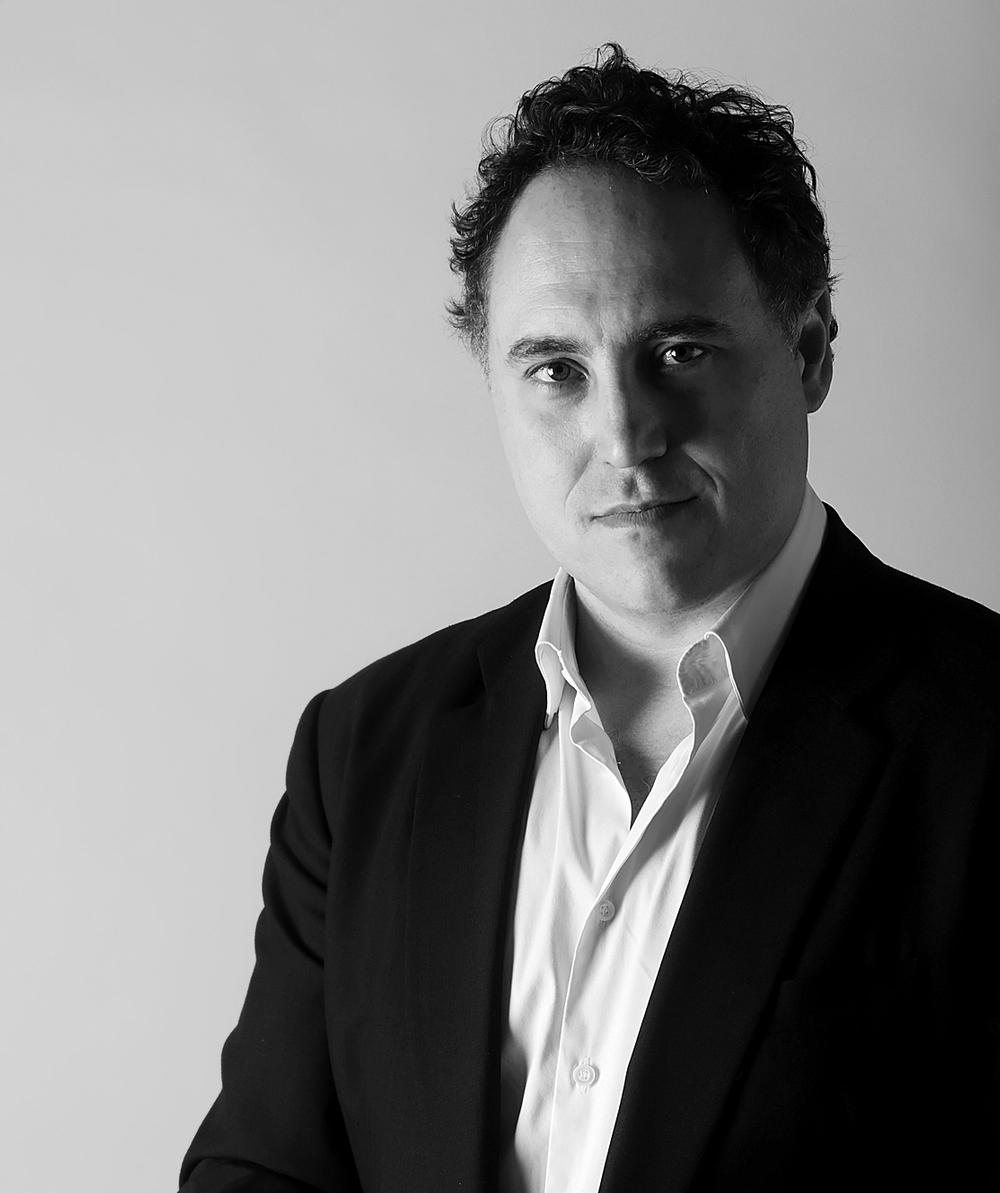
I think we have a unique ability to balance the poetry and the proficiency of buildings, the fantasy as well as the functionality,” says Chad Oppenheim, of Miami-based Oppenheim Architecture + Design.
Oppenheim Architecture was founded in 1999, and in that time the firm has won more than 30 AIA Awards.
Specialising in hotels and resorts, retail, commercial and residential projects at the high end of the global market, the firm is recognised for its environmental approach and respect for the relationship between man and nature.
As the practice has grown and opened offices in both Basel and New York, it has attracted a variety of big-hitting clients, including the Walt Disney Company, Starwood, Morgans Hotel Group and Mandarin Oriental. A-list stars are also on Oppenheim’s books, including singer/songwriter Pharrell Williams and filmmaker Michael Bay.
Oppenheim’s concepts can be understated and sensational at the same time. One recent project, which he says was a defining point in his career, is Bay’s Los Angeles home. From one angle, a minimalistic glass box perched atop a hill, framing the view like a cinema screen. From another, a Jenga game of complex volumes hovering next to the cliff’s edge, conveying all the drama you’d expect from a US$5bn-grossing movie director.
For Bay, it was a dream home – and for Oppenheim Architecture, a dream client – one who wanted something spectacular and had the budget to make it happen. Oppenheim recalls that at Bay’s celebrity-filled housewarming party, he gave one of the guests – director Stephen Spielberg – a tour. “His jaw just dropped,” Oppenheim says. “He said he’d never seen anything like it in his life.”
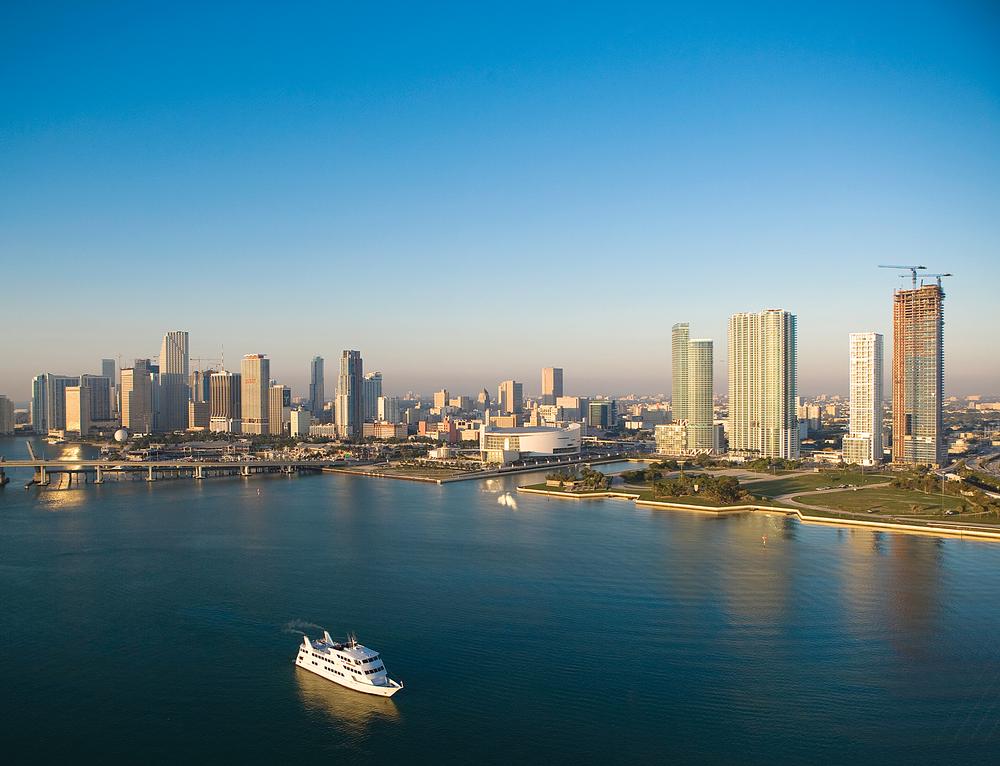
Oppenheim gets a kick out of creating this wow factor, the jaw-dropping moment that leaves people first speechless, then reaching for the superlatives. Whether designing a residential project – like Bay’s villa or Miami’s Ten Museum Park high-rise – or a hospitality or leisure project, Oppenheim says the aim is the same: get both form and function right because it has to feel as good as it looks.
PERFORMANCE / POETRY “You have to match the level of amazement, power and drama with the same level of comfort,” he says. “In a hotel, the brief is not just to create something interesting, beautiful and dynamic architecturally, it’s also to create something wonderful experientially and operationally.”
It’s easy to see how Oppenheim secures contracts with some of the biggest names in luxury hospitality, such as Delano, Six Senses and Starwood. His aesthetic suits them down to the ground, and when he works on a hotel or resort, the experience and “tremendous comfort” of the guest is central. This can only be achieved when the resort functions flawlessly at every level.
“You can’t insert the operational aspects as an afterthought,” he says. “The whole project is a balance of performance and poetry.”
One of the newest developments on his books is a Six Senses resort with private residences which will be located on the top of Powder Mountain in Utah. Oppenheim is in the preliminary design phase. The mountaintop site was acquired in 2013 by the Summit Group, four radical young entrepreneurs – Elliott Bisnow, Brett Leve, Jeff Rosenthal and Jeremy Schwartz – who are planning to make Powder Mountain a modern-day ski village with eco-hotels and organic restaurants (see feature on p50 for more details).
One reason Oppenheim’s practice is sought for jobs like this is its respect for the landscape and ability to create resorts that build on that connection between structure and surrounds.
Part of the firm’s philosophy is to hide structures in the landscape or integrate them with the land, using traditional techniques and local materials.
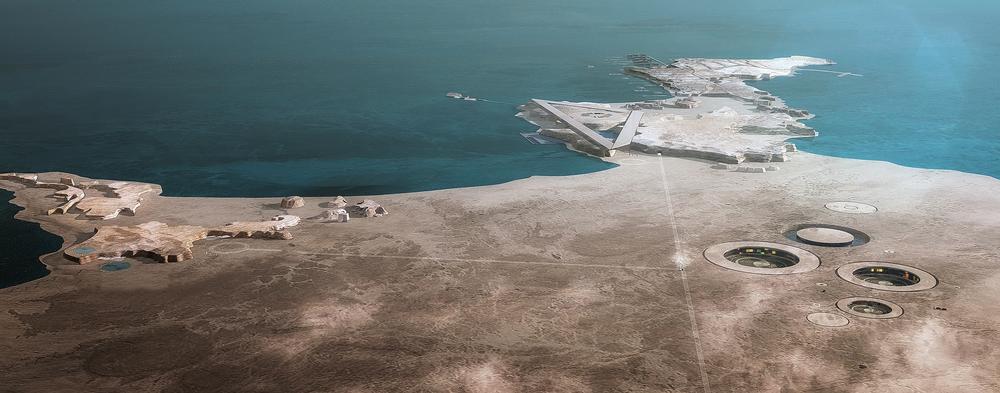
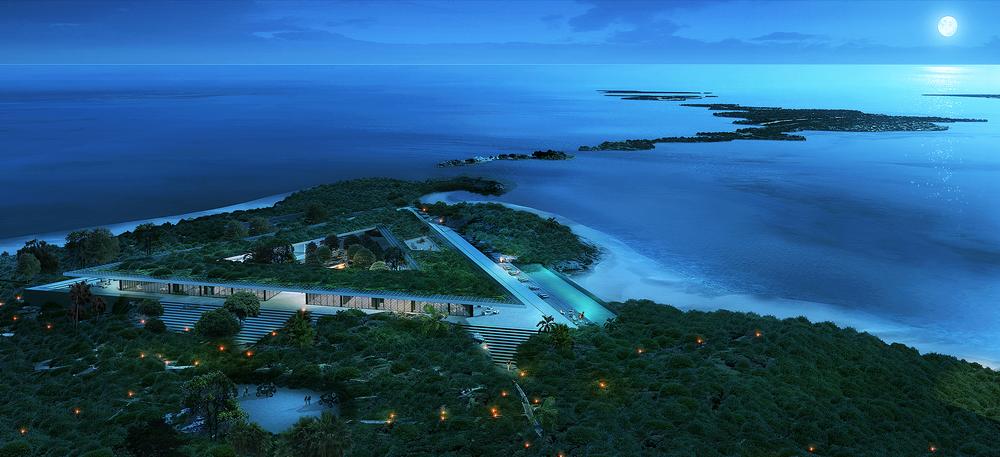
One proposal for a resort and spa for a royal family in the Middle East is dug into the ground, becoming almost invisible. The aerial view, however, reveals the land is covered in a smattering of what look like space-age crop circles. The project marries cutting-edge construction techniques with ancient ones to create a destination that seems like a mirage. A “vibrant dialogue between built form and landscape inspired by and in awe of the power of the desert,” the project description says.
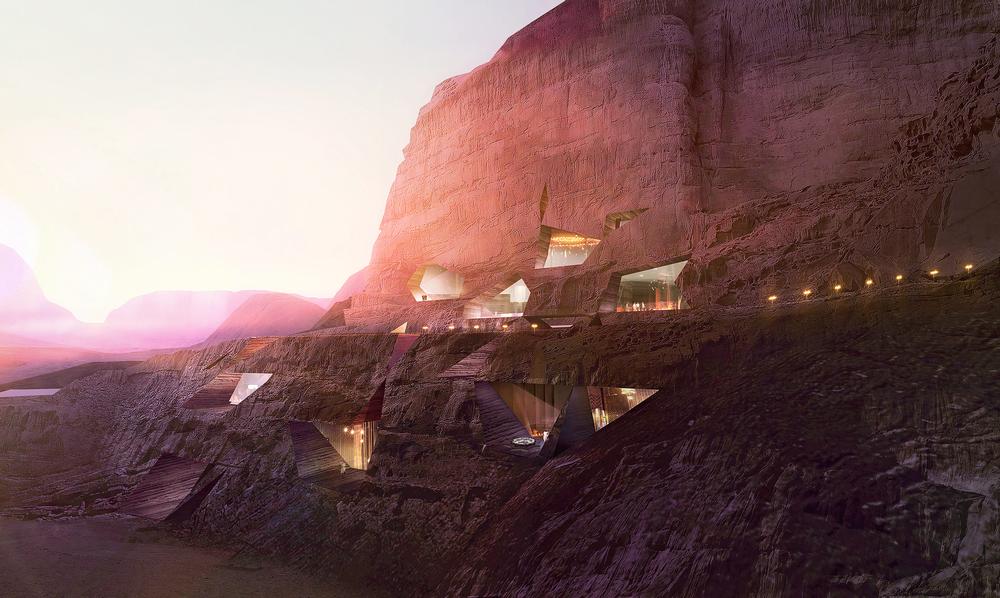
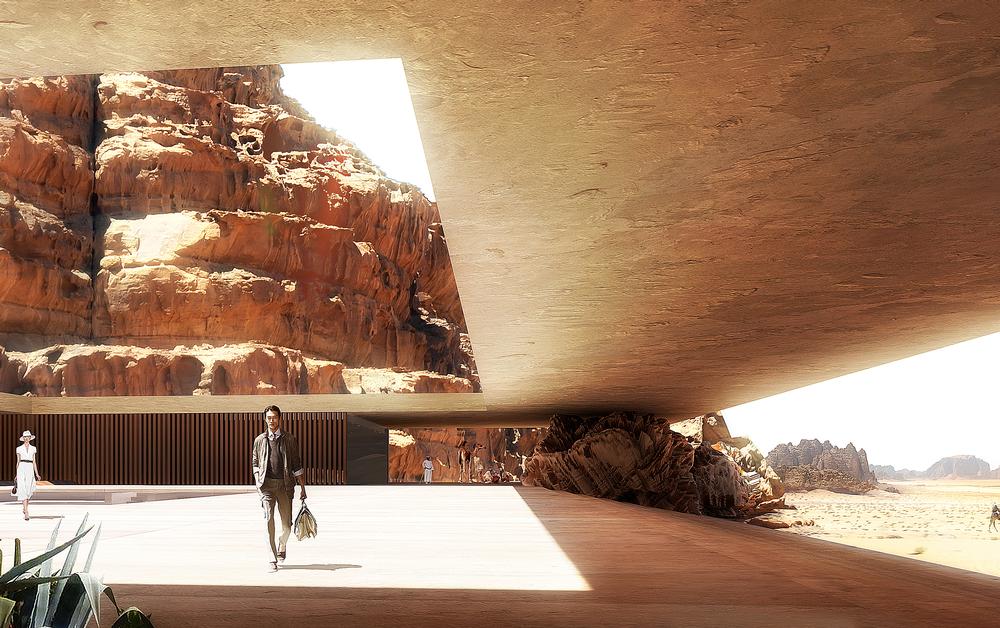
DISCONNECT / CONNECT Another example is an Oppenheim eco-destination in Jordan, the Wadi Rum Desert Resort, where lodge-like accommodations are carved out of the natural stone landscape.
Although the resort will have the usual five-star facilities, including restaurants and a spa, there will be no heating or electrical fittings. Water will be solar-heated and after dark, guests will have to rely on candlelight. Rooms will be sparsely furnished and inspired by the tribal way of life.
“We’re creating inhabitable land-art installations that rip you from your normal world and bring you to this place. It’s about disconnecting and connecting,” says Oppenheim. “It’s very much tied in with nature: the sunrises, the sunsets, the moon, the breezes. I’ve always tried to express this purity of design to create a powerful sense of connecting with the earth and the world around you.”
However, the project has only been moving forward at a snail’s pace since 2011, partly due to tensions around the land ownership following the Arab uprisings that year.
When Oppenheim designs a project, he aims to create spaces where experiences can happen, to set up the moments that will become memories for the guest. These experiences are driven by nature and Oppenheim will make sure he constructs the right place to watch the sunrise or appreciate the view, without the architecture interfering.
“We’ve done our job right when the architecture disappears and is submissive in relation to the beauty of the place,” he says. “That’s something we really strive for. It’s not an elevated thought or an ethereal concept that these buildings tap into – it’s something that you feel in your heart. You feel it and you sense it and it blows your mind.”
If it sounds instinctive, perhaps that’s because architecture has always been Oppenheim’s raison d’etre. He decided to become an architect at the age of seven, when his parents were building a custom home and he was allowed to join in the design process with them and the architect.
“I loved this idea of taking your dreams and translating them into a built reality,” he says. “From that moment, creating buildings became an incredible passion. I’ve never really stopped.”
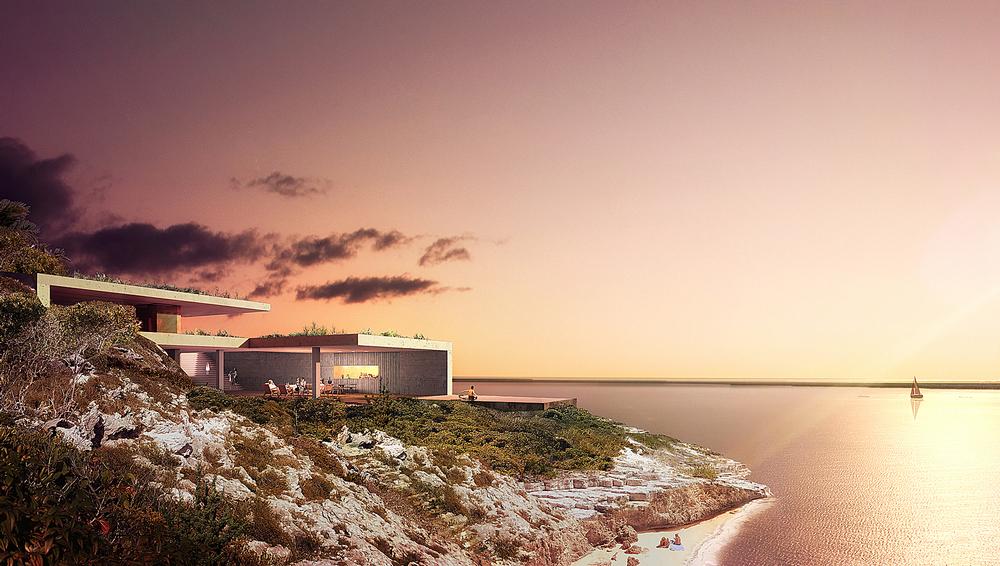
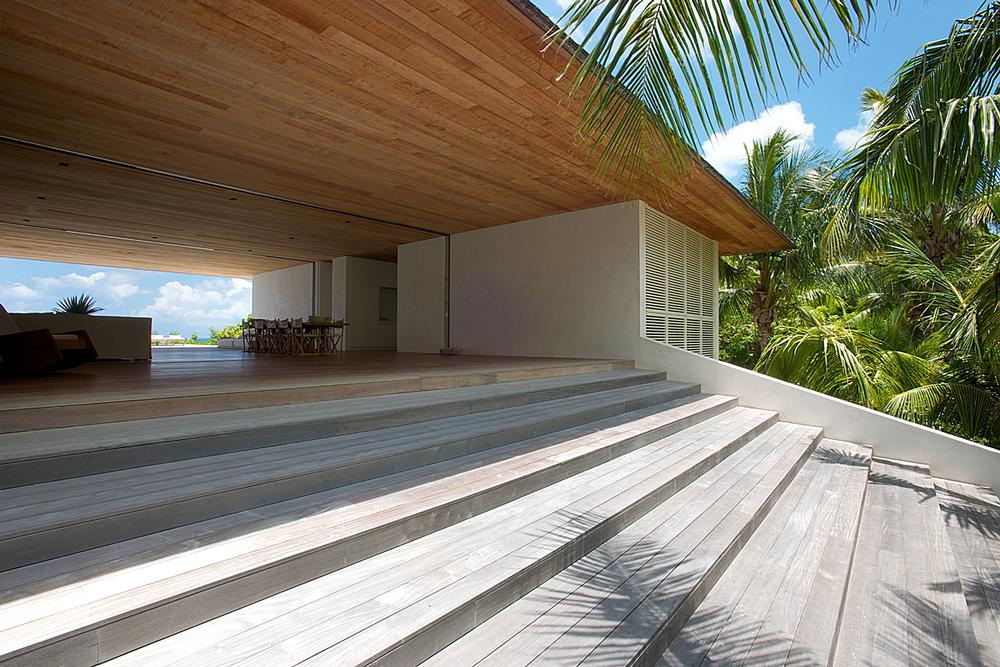
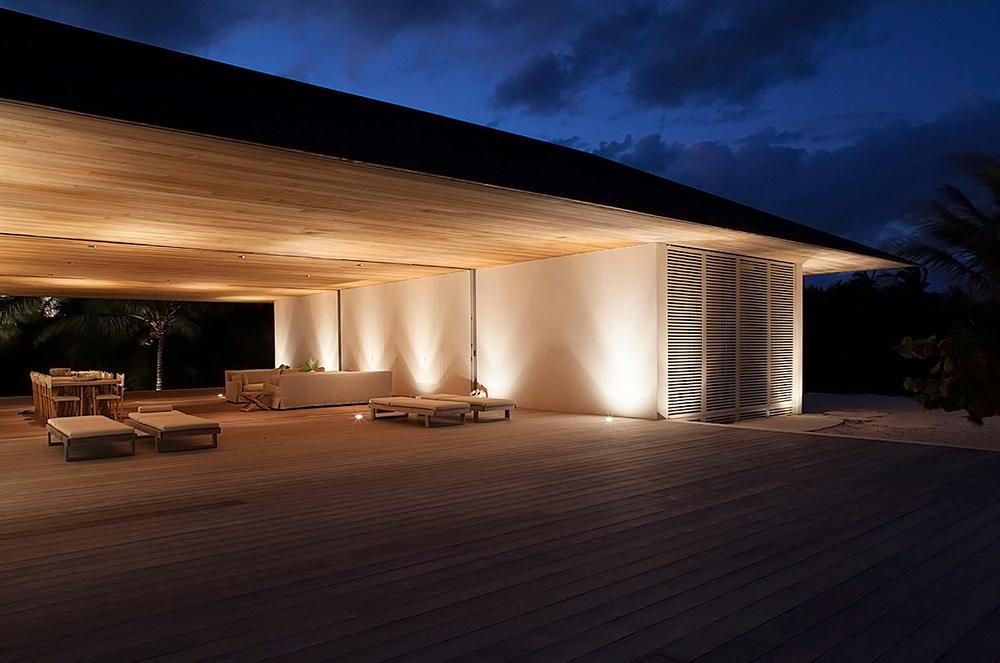
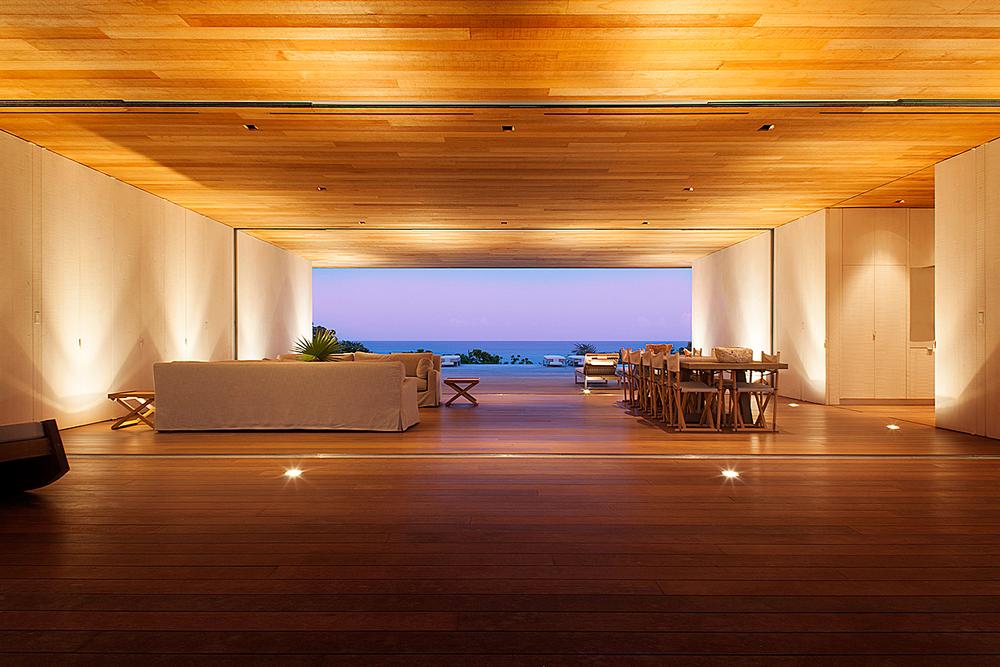
A luxurious vacation cottage on Norman’s Cay, the Bahamas
/ IMAGE: LUXIGON
The Wadi Rum Desert Resort, Jordan, where lodge-like accommodations are carved out of the stone landscape / IMAGE: LUXIGON
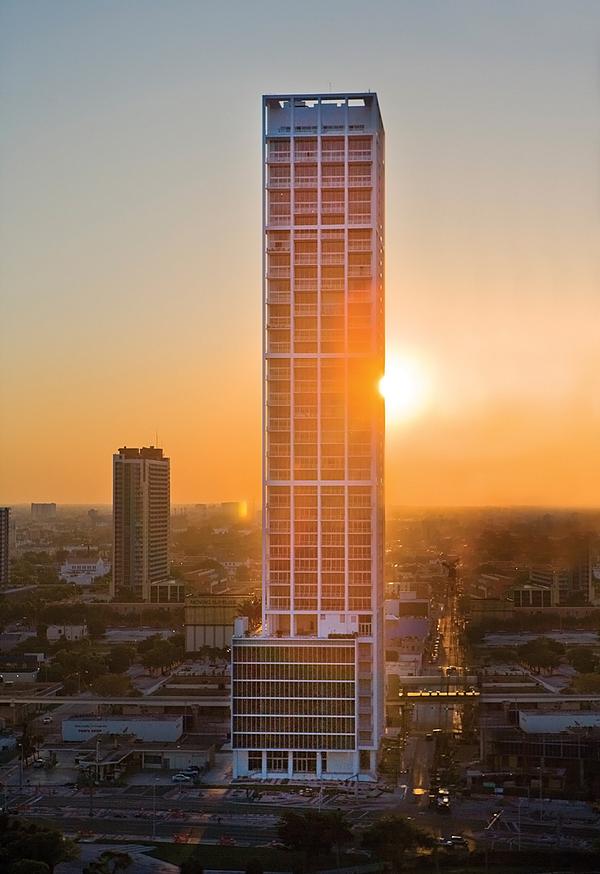
Ten Museum Park in Miami, Florida, an
exclusive fifty-storey apartment block / PHOTO: LAZIZ HAMANI
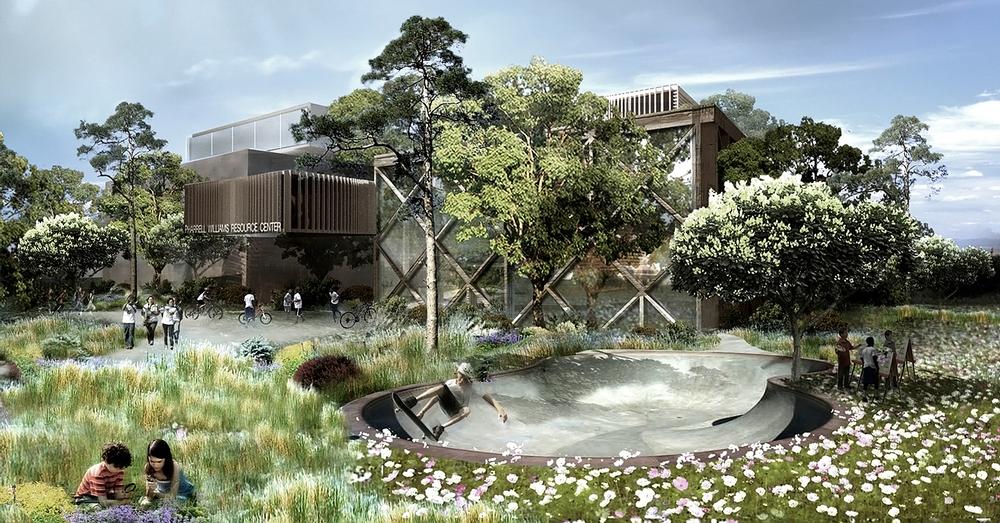
Pharrell Williams Resource Center: a youth centre for the producer’s Virginia Beach hometown / PHOTO: OPPENHEIM ARCHITECTURE & DESIGN
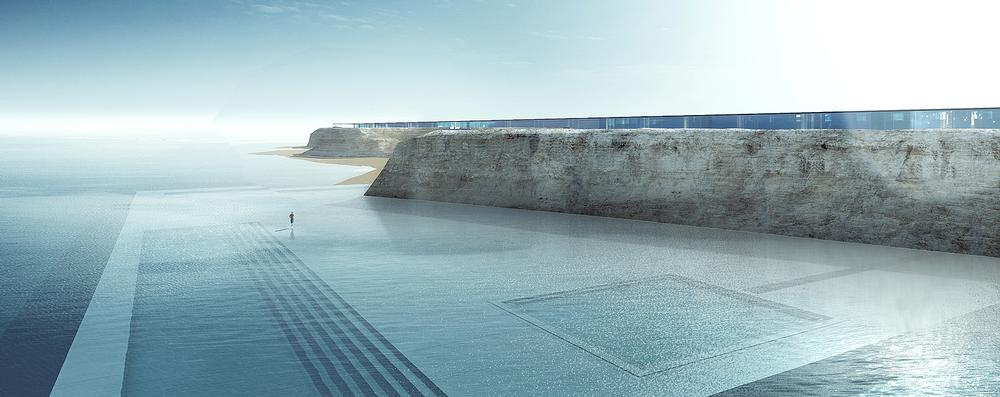
A top-secret project in the Middle East, dubbed Destination Resort and Spa, is inspired by the transition from the desert dunes to the sea and features gardens, pools and meditative spaces / IMAGES: LUXIGON
A top-secret project in the Middle East, dubbed Destination Resort and Spa, is inspired by the transition from the desert dunes to the sea and features gardens, pools and meditative spaces / IMAGES: LUXIGON
Ten Museum Park has sky gardens and pavilions, and rooftop vitality pools for the penthouses and tower suites / PHOTOS: KAREN FUCHS
The design for Norman’s Cay resort accentuates the beauty of its surroundings while remaining hidden in the topography
Interior and exterior boundaries blur in Wadi Rum
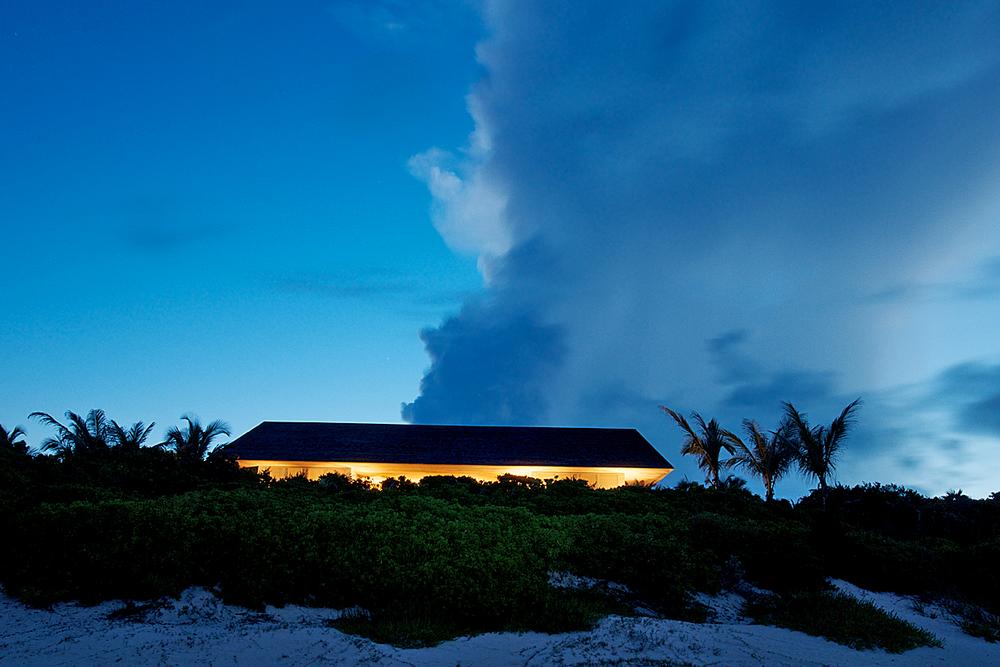
House on a Dune is a pavilion-style residence with living spaces arranged around a central breezeway / PHOTOS: KAREN FUCHS
House on a Dune is a pavilion-style residence with living spaces arranged around a central breezeway
House on a Dune is a pavilion-style residence with living spaces arranged around a central breezeway
House on a Dune is a pavilion-style residence with living spaces arranged around a central breezeway
Pharrell Williams / PHOTO: PA ARCHIVE / PRESS ASSOCIATION
One of the biggest mistakes the fitness industry still makes is advertising almost
exclusively to people who already look and live like gym members. [more...]
Elevate is set to celebrate its 10th anniversary in style this June, with organisers
confirming the event’s largest-ever drinks reception as registrations continue to run more
than 10% ahead of last year. [more...]
Whether he’s designing a resort for Six Senses or a youth centre for Pharrell Williams, Miami architect Chad Oppenheim’s aim is to leave the client speechless. He tells Alice Davis how he does it
By Alice Davis | Published in CLADmag 2016 issue 1
I think we have a unique ability to balance the poetry and the proficiency of buildings, the fantasy as well as the functionality,” says Chad Oppenheim, of Miami-based Oppenheim Architecture + Design.
Oppenheim Architecture was founded in 1999, and in that time the firm has won more than 30 AIA Awards.
Specialising in hotels and resorts, retail, commercial and residential projects at the high end of the global market, the firm is recognised for its environmental approach and respect for the relationship between man and nature.
As the practice has grown and opened offices in both Basel and New York, it has attracted a variety of big-hitting clients, including the Walt Disney Company, Starwood, Morgans Hotel Group and Mandarin Oriental. A-list stars are also on Oppenheim’s books, including singer/songwriter Pharrell Williams and filmmaker Michael Bay.
Oppenheim’s concepts can be understated and sensational at the same time. One recent project, which he says was a defining point in his career, is Bay’s Los Angeles home. From one angle, a minimalistic glass box perched atop a hill, framing the view like a cinema screen. From another, a Jenga game of complex volumes hovering next to the cliff’s edge, conveying all the drama you’d expect from a US$5bn-grossing movie director.
For Bay, it was a dream home – and for Oppenheim Architecture, a dream client – one who wanted something spectacular and had the budget to make it happen. Oppenheim recalls that at Bay’s celebrity-filled housewarming party, he gave one of the guests – director Stephen Spielberg – a tour. “His jaw just dropped,” Oppenheim says. “He said he’d never seen anything like it in his life.”
Oppenheim gets a kick out of creating this wow factor, the jaw-dropping moment that leaves people first speechless, then reaching for the superlatives. Whether designing a residential project – like Bay’s villa or Miami’s Ten Museum Park high-rise – or a hospitality or leisure project, Oppenheim says the aim is the same: get both form and function right because it has to feel as good as it looks.
PERFORMANCE / POETRY “You have to match the level of amazement, power and drama with the same level of comfort,” he says. “In a hotel, the brief is not just to create something interesting, beautiful and dynamic architecturally, it’s also to create something wonderful experientially and operationally.”
It’s easy to see how Oppenheim secures contracts with some of the biggest names in luxury hospitality, such as Delano, Six Senses and Starwood. His aesthetic suits them down to the ground, and when he works on a hotel or resort, the experience and “tremendous comfort” of the guest is central. This can only be achieved when the resort functions flawlessly at every level.
“You can’t insert the operational aspects as an afterthought,” he says. “The whole project is a balance of performance and poetry.”
One of the newest developments on his books is a Six Senses resort with private residences which will be located on the top of Powder Mountain in Utah. Oppenheim is in the preliminary design phase. The mountaintop site was acquired in 2013 by the Summit Group, four radical young entrepreneurs – Elliott Bisnow, Brett Leve, Jeff Rosenthal and Jeremy Schwartz – who are planning to make Powder Mountain a modern-day ski village with eco-hotels and organic restaurants (see feature on p50 for more details).
One reason Oppenheim’s practice is sought for jobs like this is its respect for the landscape and ability to create resorts that build on that connection between structure and surrounds.
Part of the firm’s philosophy is to hide structures in the landscape or integrate them with the land, using traditional techniques and local materials.
One proposal for a resort and spa for a royal family in the Middle East is dug into the ground, becoming almost invisible. The aerial view, however, reveals the land is covered in a smattering of what look like space-age crop circles. The project marries cutting-edge construction techniques with ancient ones to create a destination that seems like a mirage. A “vibrant dialogue between built form and landscape inspired by and in awe of the power of the desert,” the project description says.
DISCONNECT / CONNECT Another example is an Oppenheim eco-destination in Jordan, the Wadi Rum Desert Resort, where lodge-like accommodations are carved out of the natural stone landscape.
Although the resort will have the usual five-star facilities, including restaurants and a spa, there will be no heating or electrical fittings. Water will be solar-heated and after dark, guests will have to rely on candlelight. Rooms will be sparsely furnished and inspired by the tribal way of life.
“We’re creating inhabitable land-art installations that rip you from your normal world and bring you to this place. It’s about disconnecting and connecting,” says Oppenheim. “It’s very much tied in with nature: the sunrises, the sunsets, the moon, the breezes. I’ve always tried to express this purity of design to create a powerful sense of connecting with the earth and the world around you.”
However, the project has only been moving forward at a snail’s pace since 2011, partly due to tensions around the land ownership following the Arab uprisings that year.
When Oppenheim designs a project, he aims to create spaces where experiences can happen, to set up the moments that will become memories for the guest. These experiences are driven by nature and Oppenheim will make sure he constructs the right place to watch the sunrise or appreciate the view, without the architecture interfering.
“We’ve done our job right when the architecture disappears and is submissive in relation to the beauty of the place,” he says. “That’s something we really strive for. It’s not an elevated thought or an ethereal concept that these buildings tap into – it’s something that you feel in your heart. You feel it and you sense it and it blows your mind.”
If it sounds instinctive, perhaps that’s because architecture has always been Oppenheim’s raison d’etre. He decided to become an architect at the age of seven, when his parents were building a custom home and he was allowed to join in the design process with them and the architect.
“I loved this idea of taking your dreams and translating them into a built reality,” he says. “From that moment, creating buildings became an incredible passion. I’ve never really stopped.”
A luxurious vacation cottage on Norman’s Cay, the Bahamas
/ IMAGE: LUXIGON
The Wadi Rum Desert Resort, Jordan, where lodge-like accommodations are carved out of the stone landscape / IMAGE: LUXIGON
Ten Museum Park in Miami, Florida, an
exclusive fifty-storey apartment block / PHOTO: LAZIZ HAMANI
Pharrell Williams Resource Center: a youth centre for the producer’s Virginia Beach hometown / PHOTO: OPPENHEIM ARCHITECTURE & DESIGN
A top-secret project in the Middle East, dubbed Destination Resort and Spa, is inspired by the transition from the desert dunes to the sea and features gardens, pools and meditative spaces / IMAGES: LUXIGON
A top-secret project in the Middle East, dubbed Destination Resort and Spa, is inspired by the transition from the desert dunes to the sea and features gardens, pools and meditative spaces / IMAGES: LUXIGON
Ten Museum Park has sky gardens and pavilions, and rooftop vitality pools for the penthouses and tower suites / PHOTOS: KAREN FUCHS
The design for Norman’s Cay resort accentuates the beauty of its surroundings while remaining hidden in the topography
Interior and exterior boundaries blur in Wadi Rum
House on a Dune is a pavilion-style residence with living spaces arranged around a central breezeway / PHOTOS: KAREN FUCHS
House on a Dune is a pavilion-style residence with living spaces arranged around a central breezeway
House on a Dune is a pavilion-style residence with living spaces arranged around a central breezeway
House on a Dune is a pavilion-style residence with living spaces arranged around a central breezeway
Pharrell Williams / PHOTO: PA ARCHIVE / PRESS ASSOCIATION
Global luxury hospitality brand, Six Senses, has partnered with longevity healthcare provider,
HUM2N, to launch a clinic at Six Senses London, at The Whiteley.
Premium London health club, KX Chelsea, will imminently unveil its most significant
redevelopment since its launch in 2002 to create an integrated wellness model combining
training, recovery and relaxation.
Researchers in the US have identified an antibody which could greatly reduce the loss of lean
muscle mass in people who are taking weight-loss medications.
Crunch Fitness has announced the launch of Crunch Reform Pilates – its own reformer concept
designed to bring this fast growing, but rather expensive, modality into the mainstream.
The 20th State of the Industry Report reveals a resilient, expanding and competitive
sector, the
importance of differentiation and the ongoing challenge of tackling inequalities.
Nuffield Health has told HCM that it takes its responsibilities towards its colleagues seriously
and is committed to meeting all legal obligations after news of a tribunal has made national
headlines.
Technogym has announced the launch of the Run X World Treadmill Championship, the first
world championship for running on connected treadmills over five kilometres.
One of the biggest mistakes the fitness industry still makes is advertising almost
exclusively to people who already look and live like gym members. [more...]
Elevate is set to celebrate its 10th anniversary in style this June, with organisers
confirming the event’s largest-ever drinks reception as registrations continue to run more
than 10% ahead of last year. [more...]