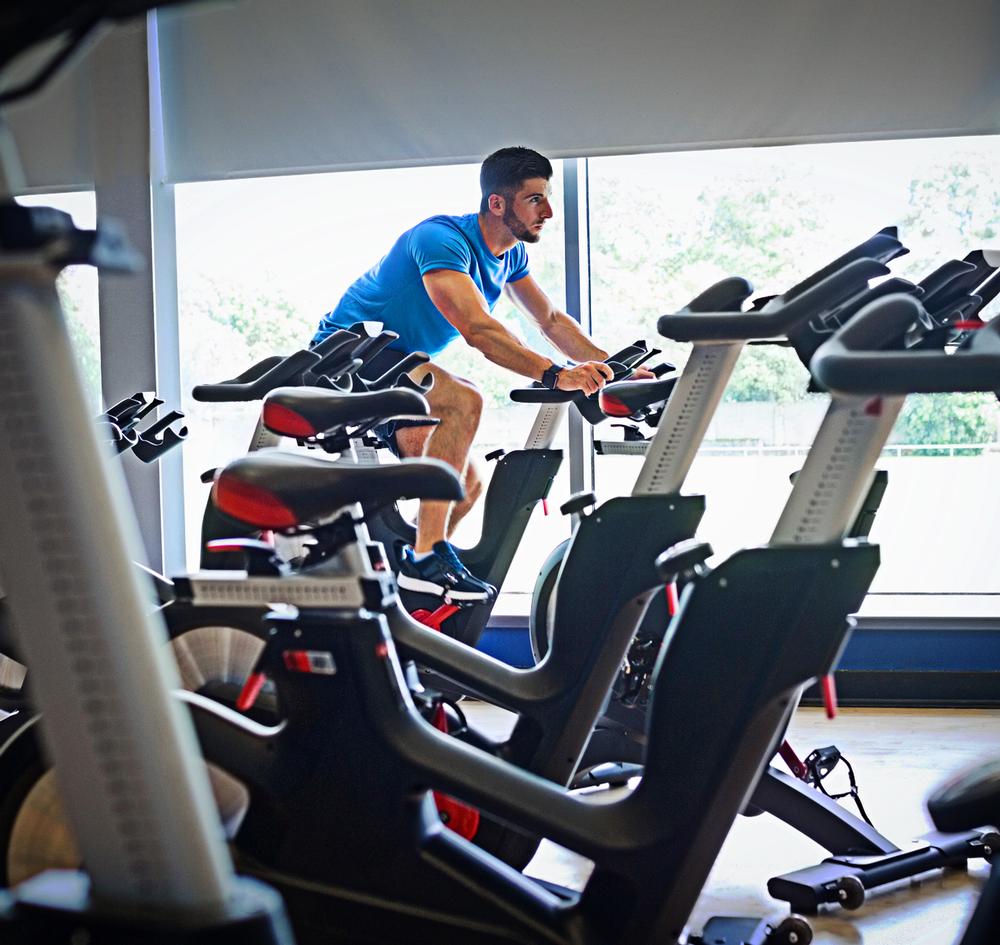
Fit people have a lower risk of death, but only if their BMI is good too / photo:www.shutterstock.com
For a number of years, scientists have believed it doesn’t matter too much if you’re overweight, so long as you exercise. It was felt that, if you have a high degree of aerobic fitness, this can go some way towards compensating for the challenges brought on by obesity. In other words, the consensus has been that it’s possible – and indeed OK – to be ‘fat but fit’.
However, a major new study based on 1.3 million Swedish men has turned this notion on its head, claiming that being ‘fat but fit’ is a myth and that it won’t prevent people from premature death.
Military precision Professor Peter Nordström and his team from Umea University in Sweden used records from the armed forces as the basis for their study – the largest of its kind to date. They looked at the details of men who had been conscripted between 1969 and 1996, and who had an average age of 18.
When signing up to the forces, each man had to undertake a fitness test on an exercise bike to determine their physical capabilities. The test involved cycling with increased resistance until exhaustion. The weight, height and BMI of each recruit was also noted, giving an indication of whether or not they were obese at the time of joining the armed forces.
The researchers then tracked the men’s records over the next 29 years to see if any of them had died – and if so, at what age and what the causes of death were.
Busting the myth The results of the study were published in the peer-reviewed International Journal of Epidemiology in December 2015*.
Over the course of the study, Nordström and his team noted 44,300 deaths, and they found that men who were fit as adolescents – when they first joined the armed forces – were far less likely to pass away in the follow-up period than those who did little or no exercise pre-joining. Participants in the upper echelons of aerobic fitness (in the highest fifth) had a 51 per cent lower risk of death compared to those in the lowest fifth. They were 80 per cent less likely to die from drug or alcohol abuse, 59 per cent less likely to kill themselves, and 45 per cent less likely to die from heart disease.
But – and here’s the crucial point – the advantages of physical activity were undone if the men were overweight. Even the fittest obese individuals were still 30 per cent more likely to die prematurely than those who were slim.
Nordström says: “Low aerobic fitness in late adolescence is associated with increased risk of early death. The results suggest that low BMI in early life is more important than high physical fitness with regard to reducing the risk of early death.”
Nevertheless, the basic findings remain: those who were fit as adolescents had a reduced risk of death. However, it’s clearly important to maintain a healthy weight too – being ‘fat but fit’ is no longer an option.
*Nordström, Petal. Aerobic fitness in late adolescence and the risk of early death: a prospective cohort study of 1.3 million Swedish men. International Journal of Edpidemiology. December 2015.
Panatta brought together four of the most influential figures in bodybuilding history on the
stage of RiminiWellness 2026: Phil Heath, Lee Haney, Ronnie Coleman and Hany Rambod. [more...]
Active Blackpool is deploying Cornerstone Connect, a new digital interface allowing
disparate information from multiple systems to be aggregated into one dataset, to support
its focus on reducing health inequalities and improving healthy life expectancy. [more...]
+ More featured suppliers
COMPANY PROFILES
Orbit4
With Orbit4, you’ll always have full visibility
of your equipment inventory, the true
market value [more...]
Fit people have a lower risk of death, but only if their BMI is good too / photo:www.shutterstock.com
For a number of years, scientists have believed it doesn’t matter too much if you’re overweight, so long as you exercise. It was felt that, if you have a high degree of aerobic fitness, this can go some way towards compensating for the challenges brought on by obesity. In other words, the consensus has been that it’s possible – and indeed OK – to be ‘fat but fit’.
However, a major new study based on 1.3 million Swedish men has turned this notion on its head, claiming that being ‘fat but fit’ is a myth and that it won’t prevent people from premature death.
Military precision Professor Peter Nordström and his team from Umea University in Sweden used records from the armed forces as the basis for their study – the largest of its kind to date. They looked at the details of men who had been conscripted between 1969 and 1996, and who had an average age of 18.
When signing up to the forces, each man had to undertake a fitness test on an exercise bike to determine their physical capabilities. The test involved cycling with increased resistance until exhaustion. The weight, height and BMI of each recruit was also noted, giving an indication of whether or not they were obese at the time of joining the armed forces.
The researchers then tracked the men’s records over the next 29 years to see if any of them had died – and if so, at what age and what the causes of death were.
Busting the myth The results of the study were published in the peer-reviewed International Journal of Epidemiology in December 2015*.
Over the course of the study, Nordström and his team noted 44,300 deaths, and they found that men who were fit as adolescents – when they first joined the armed forces – were far less likely to pass away in the follow-up period than those who did little or no exercise pre-joining. Participants in the upper echelons of aerobic fitness (in the highest fifth) had a 51 per cent lower risk of death compared to those in the lowest fifth. They were 80 per cent less likely to die from drug or alcohol abuse, 59 per cent less likely to kill themselves, and 45 per cent less likely to die from heart disease.
But – and here’s the crucial point – the advantages of physical activity were undone if the men were overweight. Even the fittest obese individuals were still 30 per cent more likely to die prematurely than those who were slim.
Nordström says: “Low aerobic fitness in late adolescence is associated with increased risk of early death. The results suggest that low BMI in early life is more important than high physical fitness with regard to reducing the risk of early death.”
Nevertheless, the basic findings remain: those who were fit as adolescents had a reduced risk of death. However, it’s clearly important to maintain a healthy weight too – being ‘fat but fit’ is no longer an option.
*Nordström, Petal. Aerobic fitness in late adolescence and the risk of early death: a prospective cohort study of 1.3 million Swedish men. International Journal of Edpidemiology. December 2015.
The UK's four Chief Medical Officers have published a refreshed edition of Physical activity
guidelines: UK Chief Medical Officers' report, updating the evidence that underpins the nation's
physical activity recommendations and placing greater emphasis on strength, balance, reducing
sedentary behaviour and, for the first time, supporting people taking weight loss medications.
Places Leisure has exchanged contracts to build and operate a flagship £60m water and leisure
destination on behalf of Basingstoke and Deane Borough Council.
The Republic of Ireland will become the latest market in PureGym’s expanding international
portfolio, with the first launch planned for Dublin in 2027.
Anytime Fitness opened more than one club a day in 2025 and is on track to maintain this rate
of growth this year, as parent company Purpose Brands targets further international expansion.
The £33.9 million Leighton Leisure and Community Centre has opened in Leighton Buzzard, UK,
creating a next-generation public leisure, health and wellbeing hub for the local community.
Walnuts Leisure Centre in Orpington, in the London Borough of Bromley, has reopened following
a £17m transformation designed to secure the long-term future of the public leisure asset and
reposition it as a community wellbeing hub.
The Gym Group, has announced that it's sustained positive trading momentum has continued
through the first half of 2026 and the company remains confident about the outlook.
Luxury boutique Pilates and wellness studio, X-Club, officially launches a
4,000sq ft flagship at
Marylebone on 16 July Built around X-Club’s four pillars of wellness – mind,
movement,
nutrition and therapy – the facility features two group exercise studi
Panatta brought together four of the most influential figures in bodybuilding history on the
stage of RiminiWellness 2026: Phil Heath, Lee Haney, Ronnie Coleman and Hany Rambod. [more...]
Active Blackpool is deploying Cornerstone Connect, a new digital interface allowing
disparate information from multiple systems to be aggregated into one dataset, to support
its focus on reducing health inequalities and improving healthy life expectancy. [more...]
+ More featured suppliers
COMPANY PROFILES
Orbit4 With Orbit4, you’ll always have full visibility
of your equipment inventory, the true
market value [more...]