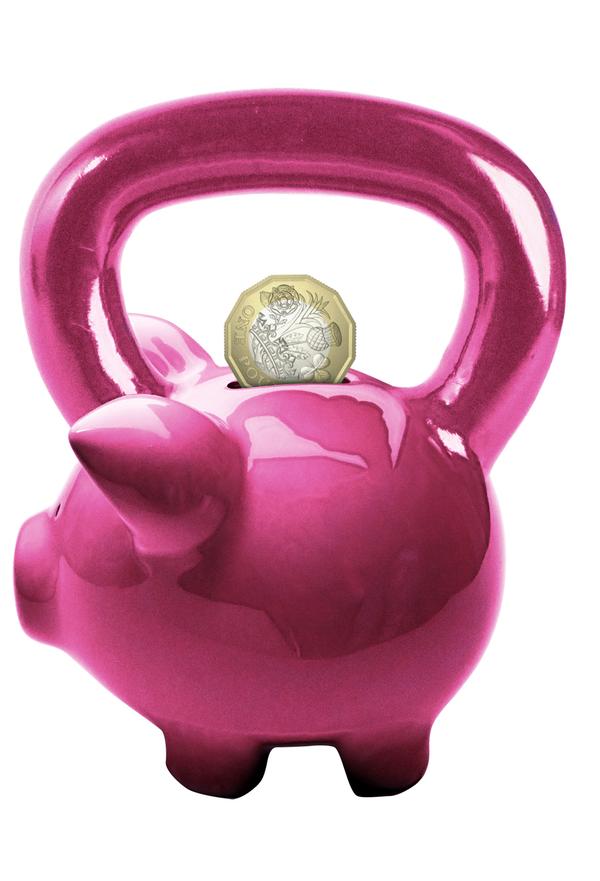
Whisper it quietly, but fitness is fast becoming the hottest ticket in town for many investors.
From a glut of seed-funding for imaginative start-ups, to venture capital funding for mid-sized businesses breaking out, to high-profile IPOs for some of the sector’s biggest hitters, investors of all types are turning their attention to the health and fitness industry.
As noted by Deloitte’s Karsten Hollasch last year, one of the surest signs of an attractive investment climate is a surge in the level of merger and acquisition (M&A) activity. Presenting the European Health & Fitness Market Report 2015 at FIBO, he noted that there were 19 M&A transactions alone in 2014, compared to an overall total of 24 in the three years previously. This trend is continuing to gather pace, with the forthcoming report – set to be released next month – expected to identify 22 such deals in 2015.
What type of investment? M&A aside, we’re seeing an explosion in investments of all types across the sector, and businesses must decide which investment strategy is right for them: seed funding, crowdfunding, venture capital, private equity, IPO? What sort of investor are they looking for? How much equity in their company are they actually willing to give up?
At the entry point to the market, innovative fitness tech start-ups such as dynamic pricing platform Dibs, social workout app Fitssi and management software provider Glofox have all attracted seed-funding in recent months to accelerate their growth into new markets. Meanwhile, new players such as 1Rebel have embraced the benefits of new investment avenues such as crowdfunding to raise eye-watering sums of money in double quick time.
From a private equity perspective, established chains such as Virgin Active and Barry’s Bootcamp have sold significant chunks of their businesses to high-powered investment firms (Brait and North Castle Partners respectively) to turbocharge their growth ambitions.
But perhaps the strongest example of the fitness sector’s growing appeal lies in the number of IPOs the industry has witnessed over recent months. Following US flotations for Fitbit and Planet Fitness, The Gym Group became the first UK operator in 15 years to go public in November (see HCM Feb 16, p28) and has since seen its shares climb 20 per cent as investors have scrambled for a slice of the fitness pie. Not to be outdone, budget rival Pure Gym is now limbering up for a listing of its own, with early indications suggesting the chain could be valued at more than £500m.
“The flotation of The Gym Group has shown the appetite for investment into the physical activity sector,” concluded Mazars’ head of leisure Gareth Jones in a recent market analysis. “How the IPO assists with the expansion of The Gym Group from its current 66 sites will be keenly watched by competitors, and welcomed by those who see the huge potential of the low-cost model in driving the growth of the sector.”
A growing appetite Clearly there’s appetite for investment in the fitness sector, and the valuable contacts and expertise that these investors bring with them can be a huge asset in scaling a business: whether you’re a small start-up or a well-established firm looking to take operations to the next level, every company needs investment to make good on expansion plans.
We speak to some leading industry figures in fitness and investment to uncover their top tips for securing funding.
James BalfourCo-founder1Rebel
James Balfour
We pursued crowdfunding as we see ourselves as a market disruptor and this seemed like the most on-brand option for raising capital. It allows your customers to be your investors and your investors to be your customers, and it obviously brings a marketing boost in terms of added publicity.
The downside, of course, is that if you fail it’s a very public failure. But new market entrants seeking funding always risk private equity punishment on valuation and control of the business, whereas on crowdfunding you will get a more sympathetic valuation. This is because crowdfunding investors don’t need to justify their job in making that call – they’re investing in a story they want to be part of. And by raising capital through crowdfunding, you avoid anybody taking a board seat or a veto right.
The key thing to realise is that just because you take the pitch online, you won’t suddenly be flooded with investments. We had to do a serious amount of work to raise that money – I would say at least 50 per cent of the money raised came from us slogging it out, talking to people and presenting.
You also need a strong web presence. The first thing potential investors do these days is check out your Google reviews, your website, your Twitter account and your communication with your customers. They’ll believe your marketing spiel only so far, then they’ll dig around for themselves – and it’s very easy to do that.
Once you have the investors on-board, communication is absolutely key to a successful relationship. We have a private Facebook group for our investors where we share all the latest 1Rebel news and updates from the press to keep them informed; an angry investor is usually an ill-informed investor.
"Communication is key to a successful relationship; an angry investor is usually an ill-informed investor" James Balfour
Crowdfunding customers often become your members
Philipp Roesch-SchlandererFounder and CEO, eGym
Philipp Roesch-Schlanderer
When scaling a business quickly, first and foremost you need the right team. From day one, our recruiting strategy has been to look only for the best talent. This makes things a lot easier when you’re talking to investors.
For me, it’s always been very important to identify investors who are a perfect match for eGym. It’s not just about the money you raise – it’s also about other factors like the team, existing networks and market knowledge that really make the difference. Given our goal for eGym be a true global player in the fitness industry, our investors have to share this goal. Luckily there has been a strong interest in our business from the very beginning, so we’ve always had a choice of potential investors.
It’s also very important to bring in investors with specialised knowledge and contacts – people who can be your brand ambassadors. Our investors include the likes of Jürgen Gallmann, who – having held top management positions at both IBM and Microsoft Germany – has a lot of credibility when he addresses an audience about the benefits of digitisation for our industry. Another example is Mario Görlach, an industry veteran with unmatched knowledge of gym organisation and holistic training concepts. Gallmann and Görlach, in addition to being investors in eGym, are regular speakers at many of our events.
"Investors with specialised knowledge and contacts can be ambassadors for your brand" - Phillip Roesch-Schlanderer
Jim GrahamCOOThe Gym Group & Former operating partner, Phoenix Equity Partners
Jim Graham
Private equity firms tend to look for really good management teams with a simple business model that’s well executed. You also need a slick elevator pitch: nobody will invest if you can’t explain to them in a few sentences what your company does, how it makes money and why that’s defensible.
Management teams should look for backers who bring more to the party that just their capital. That added value could be in the shape of strategic insight, operational expertise or the ability to find and execute bolt-on acquisitions.
Successful PE investments depend on frank agreement on the few major priorities needed to deliver the business plan. Over a three- to five-year investment, don’t try to do 10 things or you’ll do them all badly. Stick to two or three and have an unwavering focus on delivering them really well.
Private equity firms need to get a return on their investors’ money, so if they start talking about how to exit the investment soon after they’ve entered, get over it!
Last piece of advice? Find people you like and respect. Chances are, if they also like and respect you, it’ll be easier to deal with the inevitable bumps along the way.
"Nobody will invest if you can’t explain in a few sentences what your company does, how it makes money and why that’s defensible" - Jim Graham
The Gym Group: ‘Look for investors who bring more than just capital’
Brian SchuringFounding partner, Rubicon Ventures & Co-founder, Heartcore
Brian Schuring
We’re a little unique in the venture space because of our operating background, so if we don’t feel our experience adds value or don’t feel we have a unique view on a situation, we’ll politely pass.
Once we cross that hurdle, we ask two really important questions: firstly, does this format actually get clients better results over a long-term horizon than other platforms; and secondly, is there proof – in length of engagement or weekly returns data – that the format is sticky enough to see any given client coming back for 12+ months?
After we’re comfortable with that, we start with a fairly standard checklist of questions. Is the format floorplan-efficient without being a commodity? What does the competitive environment in the format look like today – and what do we think will it look like in five years’ time? Are there barriers to entry that should protect pricing as more capacity comes to market? Is the company/instructor the best in the market at what they do, and can that skill be taught in a way that allows the business to scale beyond just a couple of studios?
Once that’s covered off, we spend time getting to know the business owners better and, if we feel there’s a great fit between what they’re looking to do and what we can help with, we’ll look to get involved.
Joey GonzalezCEO, Barry’s Bootcamp
Joey Gonzalez
Finding a partner who shares both your vision and values is the most important thing. Our collaboration with North Castle Partners was a natural fit, not only due to its extensive experience with fitness operators, but also because it possesses a deep understanding and appreciation of the Barry’s Bootcamp DNA.
For me as CEO, a big part of my role is acting as a cultural compass, making sure my employees and customers feel that, as Barry’s Bootcamp is scaling up, it retains the sense of close-knit community that we’ve worked so hard to build and preserve.
It’s vital to remember that the fitness industry is a people-driven industry, and there have been moments where I’ve said: “I don’t always make decisions based on the bottom line – I make decisions based on the culture, how it’s going to affect my employees and my consumers.” North Castle Partners understand that.
You want to find an investor who can provide you with the tools to make data-driven decisions, lend expertise on markets, and help you to successfully scale your business while still maintaining the integrity of your brand.
"I don’t always make decisions based on the bottom line, but on the culture. Our investors understand that" - Joey Gonzales
Thirst for investment
Speaking at last year’s Flame Conference, ukactive chair Tanni Grey-Thompson noted that the ‘ears of investors have pricked up’. To deepen this investor interest, ukactive is now working on a true valuation of the sector in terms of its wider economic impact, which Grey-Thompson believes will make it significantly easier for fitness businesses to attract investment.
So why are investors so eager to fund fitness firms? A combination of historically low interest rates and ongoing market uncertainty mean growth sectors are currently at a premium – and fitness ticks this box, bolstered by the leading role it stands to play in tackling the looming health crisis.
Fitness has also become an attractive investment proposition due to its growing presence in mainstream culture. Thanks in part to celebrity personalities such as The Body Coach – whose latest book is the UK’s biggest seller so far this year – and the prominence of fitness across social media due to the advocacy of young exponents, fitness has developed that intangible yet invaluable veneer of cool.
Panatta brought together four of the most influential figures in bodybuilding history on the
stage of RiminiWellness 2026: Phil Heath, Lee Haney, Ronnie Coleman and Hany Rambod. [more...]
Active Blackpool is deploying Cornerstone Connect, a new digital interface allowing
disparate information from multiple systems to be aggregated into one dataset, to support
its focus on reducing health inequalities and improving healthy life expectancy. [more...]
Whisper it quietly, but fitness is fast becoming the hottest ticket in town for many investors.
From a glut of seed-funding for imaginative start-ups, to venture capital funding for mid-sized businesses breaking out, to high-profile IPOs for some of the sector’s biggest hitters, investors of all types are turning their attention to the health and fitness industry.
As noted by Deloitte’s Karsten Hollasch last year, one of the surest signs of an attractive investment climate is a surge in the level of merger and acquisition (M&A) activity. Presenting the European Health & Fitness Market Report 2015 at FIBO, he noted that there were 19 M&A transactions alone in 2014, compared to an overall total of 24 in the three years previously. This trend is continuing to gather pace, with the forthcoming report – set to be released next month – expected to identify 22 such deals in 2015.
What type of investment? M&A aside, we’re seeing an explosion in investments of all types across the sector, and businesses must decide which investment strategy is right for them: seed funding, crowdfunding, venture capital, private equity, IPO? What sort of investor are they looking for? How much equity in their company are they actually willing to give up?
At the entry point to the market, innovative fitness tech start-ups such as dynamic pricing platform Dibs, social workout app Fitssi and management software provider Glofox have all attracted seed-funding in recent months to accelerate their growth into new markets. Meanwhile, new players such as 1Rebel have embraced the benefits of new investment avenues such as crowdfunding to raise eye-watering sums of money in double quick time.
From a private equity perspective, established chains such as Virgin Active and Barry’s Bootcamp have sold significant chunks of their businesses to high-powered investment firms (Brait and North Castle Partners respectively) to turbocharge their growth ambitions.
But perhaps the strongest example of the fitness sector’s growing appeal lies in the number of IPOs the industry has witnessed over recent months. Following US flotations for Fitbit and Planet Fitness, The Gym Group became the first UK operator in 15 years to go public in November (see HCM Feb 16, p28) and has since seen its shares climb 20 per cent as investors have scrambled for a slice of the fitness pie. Not to be outdone, budget rival Pure Gym is now limbering up for a listing of its own, with early indications suggesting the chain could be valued at more than £500m.
“The flotation of The Gym Group has shown the appetite for investment into the physical activity sector,” concluded Mazars’ head of leisure Gareth Jones in a recent market analysis. “How the IPO assists with the expansion of The Gym Group from its current 66 sites will be keenly watched by competitors, and welcomed by those who see the huge potential of the low-cost model in driving the growth of the sector.”
A growing appetite Clearly there’s appetite for investment in the fitness sector, and the valuable contacts and expertise that these investors bring with them can be a huge asset in scaling a business: whether you’re a small start-up or a well-established firm looking to take operations to the next level, every company needs investment to make good on expansion plans.
We speak to some leading industry figures in fitness and investment to uncover their top tips for securing funding.
James BalfourCo-founder1Rebel
James Balfour
We pursued crowdfunding as we see ourselves as a market disruptor and this seemed like the most on-brand option for raising capital. It allows your customers to be your investors and your investors to be your customers, and it obviously brings a marketing boost in terms of added publicity.
The downside, of course, is that if you fail it’s a very public failure. But new market entrants seeking funding always risk private equity punishment on valuation and control of the business, whereas on crowdfunding you will get a more sympathetic valuation. This is because crowdfunding investors don’t need to justify their job in making that call – they’re investing in a story they want to be part of. And by raising capital through crowdfunding, you avoid anybody taking a board seat or a veto right.
The key thing to realise is that just because you take the pitch online, you won’t suddenly be flooded with investments. We had to do a serious amount of work to raise that money – I would say at least 50 per cent of the money raised came from us slogging it out, talking to people and presenting.
You also need a strong web presence. The first thing potential investors do these days is check out your Google reviews, your website, your Twitter account and your communication with your customers. They’ll believe your marketing spiel only so far, then they’ll dig around for themselves – and it’s very easy to do that.
Once you have the investors on-board, communication is absolutely key to a successful relationship. We have a private Facebook group for our investors where we share all the latest 1Rebel news and updates from the press to keep them informed; an angry investor is usually an ill-informed investor.
"Communication is key to a successful relationship; an angry investor is usually an ill-informed investor" James Balfour
Crowdfunding customers often become your members
Philipp Roesch-SchlandererFounder and CEO, eGym
Philipp Roesch-Schlanderer
When scaling a business quickly, first and foremost you need the right team. From day one, our recruiting strategy has been to look only for the best talent. This makes things a lot easier when you’re talking to investors.
For me, it’s always been very important to identify investors who are a perfect match for eGym. It’s not just about the money you raise – it’s also about other factors like the team, existing networks and market knowledge that really make the difference. Given our goal for eGym be a true global player in the fitness industry, our investors have to share this goal. Luckily there has been a strong interest in our business from the very beginning, so we’ve always had a choice of potential investors.
It’s also very important to bring in investors with specialised knowledge and contacts – people who can be your brand ambassadors. Our investors include the likes of Jürgen Gallmann, who – having held top management positions at both IBM and Microsoft Germany – has a lot of credibility when he addresses an audience about the benefits of digitisation for our industry. Another example is Mario Görlach, an industry veteran with unmatched knowledge of gym organisation and holistic training concepts. Gallmann and Görlach, in addition to being investors in eGym, are regular speakers at many of our events.
"Investors with specialised knowledge and contacts can be ambassadors for your brand" - Phillip Roesch-Schlanderer
Jim GrahamCOOThe Gym Group & Former operating partner, Phoenix Equity Partners
Jim Graham
Private equity firms tend to look for really good management teams with a simple business model that’s well executed. You also need a slick elevator pitch: nobody will invest if you can’t explain to them in a few sentences what your company does, how it makes money and why that’s defensible.
Management teams should look for backers who bring more to the party that just their capital. That added value could be in the shape of strategic insight, operational expertise or the ability to find and execute bolt-on acquisitions.
Successful PE investments depend on frank agreement on the few major priorities needed to deliver the business plan. Over a three- to five-year investment, don’t try to do 10 things or you’ll do them all badly. Stick to two or three and have an unwavering focus on delivering them really well.
Private equity firms need to get a return on their investors’ money, so if they start talking about how to exit the investment soon after they’ve entered, get over it!
Last piece of advice? Find people you like and respect. Chances are, if they also like and respect you, it’ll be easier to deal with the inevitable bumps along the way.
"Nobody will invest if you can’t explain in a few sentences what your company does, how it makes money and why that’s defensible" - Jim Graham
The Gym Group: ‘Look for investors who bring more than just capital’
Brian SchuringFounding partner, Rubicon Ventures & Co-founder, Heartcore
Brian Schuring
We’re a little unique in the venture space because of our operating background, so if we don’t feel our experience adds value or don’t feel we have a unique view on a situation, we’ll politely pass.
Once we cross that hurdle, we ask two really important questions: firstly, does this format actually get clients better results over a long-term horizon than other platforms; and secondly, is there proof – in length of engagement or weekly returns data – that the format is sticky enough to see any given client coming back for 12+ months?
After we’re comfortable with that, we start with a fairly standard checklist of questions. Is the format floorplan-efficient without being a commodity? What does the competitive environment in the format look like today – and what do we think will it look like in five years’ time? Are there barriers to entry that should protect pricing as more capacity comes to market? Is the company/instructor the best in the market at what they do, and can that skill be taught in a way that allows the business to scale beyond just a couple of studios?
Once that’s covered off, we spend time getting to know the business owners better and, if we feel there’s a great fit between what they’re looking to do and what we can help with, we’ll look to get involved.
Joey GonzalezCEO, Barry’s Bootcamp
Joey Gonzalez
Finding a partner who shares both your vision and values is the most important thing. Our collaboration with North Castle Partners was a natural fit, not only due to its extensive experience with fitness operators, but also because it possesses a deep understanding and appreciation of the Barry’s Bootcamp DNA.
For me as CEO, a big part of my role is acting as a cultural compass, making sure my employees and customers feel that, as Barry’s Bootcamp is scaling up, it retains the sense of close-knit community that we’ve worked so hard to build and preserve.
It’s vital to remember that the fitness industry is a people-driven industry, and there have been moments where I’ve said: “I don’t always make decisions based on the bottom line – I make decisions based on the culture, how it’s going to affect my employees and my consumers.” North Castle Partners understand that.
You want to find an investor who can provide you with the tools to make data-driven decisions, lend expertise on markets, and help you to successfully scale your business while still maintaining the integrity of your brand.
"I don’t always make decisions based on the bottom line, but on the culture. Our investors understand that" - Joey Gonzales
Thirst for investment
Speaking at last year’s Flame Conference, ukactive chair Tanni Grey-Thompson noted that the ‘ears of investors have pricked up’. To deepen this investor interest, ukactive is now working on a true valuation of the sector in terms of its wider economic impact, which Grey-Thompson believes will make it significantly easier for fitness businesses to attract investment.
So why are investors so eager to fund fitness firms? A combination of historically low interest rates and ongoing market uncertainty mean growth sectors are currently at a premium – and fitness ticks this box, bolstered by the leading role it stands to play in tackling the looming health crisis.
Fitness has also become an attractive investment proposition due to its growing presence in mainstream culture. Thanks in part to celebrity personalities such as The Body Coach – whose latest book is the UK’s biggest seller so far this year – and the prominence of fitness across social media due to the advocacy of young exponents, fitness has developed that intangible yet invaluable veneer of cool.
The UK's four Chief Medical Officers have published a refreshed edition of Physical activity
guidelines: UK Chief Medical Officers' report, updating the evidence that underpins the nation's
physical activity recommendations and placing greater emphasis on strength, balance, reducing
sedentary behaviour and, for the first time, supporting people taking weight loss medications.
Places Leisure has exchanged contracts to build and operate a flagship £60m water and leisure
destination on behalf of Basingstoke and Deane Borough Council.
The Republic of Ireland will become the latest market in PureGym’s expanding international
portfolio, with the first launch planned for Dublin in 2027.
Anytime Fitness opened more than one club a day in 2025 and is on track to maintain this rate
of growth this year, as parent company Purpose Brands targets further international expansion.
The £33.9 million Leighton Leisure and Community Centre has opened in Leighton Buzzard, UK,
creating a next-generation public leisure, health and wellbeing hub for the local community.
Walnuts Leisure Centre in Orpington, in the London Borough of Bromley, has reopened following
a £17m transformation designed to secure the long-term future of the public leisure asset and
reposition it as a community wellbeing hub.
The Gym Group, has announced that it's sustained positive trading momentum has continued
through the first half of 2026 and the company remains confident about the outlook.
Luxury boutique Pilates and wellness studio, X-Club, officially launches a
4,000sq ft flagship at
Marylebone on 16 July Built around X-Club’s four pillars of wellness – mind,
movement,
nutrition and therapy – the facility features two group exercise studi
Panatta brought together four of the most influential figures in bodybuilding history on the
stage of RiminiWellness 2026: Phil Heath, Lee Haney, Ronnie Coleman and Hany Rambod. [more...]
Active Blackpool is deploying Cornerstone Connect, a new digital interface allowing
disparate information from multiple systems to be aggregated into one dataset, to support
its focus on reducing health inequalities and improving healthy life expectancy. [more...]