The FA’s head of grassroots delivery talks to Matthew Campelli about a renewed focus on educating coaches and the role of the National Football Centre in Burton
By Matthew Campelli | Published in Sports Management 22 feb 2016 issue 114
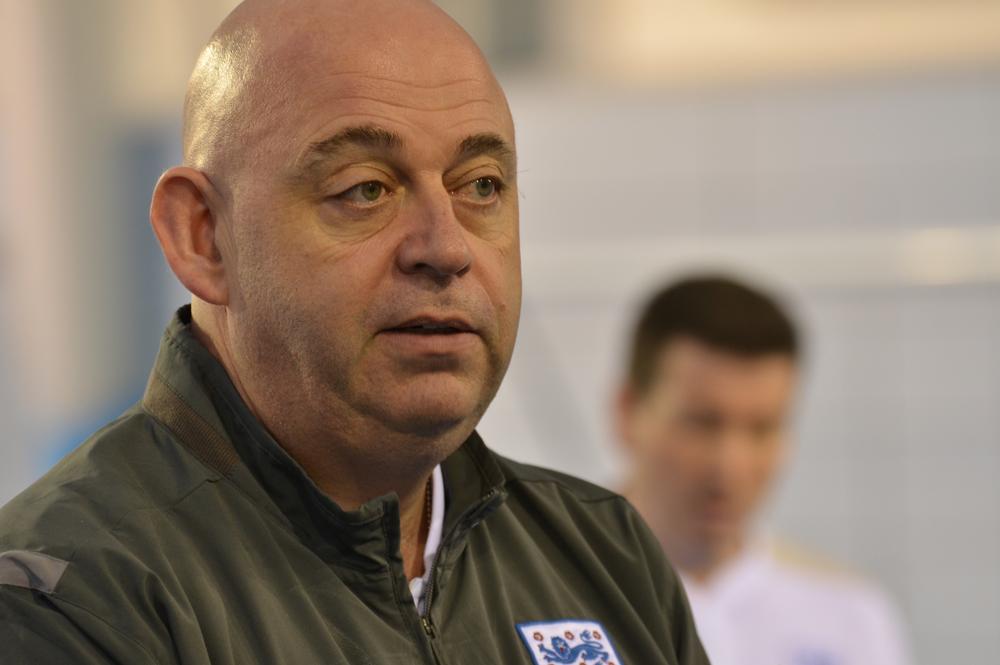
Les Howie joined the Football Association as head of grassroots in 1998
We’ve got to destroy the myth about Spain and Germany having more coaches than us . That’s historical,” says Les Howie following a question he’s probably had to answer more times than he would have liked.
Since it emerged in 2013 that England had 1,161 coaches qualified to UEFA A standard compared to 12,720 in Spain and 5,500 in Germany, the quality and quantity of English coaches has been firmly under the microscope.
At the level above – UEFA Pro – England had 203 coaches to Spain’s 2,140 and Germany’s 1,000, but the Football Association’s (FA) head of grassroots delivery is very keen to put those figures into a wider and more positive context.
“Spain”, says Howie, “counts back to 1948” to measure its number of UEFA-qualified coaches, while in Germany it’s “statutory” for coaches at some amateur levels to have UEFA B licenses.
“Only in the past five years has UEFA B been the required standard to coach at first team level in the Football League – we’re not comparing like with like, but that’s used as a great big stick to hit us over the head with,” he says. “Year-on-year we now put as many people through the UEFA B course as other countries.”
Talking to Sports Management at the FA’s impressive National Football Centre, St George’s Park in Burton-on-Trent, Howie highlights a concerted effort by the governing body to take coaching in England to another level.
The number of FA-trained regional coaches has more than doubled, from 16 to 40 over the past year to support the eight members of nationwide coaching staff who work with children in schools. A bursary of £500,000 (US$712,422, €658,025) has been created for coaches wanting to complete a Level Two Youth Award qualification. Individual bursaries of £50-£100 (US$71-US$142, €66-€132) will “help 8,000 coaches get to that level” this season, Howie claims confidently.
The FA is in the middle of conducting a major coaching review and is writing new courses for both budding and experienced coaches to undertake from August 2016.
A “competency-based model” will be the basis of the new courses, bringing together child development, child specialisation and pastoral care, as well as tactical and technical knowledge. It will include what Howie describes as the “four corners” – technical and tactical; physical; psychological; and social elements.
“In terms of psychological competency, at Level One, it might be about helping children make sure they have lots of opportunities to make decisions, while at UEFA Pro level it might be about teaching players to handle stress and pressure in a Champions League final,” he explains.
All the new courses have been developed, written and will be delivered at St George’s Park, which Howie says will “help raise standards and keep us in touch with what’s going on”.
“This is where we write the courses, pilot them and where the tutors come to be trained, supported and developed,” he adds. “It’s like being taught by someone who went to Oxford or Cambridge.”
Level One courses cost “on average” £150 (US$214, €197) - “less than a fiver an hour” – while a UEFA Pro license, including study visits, board, lodgings, meals, kit and 150 hours of contact time, costs around £7,000 (US$9,973, €9,211).
“My daughter’s Masters degree is £7,000, but then I have to pay her board and lodgings. She probably gets in total 150 hours of contact time,” he says. “That’s the same as a Pro license, but that’s your Masters in football.”
Bursaries are also being provided to regional FAs to target 100 more female and black, Asian and minority ethnic (BAME) coaches taking the UEFA B license. Higher up the ladder, former Tranmere Rovers forward Wayne Allison will oversee the development of BAME coaches at the elite level – particularly coaches going from UEFA B to UEFA A.
Modular support and online learning has been incorporated into the process by the FA, with the launch of its England DNA website last December, which highlights all of the organisation’s practices for coaches to use in their day-to-day sessions. But Howie, and the FA’s, overarching message is one of creativity and prioritising the long-term.
“I don’t want a shed load of trophies when children are 10, I want them to be playing and enjoying football 20 years time,” he says. “It doesn’t mean to say those kids won’t want to win their game on Sunday, and it won’t be the most competitive 40 minutes of their week, but the chances are they’ll forget the final score five minutes after the final whistle.”
FA Coaching pathway
• FA UEFA Pro license • FA UEFA A license • FA UEFA B licence • FA Level Two Certificate • FA Level One Award
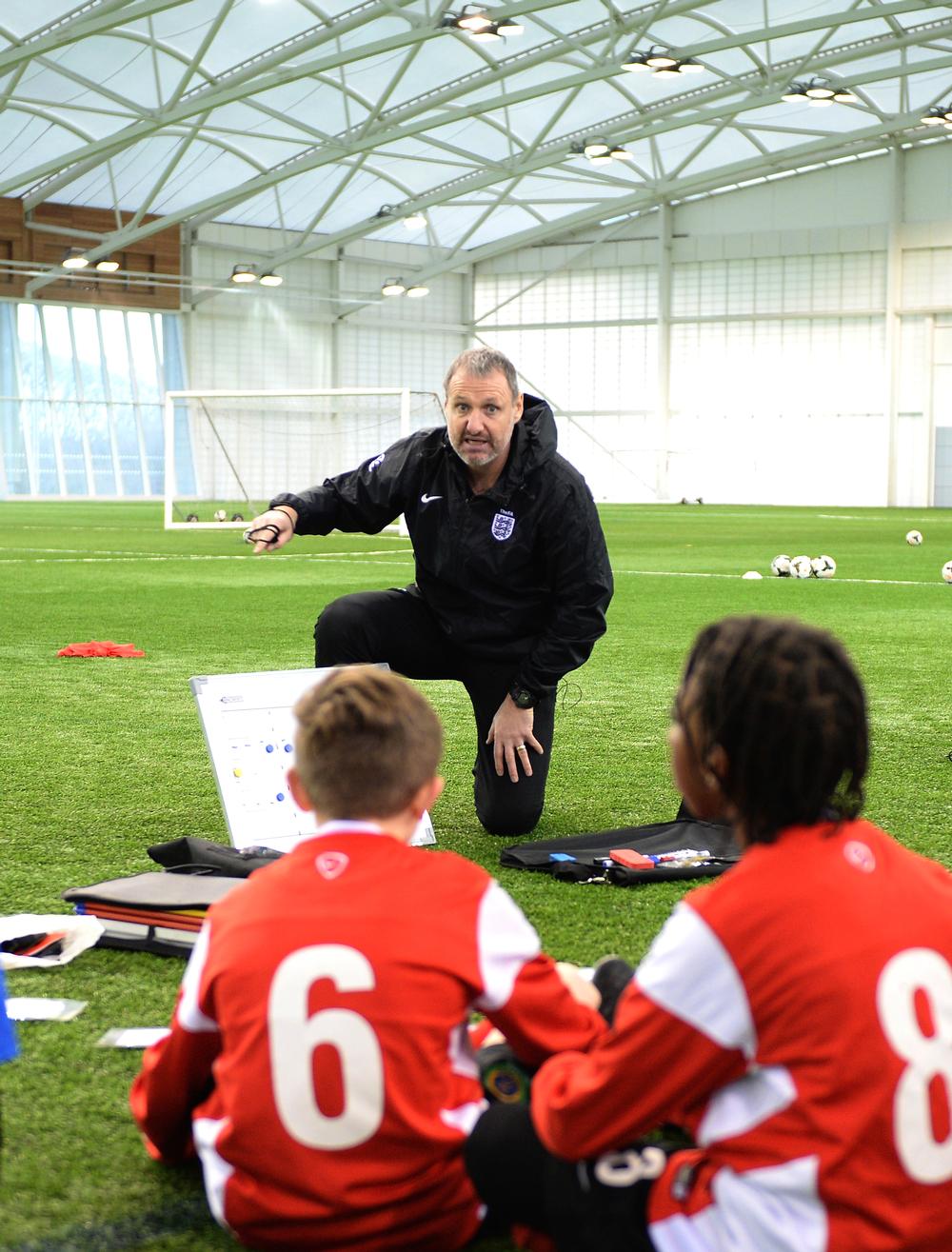
All of the FA’s coaching courses and frameworks are now devised at St George’s Park, Burton / Tony Marshall/The FA/Getty Images
Coaches completing their Level Two Youth Award can apply for a bursary / shutterstock_Fotokostic
Coaches completing their Level Two Youth Award can apply for a bursary / shutterstock
One of the biggest mistakes the fitness industry still makes is advertising almost
exclusively to people who already look and live like gym members. [more...]
As healthcare continues to shift towards prevention, there’s a growing focus on helping
people stay active, independent and feeling good for longer. [more...]
The FA’s head of grassroots delivery talks to Matthew Campelli about a renewed focus on educating coaches and the role of the National Football Centre in Burton
By Matthew Campelli | Published in Sports Management 22 feb 2016 issue 114
Les Howie joined the Football Association as head of grassroots in 1998
We’ve got to destroy the myth about Spain and Germany having more coaches than us . That’s historical,” says Les Howie following a question he’s probably had to answer more times than he would have liked.
Since it emerged in 2013 that England had 1,161 coaches qualified to UEFA A standard compared to 12,720 in Spain and 5,500 in Germany, the quality and quantity of English coaches has been firmly under the microscope.
At the level above – UEFA Pro – England had 203 coaches to Spain’s 2,140 and Germany’s 1,000, but the Football Association’s (FA) head of grassroots delivery is very keen to put those figures into a wider and more positive context.
“Spain”, says Howie, “counts back to 1948” to measure its number of UEFA-qualified coaches, while in Germany it’s “statutory” for coaches at some amateur levels to have UEFA B licenses.
“Only in the past five years has UEFA B been the required standard to coach at first team level in the Football League – we’re not comparing like with like, but that’s used as a great big stick to hit us over the head with,” he says. “Year-on-year we now put as many people through the UEFA B course as other countries.”
Talking to Sports Management at the FA’s impressive National Football Centre, St George’s Park in Burton-on-Trent, Howie highlights a concerted effort by the governing body to take coaching in England to another level.
The number of FA-trained regional coaches has more than doubled, from 16 to 40 over the past year to support the eight members of nationwide coaching staff who work with children in schools. A bursary of £500,000 (US$712,422, €658,025) has been created for coaches wanting to complete a Level Two Youth Award qualification. Individual bursaries of £50-£100 (US$71-US$142, €66-€132) will “help 8,000 coaches get to that level” this season, Howie claims confidently.
The FA is in the middle of conducting a major coaching review and is writing new courses for both budding and experienced coaches to undertake from August 2016.
A “competency-based model” will be the basis of the new courses, bringing together child development, child specialisation and pastoral care, as well as tactical and technical knowledge. It will include what Howie describes as the “four corners” – technical and tactical; physical; psychological; and social elements.
“In terms of psychological competency, at Level One, it might be about helping children make sure they have lots of opportunities to make decisions, while at UEFA Pro level it might be about teaching players to handle stress and pressure in a Champions League final,” he explains.
All the new courses have been developed, written and will be delivered at St George’s Park, which Howie says will “help raise standards and keep us in touch with what’s going on”.
“This is where we write the courses, pilot them and where the tutors come to be trained, supported and developed,” he adds. “It’s like being taught by someone who went to Oxford or Cambridge.”
Level One courses cost “on average” £150 (US$214, €197) - “less than a fiver an hour” – while a UEFA Pro license, including study visits, board, lodgings, meals, kit and 150 hours of contact time, costs around £7,000 (US$9,973, €9,211).
“My daughter’s Masters degree is £7,000, but then I have to pay her board and lodgings. She probably gets in total 150 hours of contact time,” he says. “That’s the same as a Pro license, but that’s your Masters in football.”
Bursaries are also being provided to regional FAs to target 100 more female and black, Asian and minority ethnic (BAME) coaches taking the UEFA B license. Higher up the ladder, former Tranmere Rovers forward Wayne Allison will oversee the development of BAME coaches at the elite level – particularly coaches going from UEFA B to UEFA A.
Modular support and online learning has been incorporated into the process by the FA, with the launch of its England DNA website last December, which highlights all of the organisation’s practices for coaches to use in their day-to-day sessions. But Howie, and the FA’s, overarching message is one of creativity and prioritising the long-term.
“I don’t want a shed load of trophies when children are 10, I want them to be playing and enjoying football 20 years time,” he says. “It doesn’t mean to say those kids won’t want to win their game on Sunday, and it won’t be the most competitive 40 minutes of their week, but the chances are they’ll forget the final score five minutes after the final whistle.”
FA Coaching pathway
• FA UEFA Pro license • FA UEFA A license • FA UEFA B licence • FA Level Two Certificate • FA Level One Award
All of the FA’s coaching courses and frameworks are now devised at St George’s Park, Burton / Tony Marshall/The FA/Getty Images
Coaches completing their Level Two Youth Award can apply for a bursary / shutterstock_Fotokostic
Coaches completing their Level Two Youth Award can apply for a bursary / shutterstock
Global luxury hospitality brand, Six Senses, has partnered with longevity healthcare provider,
HUM2N, to launch a clinic at Six Senses London, at The Whiteley.
Premium London health club, KX Chelsea, will imminently unveil its most significant
redevelopment since its launch in 2002 to create an integrated wellness model combining
training, recovery and relaxation.
Researchers in the US have identified an antibody which could greatly reduce the loss of lean
muscle mass in people who are taking weight-loss medications.
Crunch Fitness has announced the launch of Crunch Reform Pilates – its own reformer concept
designed to bring this fast growing, but rather expensive, modality into the mainstream.
The 20th State of the Industry Report reveals a resilient, expanding and competitive
sector, the
importance of differentiation and the ongoing challenge of tackling inequalities.
Nuffield Health has told HCM that it takes its responsibilities towards its colleagues seriously
and is committed to meeting all legal obligations after news of a tribunal has made national
headlines.
Technogym has announced the launch of the Run X World Treadmill Championship, the first
world championship for running on connected treadmills over five kilometres.
One of the biggest mistakes the fitness industry still makes is advertising almost
exclusively to people who already look and live like gym members. [more...]
As healthcare continues to shift towards prevention, there’s a growing focus on helping
people stay active, independent and feeling good for longer. [more...]