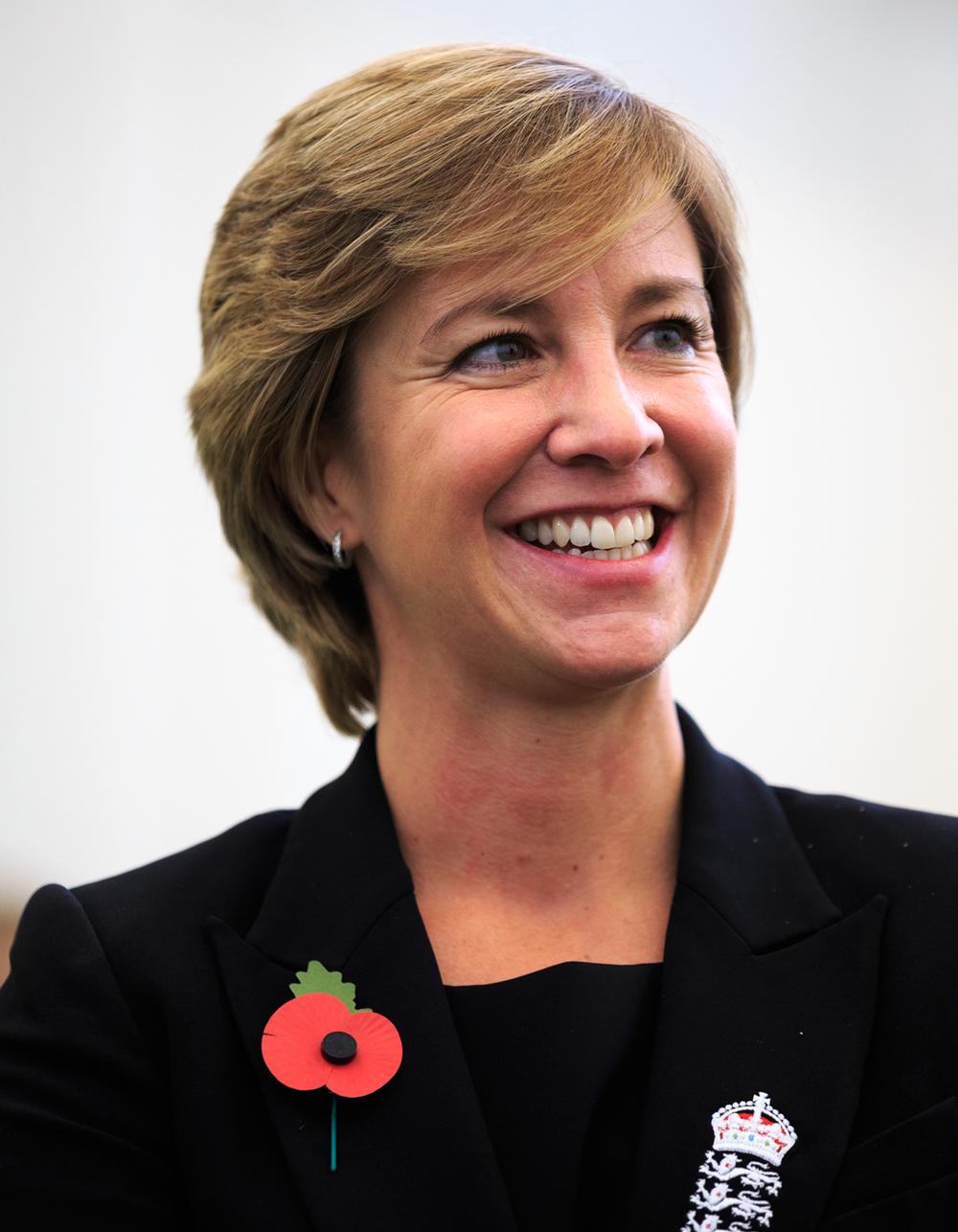
Put it this way – I wouldn’t get anywhere near being selected for the current England team,” says former England cricket captain Clare Connor, when asked to describe how women’s cricket has developed over the past decade.
“The last few years have been remarkable. We’ve gone from being a completely amateur sport to having a fully fledged, professional England team. We used to have very little televised cricket, but last year every ball of the women’s Ashes was televised live on Sky Sports and broadcast on BBC radio.”
SUPER STUFF Connor, who received an OBE for captaining England to victory against Australia in 2005, is now the person tasked with taking the women’s game to the next level. She’s the director of women’s cricket at England and Wales Cricket Board (ECB) – responsible not only for the national team, but also for the women’s domestic league set up and for growing the number of female cricketers at grassroots level.
As part of her plans to improve the sport, she’s masterminded the new Women’s Cricket Super League, a six-team tournament set to launch in July this year. The ambition is for the new league to attract the best cricketers from around the world, creating a more competitive environment for English female players and increasing the visibility of women’s cricket.
Connor says getting the league up and running has been one of her greatest career achievements. “It took over, probably, a third of my working life over the last year,” she says. “It’s been really challenging and we’ve had a lot of work to do – preparation, planning and contractual work with the tender process – without ever being 100 per cent sure whether the league would happen. There were many things which could have derailed it along the way – if the bids from the teams hadn’t been good enough, for example.
“I’m really proud that we’ve made it and once the competition gets going I won’t be as hands-on as I was in the planning stage – although ultimately I’ll be accountable and the buck will stop with me!”
THREE Ps Connor says the league will be based on three ‘Ps’ – “Performance, profile and participation – that’s how we’ve approached the concept,” she explains. “Performance obviously encompasses everything that goes on the pitch. By profile we mean the efforts to really keep up the momentum behind the women’s game. The international women’s game has a big profile at the moment – in terms of increased media interest and commercial investment – but there isn’t a high-profile domestic product, so the women’s game is relying heavily on the international game.
“Hopefully the Super League, with the best female players from around the world, will take women’s cricket to another level, from which we can really push and drive the profile for women’s cricket.”
“The third ‘P’ is participation,” Connor adds, and explains how the aim of attracting more youngsters to cricket is enshrined in the foundations of the Super League. Teams wanting to join the competition were asked to include in their bids clearly identified proposals which would inspire growth at grassroots level, reach more women and girls in their communities and grow female audiences for the sport.
All six women’s cricket teams which were selected for the competition did this successfully. They are Hampshire Cricket, Lancashire County Cricket Board, Loughborough University, South West, Surrey County Cricket Club and Yorkshire County Cricket Club.
Hampshire, for example, will play its Super League games based on a “road show” model, working with local partners, such as Berkshire Cricket, the Dorset Cricket Board and Southampton Solent University.
EYES ON THE PRIZE The ECB will invest £3m (US$4.3m, €3.9m) in the Women’s Super League over the next four years, with host teams being awarded an annual grant. Some money will be held centrally to develop logos and kits for the players, while a “big chunk” will go towards prize money – this is the first time cash has been awarded to women for playing English domestic cricket.
Connor reveals that the ECB is having “really positive conversations” with broadcaster Sky about televising the competition, with inspiration for a possible contract for TV rights being drawn from the successful agreement for live coverage made by the Football Association’s Women’s Super League.
As for measuring success – does Connor have a target in mind? “It would be fantastic to reach an average attendance of 1,000 for first round games,” she says. “That would make me very happy, and for finals day we’ll hope to get nearer to 4-5,000. We’ll do our best to make the most of this opportunity.”
Members of the England Women’s cricket team are likely to play in the Super League with its cash prizes
CoverMe, the global leader in fitness workforce management, today launches CoverMe PT, an
on-demand personal training platform that connects the right personal trainer to the right
client in under 10 seconds. [more...]
As healthcare continues to shift towards prevention, there’s a growing focus on helping
people stay active, independent and feeling good for longer. [more...]
+ More featured suppliers
COMPANY PROFILES
Safe Space Lockers
We provide a full turn-key solution for clients from design and consultation, through to bespoke man [more...]
Put it this way – I wouldn’t get anywhere near being selected for the current England team,” says former England cricket captain Clare Connor, when asked to describe how women’s cricket has developed over the past decade.
“The last few years have been remarkable. We’ve gone from being a completely amateur sport to having a fully fledged, professional England team. We used to have very little televised cricket, but last year every ball of the women’s Ashes was televised live on Sky Sports and broadcast on BBC radio.”
SUPER STUFF Connor, who received an OBE for captaining England to victory against Australia in 2005, is now the person tasked with taking the women’s game to the next level. She’s the director of women’s cricket at England and Wales Cricket Board (ECB) – responsible not only for the national team, but also for the women’s domestic league set up and for growing the number of female cricketers at grassroots level.
As part of her plans to improve the sport, she’s masterminded the new Women’s Cricket Super League, a six-team tournament set to launch in July this year. The ambition is for the new league to attract the best cricketers from around the world, creating a more competitive environment for English female players and increasing the visibility of women’s cricket.
Connor says getting the league up and running has been one of her greatest career achievements. “It took over, probably, a third of my working life over the last year,” she says. “It’s been really challenging and we’ve had a lot of work to do – preparation, planning and contractual work with the tender process – without ever being 100 per cent sure whether the league would happen. There were many things which could have derailed it along the way – if the bids from the teams hadn’t been good enough, for example.
“I’m really proud that we’ve made it and once the competition gets going I won’t be as hands-on as I was in the planning stage – although ultimately I’ll be accountable and the buck will stop with me!”
THREE Ps Connor says the league will be based on three ‘Ps’ – “Performance, profile and participation – that’s how we’ve approached the concept,” she explains. “Performance obviously encompasses everything that goes on the pitch. By profile we mean the efforts to really keep up the momentum behind the women’s game. The international women’s game has a big profile at the moment – in terms of increased media interest and commercial investment – but there isn’t a high-profile domestic product, so the women’s game is relying heavily on the international game.
“Hopefully the Super League, with the best female players from around the world, will take women’s cricket to another level, from which we can really push and drive the profile for women’s cricket.”
“The third ‘P’ is participation,” Connor adds, and explains how the aim of attracting more youngsters to cricket is enshrined in the foundations of the Super League. Teams wanting to join the competition were asked to include in their bids clearly identified proposals which would inspire growth at grassroots level, reach more women and girls in their communities and grow female audiences for the sport.
All six women’s cricket teams which were selected for the competition did this successfully. They are Hampshire Cricket, Lancashire County Cricket Board, Loughborough University, South West, Surrey County Cricket Club and Yorkshire County Cricket Club.
Hampshire, for example, will play its Super League games based on a “road show” model, working with local partners, such as Berkshire Cricket, the Dorset Cricket Board and Southampton Solent University.
EYES ON THE PRIZE The ECB will invest £3m (US$4.3m, €3.9m) in the Women’s Super League over the next four years, with host teams being awarded an annual grant. Some money will be held centrally to develop logos and kits for the players, while a “big chunk” will go towards prize money – this is the first time cash has been awarded to women for playing English domestic cricket.
Connor reveals that the ECB is having “really positive conversations” with broadcaster Sky about televising the competition, with inspiration for a possible contract for TV rights being drawn from the successful agreement for live coverage made by the Football Association’s Women’s Super League.
As for measuring success – does Connor have a target in mind? “It would be fantastic to reach an average attendance of 1,000 for first round games,” she says. “That would make me very happy, and for finals day we’ll hope to get nearer to 4-5,000. We’ll do our best to make the most of this opportunity.”
Members of the England Women’s cricket team are likely to play in the Super League with its cash prizes
Global luxury hospitality brand, Six Senses, has partnered with longevity healthcare provider,
HUM2N, to launch a clinic at Six Senses London, at The Whiteley.
Premium London health club, KX Chelsea, will imminently unveil its most significant
redevelopment since its launch in 2002 to create an integrated wellness model combining
training, recovery and relaxation.
Researchers in the US have identified an antibody which could greatly reduce the loss of lean
muscle mass in people who are taking weight-loss medications.
Crunch Fitness has announced the launch of Crunch Reform Pilates – its own reformer concept
designed to bring this fast growing, but rather expensive, modality into the mainstream.
The 20th State of the Industry Report reveals a resilient, expanding and competitive
sector, the
importance of differentiation and the ongoing challenge of tackling inequalities.
Nuffield Health has told HCM that it takes its responsibilities towards its colleagues seriously
and is committed to meeting all legal obligations after news of a tribunal has made national
headlines.
Technogym has announced the launch of the Run X World Treadmill Championship, the first
world championship for running on connected treadmills over five kilometres.
CoverMe, the global leader in fitness workforce management, today launches CoverMe PT, an
on-demand personal training platform that connects the right personal trainer to the right
client in under 10 seconds. [more...]
As healthcare continues to shift towards prevention, there’s a growing focus on helping
people stay active, independent and feeling good for longer. [more...]
+ More featured suppliers
COMPANY PROFILES
Safe Space Lockers We provide a full turn-key solution for clients from design and consultation, through to bespoke man [more...]