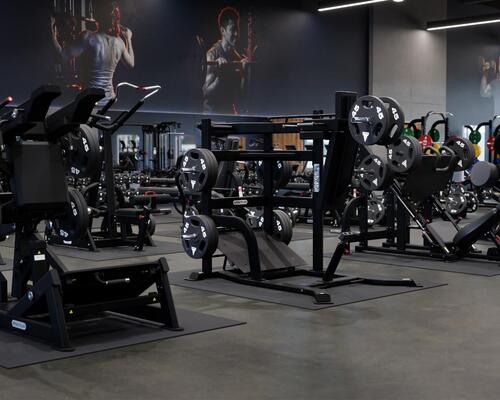
GLL’s Better is the largest public sector brand with 126 sites
First we shape our industry and afterwards our industry shapes us.
This aphorism is perhaps the least quoted exposition of the relationship between people and their fitness (and health). In a year when we should be celebrating our successes, I want to question, as a critical friend, why we’re not achieving more.
Size matters First the good news. The industry has shown itself to be recession-proof and is back in positive headline growth year-on-year. This year’s State of the Fitness Industry Report (SoFI) infographics are excellent at showing trends over longer periods, something industry veterans and financiers are finding reassuring. The penetration rate across the total population has grown to 13.7 per cent as monthly direct debits hit 8.8 million, up from 13.2 per cent and 8.3 million.
I put this upfront because it recently came to my notice via social media that too many people working in the industry don’t know the size of the industry they work in. The day-to-day isolation that many people suffer while working in what should be a very social environment needs to be addressed and we’re looking to present more real-time data on our website in 2016.
Budget becomes mid-market So back to the good news. The total number of fitness sites stands at 6,312, up from 6,112 in the previous year, and the market value has grown to £4.3bn – representing almost £1bn growth since 2007.
Across the private sector, low-cost sites have continued to drive growth: there are now 319 low-cost clubs, up from 257. Membership of these clubs has jumped to 1.3 million, with a market value of £290m. Last year, members paid on average £17.99; this year it has increased to £18.23, an indication that more low-cost operators are bordering on the £20 a month definition.
If we keep this definition, then some low-cost brands are either finding the model isn’t working on all sites, or else they’re finding the strength of the market means they no longer need to be constrained by price. Because some brands are moving not only into the £20-plus but £30-plus brackets, particularly in London. So low-cost brands are moving into the very mid-market they were once attacking.
Public show of strength The public sector, meanwhile, is playing a far more long-term game, gaining strength and embedding itself into the local community. Public sites have a wider range of facilities and maintain over 3.3 million members paying an average fee of £30, unchanged since last year.
Back in 2011, the public sector opened 81 all-new gyms, but although refurbs have grown, new openings have dropped year-on-year with 2015 bringing just 46. However, these new sites have 58 stations on average and are charging £31.25 – both figures higher than the all-public site average.
This average is being pushed up by the work of the larger public site operators. At the time our latest report was published, GLL and its Better brand was the largest fitness brand in the country with 126 sites, SLM’s Everyone Active had 79, and Places for People Leisure had 78 sites. GLL managed 38 more gyms than it did 12 months previously and was also the largest swim and diving school operator.
Instagram what? Our personal preferences can become personal insight based on information in the public domain – yet few public or private brands are taking advantage to engage in meaningful conversations, present real-time information and convert interest into commerce or visits.
For the first time in our SoFI report, we’ve included a Fitness Social Media Index looking at brands on Facebook, Twitter, Instagram and YouTube. The results don’t make for good reading: four of the top 10 private brands and nine of the top 10 public brands don’t use Instagram. Compare this to the active wear brands that have taken fitness beyond the gym to become a lifestyle.
Nike, Adidas, Vans, Converse, Puma, Under Armour and New Balance have all seen 144–252 per cent growth in Instagram followers, unprecedented in other social media forms. Are fitness brands neglecting a superior indexing platform?
Could the lack of social media strategies, along with a lack of innovation and differentiation, be the downfall of the industry in 2016? Weight Watchers is a good example of how quickly new technology can destroy the value of a business. In 2015, its stock dropped 92 per cent from its all-time high, membership is down 38 per cent, and the number of meetings has fallen by 20 per cent. Dieting tools have gone hi-tech and the Weight Watchers weekly meetings and weigh-ins have been replaced by on-demand conversation and support.
Husband and wife bloggers Daniel and Kelli on Fitness Blender have over 18 million followers, and like Wikipedia rely on donations. In the UK, Body.Network – promoted by The Times and fronted by PT Matt Roberts – provides an on-demand library of videos with your favourite trainer for £15 a month. Around 20 new aggregators – hi-tech start-ups from UK, India, Israel and the US – are working around the lack of APIs to go direct to the consumer. These aggregators will have a conversation with the consumer, will provide a personal service and will create an experience for them. Does the fitness industry do all three and do it well?
Some new technology attracts criticism for undercutting the industry, but like Uber and Airbnb, the power and choice lies with the consumer. Will aggregators, bloggers, unboxing celebrities, on-demand channels, trackers, wearables and an app for everything win over the consumer and impact traditional platforms and websites? It’s only a matter of time, so embrace new technology and help shape our industry in 2016.
Want all the stats?
David Minton:
The annual State of the Fitness Industry Report is published by independent analyst for the industry The Leisure Database Company, which compiles the report from a comprehensive review and audit involving individual contact with all sites.
For further information, contact TLDC director David Minton:
The UK low-cost sector – including brands like Xercise4Less – has grown to 319 sites
Active wear brands such as Nike, Converse, Under Armour and New Balance have seen 144–252 per cent growth in Instagram followers / Photo: shutterstock.com
Panatta brought together four of the most influential figures in bodybuilding history on the
stage of RiminiWellness 2026: Phil Heath, Lee Haney, Ronnie Coleman and Hany Rambod. [more...]
+ More featured suppliers
COMPANY PROFILES
IndigoFitness
At IndigoFitness, we create intelligent training spaces that elevate fitness facilities across indus [more...]
Safe Space Lockers
We provide a full turn-key solution for clients from design and consultation, through to bespoke man [more...]
GLL’s Better is the largest public sector brand with 126 sites
First we shape our industry and afterwards our industry shapes us.
This aphorism is perhaps the least quoted exposition of the relationship between people and their fitness (and health). In a year when we should be celebrating our successes, I want to question, as a critical friend, why we’re not achieving more.
Size matters First the good news. The industry has shown itself to be recession-proof and is back in positive headline growth year-on-year. This year’s State of the Fitness Industry Report (SoFI) infographics are excellent at showing trends over longer periods, something industry veterans and financiers are finding reassuring. The penetration rate across the total population has grown to 13.7 per cent as monthly direct debits hit 8.8 million, up from 13.2 per cent and 8.3 million.
I put this upfront because it recently came to my notice via social media that too many people working in the industry don’t know the size of the industry they work in. The day-to-day isolation that many people suffer while working in what should be a very social environment needs to be addressed and we’re looking to present more real-time data on our website in 2016.
Budget becomes mid-market So back to the good news. The total number of fitness sites stands at 6,312, up from 6,112 in the previous year, and the market value has grown to £4.3bn – representing almost £1bn growth since 2007.
Across the private sector, low-cost sites have continued to drive growth: there are now 319 low-cost clubs, up from 257. Membership of these clubs has jumped to 1.3 million, with a market value of £290m. Last year, members paid on average £17.99; this year it has increased to £18.23, an indication that more low-cost operators are bordering on the £20 a month definition.
If we keep this definition, then some low-cost brands are either finding the model isn’t working on all sites, or else they’re finding the strength of the market means they no longer need to be constrained by price. Because some brands are moving not only into the £20-plus but £30-plus brackets, particularly in London. So low-cost brands are moving into the very mid-market they were once attacking.
Public show of strength The public sector, meanwhile, is playing a far more long-term game, gaining strength and embedding itself into the local community. Public sites have a wider range of facilities and maintain over 3.3 million members paying an average fee of £30, unchanged since last year.
Back in 2011, the public sector opened 81 all-new gyms, but although refurbs have grown, new openings have dropped year-on-year with 2015 bringing just 46. However, these new sites have 58 stations on average and are charging £31.25 – both figures higher than the all-public site average.
This average is being pushed up by the work of the larger public site operators. At the time our latest report was published, GLL and its Better brand was the largest fitness brand in the country with 126 sites, SLM’s Everyone Active had 79, and Places for People Leisure had 78 sites. GLL managed 38 more gyms than it did 12 months previously and was also the largest swim and diving school operator.
Instagram what? Our personal preferences can become personal insight based on information in the public domain – yet few public or private brands are taking advantage to engage in meaningful conversations, present real-time information and convert interest into commerce or visits.
For the first time in our SoFI report, we’ve included a Fitness Social Media Index looking at brands on Facebook, Twitter, Instagram and YouTube. The results don’t make for good reading: four of the top 10 private brands and nine of the top 10 public brands don’t use Instagram. Compare this to the active wear brands that have taken fitness beyond the gym to become a lifestyle.
Nike, Adidas, Vans, Converse, Puma, Under Armour and New Balance have all seen 144–252 per cent growth in Instagram followers, unprecedented in other social media forms. Are fitness brands neglecting a superior indexing platform?
Could the lack of social media strategies, along with a lack of innovation and differentiation, be the downfall of the industry in 2016? Weight Watchers is a good example of how quickly new technology can destroy the value of a business. In 2015, its stock dropped 92 per cent from its all-time high, membership is down 38 per cent, and the number of meetings has fallen by 20 per cent. Dieting tools have gone hi-tech and the Weight Watchers weekly meetings and weigh-ins have been replaced by on-demand conversation and support.
Husband and wife bloggers Daniel and Kelli on Fitness Blender have over 18 million followers, and like Wikipedia rely on donations. In the UK, Body.Network – promoted by The Times and fronted by PT Matt Roberts – provides an on-demand library of videos with your favourite trainer for £15 a month. Around 20 new aggregators – hi-tech start-ups from UK, India, Israel and the US – are working around the lack of APIs to go direct to the consumer. These aggregators will have a conversation with the consumer, will provide a personal service and will create an experience for them. Does the fitness industry do all three and do it well?
Some new technology attracts criticism for undercutting the industry, but like Uber and Airbnb, the power and choice lies with the consumer. Will aggregators, bloggers, unboxing celebrities, on-demand channels, trackers, wearables and an app for everything win over the consumer and impact traditional platforms and websites? It’s only a matter of time, so embrace new technology and help shape our industry in 2016.
Want all the stats?
David Minton:
The annual State of the Fitness Industry Report is published by independent analyst for the industry The Leisure Database Company, which compiles the report from a comprehensive review and audit involving individual contact with all sites.
For further information, contact TLDC director David Minton:
The UK low-cost sector – including brands like Xercise4Less – has grown to 319 sites
Active wear brands such as Nike, Converse, Under Armour and New Balance have seen 144–252 per cent growth in Instagram followers / Photo: shutterstock.com
Italian Exhibition Group – the organiser behind industry events Dubai Active and Dubai Muscle
Show – has been appointed to deliver the Health and Wellness Expo and Fire and Safety Expo at
the 16th World Firefighters Games.
It’s been five years since the fitness industry reopened after the last lockdown – long enough
to look back on the impact the pandemic had on the sector and what might come next.
Wattbike has announced a new integration with EGYM, which enables the bikes to contribute to
the Cardio BioAge score of individuals via a VO2 max result.
Les Mills has launched a reformer Pilates workout. The 45-minute workout blends traditional
reformer movements and more contemporary exercises, choreographed to music.
According to research which tracked more than 147,000 people for 30 years, 90-120 minutes
of strength training a week may deliver some of the biggest long-term health rewards.
The UK's four Chief Medical Officers have published a refreshed edition of Physical activity
guidelines: UK Chief Medical Officers' report, updating the evidence that underpins the nation's
physical activity recommendations and placing greater emphasis on strength, balance, reducing
sedentary behaviour and, for the first time, supporting people taking weight loss medications.
Places Leisure has exchanged contracts to build and operate a flagship £60m water and leisure
destination on behalf of Basingstoke and Deane Borough Council.
The Republic of Ireland will become the latest market in PureGym’s expanding international
portfolio, with the first launch planned for Dublin in 2027.
Panatta brought together four of the most influential figures in bodybuilding history on the
stage of RiminiWellness 2026: Phil Heath, Lee Haney, Ronnie Coleman and Hany Rambod. [more...]
+ More featured suppliers
COMPANY PROFILES
IndigoFitness At IndigoFitness, we create intelligent training spaces that elevate fitness facilities across indus [more...]